 Bellingham Roofing
 Why Siding Repair Looks Different in Edgemoor
Edgemoor is one of Bellingham's older, established neighborhoods, set into a wooded stretch of the city close to the water south of downtown. Mature tree canopy, sloped lots, and proximity to Bellingham Bay give the area a lot of its character, but that same combination is exactly what makes siding repair here different from a repair job on a newer, more exposed subdivision. Salt air drifting off the bay, driving rain that Whatcom County sees for a large part of the year, and a moss season that runs longer under heavy tree cover all put sustained pressure on a home's exterior — and that pressure shows up first, and worst, on siding.
A siding repair that actually holds up in Edgemoor starts with understanding which of these factors is doing the damage on a given home, because a shaded, tree-covered lot near the water deals with a different mix of problems than a home on an open, sunny street a mile inland. This page covers what actually goes wrong with siding in this specific setting, how a repair should be diagnosed and scoped, and why it matters that the crew doing the work already knows this neighborhood.
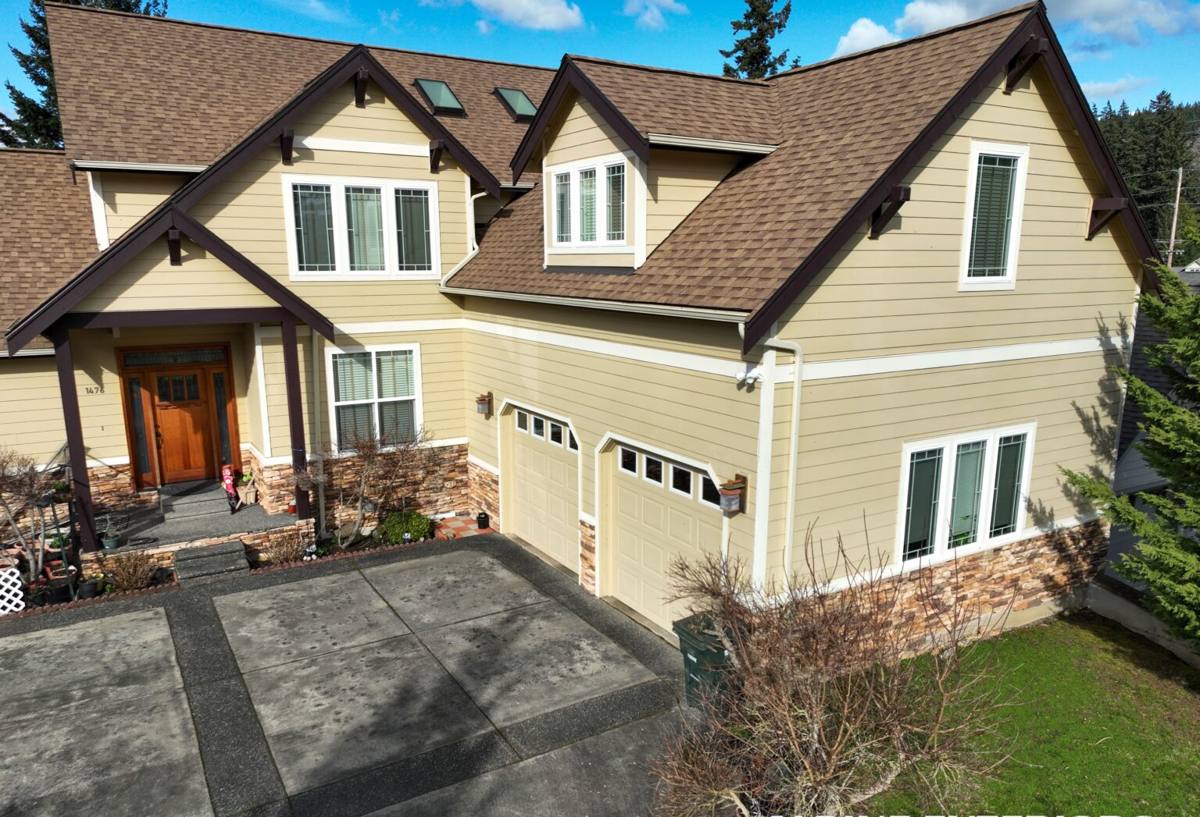
What Salt Air, Driving Rain, and Moss Do to Siding
Salt Air and Slow Corrosion
Homes closer to Bellingham Bay deal with salt-laden air settling on siding, trim, and fasteners more or less continuously, not just during storms. That exposure accelerates corrosion in exposed nails, hardware, and any metal flashing that isn't properly protected, and it keeps painted or coated surfaces wet longer than they'd stay in a drier, more inland setting. On siding, that often shows up first as a fastener that's lost its grip, a finish failing faster than it should, or streaking below a piece of trim hardware.
Driving Rain and Wind-Driven Water
Whatcom County rain rarely falls straight down for long. Wind pushes it sideways into laps, seams, and anywhere flashing or caulking wasn't detailed correctly, and a tree-shaded lot doesn't offer much protection once wind is involved. Water forced into a seam that a calmer climate would never test can sit there for days without direct sun to dry it out — exactly the condition that turns a small installation gap into a real moisture problem.
Moss, Shade, and Sustained Dampness
Edgemoor's tree cover is part of what makes the neighborhood attractive, but shaded, north-facing walls under a heavy canopy stay damp for extended stretches through fall, winter, and much of spring — precisely the condition moss needs to take hold. On wood-based or wood-look siding, that ongoing dampness isn't just cosmetic. Sustained moisture against a moisture-absorbent material eventually leads to softening, swelling, and rot at seams and edges, often well before it's visible from the ground.
Cosmetic Wear vs. a Real Moisture Problem
Not every issue on aging siding needs the same response, and telling the difference correctly is the actual job of a repair estimate — not just spotting a problem, but knowing what it means.
| Symptom | Usually Cosmetic | Often a Deeper Problem |
|---|---|---|
| Faded paint or finish on a sun-exposed wall | Yes — normal weathering | Only if wood underneath is also soft |
| Green staining or moss on a shaded wall | Cosmetic if surface-only | Yes, if boards feel soft or spongy beneath it |
| Small gaps opening at seams or corners | Sometimes — caulk failure | Often — panels shifting or seams working loose |
| Warping, cupping, or bowing boards | Rarely | Usually — moisture already inside the material |
| Soft spot when pressed near a window or corner | No | Yes — likely rot behind the surface |
| Rust streaks below fasteners | Cosmetic if isolated and shallow | Can indicate fastener failure underneath |
Cosmetic issues can typically wait for routine maintenance. Anything soft, spongy, or actively letting water past the surface needs attention before the next wet season, not after.
How We Diagnose a Repair Before Recommending Anything
A repair estimate that's worth anything starts with an actual inspection, not a guess from the curb. On an Edgemoor home, that typically includes:
- Probing suspect boards and trim for softness, not just checking them visually
- Checking behind and around window and door openings, where flashing failures most often let water in
- Looking at how each wall's orientation and shade exposure has aged it differently — a shaded, tree-covered side rarely wears the same way as a sunnier one
- Inspecting fasteners and any exposed metal hardware for corrosion, especially on walls facing the bay
- Checking clearance between siding and grade, decks, or roof lines, since trapped moisture at these transitions is a common failure point
- Assessing whether moss or mildew on the surface has stayed superficial or worked its way into the material
We'll walk through what we actually find — what needs repair now, what can be watched, and what's purely cosmetic — before recommending a scope of work.
Repair vs. Replace: How We Make That Call
Homeowners often assume any siding problem means a full replacement, or the opposite — that a patch will always be good enough. Neither assumption holds up consistently. What actually drives the decision:
- How far the damage has spread. A section or two of isolated rot or fastener failure is usually a fair repair candidate. Moisture damage that's worked across several walls or courses often isn't worth chasing piece by piece.
- What the original siding material is. Cedar, primed wood, and some engineered wood products are harder to repair cleanly in this climate, because the same moisture sensitivity that caused the visible damage tends to affect the surrounding material too, even where it isn't failing yet.
- Whether a color or profile match is realistically available. Older siding, especially discontinued lines, can be difficult to patch invisibly. We'll be upfront if an exact match isn't possible before starting the work, not after.
- Age of the siding relative to its expected service life. Siding nearing the end of its practical life may only have so many repair cycles left before replacement becomes the more cost-effective path.
We'll give a straight answer on which category a given home falls into — including when a targeted repair is genuinely the right call, not just the smaller job.
What a Correct Repair Actually Involves
Fixing the Cause, Not Just the Symptom
A soft board or a failing seam is a symptom. Poor flashing at a window, a missing or failed weather-resistive barrier, or a clearance issue at grade is usually the actual cause. A repair that swaps out the visible damage without correcting what let water in behind it tends to fail again in the same spot — often faster the second time, because the underlying issue was never addressed.
Matching Materials Where It Makes Sense
When a targeted repair is the right call and the existing siding is otherwise sound, we'll match the existing material, profile, and finish as closely as realistically possible. Where that isn't practical — a discontinued product, a poor original material choice, or damage that's spread too far to patch cleanly — replacing the affected section, or the wall, with James Hardie fiber cement is usually the better long-term answer.
Why We Rebuild With James Hardie, Not a Mixed Patch
We install only James Hardie fiber cement siding — we don't install vinyl, LP SmartSide, other fiber cement brands, primed spruce, or cedar. When a repair grows into a partial or full re-side, that standard doesn't change. Hardie's ColorPlus factory finish is baked on under controlled conditions and warrantied against fading and chalking, the material itself is non-combustible and doesn't feed moss or absorb moisture the way wood-based products do, and Hardie's climate-specific HZ formulations are built for exactly the kind of sustained dampness Edgemoor's tree cover and bay proximity create. Repairing a home with a product that's already shown its limits in this climate just resets the clock on the same problem.
Comparing Siding Materials When Replacement Makes More Sense
Once a repair estimate turns into a replacement conversation — for a section of wall or the whole house — it's worth being direct about how the common options actually compare in a shaded, salt-air, high-rain setting like Edgemoor.
| Material | Moisture Behavior Here | Typical Long-Term Maintenance |
|---|---|---|
| James Hardie fiber cement | Non-combustible, doesn't absorb moisture or feed rot the way wood-based products can | Low — factory finish holds up well under sustained shade and damp |
| Vinyl | Won't rot, but can warp or crack under wind-driven rain and temperature swings over time | Low upfront, but panel replacement rather than repair once it fails |
| LP SmartSide / engineered wood | Wood-based core is more moisture-sensitive at cut edges and seams than fiber cement | Moderate — edge sealing and coating upkeep matter more under sustained shade |
| Primed spruce or cedar | Natural wood absorbs moisture readily and is a preferred surface for moss growth | Highest — regular repainting, caulking, and moss treatment needed |
This isn't a claim that every alternative product is destined to fail — it's why our own standard, for a climate this consistently damp and shaded, is fiber cement installed correctly rather than a material that trades a lower upfront cost for a heavier maintenance burden later.
Why It Matters That We Already Work in Edgemoor
A crew that mostly repairs siding on open, sunny lots can still do competent work here, but Edgemoor's mix of mature tree cover, sloped terrain, and bay proximity raises questions that come up more often on this kind of property than elsewhere in Bellingham — which walls actually stay damp longest given the specific tree cover and orientation, how much clearance siding needs above grade on a sloped lot, and what fastener grade genuinely holds up this close to the water. Working this neighborhood regularly means we're not guessing at those answers on your project. We've seen how homes here actually age, which tells us where to look first and what a repair estimate needs to account for that a generic checklist would miss.
That familiarity also tends to mean a more accurate estimate from the start — fewer surprises once work is underway, because the inspection already accounts for how this specific setting behaves.
Signs Your Edgemoor Home May Need Siding Attention
- Green staining or visible moss on shaded or north-facing walls
- Paint or finish that keeps failing no matter how often it's redone
- Soft spots or slight give when pressing near a window, door, or corner
- Siding that's cupping, warping, or separating at seams
- Rust streaks below fasteners or trim hardware
- Gaps opening at corners or trim that weren't there a year or two ago
- Visible daylight or drafts around older window or door trim
Any one of these on its own doesn't necessarily mean a full replacement. But in a climate that keeps moisture in contact with siding this long, they're worth having a professional look at directly rather than assuming they'll resolve on their own.
If your Edgemoor home has siding that needs a closer look — whether it's a specific spot of damage or a general sense that something isn't holding up the way it should — we're glad to walk the property and give an honest read on what it actually needs. Reach out using the form below to schedule a free, no-pressure estimate.