 Bellingham Roofing
 Windows Built for Blaine's Waterfront Weather
Blaine sits at the far northwest corner of Whatcom County, right up against the water and the Canadian border, which means it gets a version of Pacific Northwest weather that's a step harsher than what you'd find further inland around Bellingham. Homes here take on salt-laden air, steady wind off the water, and long stretches of wet, gray months where surfaces rarely get a chance to fully dry out. Windows are one of the first building components to show the wear from that combination, and they're also one of the biggest sources of heat loss in an older home. A window that's doing its job in Blaine has to manage moisture, block drafts, and hold up to salt exposure all at the same time — not just look good and seal shut.
This page is about that one job done right in this one area: replacing or upgrading windows on a Blaine home so they actually perform in this climate, installed by a crew based in Bellingham that already knows what this stretch of coastline does to a building.
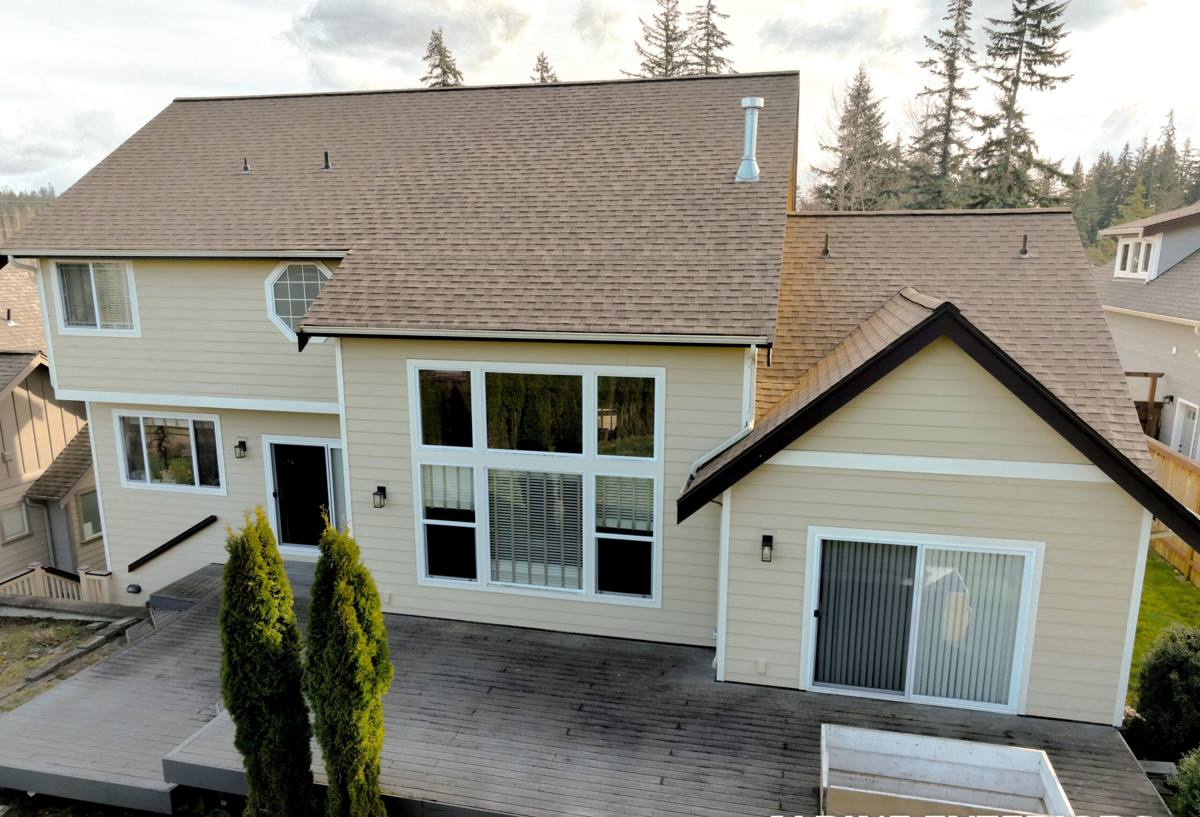
What Salt Air, Driving Rain, and Moss Season Do to Old Windows
Salt Air and Corrosion
Homes close to the water deal with airborne salt settling on every exterior surface, including window hardware. Over years, that salt exposure accelerates corrosion on cheaper hinges, locks, and balance mechanisms, and it can pit or dull unprotected aluminum frames faster than a homeowner further inland would ever see. It's a slow process, so it's easy to miss until a window won't latch properly or a frame starts to look chalky and rough.
Wind-Driven Rain and Water Intrusion
Rain in this part of Whatcom County doesn't always fall straight down — wind off the water pushes it sideways into wall and window assemblies, testing every seam and joint. A window that was installed without proper flashing or sealant detailing can look fine for years and still be letting water track behind the trim, where it quietly rots sheathing and framing out of sight.
Moss, Mildew, and Prolonged Dampness
The same damp, mild conditions that grow moss on roofs and siding also create a good environment for mildew and wood rot around window sills and trim, especially on the north and west-facing walls that get the least sun exposure to dry out between storms. Wood sills and cheap composite trim are the first to show it. Good drainage detailing and the right frame material go a long way toward keeping that from becoming a structural problem.
What Actually Makes a Window Energy-Efficient
"Energy-efficient" gets used loosely in the window business. For a Blaine home, it comes down to a handful of specific things working together — not a marketing sticker on the glass.
Frame Material
The frame has to resist moisture and hold its shape through temperature swings without becoming a thermal bridge that transfers cold straight into the house. Vinyl, fiberglass, and clad-wood frames each handle that differently, which we cover in the comparison below.
Glazing: Panes, Gas Fill, and Low-E Coatings
Double-pane glass with a low-emissivity (low-E) coating and an argon or krypton gas fill between the panes is the standard efficiency package for this region, and it does most of the heavy lifting on comfort and energy performance. The low-E coating reflects heat back into the room in winter and blocks unwanted solar heat in summer, while the gas fill slows heat transfer through the glass itself. Triple-pane glass adds another layer of insulation and can make sense on north-facing walls or particularly exposed elevations, but it isn't automatically the right call for every window on every wall — we walk through that trade-off with each homeowner rather than upselling it across the board.
U-Factor and Solar Heat Gain Coefficient (SHGC) for a Heating-Dominated Climate
Two numbers on the NFRC label matter most here: U-factor, which measures how well the window resists heat loss (lower is better), and SHGC, which measures how much solar heat passes through the glass. Because this climate is heating-dominated with mild summers, the priority is usually a low U-factor to hold heat in, rather than chasing a very low SHGC the way you would in a hot, sunny climate. Washington's state energy code sets minimum performance requirements for replacement windows, and we spec glass packages that meet or beat those minimums rather than the cheapest option that technically qualifies.
Signs Your Current Windows Are Losing You Money
Most homeowners don't think about their windows until something's obviously wrong, but there are earlier warning signs worth catching:
- Cold drafts near the window frame even when it's fully latched
- Condensation or fogging between the panes, which means the seal has failed
- Visible gaps, cracked caulking, or soft/spongy trim and sills
- Windows that are hard to open, close, or lock — often a sign of a warped or corroded frame
- Noticeably higher heating bills compared to similar-sized homes nearby
- Moss, algae, or dark streaking developing on the sill or lower trim
- A room that's consistently colder or draftier than the rest of the house
Frame Material Comparison for Coastal Whatcom County Homes
| Frame Material | Moisture & Salt Air Resistance | Maintenance | Typical Trade-Offs |
|---|---|---|---|
| Vinyl | Good — won't rot or corrode, handles salt air well | Low; occasional cleaning | Budget-friendly; limited color options; can expand/contract with temperature swings |
| Fiberglass | Very good — dimensionally stable, resists moisture and corrosion | Low | Higher upfront cost; excellent long-term durability in this climate |
| Aluminum | Poor to fair — prone to corrosion and condensation near salt air, conducts cold | Moderate to high | Not our first recommendation for waterfront exposure; better suited to commercial applications |
| Wood / Clad-Wood | Fair — needs good detailing and finish maintenance to control moisture | Higher; finish upkeep required | Classic appearance; requires more diligence in a wet climate |
We steer most Blaine homeowners toward vinyl or fiberglass for the balance of performance and upkeep in a marine environment. That's a professional judgment based on how each material actually behaves in salt air and prolonged dampness, not a knock on any particular manufacturer — every material has a place, and we'll talk through the honest trade-offs for your specific home rather than pushing one option across the board.
Installation Is Where Energy Efficiency Is Won or Lost
A high-performance window installed poorly will underperform a mid-grade window installed correctly. This is the part of the job that matters most and gets skipped most often.
Flashing and Moisture Management
Every window opening needs a drainage plane and flashing detail that sheds water down and out, not into the wall cavity. In a climate with wind-driven rain, this is not optional — it's the single biggest factor in whether a window installation lasts twenty years or causes a rot problem in five. We flash every opening properly and integrate it with the existing weather-resistive barrier rather than just caulking around the trim and calling it done.
Air Sealing and Insulation Around the Rough Opening
The gap between the window frame and the rough framing needs to be sealed and insulated correctly — too little and you get drafts and heat loss, too much rigid foam packed in too tight and you can bow the frame and affect how the window operates. We use appropriate low-expansion sealants and backer material sized to the gap.
Sizing, Squaring, and Fastening
A window that's out of square will bind, won't seal evenly, and puts stress on the frame and hardware over time. Correct shimming, leveling, and fastening at the manufacturer's specified points keeps the unit operating smoothly and keeps the warranty intact.
What Drives the Cost of a Window Project
Costs vary a lot by project, so we don't quote broad numbers without seeing the home, but these are the main factors that move the price up or down:
| Factor | How It Affects Cost |
|---|---|
| Frame material | Vinyl is generally the most budget-friendly; fiberglass and clad-wood cost more upfront |
| Glazing package | Double-pane low-E argon is the baseline; triple-pane adds cost per window |
| Window size and quantity | Larger openings and whole-house replacements have more material and labor |
| Condition of the existing opening | Rot repair, resizing, or re-flashing an opening adds labor beyond a straightforward swap |
| Trim and finish work | Matching existing interior/exterior trim profiles can add finish carpentry time |
| Access and site conditions | Upper stories, tight lots, or difficult access can affect labor time |
We also point homeowners toward checking with their utility provider about any current rebates or incentive programs for energy-efficient window upgrades — those programs change over time, so it's worth a direct check rather than relying on outdated numbers.
Our Process for Blaine Homeowners
We keep the process straightforward from the first call to the final walkthrough:
- Free on-site estimate — we look at your existing windows, note any moisture or framing issues, and talk through material and glazing options for your specific exposure
- Written proposal — clear scope, materials, and pricing before any work is scheduled
- Precise measuring and ordering — accurate measurements matter for a tight, correctly sealed fit
- Installation — proper flashing, air sealing, and fastening at every opening, with daily cleanup
- Final walkthrough — we test every window with you before we consider the job finished
Why a Crew That Already Works in Blaine Matters
Bellingham and Blaine sit close together, but the exposure difference is real — homes right on the water take a harder hit from salt air and wind-driven rain than homes further inland. A crew that regularly works this part of Whatcom County has already seen how that plays out on real houses: where moss and moisture tend to build up, which frame materials hold up and which struggle, and how to detail flashing so it actually sheds water in a storm coming off the water sideways. That's the kind of judgment that only comes from doing the work here repeatedly, not from a general install checklist.
It also means straightforward logistics — a local crew can get to your home for the estimate, the install, and any follow-up without the delays or scheduling gaps that come with a contractor based further away.
If your windows are drafty, fogged, hard to operate, or just old enough that you're wondering whether it's time, we're happy to take a look. Reach out for a free, no-pressure estimate using the form below — we'll walk the property, answer your questions honestly, and give you a clear picture of your options before you decide anything.