 Bellingham Roofing
 Why Fairhaven's Location Puts Extra Demand on a Roof
Fairhaven sits close to Bellingham Bay, and that proximity to open water changes what a roof has to deal with compared to a house a few miles inland. Salt-laden air, wind-driven rain off the water, and a long, damp moss season in Whatcom County all combine to put more stress on roofing materials and fasteners than you'd see in a drier, more sheltered climate. A new roof installation here isn't just about covering the house — it's about choosing materials and installation details that are matched to this specific environment.
Salt Air and Corrosion
Airborne salt from the bay accelerates corrosion on exposed metal — nail heads, flashing edges, and fasteners that aren't rated for a marine-influenced environment can start to rust years before they would inland. This matters most at the small details: the type of nail used, the flashing metal chosen, and whether exposed fasteners are properly sealed and coated.
Driving Rain and Wind
Storms coming off the water often bring rain at an angle, which pushes water sideways under shingles and around flashing rather than letting it simply run off. A roof built for calmer, drier conditions can handle vertical rain fine but still leak under sideways-driven water if the underlayment, flashing laps, and valleys aren't detailed for it.
A Long Moss Season
Bellingham's mild, wet climate keeps roofs damp for much of the year, and shaded, tree-lined streets like the ones common in Fairhaven make it worse. Moss and moss spores need moisture and shade to establish, and once moss takes hold on a roof it holds water against the surface, works into shingle layers, and shortens the life of the roofing material. New construction and complete tear-off replacements give us a rare chance to build in moss resistance from day one, rather than fighting it after the fact.
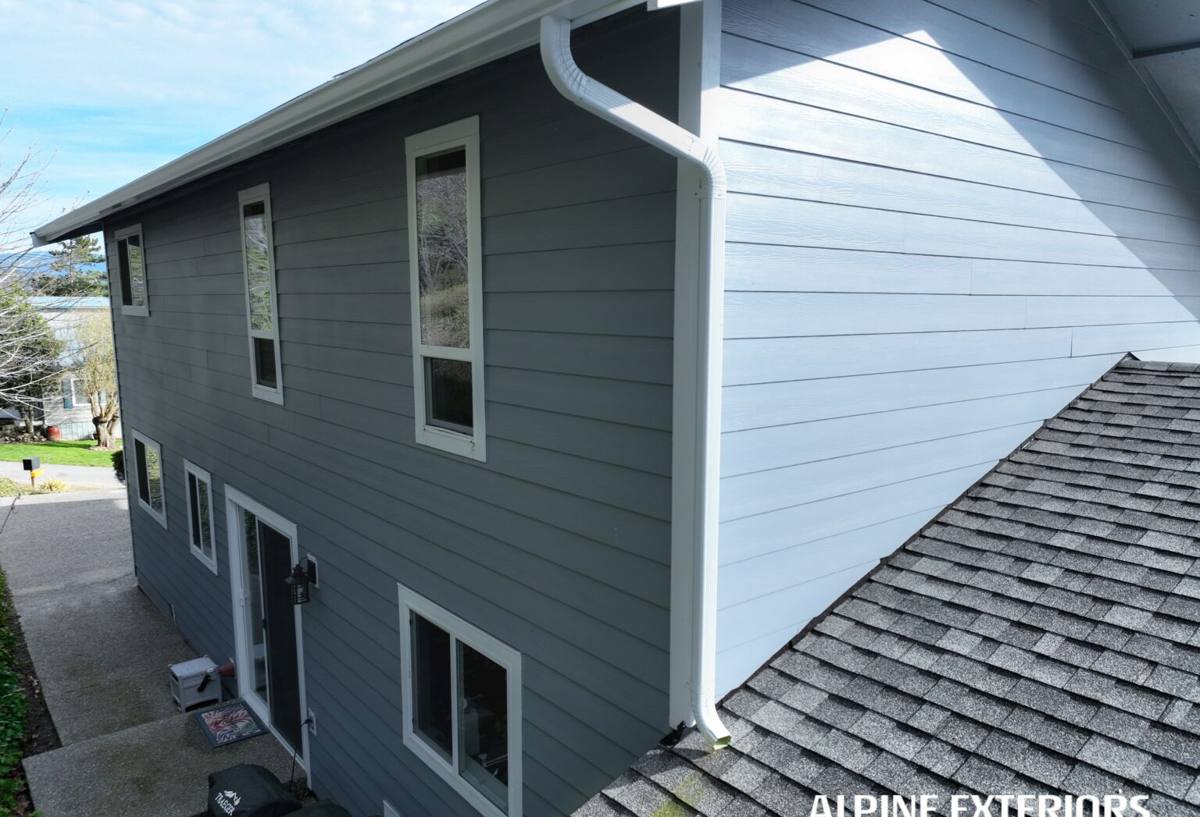
What a Correct New Roof Installation Actually Involves
"New roof" sounds simple, but the difference between a roof that lasts and one that fails early almost always comes down to what's underneath the visible shingles or panels. In a climate like ours, these details aren't optional extras — they're the parts of the job that actually determine whether the roof holds up.
Tear-Off and Deck Inspection
We remove the old roofing down to the deck rather than layering over it. This lets us inspect the sheathing for soft spots, rot, or moisture damage that's common on older homes in wetter neighborhoods, and replace any compromised sections before new material goes down. Roofing over a damaged deck just hides a problem that will resurface.
Underlayment and Ice-and-Water Barrier
A quality synthetic underlayment is the roof's real waterproofing layer — the shingles or panels are the weather shield, but the underlayment is what keeps the house dry if wind or moss ever lets water past that outer layer. In vulnerable areas — eaves, valleys, and around penetrations — we use self-adhering ice-and-water membrane, which seals tight around fastener penetrations and resists the wind-driven rain this area is known for.
Flashing Details
Flashing around chimneys, skylights, sidewalls, and valleys is where most roof leaks actually originate, not in the open field of shingles. We use corrosion-resistant flashing metal and proper step-and-counter-flashing techniques rather than relying on sealant alone, since caulk breaks down over time and salt air speeds that breakdown further.
Fastening Standards
Every shingle or panel is fastened according to the manufacturer's wind-rating specifications, not just "enough nails to hold it down." Under-fastening is one of the most common causes of early wind damage, and it's invisible from the ground until a storm finds the weak spot.
Ventilation
A balanced intake-and-exhaust ventilation system keeps the attic space at a consistent temperature and moisture level. Poor ventilation traps moisture under the deck, which promotes rot from the inside and can void material warranties — a real risk in a climate where humidity is high for much of the year.
Choosing the Right Roofing Material for Fairhaven
There's no single "best" roofing material — the right choice depends on the home's roof pitch, your budget, and how much long-term maintenance you're willing to take on. Here's how the common options perform against this area's specific conditions.
| Material | Moisture & Salt-Air Performance | Moss Resistance | Maintenance Burden |
|---|---|---|---|
| Architectural asphalt shingle | Good, with proper underlayment | Moderate — benefits from periodic cleaning | Low to moderate |
| Standing seam metal | Excellent when properly coated fasteners are used | High — sheds moisture quickly, little for moss to grip | Low |
| Synthetic/composite shake | Very good — engineered not to absorb moisture | Good | Low |
| Cedar shake | Requires diligent upkeep in wet, shaded settings | Lower without regular treatment and cleaning | High |
We're honest with clients about why we lean toward architectural asphalt, metal, and synthetic products for most Fairhaven homes: natural wood shake can look great, but it needs consistent drying conditions and regular maintenance to perform well, and it's simply a harder material to keep ahead of moss and moisture in a shaded, marine-influenced setting like this one. That's a maintenance and moisture-behavior trade-off, not a knock on the product itself — it just needs an owner committed to the upkeep it requires.
Our Installation Process
A new roof project runs smoother when the homeowner knows what to expect at each stage. Here's the general sequence we follow on a full replacement:
- On-site inspection and measurement, including a look at attic ventilation and any signs of existing moisture damage
- Material selection and a written estimate outlining scope, materials, and warranty coverage
- Permitting through the City of Bellingham where required
- Protection of landscaping, siding, and gutters before work begins
- Full tear-off and disposal of old roofing material
- Deck inspection and repair of any damaged sheathing
- Installation of underlayment, ice-and-water barrier, and flashing
- Installation of the new roofing material to manufacturer wind-rating specifications
- Ventilation check and adjustment as needed
- Full site cleanup, including a magnetic nail sweep
- Final walkthrough and warranty paperwork
Why Hiring a Crew That Already Works in Fairhaven Matters
A roofing crew that regularly works this neighborhood already knows the practical realities that don't show up in a generic estimate: narrow streets and limited staging space on some blocks, mature tree canopy that means extra care around limbs and root systems, and a mix of older homes alongside newer construction, each with different deck conditions and access challenges. That local familiarity translates into fewer surprises during the job and a crew that already understands how to sequence tear-off, material staging, and cleanup around tight residential lots near the water.
Working in Bellingham also means understanding the City's permitting process and inspection requirements, so the job moves through approval without unnecessary delays. And because we're local, warranty service and follow-up questions after installation are handled by the same crew that did the work — not routed through a call center or a contractor who won't be back in the area.
What Drives the Cost of a New Roof in Fairhaven
Every roof is priced individually based on the home and the scope of work, so we won't publish numbers that don't apply to your house. What we can tell you is which factors move the price up or down, so an estimate makes sense when you see it.
| Cost Factor | Why It Matters Here |
|---|---|
| Roof size and number of facets | More valleys, dormers, and roof planes mean more flashing work and labor time |
| Existing deck condition | Moisture damage from prior moss or leaks may require sheathing replacement before new material goes down |
| Material choice | Asphalt, metal, and synthetic products carry different material and installation costs |
| Access and site constraints | Tree cover, tight lots, and limited staging space affect labor time and equipment needs |
| Ventilation upgrades | Adding or correcting intake/exhaust venting adds work but protects the investment long-term |
| Tear-off layers | Removing multiple layers of old roofing takes more labor than a single-layer tear-off |
After Installation: Protecting a New Roof from Moss and Salt Air
A correctly installed roof still needs a bit of ongoing attention to reach its full lifespan in this climate. None of this is complicated, but skipping it is how moss and moisture shorten a roof's life years ahead of schedule.
- Keep gutters and downspouts clear so water doesn't back up under the roof edge
- Trim back overhanging tree limbs to reduce shade and debris buildup on the roof surface
- Have zinc or copper control strips installed near the ridge if moss is a recurring concern — rain washing over these metals naturally inhibits moss growth
- Schedule a roof inspection every year or two, especially after major storms
- Remove moss and debris with proper low-pressure methods rather than power-washing, which can strip granules and shorten shingle life
- Check attic ventilation periodically, since blocked vents can trap moisture even on a newly installed roof
Signs Your Fairhaven Home Needs a New Roof, Not Another Repair
Repairs make sense for isolated damage on an otherwise sound roof. A full replacement becomes the more honest recommendation when the underlying material and structure are wearing out broadly rather than failing in one spot. Watch for:
- Granule loss heavy enough to show bare shingle surface in multiple areas
- Persistent moss coverage that returns quickly after cleaning
- Soft spots or sagging in the roof deck, felt from inside the attic or seen from the ground
- Leaks appearing in new locations each time it rains hard
- Shingles curling, cracking, or losing their seal in multiple sections
- A roof approaching or past the expected lifespan of its material
If you're seeing more than one of these, a roofing professional can tell you honestly whether targeted repair still makes sense or whether you're better off putting that repair money toward a new roof that's built to handle Fairhaven's conditions from the start.
If you're weighing a new roof for your Fairhaven home, we're happy to take a look and walk you through your options — no pressure, no obligation. Use the form below to request a free estimate.