 Bellingham Roofing
 Fairhaven's Roofs Take a Different Kind of Beating
Fairhaven sits close to Bellingham Bay, and that waterfront position shapes everything about how a roof ages here. Homes just a few blocks apart in Bellingham can wear out in noticeably different ways depending on how much salt-laden air, wind-driven rain, and shade they're exposed to. In Fairhaven, that combination shows up early: fastener corrosion, algae and moss growth, and flashing failures tend to appear years before they would on a roof further inland in Whatcom County.
A roof repair here isn't just patching a leak. It's understanding why that leak started in this specific environment, and fixing it in a way that holds up against the next few winters of the same conditions — not just the next dry spell.
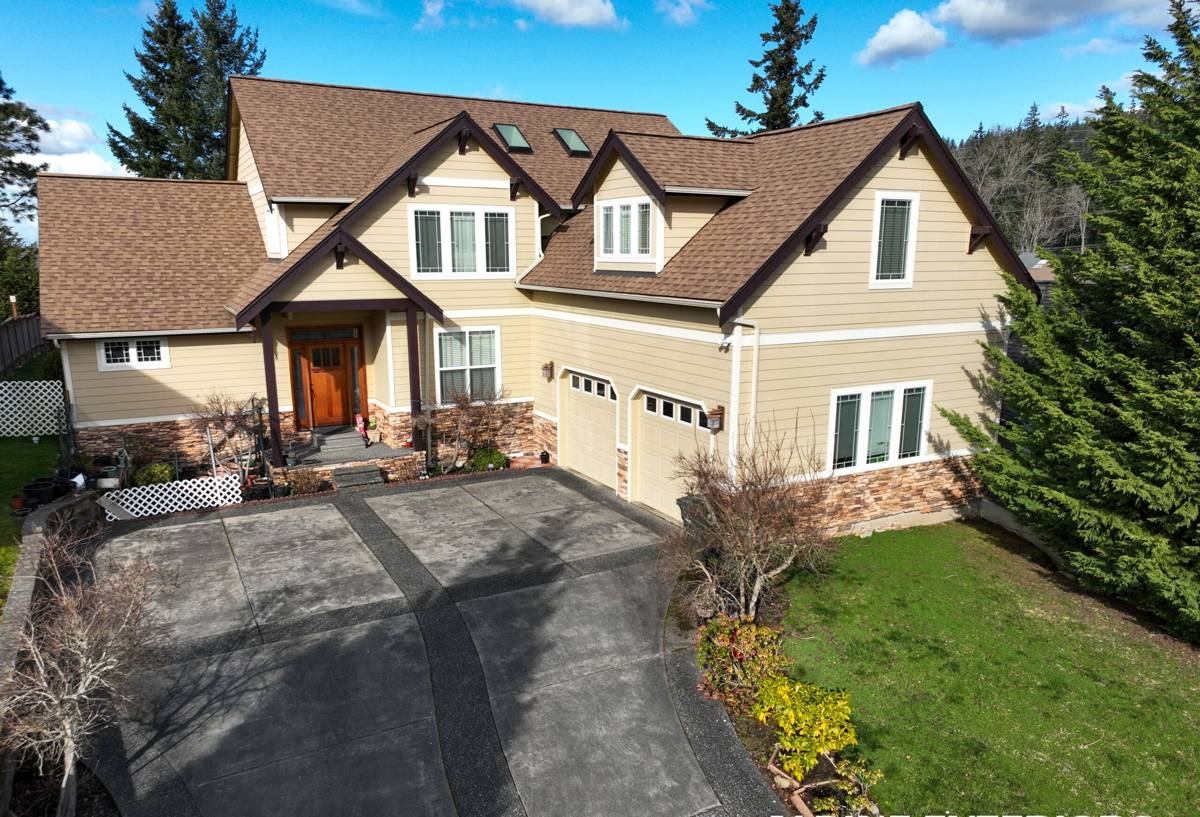
Signs a Fairhaven Roof Needs Repair, Not Replacement
Most roofs don't fail all at once. They show smaller signs first, and catching those signs early is usually the difference between a repair bill and a full replacement bill. Watch for:
- Water stains on interior ceilings or upper walls, especially near chimneys, skylights, or where two roof planes meet
- Shingles that are cupping, cracking, or losing their granules faster on one side of the roof than the other
- Dark streaking or thick moss patches, particularly on north-facing or shaded sections
- Rust staining running down from metal flashing, vents, or gutters
- Soft or spongy decking felt underfoot when walking the attic
- Daylight visible through the roof deck from inside the attic
- Granules collecting in gutters or at the base of downspouts
If what you're seeing is limited to one section, one flashing detail, or one penetration point, a repair is usually the right call. Widespread granule loss, soft decking across multiple areas, or a roof already past its expected service life points toward replacement instead — and a straight answer about which situation you're in is part of an honest inspection.
What Salt Air and Coastal Wind Do to Roofing Materials
Fasteners and Flashing
Salt in the air accelerates corrosion on exposed metal. Nail heads, flashing seams, and vent boots that would last decades in a drier inland climate can start rusting or losing their seal noticeably sooner in a bay-adjacent neighborhood like Fairhaven. Once a fastener corrodes, it loosens its grip on the shingle or flashing piece it's holding, and that's often where a leak actually starts — not at the shingle surface itself, but at the metal holding everything together underneath.
Wind-Driven Rain
Rain that comes in off Bellingham Bay rarely falls straight down. Wind pushes it sideways, up under shingle edges, and into gaps that a vertical rainstorm would never reach. This is why proper shingle sealing, correct nail placement, and well-lapped underlayment matter more here than in calmer inland spots — a repair that only addresses the visible gap and ignores wind exposure tends to fail again at the first real storm.
Moss, Moisture, and Bellingham's Long Wet Season
Whatcom County's wet season runs long, and Fairhaven's tree cover and marine-layer humidity give moss exactly what it needs: shade, moisture, and time. Moss isn't just cosmetic. As it spreads, it holds water against the roof surface, works its way under shingle tabs, and lifts them slightly — which is often enough to let wind-driven rain underneath. Left long enough, moss growth can shorten the usable life of an otherwise sound roof by years.
A repair on a moss-affected roof isn't complete if it only fixes the leak point. It needs to address the moss itself — careful removal without tearing the shingle mat, and a plan to slow regrowth — or the same failure shows up again in a season or two, sometimes in a new spot.
What a Correct Roof Repair Actually Involves
A repair done right starts before anyone touches the roof surface. It starts with finding the actual source of the problem, which is not always where the stain shows up inside the house — water can travel along rafters or decking before it drips somewhere visible.
1. A Real Inspection, Not a Guess
That means getting on the roof (not just looking from the ground), checking flashing at every penetration, examining the decking condition where accessible, and tracing water stains back to their actual entry point.
2. Matching Materials Correctly
Shingle color, profile, and manufacturer vary. A patch using the wrong shingle type stands out visually and can also create a slightly different weathering pattern that draws attention to the repair for years. When an exact match isn't available, we'll be upfront about that before starting the work.
3. Flashing Done Properly
Step flashing, counter-flashing, and valley flashing all have specific overlap and fastening requirements. In a coastal environment, this detail work matters more, not less — flashing is usually the first thing salt air and wind-driven rain find weak.
4. Sealing That Holds
Sealants have a service life of their own. Part of a proper repair is knowing when a sealant bead is a legitimate fix and when it's being used to mask a problem that needs a mechanical solution instead — like replacing a flashing piece rather than caulking over a gap in it.
Repair or Replacement: How to Tell
| Factor | Points Toward Repair | Points Toward Replacement |
|---|---|---|
| Age of roof | Well within expected service life for the material | At or past the material's typical lifespan |
| Extent of damage | Localized to one area, penetration, or flashing detail | Spread across multiple sections or slopes |
| Granule loss | Minor, isolated to older or high-wear spots | Widespread, shingle mat visible in places |
| Decking condition | Solid underfoot, no soft spots found | Soft or spongy decking in multiple areas |
| Moss/algae coverage | Light to moderate, treatable | Heavy, longstanding, lifting shingle tabs broadly |
| Prior repair history | First or second repair on this roof | Repeated patch jobs in different spots over recent years |
No single factor decides it alone — it's the combination that matters, and that's exactly what an in-person inspection is for.
Our Process for Fairhaven Roof Repairs
- Inspection and honest assessment — we get on the roof, document what we find, and explain it in plain terms.
- Written scope — you get a clear description of what's being repaired and why, before any work starts.
- Material matching — we source shingles and flashing that match your existing roof as closely as possible.
- The repair itself — proper flashing technique, correct fastening, and attention to how wind and rain actually move across your specific roof.
- Cleanup and walk-through — the site is cleared of debris and nails, and we show you what was done.
We don't use a repair call as a excuse to push a full replacement you don't need. If a repair is the right fix, that's what we recommend — and we'll tell you honestly if we start to see signs that a bigger conversation is coming down the road.
Why Local Experience in Fairhaven Matters
A crew that regularly works waterfront and near-waterfront neighborhoods in Bellingham knows what to check first. We know salt air corrodes fasteners faster here than a few miles inland. We know which roof orientations in Fairhaven tend to hold moss the longest given the tree cover and shade patterns common to the area. We know how wind coming off the bay behaves differently than a straight-down rainstorm, and why that changes where leaks actually originate versus where the stain shows up inside.
That local pattern recognition shortens the time between "there's a leak" and "here's exactly what's causing it and what it takes to fix it correctly" — which matters when water is actively getting into your home.
Simple Maintenance That Extends a Fairhaven Roof's Life
Between repairs, a few habits make a real difference in a climate like this:
- Clear gutters and downspouts at least twice a year so water isn't backing up under the roof edge
- Trim back tree limbs that keep sections of the roof shaded and damp longer than the rest
- Have moss addressed while it's still light, before it lifts shingle tabs
- Check attic ventilation — poor airflow traps moisture and accelerates deck rot from underneath
- Walk the roofline visually after major storms for lifted shingles or displaced flashing
- Schedule a professional inspection every year or two, even with no visible problems
None of this replaces a proper inspection when there's an actual leak, but it buys time and reduces how often you need one.
Ready for a Straight Answer About Your Roof?
If you're dealing with a leak, staining, or a roof that just doesn't look right anymore, we're happy to take a look and tell you honestly what's going on — repair, monitor, or replace. Reach out for a free, no-pressure estimate using the form below.