 Bellingham Roofing
 Ferndale sits close enough to the water and the marine air that comes with it to put real demands on a home's exterior. Salt-laden air, wind-driven rain off the Strait, and a moss season that can stretch for months are not abstract concerns here — they're the reason siding fails early on homes that were built or re-sided with the wrong product or the wrong install details. If you're planning a siding replacement in Ferndale, the decisions you make now determine whether you're doing this again in twelve years or in thirty.
What Ferndale's Climate Actually Does to Siding
Whatcom County's marine climate is mild compared to a lot of the country, but "mild" doesn't mean gentle on building materials. Ferndale's proximity to Bellingham Bay and the Strait of Georgia means homes here deal with a specific combination of stressors that inland siding doesn't have to survive.
Salt Air and Corrosion
Airborne salt doesn't just affect homes right on the waterfront — it travels inland on wind and settles on siding, trim, and fasteners across a wide radius. Salt accelerates corrosion in metal components (nails, flashing, hardware) and can degrade certain paint and coating systems faster than a comparable inland home would experience. Siding material and the fasteners and flashing behind it both need to be chosen with that in mind.
Driving Rain
Rain in this part of Washington rarely falls straight down. Wind off the water pushes it sideways into wall assemblies, which puts far more stress on seams, laps, and penetrations than a calm, vertical rain would. A siding system that isn't detailed for wind-driven rain will eventually let moisture past the surface, even if the material itself is sound.
Moss and Persistent Moisture
Ferndale's moss season isn't a few weeks — it's a long stretch of the year where shaded, north-facing, and tree-covered walls stay damp for extended periods. Moss and algae growth on siding isn't just cosmetic. Where it takes hold, it holds moisture against the surface longer, and on materials that aren't dimensionally stable or that absorb water, that sustained dampness is what eventually causes swelling, rot, or coating failure.
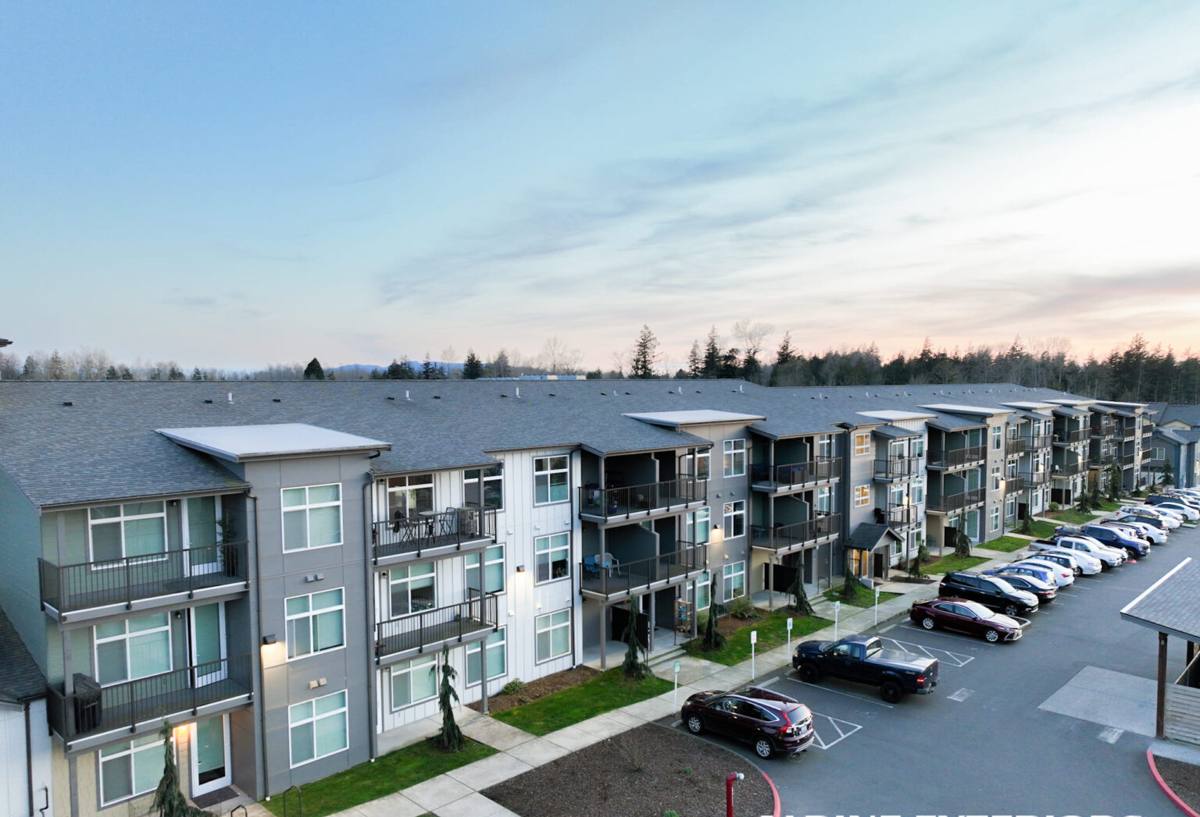
Why We Only Install James Hardie Fiber Cement Here
We've made a deliberate choice to install one siding system across every job we take on: James Hardie fiber cement. We don't install vinyl, LP SmartSide, Cemplank, Allura, primed spruce, or cedar. That's not a marketing position — it's a standard we hold because of what we've seen these products do (and not do) over time in this exact climate.
- Non-combustible: Fiber cement doesn't burn, which matters more each fire season in this region.
- Dimensionally stable: Hardie board doesn't swell and shrink with moisture the way wood-based products can, which matters directly for a climate with a long wet season.
- Factory-applied ColorPlus finish: Baked-on, UV-cured color that resists fading and holds up against salt air better than field-applied paint on many other substrates.
- Climate-engineered product lines: Hardie's HZ5 formulation is engineered for cold, wet, freeze-prone climates like the Pacific Northwest, not a one-size-fits-all national product.
- Strong transferable warranty: A long, transferable warranty backed by the manufacturer, which matters to future buyers as much as to you.
We're not going to tell you competing products are junk — some of them have real strengths, and we'll get into that below. But when we weigh those strengths against what a Ferndale wall assembly actually has to survive year after year, fiber cement is what we're willing to put our name behind.
A Fair Look at the Alternatives
Homeowners researching siding replacement will run into several other materials. Here's an honest comparison of how they hold up against Ferndale's specific conditions.
| Material | Strengths | Trade-offs in Ferndale's Climate |
|---|---|---|
| Vinyl | Low upfront cost, low maintenance surface | Can warp or become brittle with temperature swings; seams and moisture management depend heavily on installer skill; not engineered for wind-driven rain resistance the way fiber cement systems are |
| LP SmartSide | Engineered wood, lighter than fiber cement, good workability | Wood-based core means it's more moisture-sensitive at cut edges and joints; long-term performance in a persistently damp, mossy environment depends on flawless caulking and maintenance |
| Cedar / Primed Spruce | Natural appearance, traditional look | Requires ongoing refinishing, is highly susceptible to moisture absorption and rot in shaded/damp areas, and is a combustible material |
| Other Fiber Cement (Cemplank, Allura) | Similar base material chemistry to Hardie | Different manufacturing processes and finish systems; we've standardized on Hardie's specific engineering, warranty structure, and factory finish rather than mixing brands |
| James Hardie Fiber Cement | Non-combustible, dimensionally stable, factory finish, climate-specific HZ5 formulation, strong warranty | Heavier material requiring correct fastening; higher upfront cost than vinyl |
What Correct Installation Actually Involves
Material choice is half the equation. The other half is installation detail, and this is where a lot of siding jobs — regardless of brand — quietly fail years down the road.
Water-Resistive Barrier and Flashing
Behind every piece of siding, there needs to be a continuous, correctly lapped water-resistive barrier and properly integrated flashing at every window, door, and penetration. This is the layer that actually keeps wind-driven rain out of the wall assembly. Siding is the second line of defense, not the only one.
Proper Fastening
Fastener type, spacing, and embedment matter, especially in a salt-air environment where the wrong fastener corrodes faster than the siding around it lasts. Hardie's installation specifications call for specific fastener types and patterns, and following them is what preserves the warranty and the performance.
Clearance and Drainage
Siding needs proper clearance from grade, roof lines, decks, and other transitions so water has somewhere to go instead of sitting against the bottom edge of a board. This detail is frequently skipped on rush jobs and is one of the most common causes of early rot at the base of a wall.
Caulking and Joint Treatment
Joints and butt seams need to be treated correctly per manufacturer specification — not just caulked for looks. In a climate with this much sustained moisture exposure, joint failure is where water intrusion typically starts.
Signs a Ferndale Home Needs Siding Replacement, Not Just Repair
- Soft or spongy spots when you press on the siding, especially near the bottom of walls or below windows
- Persistent moss or algae staining that returns quickly after cleaning
- Visible warping, buckling, or gaps at seams
- Paint or finish that's peeling or bubbling rather than just fading
- Interior signs of moisture — musty smell, staining on interior walls near exterior siding
- Siding that's original to a home built before modern water-resistive barrier standards were common
If you're seeing one or two of these in isolated spots, targeted repair may be enough. Widespread signs across multiple walls, or any sign of moisture reaching the sheathing, usually means the underlying assembly needs to be opened up and corrected, not just patched over.
Our Process for a Ferndale Siding Replacement
1. On-Site Assessment
We walk the exterior, check problem areas closely (especially shaded and north-facing walls where moss and moisture linger longest), and look at what's happening behind the current siding where we can access it.
2. Scope and Product Plan
We put together a plan using James Hardie's HZ5 product line, specify the right water-resistive barrier and flashing details for your home's exposure, and walk you through color and profile options from Hardie's ColorPlus lineup.
3. Tear-Off and Sheathing Check
Old siding comes off and we inspect the sheathing underneath. Any rot or moisture damage found at this stage gets addressed before new siding goes on — covering damaged sheathing with new siding just hides a problem that will resurface.
4. Barrier, Flashing, and Installation
We install the water-resistive barrier, flash every penetration and transition, and install the Hardie siding to manufacturer specification for fastening, clearance, and joint treatment.
5. Final Walkthrough
We go over the finished work with you, confirm clearances and details, and make sure you understand what maintenance (if any) the ColorPlus finish needs going forward.
Why Hiring a Crew That Already Works in Ferndale Matters
Siding installation specs aren't regional, but the judgment calls made on-site are. A crew that regularly works Whatcom County homes knows which walls in this area take the worst of the wind-driven rain, understands how long moss season really runs here, and has seen firsthand what happens when flashing details get shortcut in a climate this wet. That local pattern recognition shows up in small decisions — where to add extra flashing attention, how to sequence work around the wet season, which details to double-check on a shaded wall — that a crew unfamiliar with this specific coastal climate might not think twice about.
Cost Factors to Expect
Every home is different, but a few factors consistently drive the cost of a siding replacement project:
| Factor | Why It Matters |
|---|---|
| Home size and wall complexity | More corners, gables, and transitions mean more cutting, flashing, and labor time |
| Sheathing condition | Rot or moisture damage discovered during tear-off adds repair scope before new siding can go on |
| Siding profile and trim | Lap width, shingle-style panels, and trim detail level affect material and labor cost |
| Access and site conditions | Multi-story walls, tight lot lines, and landscaping can affect staging and labor time |
| Existing siding removal | Multiple layers of old siding or extensive prep work adds time to the tear-off phase |
We'll always give you a real number based on your home's specifics, not a rough estimate pulled from a national average that doesn't account for what this climate does to a wall assembly.
Ready to Talk About Your Home
If your Ferndale home is showing signs it's time for new siding, or you just want an honest opinion on what's really going on behind it, we're happy to take a look. Reach out for a free, no-pressure estimate — we'll walk the exterior with you, tell you straight what we see, and lay out exactly what a correct James Hardie installation would look like for your home.