 Bellingham Roofing
 Fiber Cement Siding, Sized to Columbia's Climate
Columbia sits close enough to Bellingham Bay that homes here deal with a different mix of weather stress than houses further inland in Whatcom County. Salt-tinged air off the water, long stretches of driving rain, and a moss season that can run more than half the year all work against exterior materials that aren't built for it. When we talk with Columbia homeowners about siding, the conversation almost always starts with the same question: what's actually going to hold up here, not just on paper, but on this street, in this microclimate, year after year.
Our answer is James Hardie fiber cement siding, installed correctly, every time. We don't sell it as a one-size-fits-all product — we size the product line, the trim details, and the installation approach to what a Columbia home specifically needs to fight off moisture, moss, and salt air without turning into a maintenance project every spring.
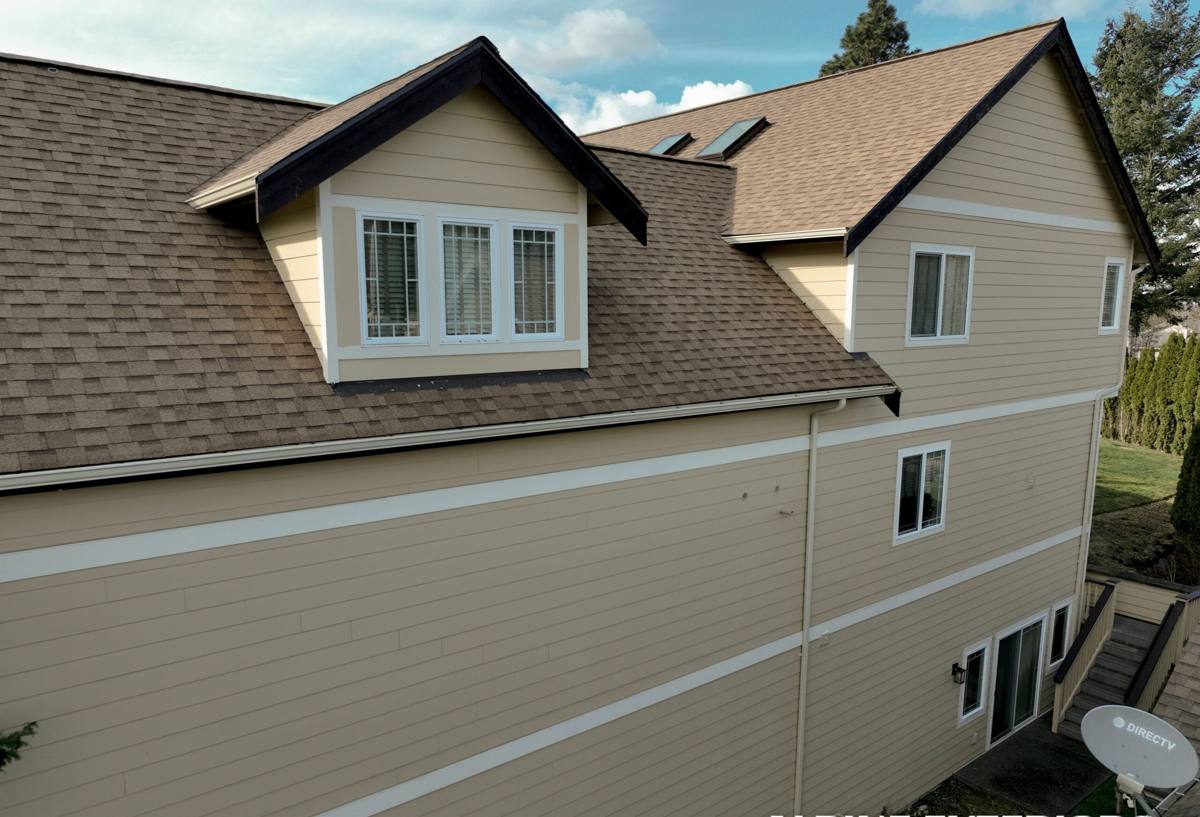
What Columbia's Microclimate Actually Does to Siding
Salt Air and Coastal Moisture
Being close to the water means siding in Columbia takes on airborne salt and higher ambient humidity than homes on the east side of Bellingham. Salt air accelerates corrosion on fasteners and metal trim, and it keeps wood-based products damp longer between rain events. Fiber cement doesn't corrode and doesn't absorb moisture the way wood or wood-composite siding does, which is a big part of why it holds up better this close to the bay.
Driving Rain
Bellingham's rain doesn't always fall straight down — wind off the water regularly pushes it sideways into west- and south-facing walls. That means water gets driven up under laps and into seams that a calmer climate would never test. Siding, flashing, and caulking details all have to account for wind-driven rain, not just vertical rainfall, or you end up with slow leaks that don't show themselves until there's already rot behind the wall.
Moss Season
Shaded lots, tree cover, and near-constant moisture give moss a long runway in Columbia — often eight months or more of active growth conditions. Moss holds water against a surface, and on organic materials like wood or engineered wood siding, that constant dampness is exactly what feeds rot. Fiber cement is inorganic, so while moss can still grow on its surface if conditions are damp and shaded enough, it isn't feeding on the material or breaking it down the way it can with wood-based products.
Why We Only Install James Hardie
We made a decision as a company to install James Hardie fiber cement exclusively — not LP SmartSide, not vinyl, not Cemplank, Allura, or primed spruce and cedar. That's not a marketing position, it's a standard we hold because of what we've seen play out on homes in this climate over time.
- Non-combustible: Fiber cement doesn't feed a fire the way wood-based sidings can, which matters for insurance conversations as much as safety.
- ColorPlus factory finish: A baked-on finish applied and cured in a controlled factory environment holds color and resists fading and chipping far better than field-applied paint, which matters a lot under this much rain and UV cycling.
- Climate-engineered product lines: Hardie builds specific formulations (their HZ5 line, for example) engineered for wetter, colder Pacific Northwest conditions rather than a single generic product for the whole country.
- Warranty structure: Hardie's transferable warranty is backed by a large, established manufacturer with decades of track record — not a smaller player with a thinner installation history in wet coastal climates.
We're upfront that other products have real strengths — LP SmartSide is lighter and easier to install quickly, vinyl is cheap and low-maintenance in dry climates, cedar has a look some homeowners love. But moisture behavior, long-term maintenance burden, and installation sensitivity in a climate like Columbia's are where those products ask more of a homeowner than we're comfortable installing. Fiber cement is what we put on homes here because it's what we trust in this specific set of conditions.
What a Correct Fiber Cement Installation Involves
Fiber cement siding is only as good as the installation behind it. A rushed or generic install in a climate like this will show problems within a few wet seasons — usually at the seams, the flashing, and the fastener pattern, not the panels themselves.
Moisture Management Comes First
Before a single piece of siding goes up, the wall needs a correctly lapped weather-resistive barrier, properly flashed windows and doors, and rainscreen or drainage gap detailing appropriate for a high-rainfall coastal climate. Fiber cement is durable, but it's not a substitute for good water management behind it — the two work together.
Fastening and Clearances
Hardie specifies exact fastener types, spacing, and minimum clearances from grade, roof lines, and other surfaces. Skipping these specs is the single most common cause of early callbacks on fiber cement siding — usually moisture wicking in at a joint that wasn't gapped or caulked to spec.
Trim and Caulking Details
In a wind-driven rain climate, trim details around windows, corners, and butt joints are where water either sheds cleanly or finds a way in. We use materials and sealants rated for the exposure and follow manufacturer-specified gaps rather than caulking everything tight, since caulk is a maintenance item, not a permanent seal.
How Our Process Works
- Walkthrough and assessment: We look at your home's exposure — which walls take the most wind-driven rain, where shade and moss pressure are heaviest, and where the current siding or trim is already showing wear.
- Product and line selection: We recommend the Hardie plank profile, texture, and HZ line suited to Columbia's exposure, plus a ColorPlus finish that fits the home.
- Moisture barrier and flashing prep: Before any siding goes up, we address the weather-resistive barrier, flashing, and drainage detailing — this is the step that determines whether the siding performs for decades or fails early.
- Installation to manufacturer spec: Fastening, clearances, and trim details are installed to Hardie's published specifications, not shortcuts.
- Final walkthrough: We go over the finished work with you, including basic care and what to watch for seasonally.
Comparing Siding Options for a Columbia Home
| Factor | James Hardie Fiber Cement | Wood-Based Siding (cedar/spruce) | Vinyl |
|---|---|---|---|
| Moisture/rot resistance | High — inorganic material | Requires diligent maintenance to avoid rot | High, but can trap moisture behind panels |
| Salt air durability | Strong — doesn't corrode or absorb salt moisture | Prone to accelerated weathering near the bay | Generally stable, but can become brittle over time |
| Fire resistance | Non-combustible | Combustible | Can melt/deform under heat exposure |
| Finish longevity | Factory-baked ColorPlus finish | Field-applied paint/stain needs recoating | Color molded in, but can fade over years |
| Typical lifespan | Decades when installed to spec | Shorter without consistent upkeep | Long, but appearance and rigidity degrade |
Maintenance Realities for This Climate
Even the right product needs some ongoing attention in Columbia's conditions. Fiber cement dramatically reduces the maintenance burden compared to wood, but it isn't zero-maintenance.
- Rinse siding periodically, especially shaded or north-facing walls, to discourage moss and mildew buildup.
- Keep gutters and downspouts clear so water isn't sheeting down walls during heavy rain events.
- Trim back vegetation and tree cover that keeps siding shaded and damp longer than necessary.
- Inspect caulked joints every year or two, since caulk is the one component in the system that does wear out over time.
- Address any impact damage or chipped ColorPlus finish promptly to prevent moisture entry at that point.
Why a Crew That Already Works Columbia Matters
Siding installation isn't just about following a manufacturer's install manual — it's about knowing how a specific neighborhood's exposure, tree cover, and weather patterns actually behave across the seasons. A crew that's worked other homes in and around Columbia already knows which walls tend to take the worst of the wind-driven rain, how aggressive moss growth gets under typical shade conditions here, and where salt air tends to cause the earliest wear on fasteners and trim. That local pattern recognition shows up in small decisions — extra attention at a particular corner, a slightly different flashing detail on a west-facing wall — that a generalist crew unfamiliar with this specific stretch of Whatcom County might not think to make.
Get a Straight Answer for Your Home
Every home in Columbia carries its own mix of sun, shade, wind exposure, and moisture pressure, and that mix should drive the siding decision — not a generic recommendation. If you're weighing a siding replacement or want a second opinion on what your home actually needs, we're happy to walk the property with you and give you a straightforward, no-pressure estimate using the form below.