 Bellingham Roofing
 Why Lynden Homes Need Siding Built for This Climate
Lynden sits inland from Bellingham Bay, but it still lives inside the same wet, marine-influenced weather system that defines Whatcom County. Homes here deal with long stretches of driving rain in the fall and winter, humid air that lingers close to the ground, and short, low-angle winter sun that leaves north- and east-facing walls damp for days at a time. Add in the salt-tinged air that rolls in off the Salish Sea and pushes inland on a west wind, and you have a climate that is genuinely hard on exterior siding — not because any one factor is extreme, but because the combination almost never lets a wall fully dry out.
That matters because most siding failures we see in this county are not dramatic. They are slow: paint that chalks and peels a few years early, seams that swell, trim that softens at the bottom, and a persistent green-black film of moss and algae that keeps a wall wet even between storms. A siding product and installation that were engineered for a dry inland climate will underperform here. What Lynden homes need is a product built for sustained moisture exposure, installed by a crew that treats water management as the actual job, not an afterthought to the cosmetic result.
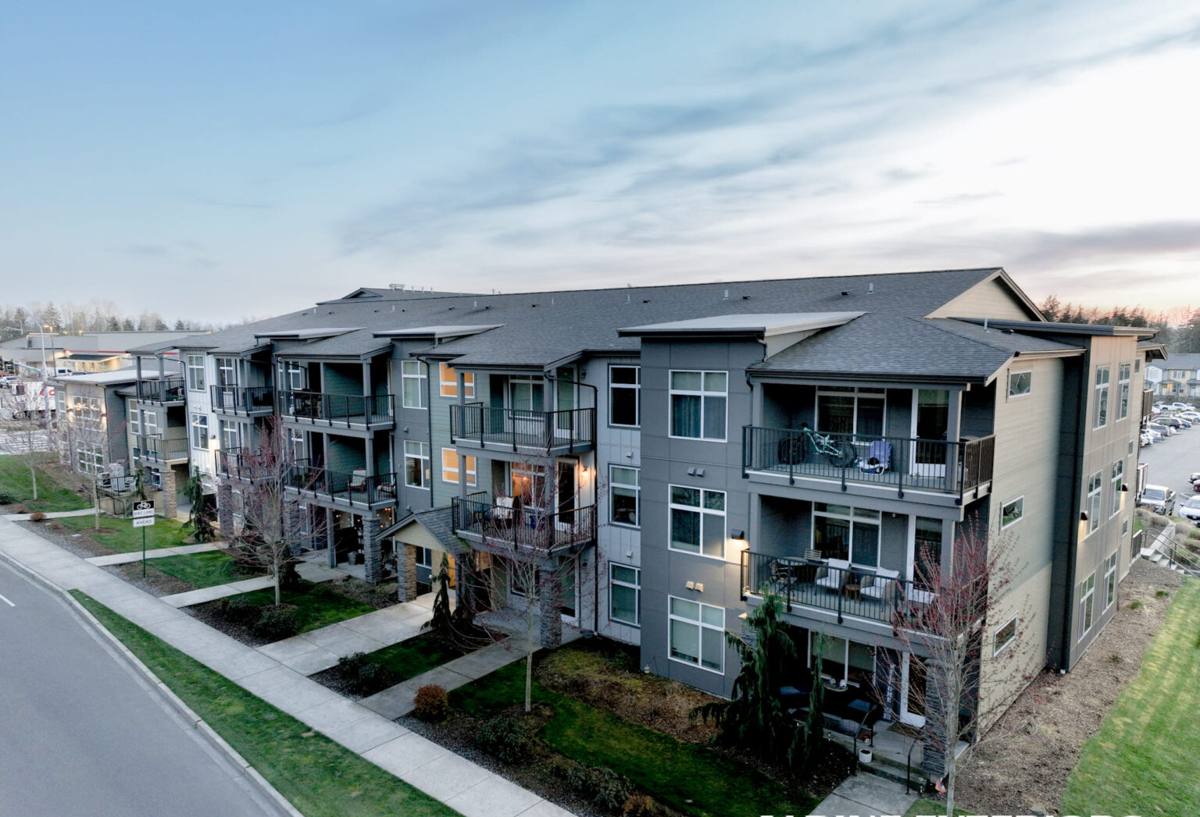
What Correct Fiber Cement Siding Looks Like on a Lynden Home
Fiber cement siding, done right, is not just a material swap from wood or vinyl — it is a system. The board itself is only one part of a correct installation. The rest is the details most homeowners never see once the job is finished but that determine whether the siding still looks good in year fifteen:
- Proper water-resistive barrier and flashing behind every board, window, and door opening, lapped correctly so water sheds down and out, never in
- Rain screen or drainage gap where conditions call for it, so moisture that does get behind the cladding can drain and the wall can breathe
- Correct fastener pattern and spacing per the manufacturer's installation instructions — not "close enough," since fastening errors are the single most common cause of early failure
- Factory-primed or factory-finished cut edges sealed in the field, since an unsealed cut edge is where moisture gets a foothold
- Minimum ground clearance and proper flashing at the bottom course, which matters more in a county where splashback and standing moisture are a daily reality for months at a time
- Caulking and sealant only where the manufacturer specifies it — over-caulking a fiber cement installation traps moisture instead of shedding it
Skip any one of these and the siding may look fine at the walkthrough and still fail early. This is why we treat the installation process, not just the product choice, as the real work of the job.
Why We Install Only James Hardie
We do not install LP SmartSide, vinyl siding, Cemplank, Allura, or primed wood siding. That is a deliberate standard, not a sales preference. Vinyl softens, warps, and fades under UV exposure and never fully seals against wind-driven rain at the seams — a real liability in a county that gets plenty of both. Engineered wood products carry an OSB-based substrate that depends entirely on an intact factory coating to keep water out; once that coating is compromised at a cut edge, a fastener hole, or a scuff, the substrate is vulnerable to the kind of sustained moisture Whatcom County delivers for months at a stretch. Primed cedar and spruce need a homeowner to stay ahead of repainting and caulking on a tight schedule, or moisture finds its way in.
James Hardie fiber cement is cement, sand, and cellulose fiber — it does not rot, it is not a food source for moss and mildew the way wood is, and it holds a factory-baked ColorPlus finish that is engineered to resist fading and chipping far longer than field-applied paint. It is also non-combustible, which matters more each year as wildfire smoke seasons stretch later into the fall across the Pacific Northwest. None of this means other products are without merit — it means that after years of doing this work in wet coastal climates, fiber cement from Hardie is the one product we are willing to stand behind for the long haul.
The HZ5 Line: Engineered for Where You Live
James Hardie manufactures its siding in different formulations tuned to different climate zones across the country. For Whatcom County, the correct specification is the HZ5 product line, engineered for climates with significant moisture exposure and freeze-thaw cycling. It is not the same board used on a house in Arizona or inland Texas — the formulation, and the installation instructions that go with it, are built around exactly the kind of wet weather Lynden sees most of the year. Using the wrong regional formulation, or installing HZ5 to generic instructions instead of the ones written for this climate, is a mistake we do not make.
Color, Texture, and Matching the Look of the Home
James Hardie's ColorPlus finish comes in a range of factory colors baked on under controlled conditions, which means better fade resistance than a job-site paint job and a finish that matches consistently, board to board. Homeowners in Lynden typically choose from lap siding profiles (the classic horizontal board look), vertical panel siding for a more modern or barn-influenced look that fits well with the area's agricultural building character, and shingle-style siding for accent areas like gables. Trim, soffit, and fascia are available in matching Hardie trim boards, so the whole exterior reads as one coordinated system rather than mismatched materials pieced together over time.
Our Installation Process
Every Lynden project runs through the same sequence, because skipping steps is where problems start:
- On-site assessment — we look at existing siding condition, sheathing and framing underneath where accessible, drainage around the foundation, and any trouble spots specific to the home's orientation and exposure
- Tear-off and substrate inspection — old siding comes off and we check the sheathing for hidden rot or moisture damage before anything new goes up; problems found here get addressed, not covered over
- Water-resistive barrier and flashing — installed and lapped correctly at every penetration, window, door, and transition
- Fiber cement installation — HZ5 boards or panels installed to Hardie's Pacific Northwest specifications, correct fastener spacing, correct clearances
- Trim, caulking, and finish details — completed per manufacturer guidance, not general contractor habit
- Final walkthrough — we go over the finished work with the homeowner before calling the job done
We also register the manufacturer warranty on the homeowner's behalf where applicable, since a warranty that never gets registered correctly is a warranty that may not be there when it's needed.
What Drives Cost on a Lynden Siding Project
Every home is different, and we do not quote a job without seeing it, but these are the main factors that move the price up or down on a typical fiber cement re-side in this area:
| Factor | Why It Matters |
|---|---|
| Home size and number of stories | More square footage and higher walls mean more material, more labor, and often more scaffolding or lift access |
| Existing siding removal | Tear-off of old wood, vinyl, or damaged siding adds labor time versus installing over sound sheathing |
| Substrate repair | Rot or moisture damage found during tear-off needs to be fixed before new siding goes on — this is common on older Whatcom County homes |
| Siding profile and trim complexity | Straight lap siding on a simple rectangular home costs less than a mix of panel, shingle accents, and custom trim details |
| Color and finish choice | Factory ColorPlus finishes vary slightly by color and product line |
| Access and site conditions | Tight lots, landscaping, or difficult roof lines can add setup time |
Because these factors vary so much house to house, we would rather walk your property and give you real numbers than post a generic price range that doesn't apply to your home.
Living With Moss Season
Whatcom County's moss season is not a minor annoyance — for a lot of the year, north-facing walls, anything shaded by trees, and areas near ground level stay damp enough to support moss and algae growth if the siding surface allows it. Wood siding and even some engineered products give moss something to hold onto and, eventually, feed on. A properly installed fiber cement wall with a working drainage plane behind it and a smooth ColorPlus finish gives moss far less to grip, and periodic gentle cleaning keeps growth from taking hold in the first place.
A few habits go a long way for any Lynden homeowner, regardless of siding type:
- Keep gutters clear so overflow doesn't run down the wall face
- Trim back vegetation and tree branches that keep siding shaded and damp
- Rinse siding gently once or twice a year, especially on north-facing and shaded walls
- Check caulking annually at trim and penetrations, since even correctly caulked joints should be inspected over time
- Address any soft spots, staining, or bubbling paint early rather than waiting
Why Hiring a Crew That Already Works in This Area Matters
Siding installation instructions are not one-size-fits-all across the country, and neither is the judgment that goes into a good installation. A crew that regularly works in Lynden and across Whatcom County already knows which wall orientations take the worst weather, how much clearance a foundation needs given how wet the ground stays, and where flashing details need extra attention on the specific kinds of homes built in this area. That local pattern recognition is not something you get from a crew flown in from a dry climate or one installing siding as a side offering alongside a dozen other trades.
It also matters for follow-through. A local crew is easy to reach if a question comes up two years after the job, and stands behind the workmanship warranty in a way that is much harder to enforce against a contractor who is gone from the area.
Before You Sign a Siding Contract: A Quick Checklist
- Does the contractor specify James Hardie's HZ5 line, correctly matched to this climate zone?
- Will they inspect and repair sheathing before installing over it, not just cover existing damage?
- Is a proper water-resistive barrier and drainage plane part of the written scope of work?
- Are they licensed and insured to work in Washington State, with proof available on request?
- Does the quote break out material, labor, and any substrate repair separately, so you know what you're paying for?
- Will they register the manufacturer warranty on your behalf?
If a contractor can't answer these clearly, that's worth knowing before any work starts, not after.
If your Lynden home's siding is showing its age, or you're planning ahead before the next wet season sets in, we're happy to walk the property, look at what's actually going on, and give you a straight answer about what it needs. The estimate is free, there's no pressure, and you'll get real numbers for your home — just fill out the form below to get started.