 Bellingham Roofing
 Happy Valley Roofs Work Harder Than People Realize
Happy Valley sits close enough to Bellingham Bay that salt-laden air is a constant, low-grade stress on every exposed roofing material in the neighborhood. Add in Whatcom County's long wet season, where driving rain comes in sideways off the water more often than it falls straight down, and you've got a roof that's dealing with moisture intrusion risks most drier climates never see. Then there's moss — Bellingham's mix of shade, humidity, and mild temperatures gives moss a growing season that runs most of the year, not just a few weeks in spring.
None of this means Happy Valley roofs are doomed to fail early. It means repairs here have to account for conditions that a generic patch job ignores. A roofer who mainly works drier inland areas may not think twice about a small gap in flashing or a few missing granules — but on a roof exposed to constant coastal moisture, those small issues turn into rot, leaks, and interior damage faster than they would elsewhere.
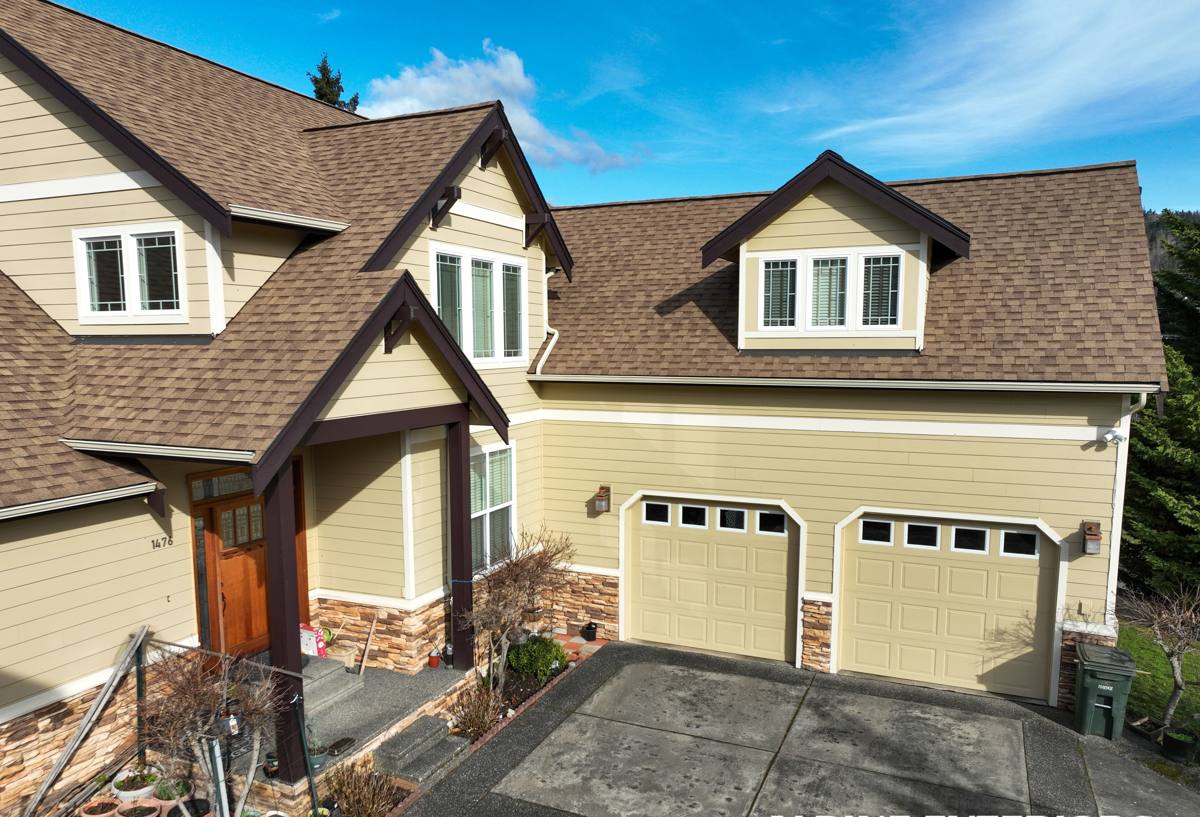
The Repairs We See Most Often in This Neighborhood
Every neighborhood has a pattern to its roofing problems, and Happy Valley's pattern is shaped by tree cover, roof pitch mix, and proximity to the water. The most common calls we get from this part of Bellingham include:
- Moss-related shingle damage — lifted edges, granule loss, and soft spots where moss has held moisture against the roof deck for months
- Flashing failures around chimneys, skylights, and roof-to-wall transitions, where driving rain finds the smallest gap
- Valley leaks, especially on roofs with multiple rooflines feeding into a single channel
- Gutter and downspout backups that push water under the roof edge instead of away from it
- Nail pops and sealant breakdown from repeated wet-dry cycling
- Soft or spongy decking discovered only after a leak has already reached the interior
Some of these are quick fixes. Others are symptoms of a problem that's been developing for a year or more before anyone noticed a stain on the ceiling. Part of doing this job right in Happy Valley is knowing which is which before we start cutting into anything.
Why Moss Is More Than a Cosmetic Issue Here
Moss on a roof isn't just unattractive — it's a moisture trap. As moss colonies spread across shingles, they hold water against the roofing surface long after the rest of the roof has dried out. Over one wet season that's a minor stress. Over several, it degrades shingle mat, breaks down the asphalt seal, and can work moisture down into the decking itself. In a neighborhood with as much tree cover and shade as Happy Valley, moss isn't an occasional problem — it's an ongoing maintenance item, and repair work here almost always includes a conversation about how to slow regrowth, not just remove what's there today.
What a Correct Repair Actually Involves
A roof repair done right isn't just sealing the spot where water is currently getting in. That's a stopgap. A proper repair addresses the full path water traveled to get there, which usually means checking three things: the surface material, the underlayment beneath it, and the decking underneath that. Skipping any one of those steps means the same leak often comes back within a season or two, sometimes in a slightly different spot.
On coastal-influenced roofs like the ones in Happy Valley, we also pay close attention to metal flashing condition. Salt air accelerates corrosion on lower-grade flashing and fasteners faster than most homeowners expect, and a repair that reuses corroded flashing instead of replacing it is a repair that's already on borrowed time.
Matching Materials, Not Just Patching Holes
When we replace shingles or sections of roofing during a repair, matching the existing material matters — both for weathertightness and appearance. Shingle color and profile change slightly between manufacturing runs, and a mismatched patch stands out and can create a slightly uneven seal at the edges. We'll walk you through what's realistic in terms of matching your existing roof, especially if it's more than a few years old and the exact product is no longer in production.
Signs a Happy Valley Homeowner Shouldn't Ignore
Roof damage in this climate rarely announces itself with a dramatic leak on day one. It usually shows up as small, easy-to-dismiss signs first. If you notice any of the following, it's worth having a roofer take a look before the next heavy rain event:
- Dark streaks or thick moss patches on north-facing or shaded roof slopes
- Granules collecting in gutters or at the base of downspouts
- Curling, cupping, or lifted shingle edges
- Daylight visible through the roof deck from inside the attic
- Musty smell or visible moisture staining in the attic, especially near chimneys or vents
- Ceiling stains that appear or worsen only during or after heavy rain
- Sagging sections of roofline, which can indicate decking damage underneath
Any one of these on its own might be minor. Several together usually mean it's time for a real assessment rather than a wait-and-see approach.
Repair or Replace? What Actually Drives That Decision
Not every roof problem in Happy Valley needs a full replacement, and we're not going to tell you it does when a targeted repair will hold up. But there are honest trade-offs to weigh, and they come down to a handful of factors:
| Factor | Favors Repair | Favors Replacement |
|---|---|---|
| Roof age | Under 15 years, damage is localized | Nearing or past manufacturer's expected lifespan |
| Extent of damage | One or two isolated areas | Widespread moss, multiple leak points, or several failing sections |
| Decking condition | Solid, no soft spots found | Rot or soft decking found in more than one area |
| Underlayment condition | Still intact where inspected | Degraded or missing in multiple sections |
| Frequency of past repairs | This is a first or isolated issue | Same areas have needed repeat repairs |
When we're on your roof for a repair estimate, we'll tell you plainly which side of that table your situation falls on — including if the honest answer is that a repair now is the right call, with replacement realistically a few years down the road.
How Our Repair Process Works
- Inspection first. We get on the roof, not just in the attic or on the ground with binoculars. We're checking flashing, valleys, decking firmness, and moss coverage, not just the spot you called about.
- A clear explanation of what we find. Before any work starts, you'll know what's actually wrong, what's causing it, and what the repair will and won't fix.
- The repair itself. Damaged material comes out, decking gets checked and replaced if needed, underlayment and flashing are restored to a weathertight condition, and matching materials go back in.
- Cleanup and a final check. We don't leave debris behind, and we verify the repair holds before we consider the job done.
We don't upsell replacement on a repair call, and we don't quietly do a repair when the honest recommendation is a bigger job. Both approaches erode trust, and in a neighborhood where word travels, that's not how we want to be known.
Ongoing Care for Salt Air and Moss Between Repairs
A single repair extends your roof's life, but in Happy Valley's climate, some ongoing attention keeps small issues from becoming repair calls in the first place. Regular gutter clearing prevents water backup at the roof edge. Periodic moss treatment — done carefully, without damaging shingles — slows regrowth between seasons. And a simple visual check after major storms, looking for lifted shingles or debris buildup in valleys, catches problems while they're still cheap to fix. We're happy to point out what to watch for on your specific roof, whether or not you're having work done that day.
Why Local Experience in This Neighborhood Matters
A roofer who works across Whatcom County regularly, and specifically in neighborhoods like Happy Valley, has already seen how this area's tree cover, roof orientations, and coastal exposure play out over years of repairs — not just in a single inspection. That experience shows up in small decisions: knowing which flashing details tend to fail first on shaded slopes, understanding how a particular roof pitch handles Bellingham's rain patterns, and recognizing moss damage before it's advanced enough to show up as an interior leak. It's the difference between a repair that addresses today's symptom and one that accounts for what this specific climate will keep doing to your roof.
If you're noticing moss buildup, a slow leak, or damaged shingles on your Happy Valley home, we're glad to take a look and give you a straightforward assessment — no pressure, no upsell, just an honest read on what your roof needs. Use the form below to request a free estimate.