 Bellingham Roofing
 Why Siding Takes More Punishment in Happy Valley
Happy Valley sits close enough to Bellingham Bay that salt-laden air is a constant, low-grade factor in how exterior materials age here — it accelerates corrosion on fasteners, trim, and any metal flashing that isn't properly protected. Combine that with the driving, wind-pushed rain that comes through Whatcom County during fall and winter storms, and you get moisture pressure on wall assemblies that a lot of siding products simply weren't built to handle for decades on end. Add the long moss and algae season that comes with our mild, wet Pacific Northwest climate, and siding here does triple duty: it has to shed water, resist salt corrosion, and stay clean enough that moisture-loving growth doesn't get a foothold in seams and laps.
None of that is unique to Happy Valley alone, but the combination of near-water exposure and mature tree cover on many lots does make this neighborhood a bit tougher on siding than some of the drier, more open parts of Bellingham. That's worth knowing before you decide whether a section of siding needs a repair, a larger patch, or a full replacement.
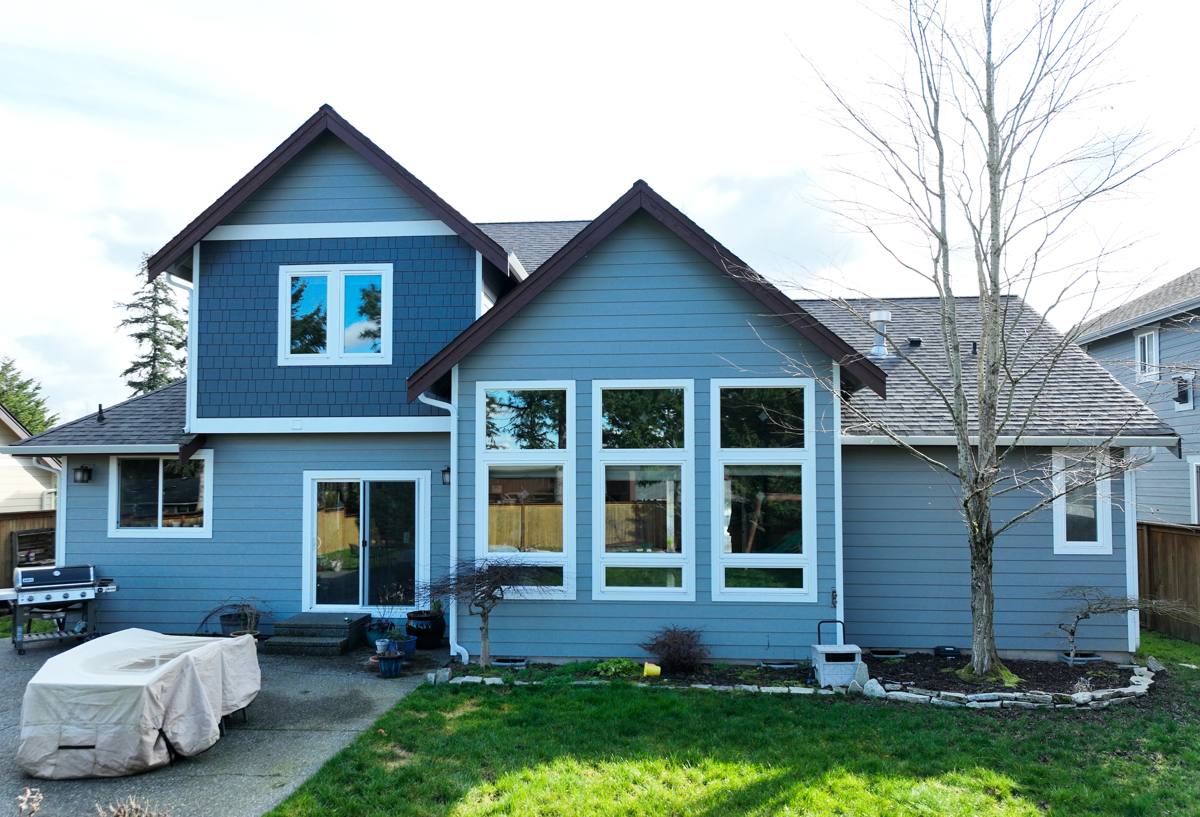
Signs Your Siding Needs Repair, Not Just a Repaint
A fresh coat of paint can hide a lot of problems for a season or two, but it doesn't fix them. Before booking any exterior work, walk your home's perimeter and look for these signs:
- Soft, spongy, or bubbling spots when you press on the siding, especially near the bottom courses
- Visible buckling, warping, or boards that no longer sit flat against the wall
- Persistent moss, algae, or dark streaking that comes back within weeks of cleaning
- Cracked, shrunken, or missing caulking at butt joints, corners, and trim
- Peeling or bubbling paint concentrated in one area rather than spread evenly
- Gaps opening up around window and door trim
- Rust streaks below nail heads or fasteners
- Visible daylight or drafts through the wall from inside an attached garage or crawlspace
Any one of these on its own might be minor. Several together, especially clustered in one section of wall, usually points to a moisture problem that's been developing for a while.
What's Usually Underneath: Moisture, Not Just Age
Flashing and Trim Failures
Most siding problems we find don't start with the siding itself — they start with flashing. A gap where trim meets siding, a missing kick-out flashing at a roof-to-wall intersection, or caulking that's shrunk and cracked all give water a path behind the surface. Once water gets behind siding, it doesn't dry out quickly in our climate, and that's when you start seeing soft sheathing, stained wall cavities, or siding that's failing from the back side while still looking okay from the street.
Fastener and Nail Corrosion
Salt air speeds up corrosion on fasteners that aren't rated for coastal exposure. When nails or screws corrode, they lose their grip, siding starts to work loose, and the small gaps that open up become new entry points for water. This is a slower, quieter failure mode than storm damage, but it's common in neighborhoods like Happy Valley that sit within reach of salt air off the bay.
Repair vs. Replace: How We Actually Decide
Not every damaged section needs to come off the whole wall. But patching the wrong problem just delays the real fix. Here's how the decision typically breaks down:
| Situation | Usual Approach | Why |
|---|---|---|
| Isolated impact damage, sound material elsewhere | Localized repair | Underlying moisture barrier and framing are intact; only the visible course needs replacing |
| Failed caulking or flashing with early soft spots | Repair plus flashing correction | Fixing the water path stops the problem from spreading |
| Widespread soft or delaminating boards across a wall | Section or full replacement | Repeated moisture intrusion usually means the sheathing and house wrap need attention too |
| Old material with multiple known problem areas | Full replacement | Patching aging material rarely matches color or performance, and it doesn't address why it's failing |
We'll always tell you honestly which category your home falls into rather than defaulting to the bigger job. A lot of Happy Valley homes only need targeted repair work if it's caught early.
Why We Repair and Replace With James Hardie Fiber Cement
We install James Hardie fiber cement siding exclusively, and that carries into how we handle repairs too. When a section of existing wood, vinyl, or engineered wood siding needs replacing, we won't patch it with a different-generation product that ages, fades, or absorbs moisture differently than what's already on the wall — that kind of mismatch tends to show up fast as a visible seam of a slightly different color or texture, and it doesn't solve the underlying moisture issue.
Cedar and other wood sidings can look great, but in a climate with this much sustained moisture and moss pressure, they need consistent upkeep — recoating, caulking, and moisture monitoring — to hold up. Vinyl sheds water reasonably well but can warp under heat, crack in cold snaps, and gives you limited options if a section fails and the original color has faded elsewhere on the house. Engineered wood products vary a lot by manufacturer and installation quality, and their long-term moisture performance depends heavily on getting every seam and cut edge sealed correctly, which isn't always how they were installed originally.
James Hardie's fiber cement doesn't rot, doesn't feed moss and algae growth in the material itself the way wood fiber can, and its ColorPlus factory finish is baked on rather than field-applied, so repaired or replaced sections hold color consistency far longer than a site-painted patch would. It's also non-combustible, which matters to a lot of homeowners regardless of climate. That's why, when a repair calls for new material rather than just resealing or refastening what's there, Hardie is what we use.
Our Siding Repair Process
- Inspection: We check the damaged area and the surrounding wall, looking for the moisture source, not just the visible symptom
- Diagnosis: We identify whether the problem is isolated (flashing, caulking, a single damaged board) or has spread into the sheathing or house wrap
- Scope decision: We tell you plainly whether this is a repair, a section replacement, or something bigger, and why
- Correct the water path: Flashing, kick-outs, and trim details get fixed as part of the repair, not left for later
- Match or replace material: Where new siding is needed, we use James Hardie product matched to your home's existing profile and color where possible
- Seal and finish: Proper caulking, fastening to manufacturer spec, and a clean finish so the repair blends in rather than standing out
- Walkthrough: We show you what we found and what we did before we call the job done
Why a Crew That Already Works Happy Valley Matters
Siding repair isn't one-size-fits-all, and a crew that's already familiar with this part of Bellingham has an advantage that's hard to replicate from a cold start. We know how salt exposure off the bay tends to concentrate corrosion on certain sides of a house, how the tree cover common in older Happy Valley lots keeps some walls damp and shaded longer than others, and how the mix of home ages and construction styles in this neighborhood affects what's usually hiding behind a failing section of siding. That local pattern recognition helps us diagnose faster and avoid repairs that look fine for a season but fail again the next wet winter.
Working within Whatcom County and the City of Bellingham also means we're familiar with local permitting expectations for exterior work, so a repair that grows in scope doesn't stall out waiting on paperwork we haven't dealt with before.
What Affects the Cost of a Siding Repair
Every repair is different, but the main cost drivers are consistent. We'll always give you a specific number after inspection — broad ranges without seeing the damage aren't useful to you.
| Factor | Impact on Cost |
|---|---|
| Size of the affected area | Larger sections cost more but often have lower cost-per-square-foot than very small patch jobs |
| Whether sheathing or house wrap needs repair | Significant increase — this is the difference between a surface repair and reconstructive work |
| Matching existing siding profile and color | Minor to moderate increase depending on availability of matching Hardie product |
| Accessibility (height, roof lines, tight setbacks) | Moderate increase for equipment and labor time |
| Flashing and trim correction needed | Modest increase, but skipping this step just invites the same failure again |
As a general guide, small isolated repairs are a modest expense, while anything involving sheathing replacement or a full wall section starts to approach partial re-siding costs. We'll walk you through exactly what your situation calls for before any work starts.
Ready for a Straight Answer on Your Siding
If you're seeing soft spots, moss that won't stay gone, or caulking that's cracked and pulling away, it's worth getting a look before another wet season sets in. We'll give you a clear, honest assessment of what's actually going on and what it will take to fix it right — no pressure, no upsell. Reach out for a free estimate and we'll take it from there.