 Bellingham Roofing
 Windows in Happy Valley Face a Specific Kind of Weather
Happy Valley sits close enough to Bellingham Bay and the surrounding wooded slopes that its homes take a steady beating from three things at once: salt-tinged air drifting up from the water, driving rain that comes in sideways during winter storms, and a moss season that stretches for much of the year thanks to the shade and moisture this part of Whatcom County holds onto. None of that is dramatic on its own, but stacked together over years, it's exactly the combination that finds every weak point in a window installation — and exploits it slowly, so you don't notice until there's rot in the framing or a draft you can't explain.
Window replacement here isn't just a cosmetic upgrade. It's a chance to correct how a window meets the wall, how water is directed away from the opening, and how well the unit itself resists the kind of moisture cycling that Bellingham weather puts it through every single week of the year.
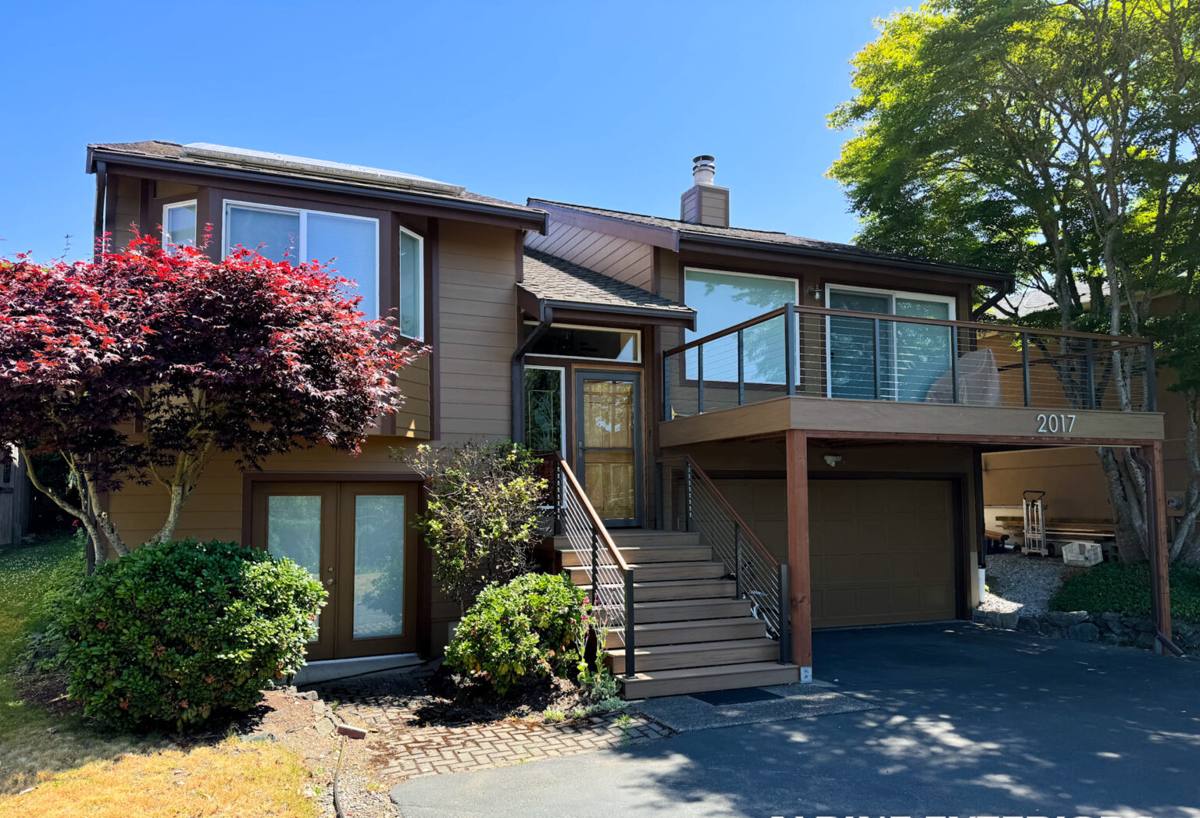
What the Local Climate Actually Does to a Window Installation
Salt Air and Metal Fatigue
Homes closer to the bay pick up airborne salt that settles on window hardware, screen frames, and any exposed fasteners. Over time this accelerates corrosion on lower-quality hinges, cranks, and locks, and it can degrade certain finishes faster than a manufacturer's warranty language ever accounts for. It's a slow process, but it's real, and it's part of why we pay attention to hardware quality and finish specs on every install in this area, not just the glass and frame.
Driving Rain and Wind-Driven Water
A lot of window failures in Bellingham aren't glass failures at all — they're water intrusion failures. When rain comes in at an angle during a winter system, it tests the flashing and sealant details around a window far more than a light vertical rain ever would. If the flashing isn't lapped correctly, or the sill pan is missing or installed wrong, wind-driven rain will find that gap eventually. This is the single most common root cause we see behind rot, staining, and interior moisture complaints on window jobs in this part of Whatcom County.
Moss, Shade, and Prolonged Moisture
Happy Valley's tree cover keeps a lot of homes shaded, which is pleasant in July and a moisture trap the rest of the year. Moss and algae growth on nearby siding, trim, and roofing keeps surfaces damp longer after a storm, and that dampness sits right up against window trim and casing. Wood trim and sills that aren't properly primed, sealed, and back-caulked will hold that moisture and start to soften years before a homeowner expects trim work to be needed.
Signs a Happy Valley Home Needs New Windows
- Visible condensation between panes on double or triple-glazed units — this means the seal has failed and the insulating gas has escaped.
- Soft or spongy trim or sill wood when pressed, especially on the bottom rail or exterior casing.
- Persistent drafts you can feel with a hand near the frame on a windy day, even with the window latched.
- Difficulty opening, closing, or locking — often a sign the frame has shifted or hardware has corroded.
- Visible daylight or gaps around the frame from outside.
- Paint or finish that's peeling specifically around the window opening, which usually points to moisture getting behind the trim.
- Moss or dark streaking building up on the sill or immediately below the window — a sign water is running down the face of the wall instead of being shed properly.
What a Correct Window Installation Actually Involves
Replacing a window is not just pulling out an old unit and screwing in a new one. In a climate like Bellingham's, the details around the window matter as much as the window itself. A proper install includes:
- Full inspection of the opening once the old window is out — checking the framing, sheathing, and any existing flashing for hidden rot or moisture damage before anything new goes in.
- Sill pan flashing that creates a sloped, sealed pan at the bottom of the opening, so any water that does get past the window has somewhere to go besides your wall cavity.
- Proper flashing sequence — house wrap and flashing tape lapped in the correct shingle-style order so water is always directed outward and downward, never trapped behind a layer.
- Correct shimming and leveling so the sash operates smoothly and the unit isn't under stress that will accelerate seal failure.
- Low-expansion foam or backer rod and sealant around the perimeter, sized and applied so it insulates without bowing the frame.
- Exterior trim and caulking finished with attention to the top and side joints, since a poorly caulked top joint is one of the most common points where wind-driven rain gets in.
- Interior finish work so the casing, stool, and apron look right and there's no gap left for drafts or pests.
Skip or rush any one of these steps and the window itself barely matters — the failure will show up in the wall around it, usually two or three years later when it's already done damage.
Our Process for a Happy Valley Window Job
We keep this straightforward because homeowners deserve to know what's actually happening at each stage:
- On-site assessment — we look at existing windows, framing condition, and any moss or moisture patterns on the exterior that tell us something about how water moves around your home.
- Honest scope and estimate — we tell you what's cosmetic, what's structural, and what can wait, so you're not paying to fix something that isn't actually broken.
- Material and product selection — matched to your home's exposure (bay-facing walls, shaded sides, etc.), not a one-size-fits-all recommendation.
- Removal and inspection — old units come out carefully so we can actually see the condition of the opening before we commit to a repair plan.
- Installation to the sequence above — flashing, sill pans, sealing, and trim done in the right order, not shortcuts to save an afternoon.
- Final walkthrough — we operate every window with you present, check the seals, and make sure the finish work is clean before we call the job done.
Frame Materials: What Holds Up in This Climate
| Frame Material | Moisture Resistance | Maintenance | Notes for Bellingham Homes |
|---|---|---|---|
| Vinyl | Good — won't rot, minimal upkeep | Low | Solid all-around choice for salt air and rain exposure; quality varies by manufacturer |
| Fiberglass | Very good — dimensionally stable in temperature swings | Low | Handles the freeze-thaw and damp cycling here well; typically a higher upfront cost |
| Wood (unclad) | Requires diligent upkeep to avoid moisture damage | High | We recommend this only where the homeowner is committed to regular repainting and sealing, given our shade and rain patterns |
| Wood-clad (vinyl or aluminum exterior) | Good — exterior shell protects the wood core | Moderate | A common middle ground; clad seams still need to be checked periodically for sealant failure |
| Aluminum | Fair — can conduct cold and show condensation without thermal breaks | Low | Fine for certain architectural styles but not our first recommendation for wet, cooler exposures without a good thermal break |
We don't push wood windows without cladding in this area unless a homeowner specifically wants that look and understands the upkeep involved. It's not that the material is bad — it's that Bellingham's rain and shade patterns punish any maintenance gap faster than they would in a drier climate, and we'd rather set that expectation upfront than have it become a problem you discover later.
What Drives Cost on a Window Project
| Factor | Why It Matters |
|---|---|
| Number and size of openings | More straightforward — more windows and larger units mean more material and labor |
| Condition of existing framing | Hidden rot or moisture damage found during removal adds repair work before the new window can go in |
| Frame material chosen | Vinyl, fiberglass, and clad-wood price differently and hold up differently over time |
| Glass package | Double vs. triple pane, and coatings for sun or noise, affect both price and performance |
| Access and height | Upper-floor or hard-to-reach windows take more time and equipment |
| Trim and finish complexity | Custom or historic trim profiles take longer to match and finish properly |
We'd rather walk your home and give you real numbers than throw out a broad range that doesn't mean much. What we can say honestly: the biggest cost swings usually come from hidden framing damage, not the window unit itself — which is exactly why a careful removal and inspection process matters.
Why a Crew That Already Works Happy Valley Matters
A window installer who hasn't worked this specific pocket of Bellingham doesn't necessarily know how your street's exposure to the bay, or the tree cover on your lot, changes what your home actually needs. We've seen how salt air affects hardware on bay-facing homes, how shaded lots hold moisture longer after a storm, and how driving rain off Bellingham Bay tests flashing details that a dry-climate install crew might not think twice about. That's not a sales pitch — it's the difference between a window that's sealed correctly for this weather and one that's sealed correctly for weather somewhere else.
Local also means accountability. If something needs a look after a big storm, we're not driving in from out of the area — we're already working in Whatcom County, and we stand behind the work we do here.
Questions Worth Asking Any Contractor Before You Hire
- Will you inspect the framing before installing, and what happens if you find rot or damage?
- Does your installation include a sill pan and full flashing sequence, or just sealant around the frame?
- What's your warranty on labor, separate from the manufacturer's warranty on the window itself?
- Can you walk me through why you're recommending this specific frame material for my home's exposure?
- Are you licensed and insured to work in Washington, and can you provide that documentation?
If a contractor can't answer these clearly, that's worth noticing before you sign anything.
If your windows are showing any of the signs above, or you just want an honest read on what shape they're in, we're glad to come take a look. The estimate is free, there's no pressure, and you'll get straight answers about what your home actually needs — just fill out the form below to get started.