 Bellingham Roofing
 Siding in Blaine Has to Work Harder Than It Does Inland
Blaine sits right up against the water, close enough to the Strait of Georgia and the Salish Sea that salt-laden air is just part of daily life. Combine that with Whatcom County's long wet season, near-constant driving rain off the water, and the moss and algae growth that thrives in the shade of mature evergreens, and you have a set of conditions that will find every weakness in a siding system. Paint that's too thin, seams that weren't sealed correctly, or a product that wasn't engineered for this kind of exposure will show it within a few years, not a few decades.
We install James Hardie fiber cement siding exclusively. Not because it's the only option on the market, but because after years of servicing homes in this corner of Washington, it's the only product we're willing to put our name behind for this climate. This page is about what that looks like specifically for a home in Blaine.
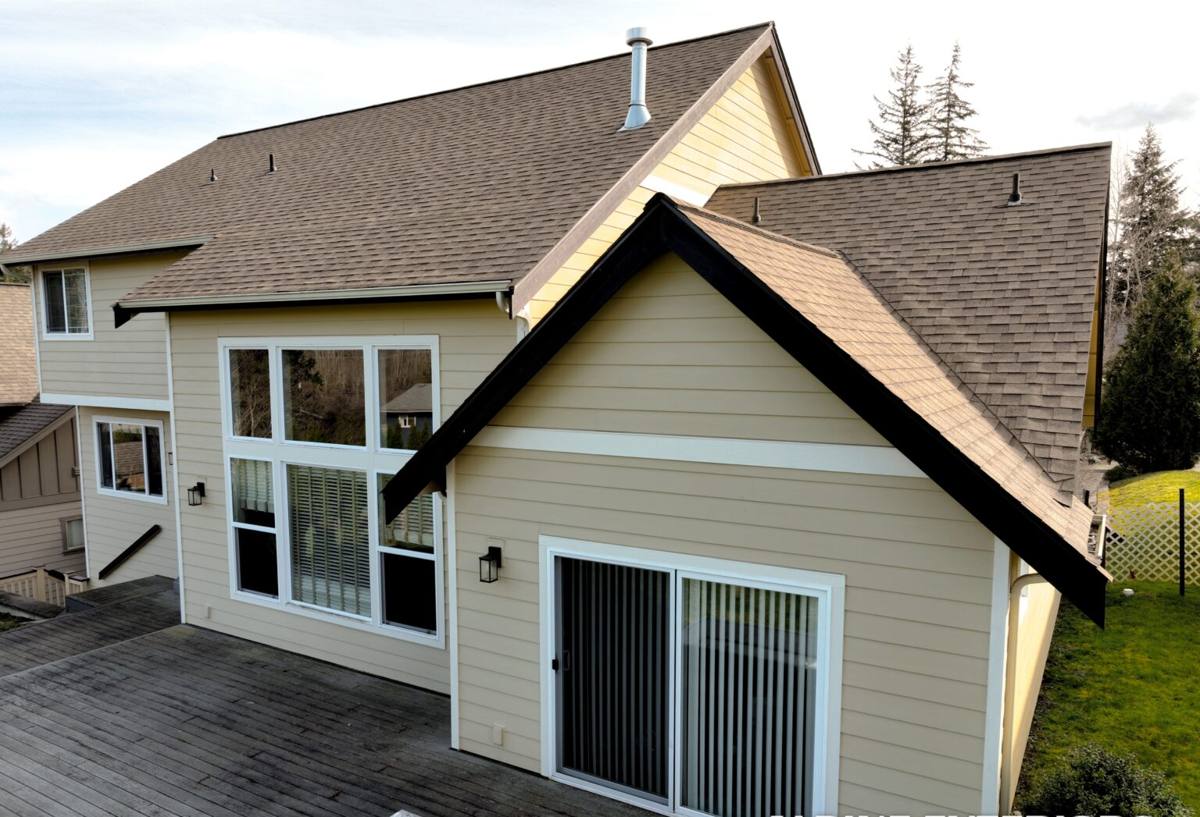
What Blaine's Climate Actually Does to a House
Salt Air and Coastal Moisture
Homes closer to the water take on airborne salt that settles on exterior surfaces and accelerates the breakdown of lower-grade paints and finishes. It doesn't just fade color — it can degrade the surface film that's supposed to keep moisture out in the first place. Fasteners, trim, and any exposed wood are especially vulnerable.
Driving Rain
Storms off the water don't just fall straight down here — wind-driven rain hits siding at an angle, working its way behind laps, around trim, and into any gap that wasn't flashed or caulked correctly. A siding system that depends on a perfect, unbroken paint film to stay dry will eventually fail in this kind of weather. The material and the installation both need to assume water will find a way in and be built to shed it anyway.
Moss, Algae, and Shade
Whatcom County's tree cover and long overcast stretches mean a lot of home exteriors stay damp and shaded for extended periods, which is exactly what moss and algae need to take hold. On the wrong material, that growth holds moisture against the surface and can trap it against seams and fasteners. Siding for this area needs a finish that resists that growth and a design that doesn't give moss anywhere convenient to grip.
Freeze-Thaw Cycling
Blaine doesn't get the deep freezes of the mountain passes, but it does see repeated cycles of cold snaps followed by wet, milder stretches. Any siding material that absorbs water and then contracts and expands with temperature swings will eventually crack, cup, or delaminate. Over enough winters, that cycle is what separates a siding job that lasts twenty-five years from one that needs attention in eight.
Why We Don't Offer Alternatives to James Hardie
We get asked from time to time about vinyl, engineered wood products like LP SmartSide, fiber cement alternatives like Cemplank or Allura, or traditional cedar and primed spruce. All of them have a place in the industry, and none of them are bad products in the abstract. But for a coastal Whatcom County home, each comes with a trade-off we're not comfortable asking a homeowner to accept:
- Vinyl expands and contracts significantly with temperature and can warp or crack in wind-driven rain and cold snaps; it also can't be painted a darker color without risking heat warping.
- Engineered wood siding relies on a resin-treated wood core, which means any breach in the surface coating — a nail pop, a scratch, a poorly sealed cut end — gives moisture a path into a material that isn't fully inert to water the way cement is.
- Cedar and primed spruce require an ongoing maintenance commitment (recoating, caulking, moss treatment) that most owners don't want to sign up for indefinitely, especially in a climate this wet.
- Other fiber cement brands may perform reasonably well, but we've standardized on one product line so our crews install it the same correct way every time, and every warranty claim goes through one manufacturer we know well.
James Hardie is non-combustible, doesn't rot, and its ColorPlus factory finish is baked on and warrantied against fading — not brushed on at a job site. For a home exposed to salt air and constant moisture, that combination is worth the fact that it's a heavier, more labor-intensive product to install correctly.
The Right Hardie Product for This Area
James Hardie makes climate-specific formulations under its HZ5 engineering, designed for regions with significant moisture and freeze-thaw exposure — which describes Blaine and the rest of Whatcom County well. For most homes here, that means:
- HardiePlank lap siding — the standard horizontal siding look, available in a range of textures and ColorPlus finishes, for the bulk of the home's exterior.
- HardiePanel vertical siding — often used for gables, accent walls, or a more modern look, and a good fit where a home wants visual contrast between stories or sections.
- HardieTrim — matched trim boards that hold paint and resist moisture the same way the field siding does, so you're not left with a mismatched failure point at every corner and window.
Color selection matters here too. Darker ColorPlus finishes hold up fine on fiber cement (unlike vinyl, which can warp under dark colors in direct sun), but we'll talk through how much direct exposure versus shade a given elevation gets, since that affects both moss risk and how a color reads over time.
What a Correct Installation Actually Involves
The material is only half the equation. Most siding failures we're called out to inspect in this region trace back to installation shortcuts, not the product itself. A correct James Hardie install includes:
Moisture Management Behind the Siding
Proper water-resistive barrier, correctly lapped and taped, with flashing at every window, door, and horizontal transition. In a wind-driven rain climate, this layer is what actually keeps a house dry — the siding itself is the second line of defense, not the first.
Fastening and Gaps
Hardie siding has specific nailing patterns and clearance requirements — gaps at trim, garage doors, and roof lines that allow the material to handle moisture and slight movement without buckling. Skipping these gaps is one of the most common corner-cutting mistakes we see from crews that don't specialize in this product.
Cut Ends and Caulking
Every field cut needs to be sealed before installation, not after. An unsealed cut edge on fiber cement is a direct path for water into the core of the board, and it's invisible from the ground once the piece is hung.
Comparing the Materials
| Material | Behavior in Salt Air & Driving Rain | Moss/Algae Resistance | Ongoing Maintenance |
|---|---|---|---|
| James Hardie fiber cement | Non-combustible, dimensionally stable, factory finish resists coastal moisture | Finish resists growth; smooth profiles shed moisture well | Periodic wash; no recoating on ColorPlus finish for the warranty period |
| Vinyl | Can warp or crack under wind-driven rain impact and temperature swings | Moderate; seams can trap grime | Low, but limited color/repair options once faded |
| Cedar / primed spruce | Absorbs moisture; prone to swelling and rot without upkeep | Low without regular treatment | Recurring recoating, caulking, and moss treatment |
| Engineered wood (e.g. LP-style) | Vulnerable at breaches in surface coating; core is wood-based | Moderate, dependent on coating integrity | Inspect coating regularly; repair breaches promptly |
Our Process for Blaine-Area Homes
We walk the exterior first and look at exposure by elevation — which walls take the worst of the weather off the water, where moss is already established, where old caulking or trim has failed. From there we scope the tear-off, confirm what condition the sheathing is in underneath (a wet climate means we sometimes find water damage that wasn't visible from outside), and build a plan around correct flashing and moisture barrier work before a single piece of Hardie goes up. We give a clear, honest estimate before any work starts, and we don't add scope once a job is underway without talking it through first.
Longevity and Upkeep After Installation
Once it's installed correctly, James Hardie siding in this climate needs very little from a homeowner: an occasional rinse to keep salt residue and organic buildup from accumulating, and an eye kept on caulking at trim joints over the years the way you would with any exterior material. It won't need repainting on the schedule that cedar or spruce does, and it won't develop the brittleness that vinyl can after enough freeze-thaw cycles near the water.
What to Check Before You Hire Anyone for This Job
- Ask whether the crew is a factory-certified James Hardie installer, not just a general contractor who occasionally hangs fiber cement.
- Confirm they're pulling permits and inspections where required, not skipping them to save time.
- Ask specifically how they handle moisture barrier and flashing at windows and doors — this is where most failures start.
- Get the manufacturer warranty terms in writing, not just a verbal assurance.
- Ask how they handle cut-end sealing and gap clearances during installation.
- Check that they're familiar with siding homes specifically in Whatcom County's coastal conditions, not just general regional experience.
If you're planning a siding project on a home in or near Blaine, we're happy to walk the exterior with you, point out what your specific exposure is dealing with, and put together a straightforward, no-pressure estimate. There's a form below to get that started.