 Bellingham Roofing
 Why Cordata's Climate Is Hard on Ordinary Siding
Cordata sits far enough inland from the water to feel less "coastal" than some Bellingham neighborhoods, but it still gets the full package of Whatcom County weather: salt-tinged air moving in off Bellingham Bay, long stretches of driving rain in the fall and winter, and a moss season that can run half the year on shaded, north-facing walls. That combination is rough on siding that isn't built for it. Moisture gets driven sideways into seams and laps by wind-blown rain, then sits there because the sun and drying wind never fully reach some elevations, especially where mature landscaping or neighboring homes create shade pockets.
Over years, that cycle of wetting and slow drying is what breaks down siding materials that depend on paint film or factory primer to keep water out. Wood-based products swell and split. Paint chalks and peels sooner than the label promises. Moss and algae take hold on the north and west sides and hold moisture against the surface even longer. None of this is a Cordata-specific defect — it's just what Pacific Northwest marine climate does to a home's exterior, year after year, and it's the reason the siding choice matters more here than it does in drier parts of the country.
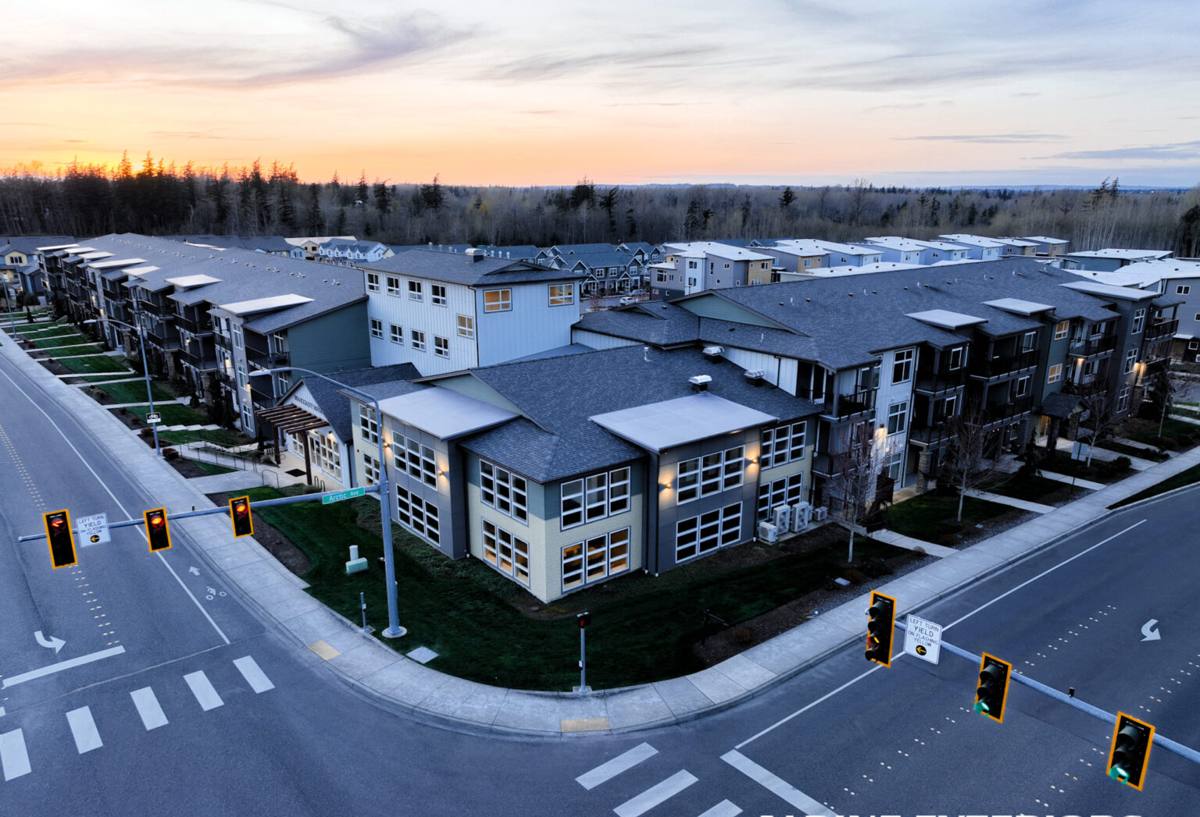
What James Hardie Fiber Cement Actually Solves
James Hardie siding is fiber cement — a mix of cement, sand, and cellulose fibers engineered specifically to handle moisture, freeze-thaw cycling, and UV exposure without relying on a coating to do all the work. It doesn't swell, rot, or delaminate the way wood-based sidings can, and it's non-combustible, which matters as wildfire smoke seasons have become a more regular part of summers in this part of the state. For a Cordata home dealing with salt-laden air and long wet winters, that durability isn't a marketing point — it's the actual reason the product holds up where others start showing problems within a decade.
The factory-applied ColorPlus finish is a big part of that. Instead of a job-site painter applying primer and topcoat in whatever weather shows up that week, the color is baked on at the factory under controlled conditions, with a finish designed to resist fading and hold up against moisture intrusion at the surface. That matters in a market like Bellingham where a field-painted finish often has to cure or get touched up during a rainy stretch, which is exactly when it's most likely to fail early.
Where This Matters Most on a Cordata House
- North and east-facing walls that stay shaded and damp longest after a storm
- Lower wall sections and areas near grade where splash-back and moisture sit longest
- Any wall facing prevailing weather that takes direct, wind-driven rain
- Trim, fascia, and other high-exposure details where water tends to find gaps first
Picking the Right Hardie Product Line
James Hardie makes climate-specific product lines, and choosing the right one for a Cordata home isn't just about looks. Their HZ5 formulation is engineered for wetter, harsher climates like the Pacific Northwest, with a moisture and freeze-thaw profile suited to exactly the conditions this neighborhood sees most winters. That's the starting point for any recommendation we make here — not a marine-climate-agnostic product pulled off a shelf.
| Product Line | Best Use on a Cordata Home | Why It Fits This Climate |
|---|---|---|
| HardiePlank Lap Siding | Primary wall cladding, most common choice | Engineered moisture and impact resistance for marine climates; wide color and texture range |
| HardiePanel Vertical Siding | Accent walls, gables, modern facade sections | Clean lines that hold up well under sustained rain exposure with correct joint detailing |
| HardieTrim | Fascia, corner boards, window and door trim | Resists the moisture intrusion at trim joints that causes rot in wood trim first |
| HardieSoffit | Eaves and overhangs | Vented and non-vented options that manage moisture in a home's most shaded, damp areas |
What a Correct Installation Actually Involves
Fiber cement siding only performs the way it's designed to if it's installed to Hardie's published specifications — and this is where a lot of the real-world problems with any siding product actually start. It's rarely the material; it's the installation. In a climate like Bellingham's, a few details matter more than they would somewhere drier:
The Details That Actually Matter Here
- Weather-resistive barrier and flashing sequencing — water management behind the siding, not just on its face, is what keeps wind-driven rain from reaching the sheathing.
- Proper clearance at grade and hardscape — Hardie specifies minimum clearances above ground, roof lines, and decks so splash-back and standing moisture don't sit against the bottom course.
- Correct fastening pattern — under-fastened or over-driven nails create movement or crushed material that becomes a water entry point over time.
- Caulking only where Hardie specifies it — over-caulking joints that are designed to manage moisture, rather than seal it completely, can trap water instead of shedding it.
- Butt joint and seam treatment — in a high-rainfall area, how seams are flashed and shimmed affects how long they stay watertight.
None of this is exotic — it's published in Hardie's installation manual — but it takes a crew that installs the product regularly to execute consistently, especially around windows, roof intersections, and the ground-level details that take the brunt of Cordata's wet season.
How We Approach a Cordata Project
Every job starts with a walk of the exterior looking at the specific exposure of each elevation — which walls take direct weather, which stay shaded and slow to dry, and where the existing siding or sheathing shows signs of past moisture problems. That assessment drives the product line selection, the flashing plan, and where extra attention is warranted before a single board goes up.
From there, tear-off exposes the sheathing so we can address any hidden moisture damage before it gets covered up again — closing over a problem is how small issues turn into expensive ones. Weather-resistive barrier and flashing get installed to current standards, siding goes up to Hardie's specification for this climate zone, and trim and soffit details get finished to match. We walk the finished job with the homeowner before calling it done.
Color and Finish Considerations for This Neighborhood
ColorPlus finishes come in a range of tones that hold up to UV and moisture without the fade and chalk you get from field-applied paint over time. For a neighborhood like Cordata, with a mix of home styles and a fair amount of tree cover, homeowners generally do well choosing finishes that read clearly against greenery and shade rather than colors that wash out under overcast Pacific Northwest light — but this comes down to individual preference and the home's trim and roofline. We can walk through physical samples on-site rather than relying on a screen, since color finishes read differently under actual Bellingham daylight than they do indoors.
Cost Factors Worth Understanding
Every home is different, but the same handful of factors drive most of the cost variation we see on Cordata projects:
| Factor | Why It Affects Cost |
|---|---|
| Tear-off and sheathing condition | Hidden moisture damage found during tear-off may need repair before new siding goes on |
| Home size and wall complexity | More corners, gables, and dormers mean more cutting, flashing, and labor time |
| Product line mix | Combining lap siding with panel accents or extensive trim work adds material and labor |
| Access and site conditions | Slopes, landscaping, and tight setbacks common in established neighborhoods can add setup time |
| Existing trim and soffit scope | Replacing trim and soffit alongside siding adds cost but avoids mismatched future repairs |
Maintaining Hardie Siding Through Cordata's Moss Season
One advantage of fiber cement over wood-based siding is how little upkeep it actually needs — but "little" isn't "none," especially with the moss and algae growth that shaded Whatcom County walls see for much of the year.
- Rinse siding annually with a garden hose to clear pollen, debris, and early moss growth before it takes hold
- Keep gutters clear so overflow doesn't run down and streak wall sections during heavy rain
- Trim back landscaping that keeps a wall shaded and damp longer than necessary
- Inspect caulking at trim and window joints every year or two, since caulk wears out well before the siding does
- Address any impact damage or chips promptly so moisture can't get behind the finish at an exposed edge
Why Hiring a Crew That Already Works Cordata Matters
A crew that regularly installs siding in this neighborhood already knows which elevations tend to hold moisture, how local soil and drainage patterns behave near foundations, and what inspection and permitting expectations look like for Bellingham and Whatcom County projects. That local repetition is what keeps a Hardie installation from becoming a generic, cookie-cutter job — the flashing plan and clearance details actually get tailored to how weather hits this specific area, not a one-size-fits-all approach pulled from a different climate zone.
If you're weighing a siding replacement for a Cordata home, we're happy to come take a look and talk through what your home's exposure actually needs. There's no pressure and no cost to get an honest assessment and a straightforward estimate — just fill out the form below and we'll set up a time to walk the property with you.