 Bellingham Roofing
 Building Right the First Time in Lynden
When you're building new in Lynden, the window install is one of those steps that either sets your home up for decades of trouble-free performance or quietly bakes in problems that won't show up until year five or ten. Unlike a replacement job, new construction gives you a rare advantage: the wall is open, the sheathing and weather-resistive barrier are exposed, and there's still a chance to get every layer of the water-management system installed in the right order. Get it right now, while the wall is still open, and you never have to think about it again. Get it wrong, and the drywall, siding, and trim all have to come back off to fix it.
We install new-construction windows for builders and homeowners throughout Lynden and the surrounding Whatcom County farm country, working directly with framers and GCs to hit the window rough-in stage at the right point in the build schedule.
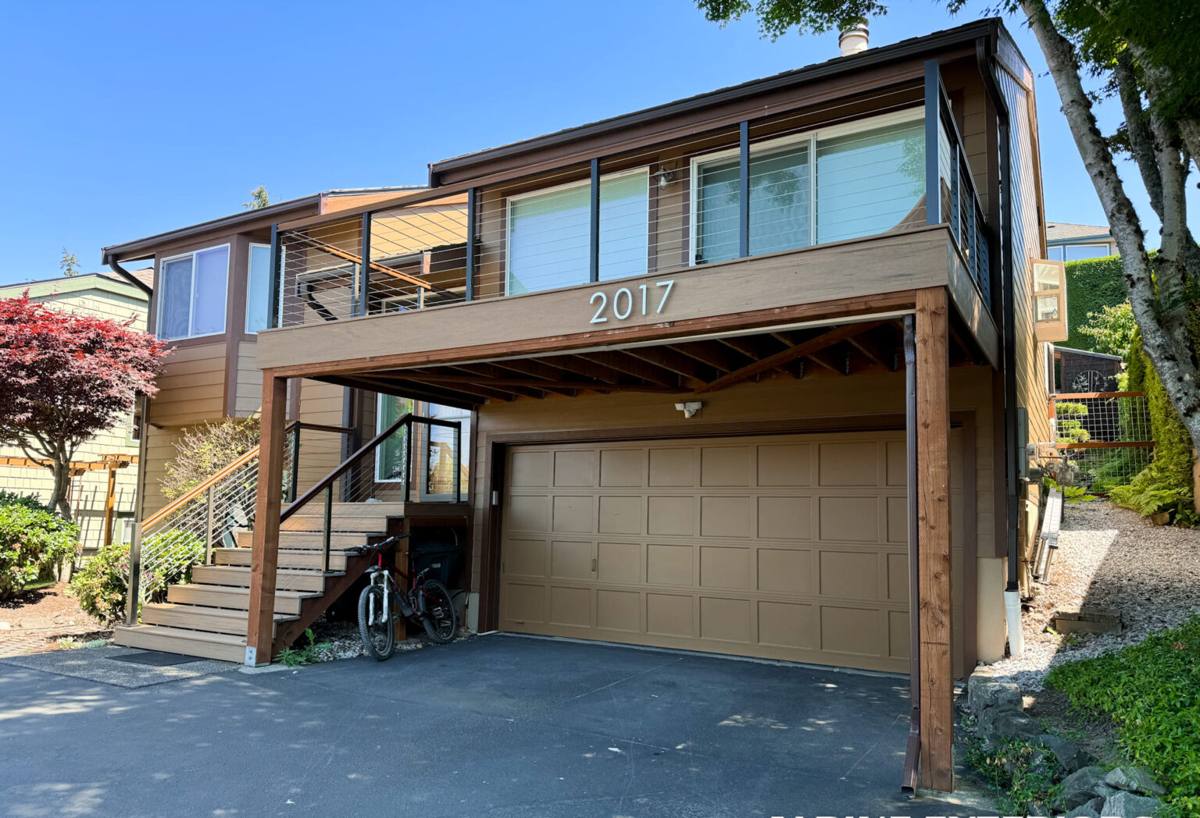
What Whatcom County's Climate Demands From a New Window Install
Whatcom County sits under a marine influence that brings long stretches of driving, wind-blown rain, high ambient moisture for months at a time, and a moss season that seems to start earlier every year. That combination is hard on any exterior building component, but it's especially unforgiving of windows, because a window opening is the single biggest interruption in an otherwise continuous weather barrier. Every seam, flange, and flashing lap around that opening is a potential path for water to get behind the siding.
Salt-laden air moving inland off the Sound accelerates corrosion on fasteners and hardware that isn't rated for coastal-adjacent exposure, and the region's near-constant humidity keeps wood trim and sheathing damp longer after every storm than it would in a drier climate. None of this means new construction in Lynden requires exotic materials — it means the basics (flashing sequence, sealant placement, fastener selection, drainage path) have to be done correctly every single time, with zero shortcuts, because the climate does not forgive sloppy work the way a drier region might.
Moss, Algae, and Sill Design
Long wet seasons also mean algae and moss growth on horizontal surfaces that stay damp, including window sills and exterior trim. Sill design and slope matter more here than in most parts of the country — a sill that doesn't shed water quickly becomes a growth surface and, eventually, a rot risk at the trim-to-sill joint.
New Construction vs. Replacement: Why the Method Is Different
A lot of homeowners assume window installation is window installation, but new-construction and replacement windows are installed with fundamentally different methods, and mixing up the two is one of the most common ways a new build ends up with a leak.
- New-construction windows typically have a nailing fin around the perimeter and are installed into a framed rough opening before the siding goes on, with the fin lapped into the weather-resistive barrier so water sheds over it, never behind it.
- Replacement (pocket) windows are installed into an existing opening with the old frame partially left in place, sealed rather than flashed into the wall assembly, because the siding around them is already finished.
- Using replacement-style methods on a new build — or new-construction methods on a retrofit — skips steps the wall assembly is depending on, and it's a mistake we see often enough from unfamiliar crews that we consider it worth calling out.
Choosing the Right Window for a Lynden Build
Frame material, glass package, and hardware all affect how a window performs against this climate over time. There's no single "best" window for every project — it depends on budget, architectural style, and how exposed a given elevation is to prevailing wind and rain.
| Frame Material | Moisture Performance | Maintenance | Best Fit |
|---|---|---|---|
| Vinyl | Good — won't rot, but seams and welds need quality control | Low | Budget-conscious builds, rental/spec homes |
| Fiberglass | Excellent — dimensionally stable, resists warping in wet-dry cycling | Low | Long-term owner-occupied homes |
| Wood-clad | Good on the exterior face; interior wood needs protection from condensation | Moderate | Traditional or high-end architectural styles |
| Aluminum | Poor in this climate without thermal breaks — prone to condensation | Low | Rarely recommended for Whatcom County exteriors |
For most new builds in Lynden, we steer clients toward vinyl or fiberglass with a double-pane, low-E, argon-filled glass package. Whole-window U-factors in this climate typically land in the U-0.28 to U-0.32 range to meet Washington State Energy Code for our zone, though the exact requirement depends on the compliance path your builder is using for the project.
Our New-Construction Window Installation Process
Pre-Install Coordination
Before a single window arrives on site, we review the rough opening dimensions against the approved window schedule, confirm the weather-resistive barrier and flashing materials being used on the project, and coordinate timing with the framer or GC so windows go in at the correct stage — after sheathing and WRB, before siding closes the wall.
Flashing and Weatherproofing
This is the step that actually protects the house. We install sill pan flashing to direct any incidental water back out of the wall, run self-adhered flashing tape up the jambs and across the head in the correct shingle-lap order, and set the window's nailing fin so it laps properly into the WRB above it. Every fastener and every piece of tape goes in the sequence that keeps water moving down and out — never trapped behind the cladding.
Final Fit, Shimming, and Sealant
Windows get shimmed square and plumb at the manufacturer's specified points, insulated at the gap between frame and framing without over-packing (which can bow the frame), and sealed on the interior air barrier — not smeared across the exterior in a way that traps moisture instead of letting it drain.
Walkthrough and Documentation
Once installed, we walk the openings with the builder or homeowner, confirm operation, and document the install for warranty and, where applicable, energy code inspection purposes.
What a Correct Installation Includes
If you're a homeowner working with a GC and want to know what to look for — or ask your builder about directly — this is the short version of what should happen at every opening:
- Sill pan flashing installed before the window goes in, not skipped or substituted with caulk alone
- Self-adhered flashing tape at jambs and head, lapped in the correct shingle order with the WRB
- Nailing fin fastened per manufacturer spec, with corrosion-resistant fasteners appropriate for coastal-influenced air
- Window shimmed square and plumb, not just fastened tight to the rough opening
- Gap between frame and framing insulated without overcompression
- Sealant placed on the interior air-seal line, with the exterior able to drain rather than being fully sealed shut
- Sill sloped to shed water rather than pond it, especially on exposed elevations
Why Work With a Crew That Already Builds in Lynden
New-construction window work sits right at the intersection of the framer's schedule, the siding contractor's schedule, and the building department's inspection schedule. A crew that already works Lynden regularly knows how local builders typically sequence a job, what Whatcom County inspectors look for at the weather-barrier stage, and how to keep a project moving without a window delay holding up siding for weeks.
Just as important: if a callback ever comes up — a seal that needs a look, a sash that needs adjustment after the house settles through its first wet season — a local crew can actually get back out to your site promptly instead of routing the call through an out-of-area office.
Energy Code and Long-Term Efficiency
New construction in Washington has to meet the current state energy code, and windows are one of the bigger factors in that calculation because glass is the weakest thermal link in any wall assembly. Beyond meeting minimums, homeowners building in Lynden's climate generally get the most practical value from a solid low-E, argon-filled glass package paired with a well-air-sealed frame — the kind of upgrade that pays off in comfort near the glass on cold, wind-driven-rain days, not just on a utility bill. We can walk through glass package options and how they affect both code compliance and day-to-day comfort as part of your window selection.
If you're building in Lynden and want a straight answer on what your window openings actually need for this climate, we're happy to take a look at your plans and put together a free, no-pressure estimate — just fill out the form below.