 Bellingham Roofing
 Why Ferndale Roofs Wear Differently Than Roofs Further Inland
Ferndale sits close enough to the water and the open flats of Whatcom County that its roofs take a different kind of beating than a roof twenty miles inland. Salt-laden air moves in off the Strait and Bellingham Bay, driving rain comes in sideways during fall and winter storms, and the damp, shaded stretches of the year keep moss and algae active for months at a time. None of this is dramatic on any single day. It's cumulative. A roofing system that would hold up fine in a drier, calmer climate can start showing granule loss, fastener corrosion, or moss intrusion years earlier out here if it wasn't installed with these specific conditions in mind.
That's the core difference between a generic new roof installation and one done right for Ferndale: the materials, the flashing details, and the ventilation all need to account for salt exposure, wind-driven moisture, and near-constant humidity, not just keep the rain out on a calm day.
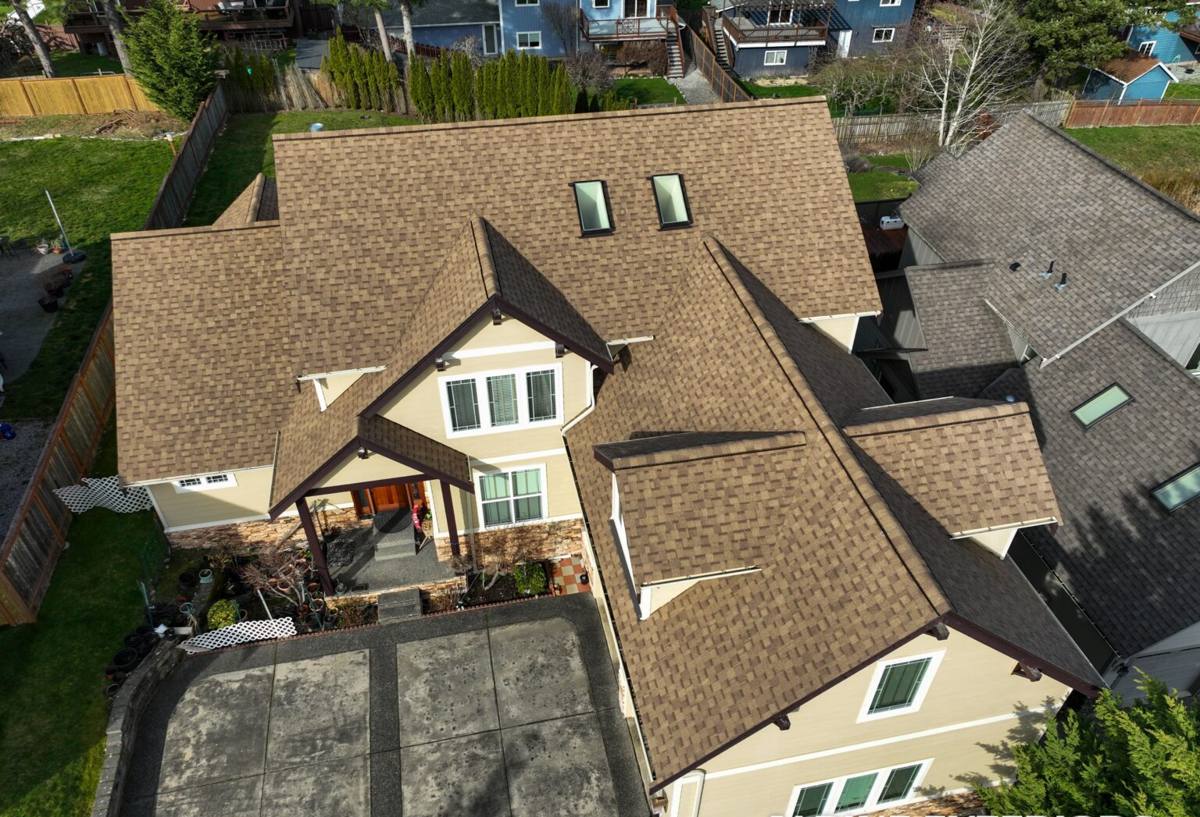
Signs a Ferndale Home Needs a New Roof, Not Another Patch
Homeowners often ask whether a problem area can just be repaired again. Sometimes it can. Other times, another repair is money spent delaying a decision that's already been made by the roof itself. Common signs that point toward full replacement rather than another patch:
- Granule loss heavy enough that you can see bare asphalt in valleys or on south- and west-facing slopes
- Moss established at the shingle edges and butting up under tabs, not just sitting on the surface
- Multiple past repairs in different areas of the same roof, especially around flashing points
- Visible corrosion on nail heads, flashing, or metal roof panels from salt air exposure
- Daylight or staining visible in the attic along the roof deck, especially near valleys or chimneys
- The roof is nearing or past the manufacturer's expected service life for this climate, not the national average
If a roof is under about ten years old and the damage is isolated, repair is usually still the right call. Beyond that, especially with driving-rain exposure and moss history, a full replacement done correctly the first time is often the more economical path over the next decade.
What a Correct New Roof Installation Actually Involves
A new roof is more than shingles nailed to plywood. In a climate that pushes rain sideways and grows moss on shade, the layers underneath the visible surface matter as much as the surface itself.
Tear-off and deck inspection
We remove the old roofing down to the deck rather than layering over it. This lets us actually see the plywood or OSB underneath, catch soft spots or water-damaged sections before they're covered again, and confirm the deck is sound enough to hold fasteners properly for the life of the new roof.
Underlayment built for wind-driven rain
A synthetic underlayment with strong water resistance is standard on every install we do here, and in higher-exposure areas or on lower-slope sections, self-adhered underlayment adds a second line of defense against rain that gets pushed backward under the shingle line during a real storm.
Ice-and-water protection at vulnerable points
Valleys, eaves, and roof-to-wall transitions are where wind-driven rain and moss debris cause the most trouble. These get self-adhered membrane, not just felt or standard underlayment, because that's where water actually finds its way in over time.
Flashing that won't corrode out from under the roof
Salt air is hard on fasteners and thin flashing. We use flashing and fastener materials chosen to hold up to that exposure rather than the cheapest option that meets code, because flashing failure is one of the most common causes of leaks in coastal Whatcom County homes, not shingle failure.
Choosing a Roofing Material for Ferndale's Climate
There's no single "best" roofing material for every home — it depends on budget, roof pitch, and how much long-term maintenance a homeowner wants to take on. Here's how the common options actually perform under salt air, driving rain, and moss pressure:
| Material | Salt Air Exposure | Moss Resistance | Maintenance Burden |
|---|---|---|---|
| Architectural asphalt shingle | Good with corrosion-resistant fasteners and flashing | Moderate — benefits from copper or zinc strips and regular cleaning | Low to moderate |
| Standing seam metal | Very good with coastal-rated coatings and fasteners | Very good — sheds moss and debris well due to slick surface | Low |
| Cedar shake | Moderate — needs proper ventilation to avoid trapped moisture | Poor without diligent upkeep; moss and rot risk in shaded, damp areas | High |
| Synthetic composite shingle | Good — resistant to corrosion and salt-driven degradation | Moderate to good depending on product | Low |
We don't push cedar shake on shaded, low-airflow roof sections in this climate — not because it's a bad product in general, but because it demands a level of ongoing maintenance and ventilation most homeowners aren't set up to keep pace with once moss gets established underneath the shakes. If a home has a sunny, well-ventilated roof plane and the owner wants that look, it's a reasonable option. On a shaded north slope near mature trees, we'll say so honestly and steer the conversation toward a lower-maintenance product for that section.
Ventilation and Moisture Control: The Part You Don't See
A roof holds up or fails based partly on what's happening underneath it. Poor attic ventilation traps warm, moist air against the underside of the deck, which speeds up rot from the inside and works against everything the outer roofing material is trying to do. In a climate as damp as Whatcom County's, balanced intake and exhaust ventilation isn't optional — it's part of what makes the whole system last. We size and place vents based on the actual roof and attic, not a one-size-fits-all rule, because under-ventilated roofs in this area are a common, preventable cause of premature deck failure.
Our New Roof Installation Process
- On-site assessment — we walk the roof, check the attic and deck condition where accessible, and note exposure factors specific to that property (tree cover, wind direction, slope, existing moss).
- Straightforward proposal — material options, what each involves, and a clear cost breakdown, with no pressure to upsell beyond what the roof actually needs.
- Scheduling around the weather — we plan installs to avoid working a stripped roof deck into an incoming rain system whenever possible.
- Tear-off and deck repair — old roofing removed, deck inspected, any damaged sheathing replaced before anything new goes down.
- Underlayment, flashing, and ventilation installed correctly — the layers that determine how the roof performs in ten or twenty years, not just how it looks on install day.
- Final roofing material installed to manufacturer spec — proper nailing patterns, exposure, and sealing, which matters as much for warranty validity as for performance.
- Site cleanup and walkthrough — magnetic sweep for debris and a final review of the finished roof with the homeowner.
What a New Roof Actually Costs — and What Drives the Number
Every roof is different, and any contractor quoting a firm number before seeing the roof is guessing. That said, homeowners deserve to understand what actually moves the price up or down:
| Cost Factor | Why It Matters |
|---|---|
| Roof size and number of planes | More material and more labor hours; complex rooflines take longer to flash correctly |
| Material choice | Asphalt, metal, and composite products span a wide price range and durability range |
| Deck condition | Rotted or soft sheathing found during tear-off needs replacement before new roofing goes down |
| Roof pitch and access | Steep or hard-to-access roofs require more safety setup and take longer |
| Ventilation upgrades needed | Adding proper intake/exhaust venting on an older home adds labor but pays off in roof lifespan |
| Flashing and detail work | Chimneys, skylights, valleys, and wall transitions add labor regardless of the main material cost |
Broadly, a straightforward asphalt shingle replacement on an average Whatcom County home tends to land in the low-to-mid five figures, with metal roofing typically running higher upfront in exchange for a longer service life and lower long-term maintenance. The only way to get an accurate number is a real on-site look at the roof.
Why a Crew That Already Works Ferndale Matters
Roofing crews that mostly work drier, inland climates sometimes default to install methods that are fine there but leave gaps here — lighter underlayment, standard fasteners instead of corrosion-resistant ones, or ventilation sized for a different climate. A crew that regularly works Ferndale and the surrounding Whatcom County coastline already knows which details can't be skipped: where wind-driven rain actually gets in, which flashing materials hold up to salt air over years rather than months, and how much moss pressure a given roof orientation will realistically face. That local pattern recognition is the difference between a roof that looks right on install day and one that's still performing correctly in year twelve.
Keeping a New Roof Performing After Installation
A correctly installed roof still benefits from basic upkeep, especially in a moss-prone, salt-air climate:
- Keep gutters clear so water isn't backing up under the roof edge during heavy rain
- Have moss growth removed gently before it works its way under shingle tabs, not after
- Trim back overhanging branches to reduce shade, debris, and moss pressure on the roof surface
- Schedule a periodic visual check after major windstorms, since driving rain and wind are what expose flashing weaknesses first
- Address any small leak signs in the attic right away rather than waiting for a visible ceiling stain
If you're weighing a new roof for a Ferndale home, we're glad to take a look and give you a straightforward assessment — no pressure, no inflated urgency, just an honest read on the roof and what it needs. Use the form below to request a free estimate.