 Bellingham Roofing
 Building a Deck That Actually Holds Up in Puget
Puget sits close enough to the water that every deck built here has to answer to the same conditions: salt-laden air rolling off the Sound, wind-driven rain that doesn't just fall straight down but gets pushed sideways into ledger boards and railings, and a long, damp stretch of the year where moss and algae get a real foothold on anything that stays shaded and wet. A deck that would be fine in a drier inland town can start showing problems here within a couple of seasons if it wasn't built with this specific climate in mind.
We build and rebuild decks throughout the Bellingham area, and the Puget properties we work on tend to share a few things: mature tree cover that keeps parts of the yard shaded most of the day, proximity to marine air, and a rainy season that runs long enough that "it'll dry out eventually" isn't a plan you can rely on. Good deck construction here isn't about using fancier materials — it's about getting the details right that keep water moving and metal from corroding.
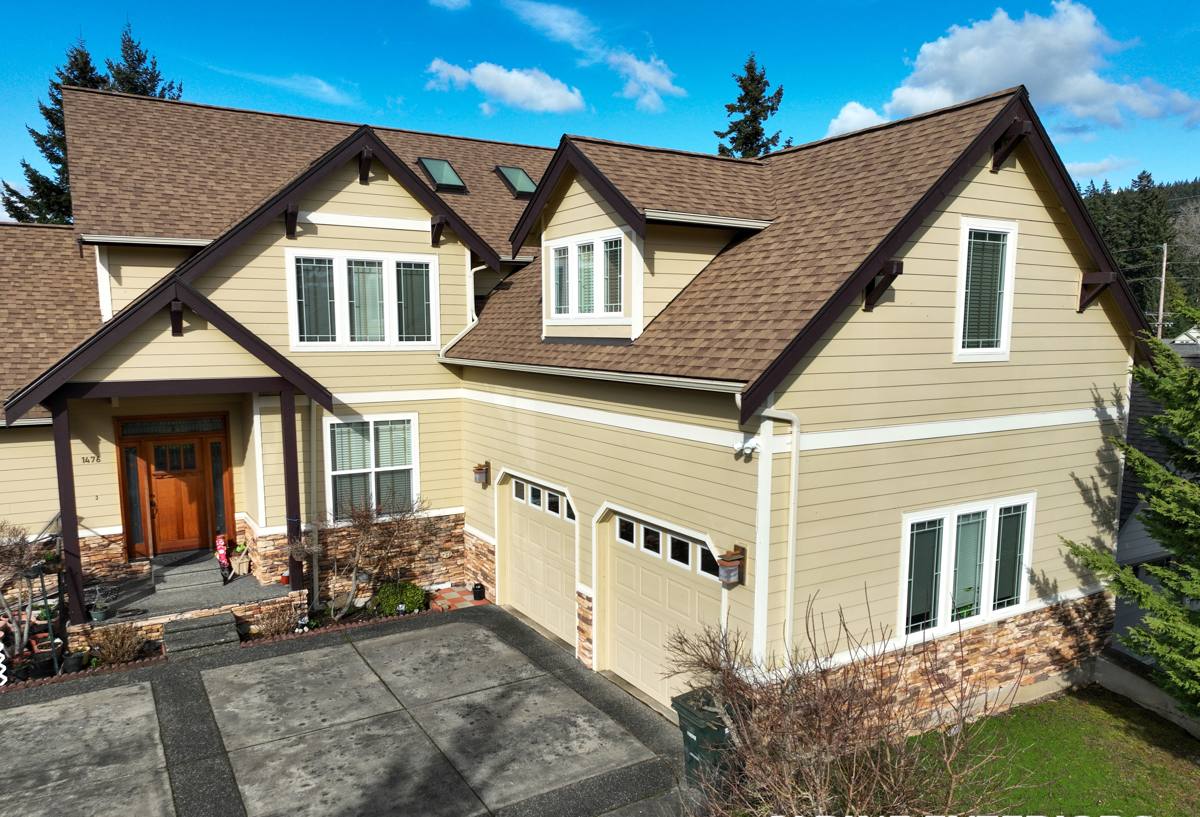
What Whatcom County's Climate Does to an Outdoor Deck
Salt Air and Fasteners
Homes closer to the water deal with airborne salt that accelerates corrosion on anything metal — fasteners, joist hangers, railing brackets, even the heads of deck screws if they're the wrong grade. A deck can look solid on the surface while the hardware holding it together is quietly rusting from the inside. This is one of the most common failure points we find on older decks in this area, and it's almost always invisible until something moves or fails.
Driving Rain and Water Intrusion
Wind off the Sound doesn't let rain fall politely straight down. It drives it sideways into the house wall, under railings, and into any gap where flashing was skipped or done wrong. The single most important — and most commonly rushed — part of any attached deck is the ledger board connection to the house. If that flashing detail isn't right, water gets behind the siding and into the rim joist, and you don't find out until there's rot.
Moss, Algae, and Shade
Bellingham's tree canopy is part of what makes neighborhoods like Puget pleasant to live in, but shade plus moisture equals moss, and moss holds water against decking boards long after the rest of the yard has dried. On wood decking, that trapped moisture is what starts rot at the surface. On any decking material, a moss-covered board is also a slip hazard, especially on stairs.
What a Correctly Built Deck Involves
A deck that's going to hold up through repeated wet seasons comes down to a handful of structural decisions made before a single board goes down.
Ledger Attachment and Flashing
Where the deck meets the house, we use proper structural fasteners (not just deck screws) and install flashing that actually sheds water away from the house framing, not just tucked in behind the siding as an afterthought. This is the detail that determines whether your deck stays structurally attached to your home for decades or starts working itself loose.
Footings and Post Bases
Frost depth and drainage matter for footing design, and post bases need to keep the post itself lifted off standing water rather than sitting in a wet pocket at grade. We also pay attention to drainage around footings so water isn't pooling against concrete through the rainy months.
Joist Spacing and Hardware Grade
Given the salt air concern, we spec hardware rated for corrosion resistance in coastal-influenced environments — not just the standard-grade connectors that are fine in a drier, inland climate but start showing rust within a few years here.
Decking Material Options for This Climate
There's no single "right" material for every deck — it depends on budget, how much upkeep you're willing to do, and how much shade the deck sits in. Here's how the common options actually perform under Puget's specific mix of salt air, rain, and moss pressure.
| Material | Moss/Moisture Behavior | Maintenance | Typical Lifespan |
|---|---|---|---|
| Pressure-treated wood | Absorbs moisture; needs airflow and periodic cleaning to resist moss buildup | Annual cleaning, re-sealing every 1-2 years | 15-20 years with upkeep |
| Cedar | Naturally rot-resistant but still needs cleaning in shaded, damp spots | Cleaning and oil/sealant every 1-2 years | 15-25 years with upkeep |
| Composite decking | Doesn't rot, but moss/algae can still grow on the surface film in shade | Periodic washing; no sealing needed | 25-30+ years |
| PVC/capped polymer | Best moisture resistance; smooth cap sheds surface growth more easily | Occasional washing | 25-30+ years |
In a shaded, damp yard, we're honest with clients that composite or capped polymer boards generally mean less time spent scrubbing moss off in the spring, but a well-maintained cedar or treated-wood deck can still perform well if you're willing to keep up with the cleaning and sealing schedule. The trade-off is time and effort versus upfront material cost — neither choice is wrong, it depends on what you'd rather spend.
How We Approach a Deck Build in Puget
- Site assessment — we look at sun exposure, shade patterns, drainage slope, and how close the deck will sit to the house's existing siding and flashing.
- Design and material selection — sized to how the space will actually be used, with material recommendations based on the shade and moisture conditions of that specific yard.
- Permitting — we handle the local permit process so the structure is signed off and won't cause problems at resale.
- Footings and framing — footings set to proper depth, ledger flashed correctly, framing built with corrosion-resistant hardware throughout.
- Decking and railing installation — installed with attention to board spacing and airflow underneath, which matters a lot for moisture and moss control.
- Final walkthrough — we go over maintenance expectations specific to the material you chose, so there are no surprises a year in.
Permits and Local Code Considerations
Decks in Bellingham and unincorporated Whatcom County generally require a building permit once they exceed a certain height or are attached to the house, and railing height and guard spacing are code-enforced for safety reasons, not just preference. We pull permits as part of the job rather than leaving that step to the homeowner, because an unpermitted deck can become a real problem when the house is sold and a buyer's inspector flags it.
Common Problems We Get Called Out to Fix
A lot of our Puget-area deck calls aren't new builds — they're existing decks with a specific failure pattern. The most frequent ones:
- Rusted or failing joist hangers and fasteners from years of salt air exposure
- Soft or rotting rim joists where ledger flashing was missing or installed wrong
- Persistent moss buildup on shaded sections making stairs and walking surfaces slippery
- Railings that have loosened at the post base from years of water sitting at the connection point
- Boards cupping or splitting where water collects and doesn't drain or dry properly
Sometimes these are repairable in place. Other times, especially with ledger rot, a rebuild is the more honest recommendation because patching over a compromised structural connection just delays the real fix.
Maintaining Your Deck Once It's Built
Whatever material you choose, a little seasonal attention goes a long way in this climate. Here's what we recommend to clients regardless of who built the deck:
- Sweep debris and standing leaves off the surface regularly through fall, especially in shaded corners
- Rinse or scrub moss and algae off boards and stairs before they get established, particularly heading into the wetter months
- Check railing posts and stair stringers annually for movement or soft spots
- Re-seal wood decking on the schedule appropriate to that wood species — don't wait until it's visibly gray and dry
- Keep gutters and downspouts near the deck clear so runoff isn't dumping extra water onto or under the structure
Why Local Experience with Puget Conditions Matters
A deck builder who mostly works drier, inland jobs can still frame a deck that looks fine on installation day. The difference shows up two or three winters later, when the hardware grade, the flashing detail, and the decking gap spacing either hold up to Whatcom County's rain and salt air or they don't. Working this area regularly means we've already seen which details actually matter here and which shortcuts cause callbacks, and we build accordingly from the start rather than learning it on your project.
If you're planning a new deck or dealing with an existing one that's showing its age, we're happy to take a look and give you a straightforward, no-pressure estimate — just fill out the form below.