 Bellingham Roofing
 Deck Repair in Puget: Built for What This Climate Actually Does to Wood
A deck in the Puget area doesn't fail the same way a deck in a dry inland climate does. Around here, the damage is slower and quieter — moisture works its way into joints and fastener holes, moss takes hold on shaded boards, and salt-laden air off the water speeds up corrosion on anything metal. By the time a homeowner notices a soft spot underfoot or a railing that flexes more than it should, the underlying damage has usually been building for a season or two already.
We repair decks in this neighborhood regularly, and the pattern is consistent: driving rain gets pushed sideways into ledger boards and post bases by wind off the water, and a long moss season keeps surfaces damp for months at a stretch even when it isn't actively raining. A repair that doesn't account for that cycle tends to fail again within a couple of years. One that does can add a decade or more of service life to a structure that's otherwise sound.
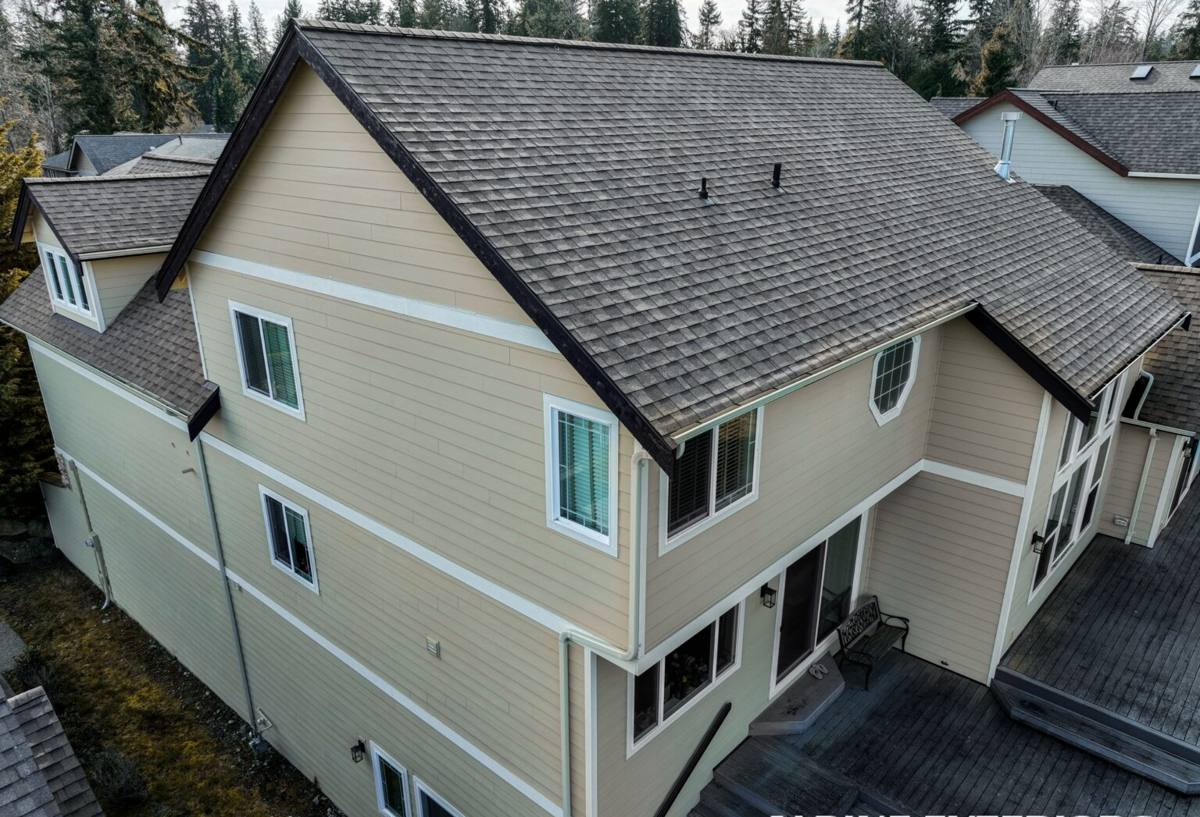
Common Deck Problems We See in Puget-Area Homes
Ledger Board and Rim Joist Rot
The ledger board — where the deck attaches to the house — is the single most common failure point we find. Flashing that was installed correctly but has since worked loose, or flashing that was never properly integrated with the house's water-resistive barrier, lets water track behind the board instead of shedding off it. Because this area is hidden behind decking and often behind skirting, rot here can go unnoticed until the deck starts to pull away from the house or feels spongy near the house line.
Post Base and Footing Deterioration
Posts that sit in standing water, even briefly after heavy rain, rot from the bottom up. Post bases that were installed flush with grade or without a proper standoff are especially vulnerable. Salt-influenced moisture near the water speeds this along further, since it holds in wood fiber longer than fresh rainwater alone.
Moss, Algae, and Surface Decay
Shaded decks, north-facing decks, and anything under tree cover hold moisture for days after a storm passes. Moss isn't just cosmetic — it holds water directly against the wood or composite surface, and on wood decking it accelerates checking, cupping, and eventual rot. On composite decking, heavy moss buildup can stain the material permanently if it isn't cleared regularly.
Fastener and Hardware Corrosion
Nails, screws, and structural connectors that aren't rated for a coastal-influenced environment corrode faster here than most homeowners expect. Once a fastener starts rusting, it loses holding strength well before it looks visibly bad, which is why a repair that only replaces boards but reuses old hardware is often a short-term fix.
What a Correct Deck Repair Actually Involves
Start With a Real Inspection, Not a Guess
Before we quote anything, we probe suspect boards, check ledger flashing where it's accessible, test post bases for give, and look at the framing from underneath when we can get to it. A repair quoted from a five-minute walk-around on the surface tends to miss the framing problems that actually shorten a deck's life.
Structural Repairs Come Before Cosmetic Ones
If a ledger board, joist, or post is compromised, that gets addressed first — even if it means removing decking that still looks fine to get at it. Replacing surface boards over a rotted frame just hides the problem for another season.
Flashing and Water Management Get Fixed, Not Just Patched
Given how much of the damage we see traces back to water intrusion at the ledger, we treat flashing repair as part of any legitimate deck repair — not an upsell. A new deck board over bad flashing is a repair that's designed to fail again.
Repair or Replace? How We Actually Decide
Not every deck problem calls for full replacement, and not every deck is worth patching indefinitely. We look at where the damage is, how much of the structure is affected, and the deck's age and design before recommending either path.
| Factor | Usually Points to Repair | Usually Points to Replacement |
|---|---|---|
| Location of damage | Isolated boards, a single post, or railing sections | Multiple framing members, ledger board, or several posts |
| Deck age | Under 15–20 years, sound overall structure | Original construction has reached the end of its practical life |
| Moisture pattern | Localized shade or drainage issue that can be corrected | Widespread rot from years of unaddressed water intrusion |
| Code and connection details | Current hardware and ledger attachment meet standard | Original build predates current fastening and flashing standards |
| Cost relative to new build | Repair cost is a fraction of full replacement | Repair cost approaches what a rebuild would run |
When a deck is a genuine repair candidate, we say so plainly. When it isn't, we'll explain exactly why — usually it comes down to how much of the load-bearing structure has already been compromised, not the condition of the visible decking.
Our Deck Repair Process
- On-site inspection of decking, framing, ledger connection, posts, and hardware, including areas hidden under the deck where accessible.
- A written scope that separates structural repairs from cosmetic ones, so you know what's required versus optional.
- Removal of compromised material only — we don't tear out sound decking to pad a job.
- Repair or replacement of framing, posts, and ledger flashing using fasteners and connectors rated for this climate.
- Reinstallation or replacement of decking and railing, matched to your existing material where practical.
- A final walk-through covering what was repaired, what to watch going forward, and basic maintenance guidance specific to a shaded, damp-prone lot.
Materials and Hardware: Why the Details Matter Here
In a drier climate, the choice between materials is mostly about looks and budget. Here, it affects how long the repair actually lasts.
| Component | What We Use | Why It Matters in This Climate |
|---|---|---|
| Fasteners | Corrosion-resistant, coastal-rated screws and structural connectors | Standard hardware corrodes faster with salt-influenced moisture in the air |
| Ledger flashing | Continuous metal or membrane flashing integrated with house wrap | Prevents the single most common failure point we see in this area |
| Post bases | Elevated, standoff-style bases rather than posts set in or flush with concrete | Keeps end grain out of standing water after heavy rain |
| Decking material | Pressure-treated lumber, cedar, or composite depending on the homeowner's priorities | Each has different moisture and moss-resistance tradeoffs worth discussing case by case |
We don't push one decking material over another as a rule — pressure-treated lumber costs less up front but needs more upkeep, cedar looks great but needs regular sealing in a wet climate, and composite costs more initially but sheds moisture and resists moss better with less maintenance. The right call depends on how much upkeep you want to do and how long you plan to stay in the home.
Seasonal Deck Maintenance Checklist
Between repairs, a little seasonal upkeep goes a long way toward preventing the same damage from coming back — especially through a long moss season and a wet fall-to-spring stretch.
- Clear leaves, needles, and debris from between boards before fall rains set in — trapped debris holds moisture against the wood.
- Rinse or gently brush off moss and algae buildup on shaded sections at least once, ideally twice, per year.
- Check that gaps between boards haven't closed up from swelling, which traps water and slows drying.
- Look under the deck after a heavy storm for standing water near posts or footings.
- Inspect railing connections and stair stringers for movement or soft spots, since these get less foot traffic and get overlooked.
- Reseal or re-stain wood decking on the manufacturer's recommended schedule — don't stretch it because the deck "still looks fine."
Why Hiring a Crew That Already Works in This Area Matters
Deck repair advice that's generic to the Pacific Northwest isn't always specific enough for a lot that sits close to the water, gets driving rain from a particular direction, or stays shaded most of the day. A crew that's already worked on decks in the Puget area knows which failure points show up repeatedly here — ledger flashing, post base rot, and moss-driven surface decay — and inspects for them specifically instead of running a generic checklist. That local pattern recognition is often the difference between a repair that holds and one that needs redoing in a few years.
It also means we're realistic about timelines. Deck repair work depends on dry stretches, and scheduling it around Bellingham's weather rather than fighting it is part of doing the job right.
Get a Straight Answer on Your Deck
If you're dealing with a soft spot, a wobbly railing, or a deck that just doesn't feel as solid as it used to, it's worth having someone look at the framing before deciding whether you need a repair or a full replacement. We offer free, no-pressure estimates for Puget-area homeowners — use the form below to get one scheduled.