 Bellingham Roofing
 Why Puget Roofs Wear Differently Than Roofs Inland
If you own a home in the Puget area of Bellingham, you already know your roof works harder than one out in the county's drier pockets. You're close enough to the water to get salt-laden air on a regular basis, close enough to the Cascades' weather pattern to catch driving, wind-pushed rain instead of gentle vertical rainfall, and shaded enough by mature Pacific Northwest trees that moss gets a long runway every year to take hold. None of that is unusual for Whatcom County. But it does mean a roof installed with generic, one-size-fits-all methods will show its age faster here than the same roof would somewhere drier and calmer.
A correct new roof installation for a Puget home isn't just about picking a shingle color. It's about choosing materials, fasteners, underlayment, and ventilation that are matched to salt exposure, wind-driven moisture, and moss pressure — and installing all of it in the sequence and detail level that actually holds up to those conditions year after year.
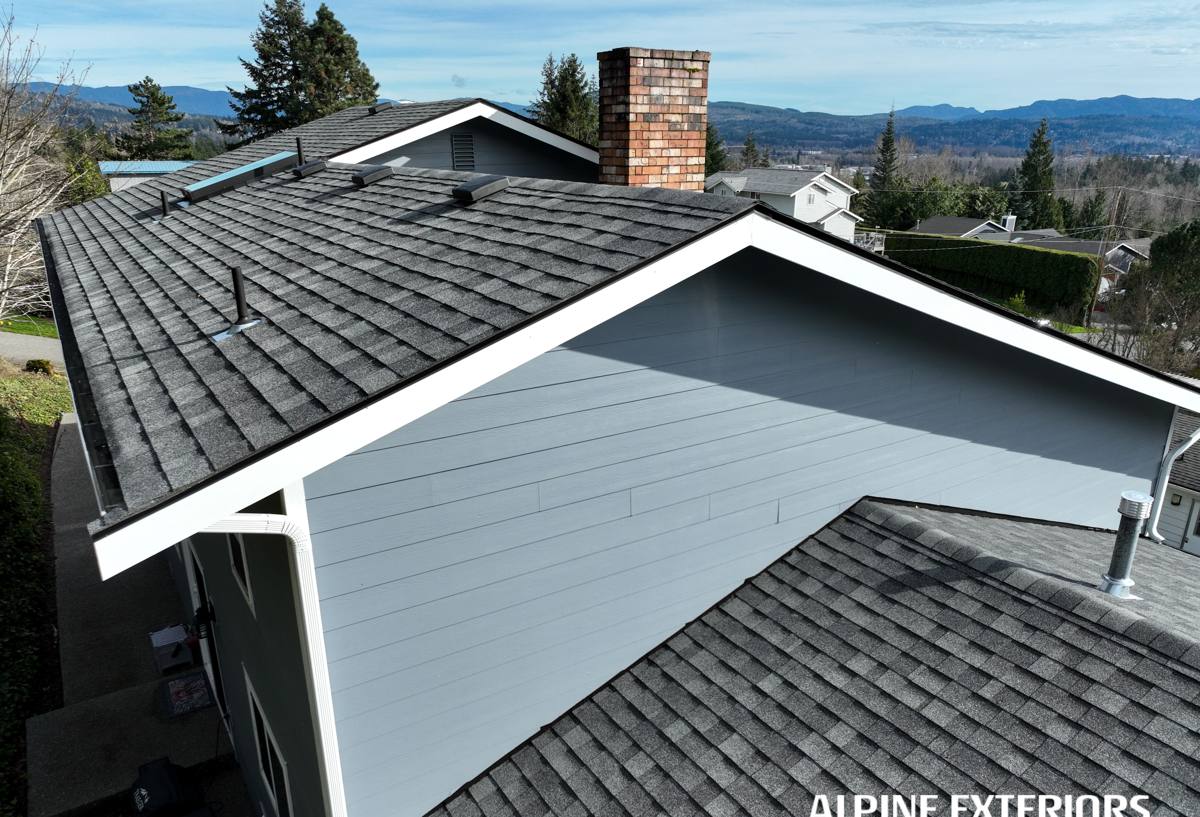
What Local Weather Actually Does to a Roof
Salt Air and Corrosion
Homes within reach of Bellingham Bay's salt air deal with slow, steady corrosion on anything metal and unprotected — nails, flashing edges, vent caps, and fastener heads. It's not dramatic and it doesn't happen in one season, but over years it's the difference between flashing that still seals tight and flashing that's rusted thin at the edges where water actually needs to shed.
Wind-Driven Rain
Rain here rarely falls straight down. When it's pushed sideways by wind off the water, it finds every seam, lap, and fastener penetration that wasn't detailed correctly. A roof that would perform fine under calm vertical rain can still leak under wind-driven rain if the underlayment laps, flashing, and valleys weren't built with that specific condition in mind.
Moss Season That Doesn't Really End
Whatcom County's moss season runs long — shaded, damp roof sections can stay wet for days at a time in fall, winter, and spring. Moss isn't just cosmetic. It holds moisture against the roofing material, lifts shingle edges as it grows, and can work its way under laps and around fasteners if it's left unmanaged. A roof design that ignores this will need moss remediation within a couple of years; one built to resist it buys you real time.
Choosing the Right Roofing System for a Puget Property
There's no single "best" roofing material for every home — it depends on your roof's pitch, how much shade and moss pressure it gets, your budget, and how long you plan to stay in the house. Here's how the common options actually compare for this specific climate, based on install experience rather than marketing claims:
| Material | How It Handles Salt Air & Rain | How It Handles Moss | Typical Lifespan Here |
|---|---|---|---|
| Architectural asphalt shingle | Good with corrosion-resistant fasteners and properly lapped underlayment | Needs zinc/copper strips and periodic cleaning to stay ahead of moss | 25–30 years |
| Standing seam metal | Excellent when finished and fastened correctly; sheds wind-driven rain very well | Sheds moss more easily due to smooth, steep-shedding surface | 40–50+ years |
| Synthetic/composite shingle | Good moisture resistance, doesn't corrode | Moderate — still benefits from moss prevention strips | 30–40 years |
| Wood shake | Requires ongoing sealant maintenance in wet, salty air | High moss risk — organic material holds moisture | Shorter without diligent upkeep |
We're upfront with Puget homeowners about wood shake specifically: it's a beautiful, traditional look, but in a climate with this much sustained dampness and moss pressure, it demands a maintenance schedule most homeowners underestimate going in. That's a trade-off we'll walk you through honestly rather than talk you out of if it's truly what you want — but for most Puget homes, architectural asphalt or metal gives you a better balance of appearance, cost, and long-term performance.
What a Correct Installation Actually Involves
A new roof is only as good as what's underneath the visible surface. For Puget homes specifically, a few details matter more than they would in a drier climate:
- Deck inspection and repair — any soft, delaminated, or moisture-damaged sheathing gets replaced before anything new goes down. Installing over a compromised deck just hides a problem, it doesn't fix it.
- Ice-and-water shield at vulnerable points — eaves, valleys, and roof-to-wall transitions get self-adhering waterproof membrane, not just felt, since these are the spots wind-driven rain and ice dams (when we get a cold snap) target first.
- Corrosion-resistant fasteners and flashing — stainless or hot-dip galvanized fasteners and flashing hold up to salt air far longer than standard-grade materials.
- Proper underlayment lap direction and overlap — laid to shed wind-driven rain moving in the prevailing direction for your roof's exposure, not just a generic uphill lap.
- Balanced intake and exhaust ventilation — this keeps moisture from condensing in the attic, which matters even more in a climate this damp.
- Zinc or copper moss-control strips near the ridge on shaded sections, so rainwater carries a small amount of metal ion down the roof that inhibits moss regrowth between cleanings.
Our Process, Start to Finish
Every roof is different, but here's the sequence we follow on a Puget installation:
- On-site inspection and honest assessment. We look at your current roof, attic ventilation, decking condition, and any moss or moisture patterns specific to your lot's shade and exposure before recommending anything.
- Material selection based on your home, not a sales quota. We'll walk through the comparison above in the context of your actual roof — pitch, shade, budget, and how long you plan to own the home.
- Property protection. Landscaping, siding, and outdoor living areas get covered and protected before tear-off begins.
- Full tear-off and deck inspection. We don't install over existing layers. Every section of decking gets checked, and any damaged sheathing is documented and replaced.
- Underlayment, flashing, and moss-control installation. This is where the climate-specific detailing described above actually happens.
- Roofing material installation to manufacturer specifications, with fastening patterns adjusted for wind exposure where your home's location calls for it.
- Ventilation balancing so intake and exhaust are matched, not just "more vents are better."
- Full site cleanup, including a magnetic nail sweep of the yard and driveway.
- Final walkthrough where we go over the completed roof, warranty paperwork, and what maintenance (if any) we recommend going forward.
What Drives Cost on a Puget Roof Replacement
Every home is quoted individually after inspection, but these are the factors that typically move the number up or down:
| Factor | Why It Matters Here |
|---|---|
| Roof pitch and access | Steeper roofs and limited access add labor time and safety equipment needs |
| Deck condition | Moisture-damaged sheathing found during tear-off adds material and labor to replace |
| Material choice | Metal and synthetic systems cost more upfront than asphalt but stretch out replacement cycles |
| Ventilation upgrades | Adding proper intake/exhaust where a home was under-vented is a one-time cost that protects the new roof |
| Moss remediation history | Roofs with years of untreated moss buildup sometimes need extra deck repair from trapped moisture |
| Flashing and penetration count | Chimneys, skylights, and multiple roof planes each add detail work at every transition |
We'd rather give you a broad, honest range up front and firm it up after a real inspection than throw out a number that doesn't hold once we see your roof. Most full replacements land in a wide range depending on the factors above — the inspection is what narrows that down for your specific home.
Keeping a New Roof Performing After Installation
A well-installed roof still benefits from a little seasonal attention in this climate. A short list worth keeping on your fridge or calendar:
- Clear debris and needles from valleys and gutters at least twice a year — fall and late winter are the two times it matters most here
- Check gutters and downspouts for proper flow before the heavy fall rains start
- Look for moss regrowth on shaded slopes each spring, especially north-facing sections
- Have flashing around chimneys, skylights, and vent pipes visually checked every couple of years for salt-air corrosion
- Keep overhanging branches trimmed back to reduce shade, debris, and moss pressure on the roof
- Don't pressure-wash the roof surface directly — it can strip granules and force water under laps; gentle low-pressure cleaning or a soft wash is safer for the material
Why It Matters to Hire a Crew That Already Works in Puget
Roofing crews who mostly work drier, inland areas can still do competent work, but they're often applying general best practices rather than local ones. A crew that regularly works Puget and the broader Bellingham area already knows which roof orientations catch the worst of the wind-driven rain, which sections of a shaded lot need extra moss-control detailing, and which fastener and flashing grades actually hold up to years of salt air rather than just passing initial inspection.
That local familiarity also shows up in smaller ways — knowing typical permitting expectations for Whatcom County, understanding how HOA or neighborhood guidelines in the area tend to run, and being realistic with you about timelines around the wetter months rather than promising a schedule that weather won't allow. It's the difference between a roof that's technically installed correctly and one that's installed correctly for where it actually sits.
Get a Straight Answer on Your Roof
If you're planning a new roof for a Puget-area home, we're glad to come take a look, walk you through what your roof specifically needs given its pitch, shade, and exposure, and give you a straightforward, no-pressure estimate. No sales pitch, no scare tactics — just an honest read on your roof and your options. Use the form below to request your free estimate.