 Bellingham Roofing
 Roof Repair Built for Ferndale's Coastal Climate
Ferndale sits close enough to the water that salt air is a real factor in how roofs age here, not just a talking point. Add in driving rain off the Strait, long stretches of shade and dampness that keep moss going most of the year, and you've got a set of conditions that wears on roofing materials differently than it does further inland. A roof repair in Ferndale isn't just patching a leak — it's addressing why that leak started in the first place, which almost always traces back to moisture, moss, or corrosion working on the roof over time.
We work on homes throughout Whatcom County, and Ferndale roofs tend to show a specific pattern of wear: fasteners and flashing that corrode faster near the coast, moss colonies that take hold in shaded valleys and north-facing slopes, and gutters that back up during heavy rain events and send water where it doesn't belong. A repair that doesn't account for these local realities tends to fail again within a season or two.
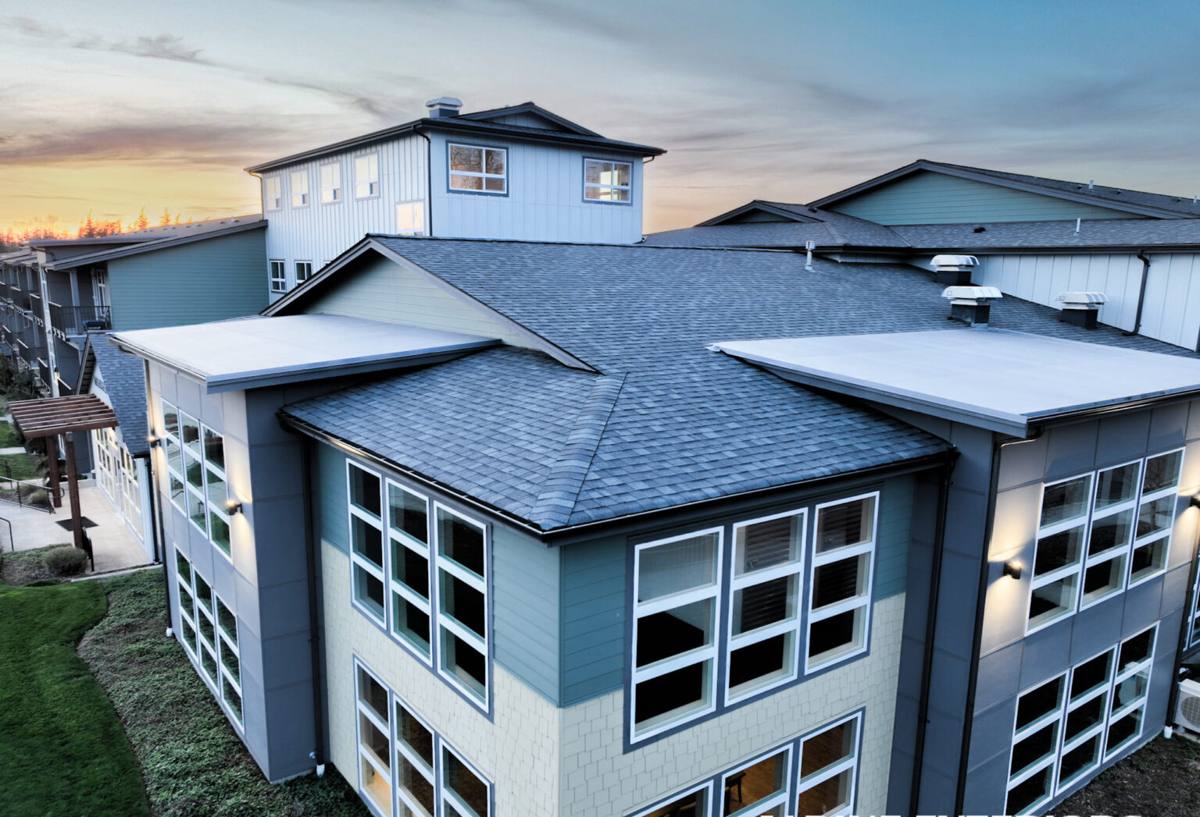
Signs a Ferndale Roof Needs Repair, Not Replacement
Most homeowners call us because of a visible problem — a stain on the ceiling, a shingle in the yard after a windstorm, moss creeping up from the eaves. The good news is that a large share of these issues are legitimately repairable if they're caught before water has had months or years to work into the deck and framing. Here's what we look for when deciding whether repair is the honest answer:
- Isolated leaks tied to a single point of failure — a pipe boot, a step flashing joint, a nail pop — rather than water entering across multiple areas.
- Moss and algae growth that's cosmetic and surface-level, without granule loss or soft, spongy decking underneath.
- Wind or storm damage limited to a section of the roof, with the surrounding material still sound.
- A roof under roughly two-thirds of its expected service life, where the underlying materials still have useful years left.
- Flashing or fastener failures around chimneys, skylights, and vents that can be re-sealed or replaced without disturbing the whole roof.
When we see widespread granule loss, soft decking in multiple areas, or a roof that's already past its realistic lifespan, we'll say so directly. Recommending a repair on a roof that needs replacement just means the homeowner pays twice.
What a Correct Repair Involves
A repair that actually holds up in Ferndale's climate goes past just covering the visible damage. It means finding the real entry point for water, which is often several feet away from where the stain shows up inside, and fixing the conditions that let moss and moisture take hold in the first place.
Moss and Algae Removal Done Right
Moss on a roof isn't just an appearance issue — its root structure holds moisture against the roofing material and lifts shingle edges over time, which is exactly how small leaks get started. Our approach is to remove moss gently, using methods that won't strip granules or damage the surface underneath, then treat the area to slow regrowth. We don't recommend high-pressure washing on shingle roofs — it does more damage to the material than the moss ever would, and it's a shortcut we won't take just to make a roof look clean for a day.
Flashing, Fasteners, and Sealants
Salt-influenced air accelerates corrosion on exposed metal, so we pay close attention to flashing around chimneys, skylights, dormers, and roof-to-wall transitions, along with the fasteners holding everything down. Corroded or loose flashing is one of the most common repair calls we get, and it's usually a straightforward fix if it's caught before water has tracked further into the roof assembly. We also check that any sealants used are rated for exterior, UV, and moisture exposure — not a generic caulk that will crack and open back up within a year or two of Whatcom County weather.
Our Repair Process
We keep the process straightforward because homeowners deserve to know exactly what's happening on their roof and why.
- Inspection. We get on the roof (weather permitting) and check the suspected problem area along with the rest of the roof, since leaks often show up inside far from where the actual failure is.
- Honest assessment. We tell you what we found, what's causing it, and whether repair or replacement is the right call — with reasoning you can follow, not just a number.
- Written estimate. You get a clear scope of work and price before anything starts, no surprise add-ons once we're up there.
- The repair itself. We remove the damaged or failed material, address the underlying cause (rotten decking, corroded flashing, moss buildup), and install matching materials correctly integrated with the surrounding roof.
- Final check. We verify the repair from the ground and, where accessible, from inside the attic space to confirm there's no ongoing moisture path.
Common Ferndale Roofing Materials and How We Repair Each
Different roofing materials fail differently in this climate, and the right repair technique depends on what's already on the house.
| Material | Common Ferndale Failure Points | Typical Repair Approach |
|---|---|---|
| Asphalt composition shingle | Granule loss, moss lifting shingle edges, nail pops, wind-lifted tabs | Replace damaged shingles, re-seal or re-nail lifted tabs, treat and remove moss |
| Wood shake/shingle | Moss and moisture retention, splitting, accelerated decay in shaded areas | Selective plank/shingle replacement, improve airflow where possible, targeted treatment |
| Metal roofing | Fastener corrosion, sealant failure at panel seams and penetrations | Fastener replacement, re-sealing seams and penetrations with exterior-rated sealant |
| Flat/low-slope membrane | Ponding water, seam separation, flashing pull-away at walls | Seam repair or patching, flashing re-attachment, addressing drainage slope where feasible |
If your roof is a material we don't see much of in this area, we'll still give you a straight answer on whether it's repairable and what that involves — we won't push an unfamiliar material toward replacement just because it's less common locally.
Cost Factors for a Ferndale Roof Repair
Every repair is different, but the price generally comes down to a handful of factors. We'd rather walk through these honestly than quote a number before we've seen the roof.
| Factor | Why It Matters |
|---|---|
| Size and location of the damaged area | A single flashing repair costs far less than multiple problem areas or a full slope |
| Roof pitch and access | Steep or high roofs take more time and safety setup than simple, accessible ones |
| Extent of moss or moisture damage | Surface treatment is inexpensive; repairing rotted decking underneath is not |
| Material match and availability | Matching an older shingle color or profile can add time versus common current products |
| Underlying cause | A one-time storm fix is simpler than an ongoing moisture or ventilation problem |
Broadly, small, isolated repairs (a flashing reseal, a handful of shingles, a pipe boot) tend to sit at the lower end of typical repair pricing, while repairs involving deck replacement or multiple failure points cost more. We won't know which category your roof falls into until we've actually looked at it.
Why Hire a Crew That Already Works in Ferndale
Roofing crews that work across a wide, varied region tend to treat every roof the same way. A crew that regularly works Ferndale and the rest of Whatcom County knows which failure patterns show up here again and again — moss taking hold on shaded north slopes, salt-air corrosion on flashing and fasteners, and gutters that can't keep up during heavy rain if they haven't been cleaned recently. That local pattern recognition means less time spent diagnosing and more time spent fixing the actual problem.
It also matters for scheduling. Roof repairs are weather-dependent work, and a crew based locally can respond faster when a storm knocks something loose and get the repair done in a dry window, rather than leaving a tarp up for weeks waiting on an out-of-area contractor.
Maintenance Checklist to Make a Repair Last
A repair holds up much longer when it's paired with basic seasonal upkeep. This is the same list we walk homeowners through after finishing a repair:
- Clean gutters and downspouts at least twice a year, more often if the property has a lot of overhanging trees.
- Have moss growth addressed early in the season rather than waiting until it's visibly thick.
- Trim back branches that keep a roof section shaded and damp longer than the rest of the house.
- Check attic ventilation — poor airflow traps moisture and accelerates decking and shingle deterioration from underneath.
- Walk the exterior after major windstorms and look for lifted shingles, displaced flashing, or debris caught on the roof.
- Schedule a roof check-up every year or two, even without an obvious problem, so small issues get caught while they're still small.
When Repair Isn't the Right Answer
Part of doing this job honestly is telling a homeowner when repair is a poor investment. If a roof has multiple areas of decking damage, has already exceeded its expected service life, or has had several repairs in recent years without solving the underlying problem, we'll say so and explain why replacement makes more financial sense over time. We'd rather lose a small repair job than have a homeowner spend money patching a roof that needs to come off.
If you're dealing with a leak, storm damage, or a roof that just needs a second opinion in Ferndale, we're happy to take a look and give you a straight answer. Reach out for a free, no-pressure estimate using the form below.