 Bellingham Roofing
 Roofing in Sudden Valley: A Different Kind of Wear
Sudden Valley sits in the trees along Lake Whatcom, a few minutes outside Bellingham but a world apart from a typical in-town lot. Homes here are tucked under fir and cedar canopy, set on sloped ground, and exposed to a mix of lake humidity and the drifting salt air that moves inland off Bellingham Bay and the greater Puget Sound. That combination is hard on a roof in ways a flat, open-lot home in a drier part of the state never has to deal with. If you own a home in Sudden Valley, your roof is working harder than the average roof in Whatcom County, even if it doesn't look like it from the ground.
This page is specifically about roof repair for Sudden Valley homes — not a full tear-off, not a general overview of roofing services. It covers what actually goes wrong out here, what a repair needs to include to actually hold, and how we approach the work.
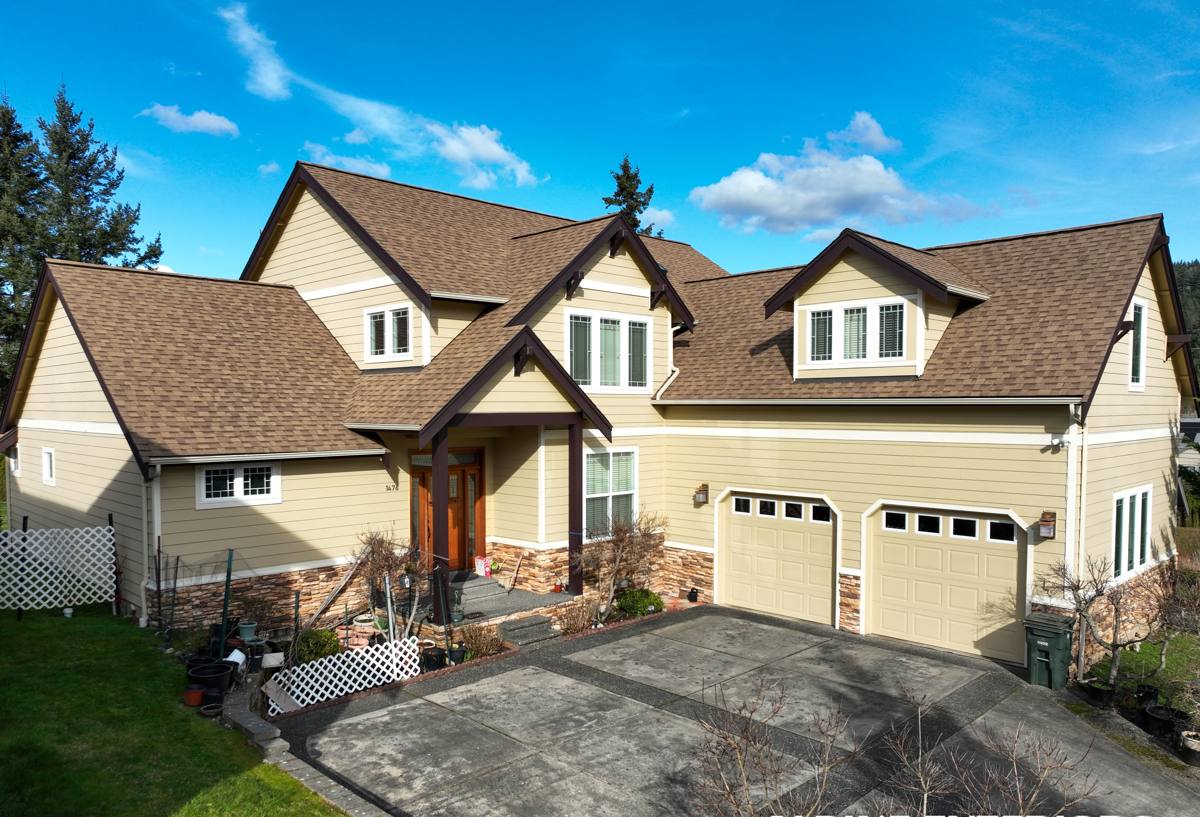
Why Sudden Valley Roofs Take Extra Punishment
Tree Cover and a Long Moss Season
Shade is the biggest factor. Roof sections under heavy tree cover, or facing north away from direct sun, stay damp long after the rest of the roof has dried out. That moisture is exactly what moss, lichen, and algae need to get established. Once moss takes hold, it holds water against the shingle surface, works its way under tabs and around fasteners, and slowly lifts material that was never designed to stay wet for weeks at a time. In Whatcom County's wet season, which runs long, that's most of the year for shaded roof planes.
Driving Rain and Wind
Pacific storm systems don't just drop rain straight down here — wind pushes it sideways, up under shingle edges, and into any gap in flashing that isn't sealed correctly. A roof that's fine in a light shower can still leak in a sideways rain event if the flashing details around chimneys, skylights, valleys, and wall intersections aren't right. This is one of the most common reasons we get called out to homes that "never leaked before."
Salt Air and Metal Fatigue
Even set back from open water, homes throughout the Bellingham area pick up salt-laden air, and that air is corrosive to exposed metal. Flashing, fasteners, gutter hardware, and any exposed roof vents slowly degrade faster here than they would inland. A fastener that rusts and backs out, or flashing that corrodes and pulls away from a seam, is a slow leak waiting to happen — often not discovered until there's already water damage underneath.
Common Roof Repairs We're Called For in Sudden Valley
- Moss-related shingle lift and granule loss on shaded north- and west-facing slopes
- Valley leaks where debris (needles, moss, small branches) dams water and forces it under the shingle edge
- Flashing failures around chimneys, skylights, and roof-to-wall transitions
- Wind-lifted or cracked shingles after a storm, especially on exposed ridgelines
- Clogged or sagging gutters pulling fascia boards loose and letting water track back into the roof edge
- Soft or stained roof decking discovered during a repair, from a slow leak that went unnoticed for a season or more
What a Correct Repair Actually Involves
A roof repair that actually solves the problem starts with figuring out where the water is really coming from — not just patching where it shows up inside. Water can enter at a flashing seam or a lifted shingle and travel several feet along the decking before it drips through a ceiling, so the visible stain and the actual entry point are often not in the same spot.
A repair we stand behind includes:
- Tracing the leak to its actual source, including checking the attic or roof deck from underneath when accessible
- Removing and replacing damaged shingles or shakes with matching material, not just caulking over a symptom
- Re-flashing, not just re-sealing, when flashing has corroded or pulled loose
- Clearing moss and treating the roof surface where organic growth caused the failure, so the same spot doesn't fail again next season
- Checking that attic ventilation isn't trapping moisture underneath the deck, which can mimic or worsen a roof leak
- Confirming gutters and downspouts are actually moving water away from the repair area
Caulk and roofing cement have a place in roofing work, but they're a short-term fix when used alone. If a repair estimate is just "we'll seal it up," that's worth a second opinion before you pay for it.
Our Repair Process, Start to Finish
- Inspection. We walk the roof (or use a ladder and binoculars where pitch or access doesn't allow safe foot traffic) and check the attic side where possible.
- Diagnosis and a written scope. You get a clear explanation of what's actually failing and why, in plain terms, before any work starts.
- Straightforward pricing. A written estimate that separates labor and materials, so you know what you're paying for.
- The repair itself. Matching materials where possible, correct flashing technique, and moss/debris clearing as part of the job, not a separate upsell.
- Cleanup and haul-away. Old materials, moss debris, and nails are cleared from the roof and gutters, not just the ground below.
- A final walk-through so you can see what was done and ask questions before we consider the job finished.
Repair vs. Replacement: How We Help You Decide
Not every problem roof needs to be replaced, and not every repair is a good long-term investment. These are the factors that actually drive that decision:
| Factor | Leans Toward Repair | Leans Toward Replacement |
|---|---|---|
| Roof age | Under roughly 15 years, asphalt shingle | Near or past its expected service life |
| Extent of damage | Localized — one valley, one flashing detail, a small shingle area | Widespread granule loss, multiple soft spots, moss across most planes |
| Decking condition | Solid, dry decking under the damaged area | Soft, delaminated, or repeatedly wet decking |
| History of leaks | First occurrence, clear single cause | Recurring leaks in different spots year after year |
| Material availability | Matching shingle/shake still obtainable | Discontinued material, visible patchwork mismatch |
When a repair is the honest answer, we'll tell you that. When the roof is past the point where a repair makes financial sense, we'll explain why — and either way, you'll get our reasoning, not just a recommendation.
A Homeowner's Pre-Winter Roof Checklist
Whatcom County's wet season rewards homeowners who catch small problems early. Before the heavy rains set in, it's worth checking:
- Gutters and downspouts are clear of needles, leaves, and moss clumps
- No visible moss buildup along ridge lines or on shaded roof slopes
- No cracked, curling, or missing shingles, especially after a windy stretch
- Flashing around the chimney, skylights, and any roof penetrations looks intact, not lifted or rusted
- No branches overhanging or resting directly on the roof surface
- Attic is dry, with no musty smell, staining, or visible daylight through the decking
- Downspouts discharge well away from the foundation, not pooling near the house
Why Hiring a Crew That Already Works Sudden Valley Matters
Sudden Valley isn't a typical Bellingham neighborhood job. The tree cover, the terrain, and the roof pitches common to homes built around the lake all change how a repair should be approached. A crew that's already familiar with the area knows which roof types tend to hold moss longest, which flashing details tend to fail first in homes of a similar age and style, and how to safely work a steep, shaded roof deck that's often still damp when the rest of the county has dried out.
That familiarity also means less guesswork and fewer surprises once we're on the roof — we're not learning the area's quirks on your dime. It's the difference between a repair that's built for wherever the crew usually works, and one that's actually built for a Sudden Valley roof.
Materials and What We Stand Behind
We use algae- and moss-resistant shingle products where they make sense for a repair, and we're upfront when a lower-maintenance option costs more up front but saves you from repeat moss treatment down the line. Any repair work we do is backed by our workmanship — if something we repaired fails because of how it was installed, that's on us to fix, not something we pass off as a new, separate problem.
If you've got a roof in Sudden Valley that's leaking, mossy, or you're just not sure what shape it's in, we're happy to take a look. The estimate is free, there's no pressure to move forward, and you'll get a straight answer about what — if anything — actually needs to be done.