 Bellingham Roofing
 Roof Replacement in Lynden: Built for the Nooksack Valley's Weather
Lynden sits inland in the Nooksack River valley, in the northern reach of Whatcom County near the Canadian border. It doesn't take the direct salt spray that some of our waterfront service areas see, but it still sits inside the same marine-influenced weather system that governs exterior work across this whole corner of Washington. Moist air moves in off the Sound and up the valley, rain arrives wind-driven more often than straight down, and mild year-round temperatures give moss a long season to work on any roof plane that stays shaded or damp. A roof that was replaced without that specific combination in mind, or one that's simply reached the end of its service life under it, tends to fail in ways that show up gradually and then all at once.
This page is specifically about full roof replacement for Lynden homes, not repair, and not general roofing services. When a roof is far enough past its useful life, or has enough underlying damage, that repair no longer makes honest sense, replacement is a different scope of work with its own process, its own cost drivers, and its own set of things a homeowner should know before signing a contract.
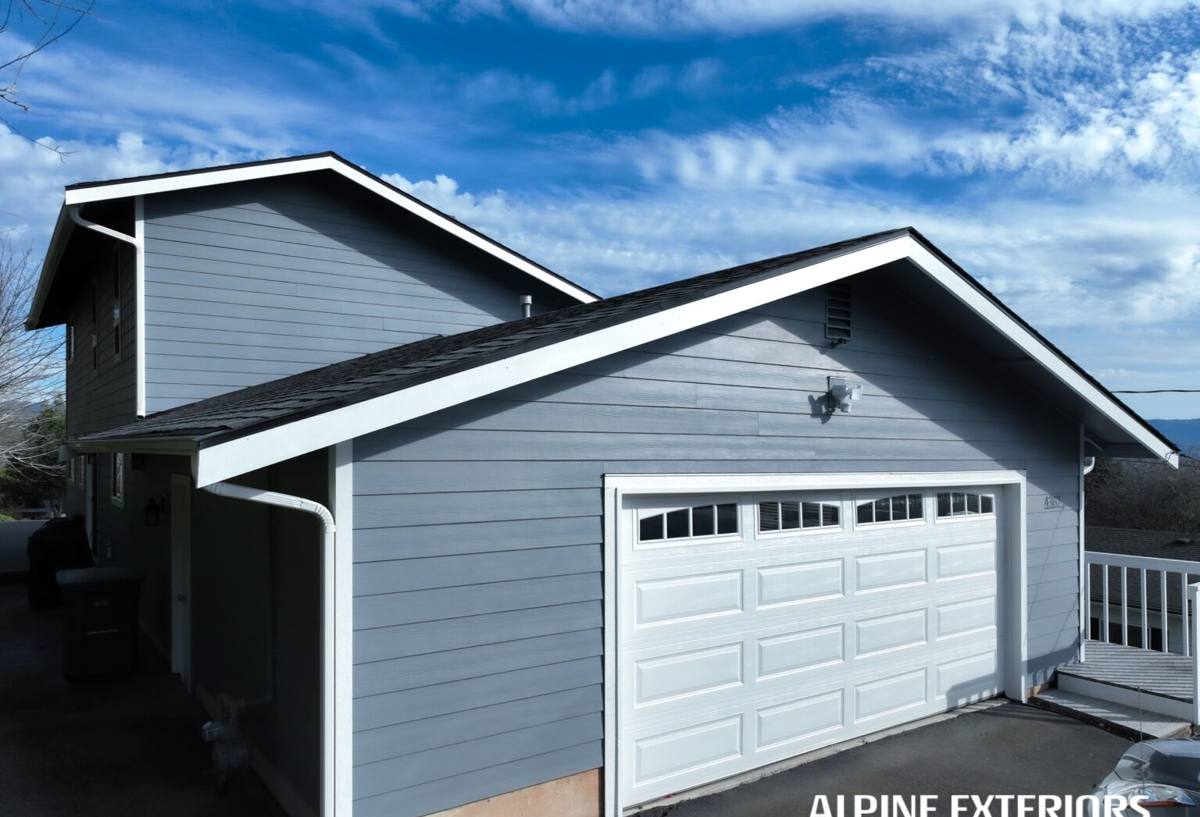
Knowing When Replacement Is the Honest Answer
Not every aging roof needs to come off. But a few conditions tend to point toward replacement rather than another round of repairs: shingles that are curling, cracking, or losing granules across most of the roof rather than one section; moss and moisture damage that's spread across multiple slopes instead of staying isolated; a roof deck with soft spots or visible sagging, which points to moisture that's already gotten past the shingles and underlayment; and a roof that's already had several patch repairs in the last few years without the underlying problem going away. On a valley property like Lynden's, tree-sheltered lots and open farmland exposure both play into this differently, and we look at the specific roof in front of us rather than applying a blanket age cutoff.
What a Correct Full Tear-Off Replacement Involves
A roof replacement done right in this climate is more than pulling off old shingles and nailing down new ones. Every layer underneath the shingles is doing real work against sustained moisture, and skipping or shortcutting any of them is exactly what turns a twenty-five-year roof into a fifteen-year roof.
Full Tear-Off and Deck Inspection
We remove the existing roofing down to the deck rather than laying new material over old. That matters here specifically because it's the only way to actually see the plywood or plank decking underneath, which is where long-term moss and moisture damage tends to hide. Soft, delaminated, or rotted decking gets identified and replaced before anything new goes down, not discovered as a surprise mid-project.
Underlayment, Ice-and-Water Shield, and Flashing
We install underlayment rated for sustained moisture exposure rather than a bare minimum-code product, plus ice-and-water shield at eaves, valleys, and other spots where water and debris collect and linger. Flashing at every valley, chimney, vent pipe, and roof-to-wall transition gets replaced and properly lapped, since that's where wind-driven rain finds its way in on a valley property like this one.
Ventilation
A replacement is also the right time to correct attic and roof deck ventilation. Trapped moisture under the new roofing shortens its life no matter how good the shingles or metal panel are, and ventilation problems are far cheaper to fix during a tear-off than after the fact.
Final Layer, Fasteners, and Cleanup
The finish material goes down with fasteners rated for a consistently damp climate, and the job wraps with a full cleanup, including a magnetic sweep of the yard and driveway for stray nails. A tear-off generates a real amount of debris, and disposal is part of the job, not an afterthought billed separately without warning.
Choosing the Right Material for a Lynden Replacement
There's no single correct material for every roof in this valley. The right call depends on the roof's pitch, how much shade it gets from surrounding trees or farmland tree lines, your budget, and how long you plan to stay in the house. A steep, sun-exposed roof and a low-slope roof shaded most of the day don't call for the same answer, and we'll walk through the realistic trade-offs for your specific roof rather than defaulting to whatever's easiest to sell.
- Architectural asphalt shingle: The most common choice, reasonable upfront cost, and performs well here when installed with proper ventilation and moss-resistant granules.
- Standing seam metal: Sheds water and moss buildup effectively due to its smooth surface, with a longer realistic lifespan, at a higher upfront cost.
- Composite or synthetic shingle: Resists moisture absorption well, with performance and cost that vary by product quality.
- Cedar shake: An attractive, traditional option, but it needs airflow underneath to dry between rains and a real ongoing maintenance commitment in a climate this wet.
What Drives the Cost of a Lynden Roof Replacement
We don't quote roof replacements off a flat per-square rate, because the same size roof can vary enormously in real cost depending on its condition and complexity. The factors below are what actually move the number, and we'll walk through each one that applies to your roof during the estimate.
| Cost Factor | Why It Matters Here |
|---|---|
| Roof size and pitch | More surface area and steeper pitches take longer and require more safety setup and material |
| Number of existing layers | Multiple layers of old roofing mean more tear-off labor and disposal before new material can go down |
| Decking condition | Rot or soft spots found during tear-off need replacement plywood or planking, which isn't visible until the old roofing comes off |
| Material choice | Asphalt, metal, and composite options carry different material and labor costs and different long-term value |
| Roof complexity | Valleys, dormers, chimneys, and skylights all add flashing work and time relative to a simple, open roof plane |
| Access and site conditions | Tree cover, steep driveways, or limited staging space on a given lot can affect labor time and equipment needs |
Because decking condition and roof complexity can't be fully assessed from the ground, any number given before an in-person inspection is a rough starting point at best. We give you a firm, written scope once we've actually seen the roof, not a phone-quote estimate.
Our Roof Replacement Process, Start to Finish
- Free on-site inspection and estimate: We look at the roof from the ground and, where safe and useful, up close, and walk you through what we see and why.
- Material selection and written scope: We go over material options suited to your roof's pitch and shade exposure, and put the full scope and price in writing before any work starts.
- Scheduling and permitting: We handle the permit where required and schedule the job around weather windows, since a tear-off day needs a reasonably dry stretch.
- Tear-off and deck inspection: Old roofing comes off down to the deck, and we flag any decking repairs needed before moving forward.
- Underlayment, ice-and-water shield, and flashing: The moisture-management layers go in first, correctly, before the finish material.
- Installation of the new roof: Shingles, metal, or your chosen material go down to manufacturer spec, with attention to ventilation as we go.
- Cleanup and final walkthrough: Full site cleanup, a magnetic nail sweep, and a walkthrough so you can see the finished work and ask questions before we consider the job done.
Why a Crew That Already Works Lynden Matters
A crew that replaces roofs across this county through every season sees how moss, wind-driven rain, and valley moisture actually behave on real houses over years, not just how a product performs on a spec sheet. That shows up in practical decisions during a replacement: how much ice-and-water shield a given valley or eave actually needs, which roof orientations in a place like Lynden hold moisture longest because of tree shade or farmland exposure, and which flashing details are worth the extra time so a callback isn't waiting two winters down the road. It also means working with someone who already understands the difference between an inland valley roof and a coastal-exposure roof, instead of applying identical assumptions to both.
Before You Sign a Roof Replacement Contract
A roof replacement is a significant investment, and a few basic checks before signing anything can save real trouble later.
- Get the full scope of work in writing, including underlayment type, ice-and-water shield locations, and flashing details, not just the shingle brand
- Confirm current Washington contractor licensing and active liability insurance
- Ask how decking repairs, if any are found during tear-off, are priced and approved before the work proceeds
- Confirm disposal and cleanup, including a magnetic nail sweep, are included in the quoted price
- Ask who pulls the permit and confirms final inspection where one is required
- Get the manufacturer and workmanship warranty terms in writing, including what voids them
If your Lynden home needs a roof replacement, or you're not yet sure whether it's a repair or a full tear-off, we're glad to come take an honest look and walk you through exactly what we find. Reach out using the form below to schedule a free, no-pressure estimate.