 Bellingham Roofing
 Siding Installation Built for Lynden's Conditions
Lynden sits in a part of Whatcom County that asks more of a home's exterior than most homeowners realize. Between the Nooksack River lowlands, open farmland, and the marine air that rolls in off Bellingham Bay, siding here deals with a steady combination of moisture, wind-driven rain, and a moss season that can stretch across most of the year. Siding that would hold up fine in a drier inland climate often starts showing problems within a few years out here — swelling at the bottom edges, soft spots behind trim, moss creeping up from the ground line, paint that fails long before it should.
This page covers what siding installation actually looks like when it's done right for a Lynden property: what the climate demands, what correct installation involves step by step, and why the crew doing the work matters as much as the material going on the wall.
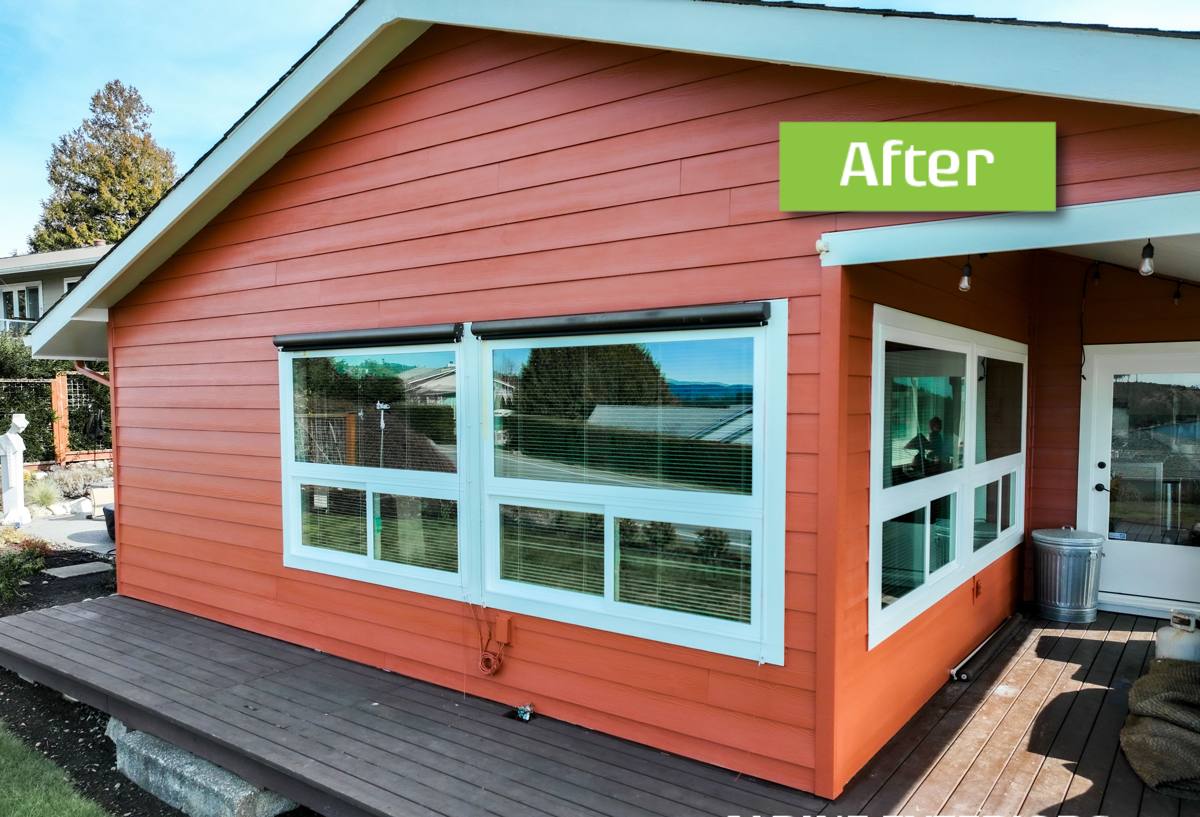
What Lynden's Climate Does to Siding Over Time
Moisture and a Long Moss Season
Whatcom County's wet season runs long, and Lynden's low-lying, agricultural surroundings keep humidity and ground moisture elevated even between storms. Moss and algae take hold on any siding surface that stays damp and shaded, especially on north-facing walls and areas close to landscaping or fence lines. Once moss gets a foothold, it holds moisture directly against the siding surface, which accelerates whatever damage is already happening underneath.
Wind-Driven Rain
Storms coming through this part of the county frequently push rain sideways into walls rather than straight down. That matters more than most homeowners expect — it's not the rain itself that causes rot, it's what happens when that water finds a gap in a butt joint, a poorly flashed window, or a fastener that penetrated the wrong spot. Wind-driven rain finds every weak point in a siding system and exploits it over years, not days.
Salt Air and Ag-Adjacent Exposure
Proximity to Bellingham Bay means a measurable amount of salt-laden air moves inland, and combined with agricultural dust and moisture common around Lynden, it creates a corrosive environment for fasteners, trim, and any siding material that isn't dimensionally stable. Materials that swell, warp, or absorb moisture don't just look worse over time — they open the door to bigger problems behind the wall.
What a Correct Siding Installation Actually Involves
Siding is a system, not a single product nailed to a wall. A correct installation on a Lynden home involves several layers working together, and skipping or rushing any one of them is where most premature siding failures start.
Weather-Resistive Barrier and Flashing
Before any siding goes up, the wall needs a properly lapped weather-resistive barrier and correctly integrated flashing at every window, door, and penetration. Flashing has to be layered so water sheds downward and outward — never trapped behind the barrier. This step is invisible once the job is done, which is exactly why it's the step most often shortchanged by crews trying to move fast.
Fastening and Clearances
James Hardie fiber cement has specific fastening requirements — nail placement, spacing, and penetration depth all affect how the panel performs over decades, not just years. Ground clearance matters just as much: siding installed too close to grade, a patio, or a deck surface will wick moisture and invite the exact moss and rot problems common in this climate. Manufacturer clearance minimums exist for a reason, and cutting corners here is one of the most common causes of early siding failure in this region.
Trim, Joints, and Caulking
Every joint, corner, and trim intersection is a potential water entry point. Correct installation means tight, properly caulked joints using compatible sealants, and trim details that shed water rather than collect it. On a home exposed to Lynden's wind-driven rain, sloppy joint work is often the single biggest predictor of future callbacks.
Why We Install Only James Hardie Fiber Cement
We standardized on James Hardie fiber cement siding and don't install vinyl, LP SmartSide, or other fiber cement alternatives. Hardie's HZ5 product line is engineered specifically for climates like Whatcom County's — moisture, freeze-thaw cycling in colder snaps, and sustained damp conditions. It's non-combustible, holds its shape and paint line far better than wood-based alternatives over time, and the factory-applied ColorPlus finish resists the fading and peeling that's common on field-painted siding in this climate. Backing it is a strong, transferable manufacturer warranty — but that warranty only holds up if installation follows Hardie's specifications exactly, which is a core reason installation quality matters as much as the material choice itself.
Our Installation Process for Lynden Homes
- On-site assessment — we walk the exterior, check for existing moisture damage, moss buildup, and problem areas around windows, trim, and ground clearance.
- Tear-off and sheathing check — old siding comes off and the sheathing underneath gets inspected for rot or soft spots before anything new goes on.
- Weather barrier and flashing — a new weather-resistive barrier is installed with properly lapped, integrated flashing at every opening.
- Hardie panel installation — panels are fastened to manufacturer spec, with correct clearances maintained at grade, roofline, and trim.
- Trim, joints, and finish detail — corners, joints, and trim are sealed and finished to shed water, not collect it.
- Final walkthrough — we review the completed exterior with the homeowner before calling the job done.
Comparing Siding Options for a Home Like This
| Factor | James Hardie Fiber Cement | Vinyl | Wood/Engineered Wood |
|---|---|---|---|
| Moisture resistance | Strong — dimensionally stable, engineered for wet climates | Doesn't rot, but can warp and gap over time | Vulnerable to swelling, rot without diligent upkeep |
| Moss/algae resistance | Factory finish resists staining, cleans well | Can stain and hold algae in shaded areas | Prone to moss growth, especially unpainted or aging surfaces |
| Fire resistance | Non-combustible | Combustible, can melt/warp near heat | Combustible |
| Finish longevity | Factory ColorPlus finish, long fade resistance | Color can fade, cannot be easily repainted | Requires regular repainting/staining |
| Warranty | Strong, transferable manufacturer warranty | Varies widely by manufacturer | Typically limited or none on materials |
Cost Factors for Siding Installation in Lynden
Every home is different, but the same handful of factors drive most of the cost variation we see on siding jobs in this area:
| Factor | Why It Matters |
|---|---|
| Amount of existing damage | Rotted sheathing or hidden moisture damage found during tear-off adds repair work before new siding can go on |
| Home size and wall complexity | More corners, dormers, and trim detail mean more labor and material cuts |
| Siding profile and accessories | Lap width, trim style, and accent details affect material cost |
| Access and site conditions | Landscaping, fencing, or tight lot lines can slow installation |
| Tear-off vs. re-side | Full removal of old siding costs more upfront but avoids covering existing problems |
We give a firm, itemized quote after walking the property — not a phone estimate — because these factors vary enough house to house that a ballpark number rarely holds up once we're on a ladder looking at the actual wall.
Signs Your Lynden Home May Need New Siding
- Moss or dark staining that returns quickly after cleaning
- Soft, spongy spots when you press on siding near the bottom edge or under windows
- Visible warping, buckling, or gaps opening up at joints and corners
- Paint that's peeling, bubbling, or failing well ahead of schedule
- Rising energy bills that suggest moisture or air infiltration behind the wall
- Siding installed with little to no clearance at grade, decks, or patios
Any one of these on its own isn't necessarily an emergency, but a couple together is usually a sign the current siding system is losing the fight against this climate.
Why Hiring a Crew That Already Works in Lynden Matters
Siding installation isn't just about the product — it's about understanding how a specific property sits relative to wind exposure, drainage, and sun. A crew that regularly works homes in and around Lynden already knows which wall orientations take the worst of the wind-driven rain, where moss tends to establish first, and how ground moisture behaves on the flatter, lower-lying lots common in this area. That local pattern recognition shows up in small decisions during installation — extra attention to a north wall's flashing, a bit more clearance at a low grade point — that don't show up on a spec sheet but make a real difference over the next twenty years.
If you're weighing a siding replacement or just want a straight answer on what your current siding is telling you, we're happy to take a look. Reach out for a free, no-pressure estimate using the form below.