 Bellingham Roofing
 Board & Batten Siding, Done Right, for Sehome Homes
Sehome sits close enough to Bellingham Bay to feel the marine air on a daily basis, and close enough to the hills and tree cover around Western Washington University to stay shaded and damp for long stretches of the year. That combination — salt-tinged moisture, dense tree canopy, and a roofline that rarely gets a full day of direct sun in winter — is exactly the kind of environment where board and batten siding either performs beautifully for decades or turns into a maintenance headache within a few years, depending entirely on what it's made of and how it's installed. We install board and batten in one material: James Hardie fiber cement. This page explains what that means for a Sehome home specifically, not siding in general.
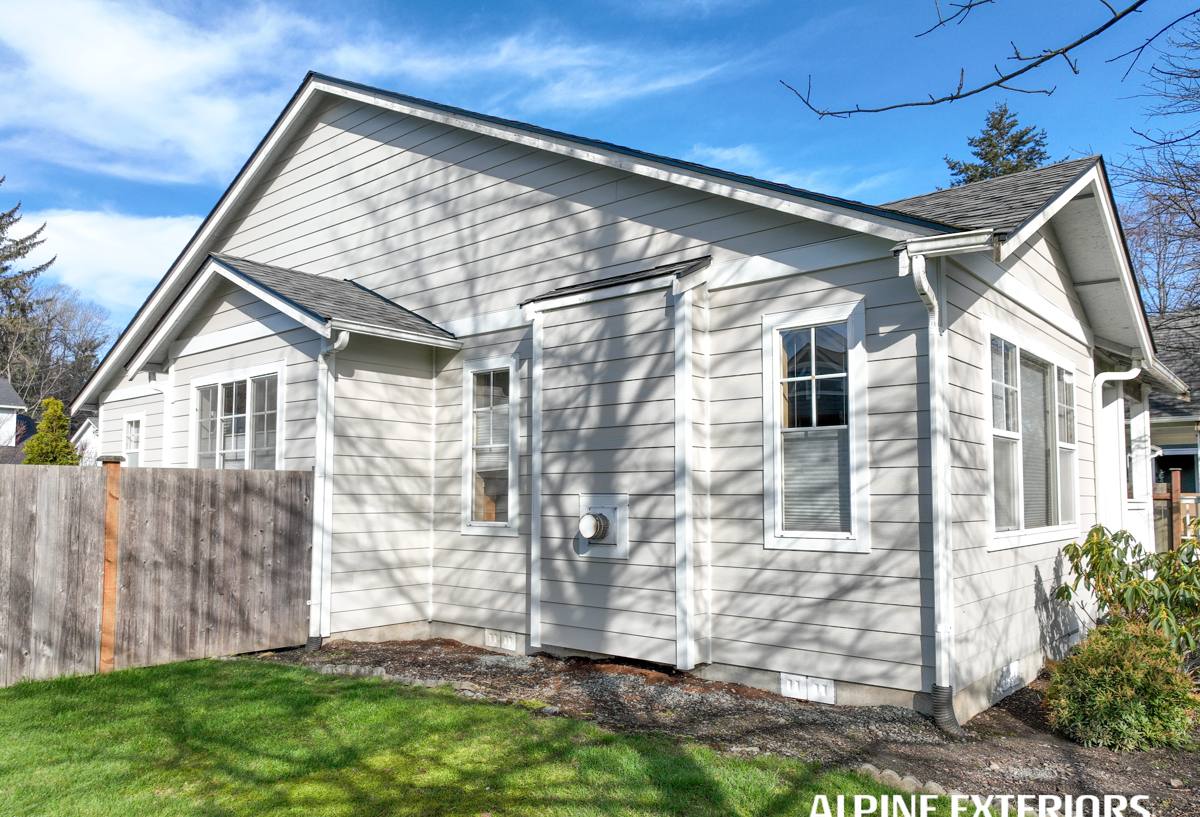
Why Board & Batten Fits Sehome's Older and Craftsman-Style Housing Stock
Sehome has a mix of early-1900s craftsman homes, mid-century houses, and newer infill construction near the university. Board and batten — vertical wide boards with narrow strips (battens) covering the seams — reads as a natural fit for craftsman and farmhouse-adjacent architecture, and it's increasingly used as an accent on gable ends, dormers, and entry features on newer builds too. Unlike lap siding, board and batten's vertical lines can make a narrower lot or a tall, boxy elevation feel more proportioned, which matters on some of Sehome's tighter in-city lots.
The appeal isn't just visual. Vertical board and batten sheds water differently than horizontal lap siding, and when it's built with the right materials and flashing details, it holds up well to wind-driven rain — a real factor in Whatcom County, where storms frequently come in off the water at an angle rather than straight down.
What Bellingham's Climate Actually Does to Siding
Three things define the durability test for any siding product installed in Sehome:
- Salt air: Even a few miles inland from Bellingham Bay, airborne salt accelerates corrosion of fasteners and degrades finishes that aren't formulated to resist it.
- Driving rain: Storms off the Strait of Georgia and Puget Sound push rain sideways into wall assemblies, not just down. Vertical siding needs correctly lapped battens and proper water-resistive barrier detailing behind it, or moisture finds a way in at the seams.
- Extended moss and algae season: Whatcom County's damp, mild winters and shaded lots (common throughout Sehome) create near-constant conditions for moss, mildew, and algae growth on north-facing and tree-shaded walls, roughly nine to ten months of the year.
Any material that swells, delaminates, or absorbs water under those conditions is going to show it faster in Sehome than it would in a drier climate. That's the lens we use when we talk to homeowners about material choice.
Why We Only Install James Hardie for Board & Batten
We don't install LP SmartSide, vinyl, Cemplank, Allura, or raw primed wood board and batten. That's a deliberate standard, not a sales pitch, and it's worth explaining honestly:
- Wood-based products (LP SmartSide, primed spruce, cedar) depend entirely on caulking, paint film, and end-cut sealing staying intact. In a climate with this much sustained moisture and moss growth, any gap in that maintenance lets water into the substrate, and wood-based composites and real wood both swell, rot, or delaminate once that happens. Cedar can look excellent, but it demands a maintenance schedule most homeowners underestimate.
- Vinyl board and batten is low-maintenance in the sense that it doesn't rot, but it's a thin, flexible material that can warp or crack in temperature swings, fades over time under UV exposure, and its butt joints and inside corners are common points where wind-driven rain gets behind the panel.
- Other fiber cement brands (Cemplank, Allura) are legitimate fiber cement products, and we don't claim they're defective. Our decision to standardize on Hardie comes down to their specific HZ5 climate engineering for the Pacific Northwest, the factory-baked ColorPlus finish, and a warranty structure and manufacturer track record we've found consistently reliable, not a knock on the category.
James Hardie fiber cement is non-combustible, dimensionally stable in wet climates, and engineered specifically for regions like ours through its HZ5 product line. The ColorPlus factory finish resists fading and chipping far better than field-applied paint, which matters when a wall faces years of salt air and rain without ever fully drying out. It won't rot, and it doesn't feed moss the way wood fiber can.
What a Correct Board & Batten Installation Involves
Board and batten is often installed poorly because it looks simple — boards, gaps, battens over the seams — but the parts nobody sees are what determine whether it lasts. On every Sehome job, correct installation means:
Behind the Boards
- A continuous, correctly lapped water-resistive barrier (housewrap or building paper) installed shingle-style so water is always directed outward and down.
- A rainscreen gap (vertical furring strips) behind the siding on most applications, so any moisture that does get past the cladding can drain and the wall assembly can dry rather than trap water against the sheathing.
- Proper flashing at every window, door, and roofline intersection — the single most common source of hidden water damage we find behind old siding in this area.
The Boards and Battens Themselves
- Correct fastener spacing and type — coated, corrosion-resistant fasteners driven to Hardie's specified depth, not overdriven or underdriven.
- Proper gapping between boards to allow for the material's minimal expansion and contraction without stressing the caulk joints.
- Battens set to Hardie's spec for overlap and fastening, so they cover seams fully without trapping moisture behind them.
- Correct bottom clearance from grade, decks, and roof lines to keep the siding out of standing water and splash-back zones.
Skipping any one of these doesn't necessarily show up in year one. It shows up in year five or six, as staining, soft spots, or paint failure at the seams — usually right when a homeowner assumed the siding was maintenance-free.
Our Process for Sehome Board & Batten Projects
- On-site assessment: We look at the existing wall assembly, moisture history, sun/shade exposure on each elevation, and any signs of past water intrusion around windows, decks, or rooflines.
- Material and color plan: We walk through James Hardie's board and batten profiles and ColorPlus color options against the home's architecture and the amount of direct sun each wall gets — a real factor for color retention in a climate this cloudy and damp.
- Tear-off and inspection: Once old siding is removed, we inspect sheathing for hidden rot or damage before anything new goes up. This step is where problems from a prior installation usually surface.
- Water-resistive barrier and rainscreen installation: Correctly lapped, correctly flashed, before a single board goes on.
- Board and batten installation to manufacturer spec: Fastening, gapping, and batten placement per James Hardie's published installation requirements — not shortcuts.
- Final detailing and walkthrough: Caulking, trim, and a walkthrough so you understand what was done and why.
Why a Crew That Already Works Sehome Matters
Sehome's housing stock isn't uniform. A 1920s craftsman near the university has different wall assembly quirks — older sheathing, older window details, sometimes no housewrap at all — than a home built in the last fifteen years. A crew that's worked this specific neighborhood knows what's usually hiding behind the old siding before tear-off starts, knows which elevations in the area tend to hold moisture longest based on tree cover and sun exposure, and isn't guessing at how Bellingham's rain patterns interact with a particular roofline or lot orientation. That local pattern recognition is what prevents the callback six months later.
It also matters for permitting and code familiarity — City of Bellingham and Whatcom County requirements around water-resistive barriers, flashing, and exterior work are things a local crew handles routinely rather than learning on your project.
Cost Factors for Board & Batten Siding in Sehome
Every quote depends on the specifics of the house, but the same factors drive cost on nearly every Sehome project:
| Factor | Why It Matters Here |
|---|---|
| Tear-off scope | Removing old siding down to sheathing, plus any rot repair found underneath, adds labor before new siding can start. |
| Wall complexity | Gables, dormers, and multiple elevations (common on craftsman-style Sehome homes) mean more cuts, more flashing detail, and more labor per square foot. |
| Rainscreen installation | Adding a drainage gap behind the siding is extra labor but is what keeps a board and batten wall performing long-term in this climate. |
| Color and finish | Factory ColorPlus finishes cost more upfront than field paint but eliminate a repaint cycle for years. |
| Access and site conditions | Tight lots, mature landscaping, and multi-story elevations near Western Washington University can affect scaffolding and staging needs. |
Signs Your Sehome Home's Siding Needs Attention
- Persistent moss or dark streaking on north- or tree-shaded walls that returns quickly after cleaning.
- Soft, spongy, or visibly warped boards, especially near ground level or under windows.
- Peeling or bubbling paint concentrated at board seams or batten edges.
- Visible gaps, cracked caulk, or separated battens after a windy storm season.
- Musty smell or interior staining on walls that back onto exterior siding showing problems.
None of these mean a home needs full replacement automatically, but they're worth a professional look before another wet season passes.
Get a Straightforward Estimate
If you're weighing board and batten siding for a home in Sehome, we're happy to walk your property, look at what's there now, and give you a clear, no-pressure estimate for a James Hardie installation built for this specific climate. There's no obligation — just a straight answer about what your home needs.