 Bellingham Roofing
 Deck Repair Built for Sehome's Climate
Sehome sits close to downtown Bellingham and Sehome Hill, with plenty of mature tree cover and homes that range from mid-century builds to newer construction on sloped lots. That combination of shade, hillside drainage, and Whatcom County's marine climate is tough on outdoor decks. Salt-tinged air off Bellingham Bay, driving rain that comes in sideways during fall and winter storms, and a moss season that can stretch from October well into spring all work against wood and fasteners year-round. A deck that looks fine on the surface can be hiding soft framing, rusted hardware, or trapped moisture underneath.
We repair decks in Sehome regularly, and the damage pattern is consistent: it's rarely one big failure. It's usually a handful of small, climate-driven problems that compound over a few wet seasons until a board flexes, a rail wiggles, or water starts pooling somewhere it shouldn't.
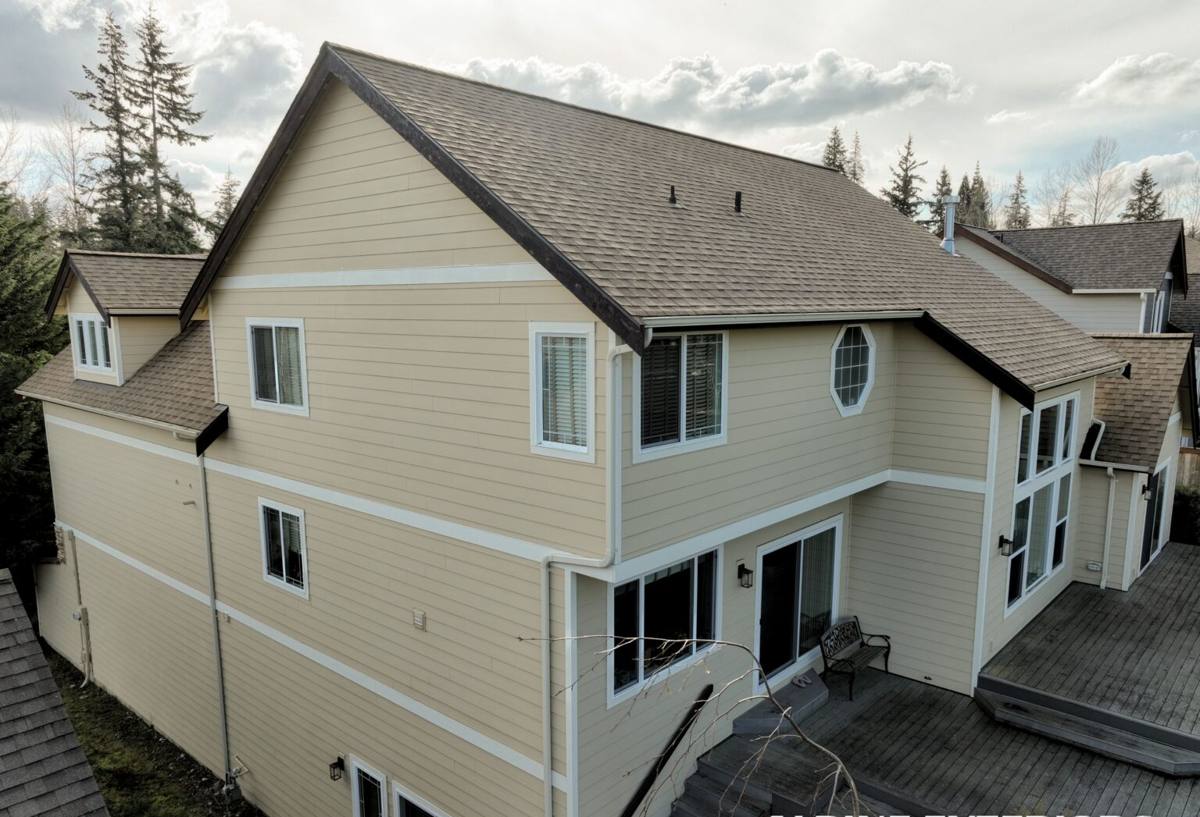
Signs Your Deck Needs Repair, Not Replacement
Most decks don't need to be torn out and rebuilt. Full replacement makes sense when the main structural frame has failed throughout, but in a lot of cases the frame is sound and the damage is limited to specific boards, connections, or surfaces. Here's what we look for during an inspection:
- Boards that feel spongy, spring back slowly, or flex more than neighboring boards
- Dark staining or a "wet wood" smell near the ledger board where the deck meets the house
- Rust streaks running down from screws, nails, or joist hangers
- Green or black moss and algae film that stays damp for days after rain stops
- Railings or posts that wobble when pushed, even slightly
- Gaps or separation where the deck attaches to the house siding or foundation
- Stair stringers that feel uneven or bounce underfoot
If you're seeing one or two of these, it's very likely a repair job. If you're seeing most of them at once, especially combined with visible rot in the main support beams, that's when we start talking about replacement instead.
Why the Ledger Board Matters Most
The ledger board — the piece bolted to your house that the whole deck hangs from — is the single most important connection point on the structure, and it's also the one most exposed to trapped moisture. In a climate like ours, where rain is frequent but doesn't always dry off quickly between storms, water can wick behind the ledger and sit there without anyone noticing. We check ledger flashing and fastening on every repair visit, even when that's not the reason for the call, because a failed ledger connection is a safety issue, not just a cosmetic one.
Common Deck Problems We Fix in Sehome
The tree cover and hillside terrain around Sehome create specific patterns we see more often here than in more open, sun-exposed parts of Bellingham.
Moss and Algae Buildup
Shaded decks under mature trees stay damp longer after rain, which gives moss and algae time to establish on horizontal surfaces and in the gaps between boards. Left alone, this buildup holds moisture against the wood constantly, accelerating rot even in pressure-treated lumber. We clean it back, address the boards underneath, and talk through what's realistically achievable given the shade your deck sits in — some moss growth is simply the trade-off of a tree-covered lot, and the goal is managing it, not pretending it will never come back.
Fastener Corrosion
Standard fasteners corrode faster this close to Bellingham Bay. Rust weakens the grip a screw or nail has on the wood, and a rusted joist hanger can quietly lose load capacity long before it looks obviously bad. We replace corroded hardware with fasteners rated for coastal, wet-climate exposure rather than matching whatever was originally used.
Soft or Rotted Framing
Joists and beams that stay wet for extended periods, particularly where debris collects or drainage is poor, can soften from the inside while the surface paint or stain still looks intact. This is why we check framing directly rather than relying on a visual surface inspection alone.
Railing and Post Movement
Freeze-thaw cycles are milder here than inland, but repeated wetting and drying still loosens post connections over time, especially on decks that see direct rain exposure without much roof overhang protection.
What a Correct Deck Repair Actually Involves
A repair that only replaces the board you can see, without checking what's underneath it, tends to fail again within a season or two. Our approach on every job includes:
- Inspecting the framing below and around the damaged area, not just the surface
- Checking ledger board attachment and flashing condition
- Identifying the moisture source — is it a drainage problem, a flashing gap, or just prolonged shade?
- Replacing rotted or compromised framing members before addressing decking or railings
- Using corrosion-resistant fasteners and hardware appropriate for our climate
- Confirming proper flashing and gapping so water sheds away from the house and framing going forward
- Addressing the surface repair — boards, railings, stairs — once the structure underneath is sound
Skipping the first few steps is the most common shortcut in deck repair, and it's also the reason homeowners end up calling someone back out a year later for the same problem.
Repair vs. Replacement: What Drives the Decision
| Factor | Leans Toward Repair | Leans Toward Replacement |
|---|---|---|
| Extent of damage | Limited to specific boards, rails, or stairs | Rot or corrosion spread across most of the frame |
| Deck age | Under 15–20 years, standard lumber | Original construction decades old with no prior upgrades |
| Ledger board condition | Solid, well-flashed connection | Compromised ledger with water intrusion into the house rim joist |
| Budget goals | Address specific problems now, plan ahead | Want a fresh structure, new layout, or upgraded materials |
| Code compliance | Meets current railing and structural standards | Older railing height, spacing, or footing doesn't meet current code |
Cost is always part of this conversation, and we'll give you an honest read on which direction makes more financial sense once we've actually opened up the problem area — quoting a repair or replacement before inspecting the framing is guesswork, and we don't do that.
Materials: Honest Trade-Offs, Not Sales Pitches
When we replace boards or framing, we talk through the real trade-offs rather than pushing whatever is easiest for us to install.
Pressure-Treated Lumber
Still the most common and most affordable option for framing and decking. It handles our wet climate reasonably well when properly sealed and maintained, but it does require periodic cleaning and re-sealing to keep moss and moisture from working into the grain, especially on shaded lots.
Composite and Capped Composite Decking
A good option for surface boards where reducing long-term maintenance is the priority — it resists moss staining better than bare wood and doesn't need re-staining. The trade-off is a higher upfront cost, and it still needs to be installed with proper airflow underneath and correct fastening; composite that's installed without adequate ventilation can trap moisture against the framing below it just like anything else.
Cedar
Naturally more rot-resistant than standard framing lumber and a common choice for visible surfaces, but it's softer and more prone to surface scratching, and it still benefits from regular sealing in a climate this wet. We treat it as an aesthetic and durability upgrade, not a maintenance-free option.
Our Process, Start to Finish
We keep the process straightforward because deck repair shouldn't be a mystery:
- Inspection: We walk the full deck, probe suspect boards and framing, and check the ledger and railings
- Written estimate: A clear scope of what needs repair, what's optional, and what we'd flag for future attention
- Scheduling: We work around Bellingham's wetter stretches when possible, since some repairs need dry conditions to do properly
- Repair work: Framing first, then hardware, then surface — in that order, every time
- Final walkthrough: We show you what was done and what to watch for going forward
Maintenance That Actually Extends the Life of a Sehome Deck
A few habits make a real difference in how often a deck needs repair here:
- Sweep debris and fallen leaves off the deck regularly, especially under tree cover where they trap moisture
- Clean moss and algae off surfaces at the start of the dry season before it re-establishes
- Keep gutters and downspouts near the deck clear so water isn't dumping directly onto or under it
- Check railings and stair connections for movement once or twice a year
- Re-seal wood surfaces on the manufacturer's recommended schedule rather than waiting until it looks obviously dry and gray
Why Hire a Crew That Already Works in Sehome
Deck problems in this neighborhood follow patterns tied to the local terrain and tree cover — a crew that already knows what shaded, hillside lots in this part of Bellingham do to framing and fasteners can diagnose the real problem faster instead of guessing. We're not driving in from out of the area to quote a job blind; we already understand how Whatcom County's rain and moss season interact with the deck styles common in this neighborhood, and that shows up in fewer surprises during the work and repairs that actually hold up through the next wet season.
If your deck has soft spots, rust stains, persistent moss, or just doesn't feel as solid as it used to, we're happy to take a look. Reach out for a free, no-pressure estimate using the form below — we'll tell you honestly whether you're looking at a repair or something bigger.