 Bellingham Roofing
 Storm Damage Roof Repair for Sehome Homes
Sehome sits close to Bellingham Bay, tucked against Sehome Hill and near Western Washington University, which means the neighborhood gets a mix of exposure most homeowners don't think about until a roof starts leaking. Salt-laden air off the bay, driving rain that comes in sideways during winter storms, and a long, shaded moss season from the tree cover around the hill all put extra stress on roofing materials here. When a storm rolls through and damages a roof in Sehome, the repair needs to account for all three of those factors, not just patch the visible hole and move on.
This page covers what storm damage repair actually involves for homes in this part of Bellingham, what a correct repair looks like, and how our process works from the first call to the final inspection.
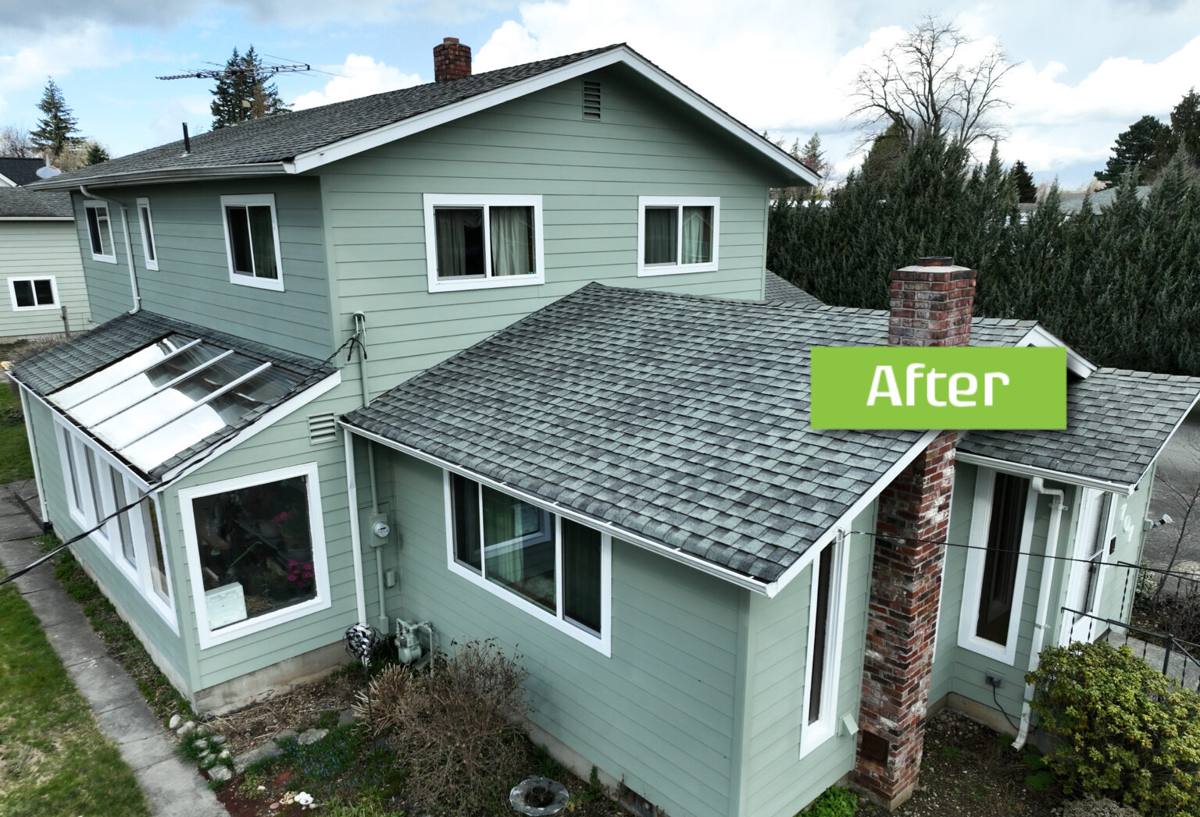
Why Storms Hit Sehome Roofs the Way They Do
Wind and Driving Rain
Whatcom County storms usually arrive off the water, and Sehome's elevation and proximity to the bay put it in the path of that weather. Wind doesn't just rip off loose shingles — it drives rain up and under roofing material at the edges, ridges, and any spot where flashing has started to separate. A roof that looks fine from the ground can have water working its way under the shingles at a lip that's been lifted by wind pressure.
Salt Air
Homes closer to the water deal with salt air accelerating corrosion on metal roofing components — flashing, fasteners, gutter hardware, and vent caps. Salt exposure doesn't cause dramatic failures overnight, but it shortens the working life of anything metal on a roof, which matters when we're deciding whether a storm-damaged flashing detail should be repaired or replaced outright.
Moss and Shade
Sehome's tree cover, especially near the hill and arboretum, keeps parts of many roofs shaded and damp for much of the year. Moss holds moisture against shingles, and during a storm that moisture-softened material is more likely to tear, lift, or lose granules than a dry, well-ventilated roof section. Storm damage repair here often uncovers moss-related wear that was already weakening the roof before the storm hit.
Signs Your Sehome Roof Has Storm Damage
Some storm damage is obvious. Some isn't visible from the ground at all, which is why a lot of leaks in this area show up weeks after the storm that actually caused them. Watch for:
- Shingles that are cracked, curled, torn, or missing entirely
- Granules collecting in gutters or at the base of downspouts
- Flashing around chimneys, skylights, or vents that looks bent, lifted, or separated
- Water stains on interior ceilings or upper walls, especially after a storm
- Sagging or soft spots when walking a roof (should only be checked by a professional)
- Debris — branches, needles, or moss clumps — dislodged and sitting in valleys or gutters
- Gutters pulled loose or hanging unevenly after high wind
- Visible daylight through the attic decking, in more severe cases
If you notice any of these after a storm, the roof should be inspected before the next round of rain, not after.
What a Correct Storm Damage Repair Involves
Inspection Before Anything Else
A proper storm damage repair starts with a full inspection, not just a look at the spot where the leak showed up inside. Wind and rain damage rarely stays contained to one shingle — we check the whole roof plane, the flashing details, the gutters, and the attic for moisture intrusion that hasn't reached the ceiling yet.
Temporary Protection First
If a roof has active exposure — a torn section, missing shingles, or lifted flashing — the first priority is stopping water from getting into the structure, usually with tarping or temporary sealing, before we schedule the permanent repair. This matters more in Bellingham than in drier climates, since a gap left open through even a few days of Pacific storm weather can turn a shingle repair into a decking and insulation problem.
Repair vs. Replace Decisions
Not every storm-damaged section needs a full replacement, but not every damaged shingle should just be swapped out either. We look at the age and condition of the surrounding roofing, whether moss or granule loss had already weakened adjacent material, and whether the flashing involved is original or has been patched before. A repair that ties into deteriorated surrounding material won't hold — it's better to know that up front than to redo the work in a year.
Matching Materials to Sehome's Conditions
Where we do replace shingles, flashing, or underlayment, we account for the shade and moss exposure common in this neighborhood — that can mean recommending algae-resistant shingle products in heavily shaded sections, or corrosion-resistant metal for flashing closer to the bay side of the property. The goal is a repair that holds up to the next storm, not just the one that already happened.
Our Storm Damage Repair Process
- Call and initial assessment — we ask what happened, when, and what symptoms you're seeing inside and outside.
- On-site inspection — we get on the roof (weather permitting) and in the attic to trace the actual extent of the damage.
- Temporary protection — if there's active exposure, we stabilize it the same visit whenever possible.
- Written scope and estimate — you get a clear explanation of what's damaged, what needs repair versus replacement, and why.
- Repair work — completed with materials suited to Sehome's shade, moisture, and salt-air exposure.
- Final walkthrough — we confirm the repair with you and check that flashing, seals, and shingle lines are solid before we consider the job done.
What Affects the Cost of Storm Damage Repair
Storm damage repair costs vary a lot depending on what's actually wrong, which is why we don't quote a number before an inspection. In general terms, small, localized repairs — a few shingles, a section of flashing — tend to fall in a modest, few-hundred-dollar range. Larger repairs involving decking replacement, extensive flashing work, or a full slope of shingles can run well into the thousands. The table below outlines the main factors that move a job from one end of that range to the other.
| Factor | Lower Cost / Simpler Job | Higher Cost / More Involved Job |
|---|---|---|
| Extent of damage | A few shingles or one flashing detail | Multiple roof planes or widespread wind lift |
| Decking condition | Dry, structurally sound | Water-damaged or soft, needs replacement |
| Moss or algae history | Minimal, roof gets good sun exposure | Heavy moss growth in shaded sections requiring treatment |
| Flashing materials | Recent, corrosion-resistant metal | Older or corroded flashing needing full replacement |
| Roof access | Simple, low-pitch, easy staging | Steep pitch or difficult access requiring extra safety setup |
| Timing | Scheduled repair, no active leak | Emergency tarping and expedited repair during storm season |
Storm Damage and Insurance Claims
Many storm damage repairs in Whatcom County are at least partly covered by homeowners insurance, depending on your policy and the cause of the damage. We can document what we find during the inspection — photos, a written description of the damage, and our assessment of likely cause — which homeowners often use to support a claim. We're not insurance adjusters and don't promise coverage outcomes, but a clear, honest record of the roof's condition tends to make that conversation with your insurer more straightforward.
Why It Matters to Hire a Crew That Already Works Sehome
Storm damage repair isn't just about patching a hole — it's about understanding why that section of roof failed and what will happen to it under the next storm. A crew that regularly works in Sehome and the surrounding Bellingham neighborhoods has already seen how salt air treats metal flashing near the bay, how moss builds up under the tree canopy near the hill, and which flashing and shingle details tend to fail first under sustained wind-driven rain. That local pattern recognition shows up in faster, more accurate diagnosis and repairs that are built for the conditions your roof will actually face again, not generic weather.
It also matters for response time. During Whatcom County storm season, roofs with active leaks need attention within days, not weeks. A contractor already working jobs in and around Bellingham can typically get to a Sehome property faster than one traveling in from farther out.
Get a Free, No-Pressure Estimate
If your Sehome home has visible storm damage, or you're just not sure whether recent weather caused a problem worth addressing, we're happy to take a look. The estimate is free, there's no pressure to commit to anything on the spot, and you'll get a straight answer about what's actually going on with your roof. Fill out the form below to get started.