 Bellingham Roofing
 Fairhaven's Climate Is Not Kind to Siding
Fairhaven sits close to Bellingham Bay, which means homes here deal with a combination of weather stresses that inland Whatcom County properties don't face to the same degree. Salt-laden air moves off the water and settles on exterior surfaces year-round, accelerating corrosion on fasteners, trim, and any siding material that isn't built to handle it. Add the wind-driven rain that comes through the Pacific Northwest's wet season, and you've got moisture finding its way into every gap, seam, and unsealed joint on a home's exterior.
Then there's the moss and algae. Many Fairhaven lots sit under mature tree cover or on shaded, north-facing slopes that stay damp for months at a time. That kind of persistent moisture is exactly what moss, mold, and mildew need to take hold on wood-based or poorly finished siding. Over a few seasons, that growth doesn't just look bad — it holds water against the surface and speeds up rot underneath.
None of this is unique to one street or one block. It's the reality of siding a home anywhere in this part of Bellingham, and it's why the material and the installation method matter more here than they would in a drier, more sheltered part of Whatcom County.
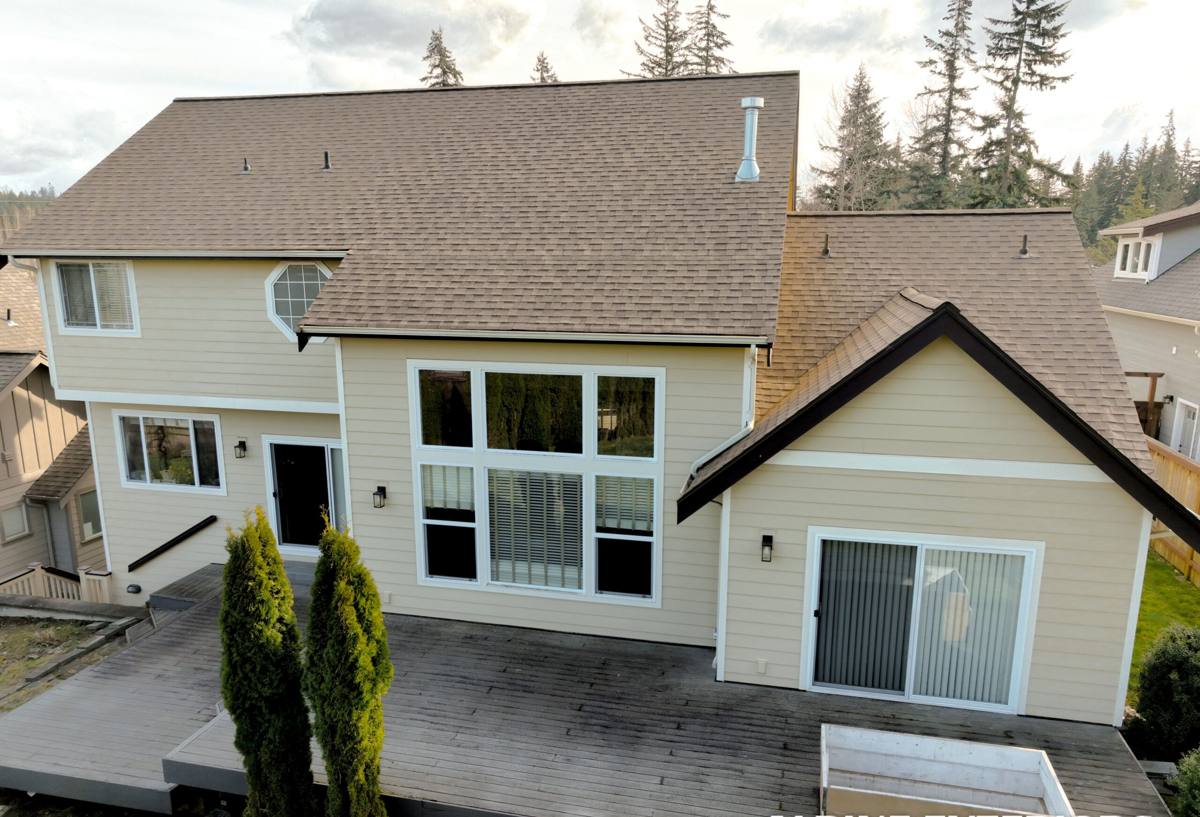
What Correct Installation Actually Involves
Good siding starts before a single board goes up. The materials underneath the visible surface do most of the real work of keeping a house dry, and skipping or rushing them is where most siding failures actually begin — not with the siding itself.
The Weather-Resistive Barrier
A properly lapped and sealed weather-resistive barrier (WRB) goes over the sheathing before any siding is installed. Every seam, penetration, and window or door opening needs to be flashed and taped correctly, with water always directed out, never trapped behind the cladding.
A Drainage Gap
In a climate as wet as ours, a rainscreen or drainage gap between the WRB and the siding gives any moisture that does get past the surface a way to drain and dry out instead of sitting against the wall assembly. This is one of the details that separates a siding job built for the Pacific Northwest from a generic installation.
Flashing at Every Transition
Roof-to-wall intersections, deck ledgers, window and door heads, and anywhere trim meets siding are the highest-risk spots for water intrusion. Kick-out flashing, head flashing, and properly lapped step flashing at these transitions are non-negotiable — not an upgrade, just correct construction.
Fastening and Clearance
Fiber cement siding has specific fastening patterns, nail spacing, and clearance requirements from grade, roofing, and hardscape. Getting these wrong voids warranty coverage and invites moisture at the bottom courses, which is one of the most common failure points we see on older homes in this area.
Why We Only Install James Hardie Fiber Cement
We made a deliberate decision as a company to install James Hardie fiber cement siding exclusively — not vinyl, not LP SmartSide, not primed wood or cedar. That's not a marketing position; it's based on what actually holds up in a climate like Whatcom County's.
Fiber cement is non-combustible and dimensionally stable, meaning it doesn't expand, contract, warp, or rot the way wood-based products can when they're exposed to constant damp conditions. It doesn't provide the organic material that moss and algae feed on the way wood siding does, which matters directly for Fairhaven's shaded, moisture-prone lots. And because it's cement-based rather than a wood composite, sustained moisture exposure doesn't break down its core the way it can with engineered wood products over time.
Climate-Engineered for This Region
James Hardie manufactures different product formulations for different climate zones under its HardieZone system. The Pacific Northwest's mild, wet, marine climate — including Bellingham and the rest of Whatcom County — falls under the HZ10 engineering, which is formulated for high-humidity, high-moisture regions rather than areas with severe freeze-thaw cycling. That distinction matters: siding engineered for the wrong climate zone can perform noticeably worse over its lifespan.
ColorPlus Factory Finish
Most of what we install uses Hardie's ColorPlus finish, a factory-applied and baked-on coating that resists fading, chipping, and cracking far better than field-applied paint. In a salt-air environment, that finish durability directly affects how long the siding looks good and how often it needs attention.
A Warranty Backed by the Manufacturer
James Hardie's product warranty is transferable and backed by the manufacturer, not just the installer. That gives homeowners real protection on the material itself, on top of whatever workmanship warranty their contractor provides.
Our Installation Process
Every home is different, but the sequence we follow doesn't change, because each step protects the one before it.
- Exterior assessment — checking existing sheathing, framing, and any moisture damage before proposing a scope of work.
- Removal of old siding and inspection of the wall assembly underneath for rot, mold, or structural issues that need to be addressed first.
- Repair of any damaged sheathing or framing — this step gets skipped by corner-cutting crews and is where hidden problems get resolved or covered up.
- Installation of the weather-resistive barrier with properly lapped and sealed seams.
- Installation of a drainage gap/rainscreen system appropriate to the wall assembly.
- Flashing at every window, door, roofline, and penetration.
- Installation of James Hardie siding per manufacturer fastening specifications.
- Trim, caulking, and final detail work at joints and transitions.
- Final walkthrough and cleanup.
Signs a Fairhaven Home Needs New Siding
Homeowners often notice symptoms long before they connect them to the siding itself. Some of the more common warning signs we see on homes in this area include:
- Persistent moss, algae, or dark streaking that returns shortly after cleaning
- Soft, spongy, or crumbling siding boards, especially near the bottom courses
- Paint that's peeling, bubbling, or failing faster than it should
- Visible gaps, warping, or separation at seams and trim boards
- Rising heating bills that suggest the wall assembly is no longer performing as insulation
- Interior stains, musty odors, or damp drywall near exterior walls
Any one of these on its own might be minor. Several together usually mean moisture has been getting behind the siding for a while.
What Drives the Cost of a Siding Project
Every home's siding project is priced individually, but the same handful of factors move the number up or down on nearly every job we quote in this area.
| Factor | Why It Matters |
|---|---|
| Home size and wall complexity | More square footage, dormers, and roof intersections mean more material and more detail work at transitions |
| Full tear-off vs. new construction | Removing old siding, disposing of it, and repairing any hidden damage adds labor beyond a fresh install |
| Siding profile | Lap siding, shingle-style panels, and board-and-batten each have different material and labor costs |
| Trim and accent detail | Extensive trim, window casing, and architectural detail add time and material |
| Site access and terrain | Sloped lots, tight lot lines, and limited staging area — common in older Fairhaven neighborhoods — can affect labor time |
| Underlying moisture repair | Rotted sheathing or framing discovered during tear-off adds cost but is essential to fix before new siding goes on |
As a broad range, professionally installed James Hardie siding in this region typically runs in the range of $9 to $16 per square foot installed, with the final number depending heavily on the factors above. A written, itemized estimate after an in-person assessment is the only reliable way to know where a specific home falls.
Why a Local Crew Matters for This Job
A contractor who regularly works in Fairhaven and the surrounding Bellingham neighborhoods understands things that don't show up in a generic estimate: how shaded lots and tree cover affect drying time between installation stages, how salt air affects fastener and flashing choices, and how to schedule work around Whatcom County's wetter months rather than fighting them.
Some homes in Fairhaven's historic areas may also have exterior design considerations worth checking with the City of Bellingham before work begins — a local crew that's navigated that process before can help homeowners avoid delays. Beyond that, a local crew is accountable locally: if a warranty issue or a question comes up two years down the road, you're calling a company with a truck in your neighborhood, not a call center.
Caring for Your Siding After Installation
James Hardie siding is low-maintenance, not zero-maintenance. A yearly rinse to keep moss and organic debris from accumulating, prompt attention to any caulking that shows cracking at joints, and keeping gutters clear so water doesn't sheet down the wall face will go a long way toward getting the full lifespan out of the installation. Because the ColorPlus finish is factory-applied, most homeowners won't need to repaint for many years — a real difference from wood siding maintenance schedules.
If your Fairhaven home is showing signs of siding wear, or you're planning ahead for a replacement, we're happy to take a look and put together a straightforward, no-pressure estimate. There's no obligation — just an honest assessment of what your home actually needs.