 Bellingham Roofing
 Siding Built for Where You Actually Live
Silver Beach sits close enough to the water that homes here take a different kind of beating than a house a few miles inland. Salt-laden air works its way into seams and fasteners. Driving rain off the water hits walls sideways, not straight down, which means it finds every gap a lazy installation leaves behind. And because this part of Bellingham holds onto shade and moisture longer than drier pockets of Whatcom County, moss and algae get a long runway to take hold on anything that stays damp. Siding installation here isn't just about picking a good material — it's about installing that material in a way that accounts for how water actually moves across this neighborhood's homes.
We install James Hardie fiber cement siding exclusively, and this page walks through what that means specifically for a Silver Beach property: what the climate does to siding over time, what a correct installation looks like, and why the details matter more here than they would somewhere drier and more sheltered.
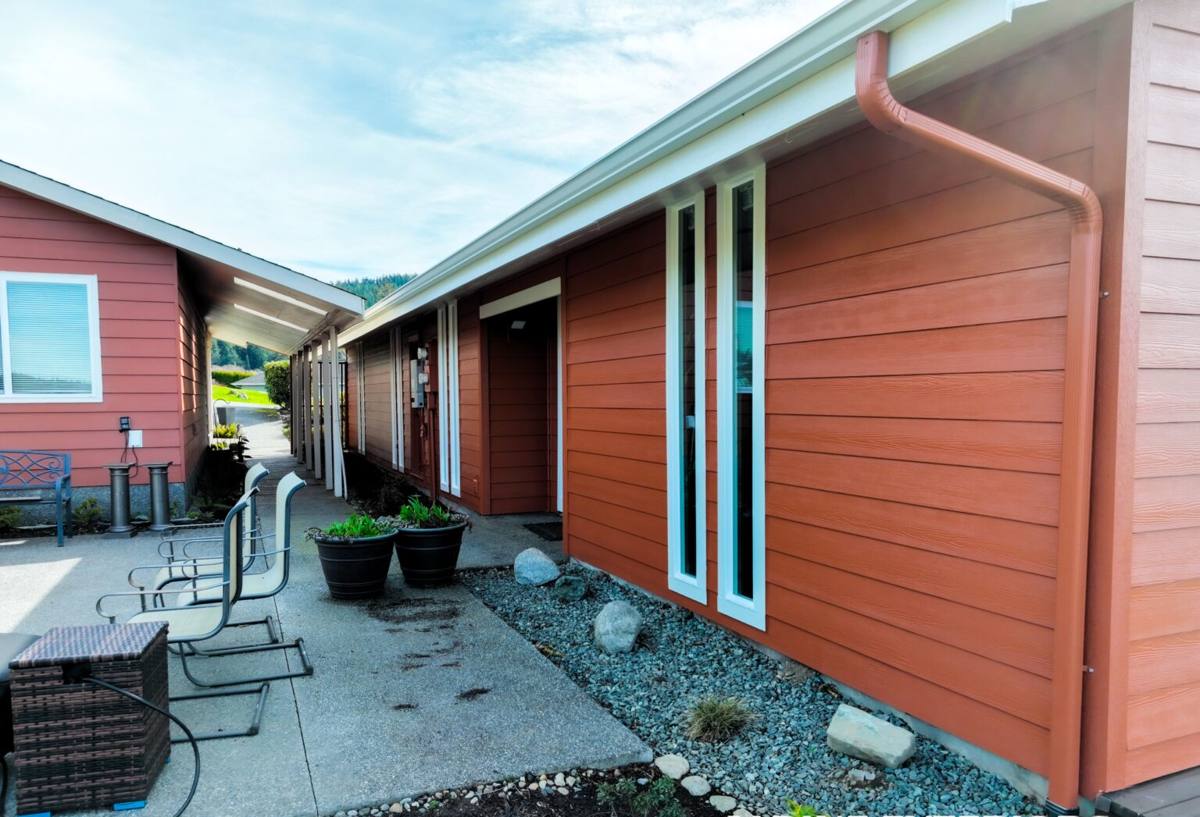
What Salt Air, Rain, and Moss Actually Do to Siding
Salt Air and Fasteners
Airborne salt doesn't just sit on the surface — it works into any exposed metal fastener, cut edge, or seam over years of exposure. Uncoated or under-spec fasteners corrode faster near the water, and once a fastener starts to fail, the panel around it loses its grip. This is why fastener selection and placement matter as much as the siding material itself in a location like Silver Beach.
Driving Rain and Wind-Driven Moisture
Rain that comes in at an angle behaves differently than rain that falls straight down. It gets pushed up under laps, into butt joints, and around trim if those details aren't built to shed water actively rather than just block it. A wall assembly that works fine in a calmer, drier location can fail here simply because it was never designed to handle sideways rain on a regular basis.
Moss, Algae, and Extended Dampness
Shade, tree cover, and cooler coastal air all slow down drying time after a storm. Siding that stays damp longer is siding that grows moss and algae sooner — and once organic growth gets a foothold in a seam or behind a trim board, it holds moisture against the substrate and accelerates whatever decay process is already underway. The fix isn't a pressure wash every spring; it's a siding system and installation detail that don't give moss anywhere easy to grow in the first place.
Why We Install Only James Hardie Fiber Cement
We don't offer a menu of siding brands. We install James Hardie, and we tell homeowners why up front rather than letting them assume it's the only option we happen to carry.
Non-Combustible, Engineered for Moisture
James Hardie fiber cement is non-combustible and manufactured specifically to resist the freeze-thaw, moisture-cycling, and rot that wood-based and wood-derived siding products are more vulnerable to. That matters directly in a climate that keeps siding damp for extended stretches, as Silver Beach's does.
HZ5 Product Engineering
James Hardie makes climate-specific product lines, and the HZ5 line is engineered for regions with more moisture exposure — which fits the Pacific Northwest generally and a near-water neighborhood like Silver Beach specifically. It's built to hold up under sustained damp conditions rather than just occasional wetting.
ColorPlus Factory Finish
Instead of a field-applied paint job, James Hardie's ColorPlus finish is baked on at the factory under controlled conditions, producing better adhesion and more consistent UV and moisture resistance than most site-applied coatings can match. Less maintenance repainting also means fewer disturbed seams and fastener points over the life of the siding — fewer places for water to start working its way in.
A Warranty Backed by the Manufacturer
James Hardie backs its products with a strong, transferable warranty. That's worth something on a home near the water, where the difference between siding that lasts decades and siding that needs early attention often comes down to material quality plus installation quality — and a manufacturer warranty only holds up if both are right.
What a Correct Siding Installation Actually Involves
The material is only half the equation. Most siding failures we see on older homes in this area trace back to installation shortcuts, not the siding itself giving out. A correct job includes:
Moisture Management Behind the Siding
A proper weather-resistive barrier, correctly lapped and taped, goes on before any siding. On a home exposed to driving rain, we also look at whether a rainscreen gap — a small air space between the barrier and the siding — makes sense, since it lets any moisture that does get behind the panels drain and dry instead of sitting against the wall.
Flashing at Every Vulnerable Point
Windows, doors, deck ledgers, roof-to-wall transitions, and any penetration through the siding need flashing detailed to shed water outward and downward, layered correctly with the weather barrier. These are the spots where most water intrusion actually starts, and they're the spots that get rushed on a low-bid job.
Fastening to Manufacturer Spec
James Hardie specifies fastener type, length, spacing, and placement for a reason — get it wrong and you either void the warranty or create the exact weak points that salt air and cyclical wetting exploit over time. We follow the spec, not a shortcut version of it.
Clearances That Let Siding Dry
Siding installed too close to grade, a deck, a roofline, or a walkway stays wet longer and picks up splash-back moisture and debris. Correct clearances aren't cosmetic — they're one of the simplest ways to keep moss and rot from getting a head start.
Our Process, Start to Finish
- Walkthrough and assessment — we look at your current siding's condition, the home's exposure to wind and rain, trim and window details, and any existing moisture or moss problems.
- Written estimate — a clear scope covering material, prep work, flashing and moisture-barrier details, and timeline, with no vague allowances.
- Tear-off and substrate check — removing old siding lets us catch sheathing damage or existing rot before it gets covered up again.
- Weather barrier and flashing installation — the unglamorous work that determines whether the siding performs for 30 years or 10.
- James Hardie installation to spec — correct fastening, clearances, and joint treatment throughout.
- Final walkthrough — we go over the finished job with you before calling it done.
Cost Factors for a Silver Beach Siding Project
Every home is different, but the same handful of factors drive most of the cost variation we see on siding jobs in this area.
| Factor | What Drives It | Typical Impact |
|---|---|---|
| Existing siding removal | Layers of old material, hidden rot, or asbestos-era products needing careful handling | More prep time and disposal cost |
| Substrate repair | Water damage found once old siding comes off | Adds cost but prevents covering up a problem |
| Home size and wall complexity | Square footage, gables, dormers, trim detail | More cutting, fitting, and labor hours |
| James Hardie product line and profile | Lap width, texture, and ColorPlus color selection | Moderate material cost variation |
| Moisture management upgrades | Adding or improving a rainscreen or flashing details | Worthwhile investment on water-exposed walls |
| Access and site conditions | Slopes, tight lot lines, landscaping to protect | Can affect scaffolding or staging needs |
Signs Your Current Siding Needs Attention
Before you get to full replacement, it helps to know what to watch for — especially in a climate that hides problems behind moss and constant dampness.
- Soft or spongy spots when you press on the siding
- Persistent moss or algae growth that comes back within a season of cleaning
- Visible warping, bowing, or gaps between panels
- Peeling or bubbling paint, especially near seams and trim
- Staining or discoloration that tracks with rain patterns on the wall
- Rot or soft wood found around window and door trim
- Rising energy bills that suggest air and moisture are getting through the wall assembly
If more than one or two of these apply, it's worth having someone look at what's happening behind the siding, not just at the surface.
Why Local Experience in Silver Beach Matters
A crew that's worked this neighborhood already knows how the wind and rain move across it, which sides of a house take the worst weathering, and where moss tends to establish first. That's the kind of judgment that shows up in small decisions — where to add extra flashing, whether a rainscreen gap is worth it on a particular wall, how tight clearances need to be near grade — that a crew unfamiliar with the area might not think to make. It also means we're not learning Whatcom County's permitting and inspection process on your project; we already know what the local process expects.
Get a Straight Answer on Your Siding
If your Silver Beach home's siding is showing its age, or you're planning ahead before it becomes a bigger problem, we're happy to take a look and give you a straightforward assessment — no pressure, no inflated scope. Request a free estimate using the form below and we'll walk you through exactly what your home needs.