 Bellingham Roofing
 Ferndale's Climate Puts Real Wear on Siding
Ferndale sits close to Bellingham Bay and the open water of the Strait of Georgia, which means homes here take a steady diet of salt-laden air on top of the everyday wet weather every Whatcom County homeowner deals with. That combination — salt air, wind-driven rain, and a long stretch of gray, damp months every year — is harder on exterior siding than most people realize until they're standing in front of a soft, discolored wall wondering how it got that bad.
Moss and algae are the most visible symptom. Ferndale's tree cover and the region's extended wet season give moss months at a time to establish itself on north- and west-facing walls, in corner joints, and anywhere siding stays shaded and damp. Left alone, that moss holds moisture against the surface long after the rest of the house has dried out, and that's when real damage — swelling, rot, paint failure — starts underneath the surface, not just on top of it.
None of this means Ferndale homes are doomed to constant siding problems. It means repairs need to account for what's actually happening in this climate, not just patch what's visible and hope it holds.
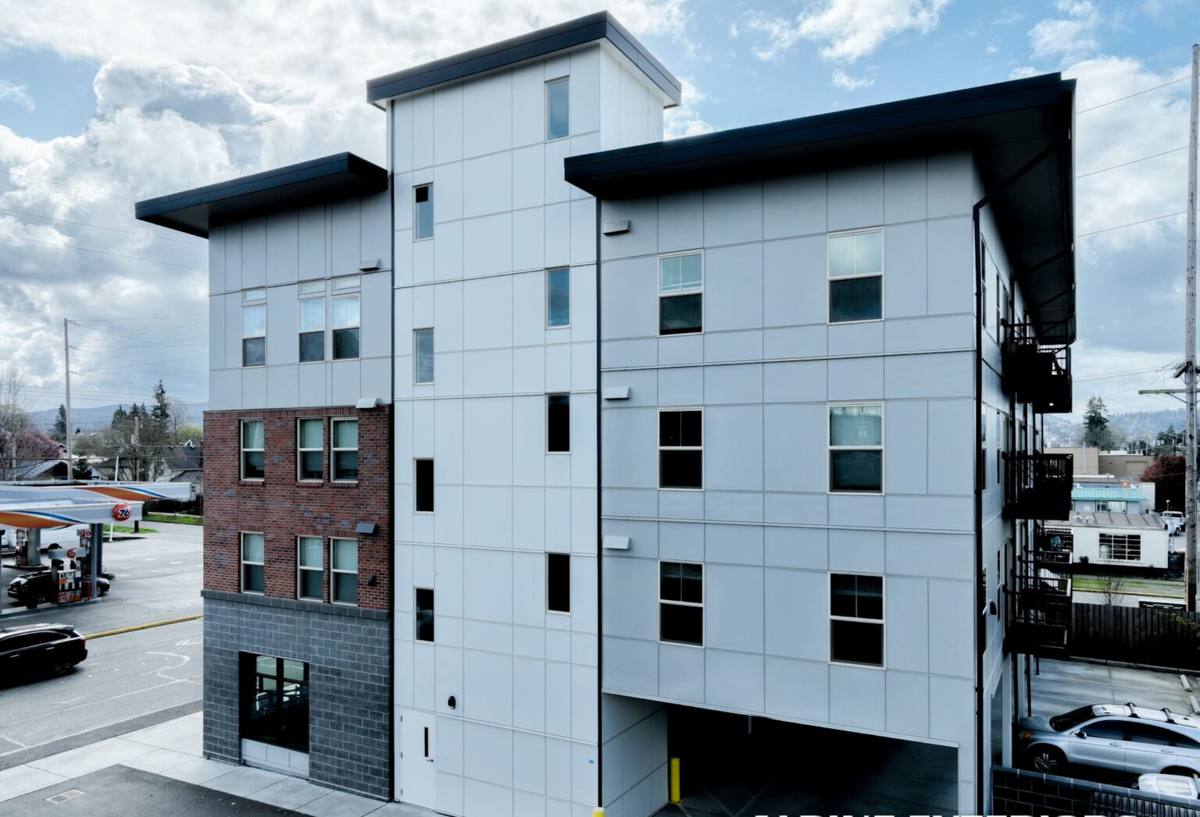
Signs Your Ferndale Home Needs Siding Repair
Most siding problems give warning signs well before they become expensive. Homeowners who catch these early save money and avoid the kind of hidden damage that turns a repair into a much bigger project:
- Soft or spongy spots when you press on the siding, especially near the bottom courses or under windows
- Persistent moss, algae, or dark streaking that keeps coming back after cleaning
- Paint that's peeling, bubbling, or flaking in patches rather than evenly across the wall
- Visible cracks, warping, or boards pulling away from the wall
- Gaps opening up at seams, corners, or where siding meets trim and window frames
- A musty smell near exterior walls inside the house, or discoloration on interior drywall near an exterior corner
- Higher-than-expected heating bills, which can point to moisture-compromised insulation behind damaged siding
Any one of these is worth a look. Several together usually mean water has been getting behind the siding for a while, not just sitting on the surface.
What a Correct Repair Job Actually Involves
It's Not Just Swapping a Board
The fastest way to do a siding repair wrong is to replace only what's visibly damaged and move on. If a board is rotten enough to need replacing, there's a good chance moisture reached it through a gap, a failed seal, or damaged house wrap — and that entry point is still there after the new board goes up unless someone actually looks for it. A repair done right means pulling the damaged section, inspecting the sheathing and weather-resistive barrier behind it, and fixing whatever let the water in before closing the wall back up.
On older Ferndale homes especially, we sometimes find that a small patch of visible rot is sitting on top of sheathing that's been damp for years. Replacing the siding without addressing that is a repair that fails again in a season or two.
Flashing and Moisture Management
Most siding failures trace back to flashing details, not the siding material itself: missing or improperly lapped flashing above windows and doors, no kick-out flashing where a roofline meets a wall, or caulk used as a substitute for proper flashing instead of a backup to it. A correct repair checks and corrects these details, uses the right sealant for the joint (not just whatever's on the truck), and makes sure water has a way to drain out from behind the siding rather than getting trapped.
Common Siding Types on Ferndale Homes — Repair Considerations
What a repair involves, and how long it holds, depends heavily on what siding is already on the house:
| Siding Type | Repairability | Moisture/Moss Behavior | Typical Repair Longevity |
|---|---|---|---|
| Vinyl | Panels snap out easily but exact color/style matches get harder to find as products age | Doesn't rot, but traps moisture behind it if installed too tight; moss grows on the surface | Good if matching panels are available |
| Cedar / Wood | Repairable but labor-intensive; often needs repainting or restaining the whole wall to blend | Absorbs moisture readily; moss and rot are the most common failure points in this climate | Shortest — needs ongoing maintenance to hold |
| Engineered Wood (OSB-based) | Repairable if caught early; edge and seam damage spreads fast once it starts | Vulnerable at cut edges and seams if factory sealant has worn through | Depends heavily on how early damage is caught |
| Fiber Cement (James Hardie) | Individual planks replace cleanly; factory finish matches well even years later | Non-combustible, resists moss growth better than raw wood, engineered for wet climates | Long — repairs are usually isolated, not recurring |
Our Siding Repair Process
- On-site inspection. We look at the visible damage and check the areas around it — corners, seams, flashing points — that tend to hide related problems.
- Probe testing. Suspect soft spots get physically checked, not just eyeballed, so we know the real extent of damage before quoting anything.
- Honest scope recommendation. We'll tell you plainly whether this is a straightforward repair, a larger repair, or a case where replacement makes more sense long-term.
- Written estimate. No surprise add-ons once work starts — what we find during the inspection goes into the scope up front.
- Removal and behind-the-wall check. Damaged siding comes off, sheathing and weather barrier get inspected, and any hidden moisture damage gets addressed, not covered up.
- Repair or replacement. Matching materials go back up, or if the existing product isn't a good long-term fit for the area, we'll talk through replacing that section or wall with James Hardie fiber cement.
- Sealing and finish work. Correct caulking, flashing corrections, and paint touch-up so the repair blends in rather than standing out.
- Final walkthrough. We show you what was found and what was done before calling the job finished.
When Repair Isn't Enough: Why We Only Install James Hardie
Not every repair needs to turn into a bigger project. Isolated damage on sound siding is often a clean, contained fix. But when we're looking at a wall with recurring moss and rot problems, multiple failed patches over the years, or damage that keeps returning to the same section, patching it again just resets the clock on the same failure.
In those cases we're honest that a section — or sometimes a full elevation — is better off replaced than repaired again. When that conversation happens, James Hardie fiber cement is the only siding we install, and it's a deliberate standard, not a sales pitch. It's non-combustible, holds its factory-baked ColorPlus finish far longer than field-painted wood or engineered wood siding typically does, and Hardie's HZ product lines are specifically engineered for wet, humid climates like ours. It also carries a strong, transferable manufacturer warranty. We don't install vinyl, LP SmartSide, Cemplank, Allura, or raw cedar or spruce — not because those products have no merit, but because we've made a professional call about what holds up best, with the least maintenance burden, on homes exposed to this kind of weather year after year.
If your current siding is one of those other materials, that doesn't change how we approach a repair — we'll fix what's fixable. It only comes up when the honest answer is that repair has run its course on a section of wall.
Why a Bellingham-Based Crew That Already Works Ferndale Matters
Siding repair is very site-specific. A crew that regularly works Ferndale and the surrounding Bellingham area has already seen which corners of a house take the worst of the wind off the bay, which wall orientations grow moss fastest, and which older construction methods common in this area tend to hide moisture problems behind otherwise normal-looking siding. That familiarity means less time spent diagnosing and more time spent fixing the actual problem.
It also means a faster response. Being local to the Bellingham area, not dispatched from somewhere out of county, matters when storm damage or a sudden leak needs attention before the next round of rain moves through.
What Siding Repair Costs Depend On
There's no single price for siding repair because the variables genuinely change the job. These are the main factors that drive cost up or down:
| Factor | Why It Matters |
|---|---|
| Extent of damage | A single board is a different job than a wall with hidden rot found once we open it up |
| Siding material | Some materials and matching colors are easier to source than others, especially older or discontinued products |
| Accessibility | Second-story sections, steep grades, or landscaping close to the wall add time and equipment needs |
| Sheathing condition | If the wall structure behind the siding is compromised, that repair adds real cost but isn't optional |
| Color and finish matching | Blending a repair into existing paint or factory finish can mean touch-up work beyond the siding itself |
We won't know which of these apply to your home until we look at it in person, which is why we start every job with an honest, no-obligation inspection rather than a phone-quote guess.
If you're seeing moss buildup, soft spots, or damage on your Ferndale home's siding, we're happy to come take a look and give you a straight answer on what it needs. Fill out the form below to request a free, no-pressure estimate.