 Bellingham Roofing
 Barkley Homes Face a Specific Kind of Weather Test
Barkley sits close enough to Bellingham Bay and the surrounding wetlands that homes here deal with a steady mix of salt-tinged air, wind-driven rain off the water, and long stretches of damp, shaded weather that keep moss and algae active for most of the year. None of that is unusual for Whatcom County, but it does mean siding in this neighborhood works harder than siding on a house fifty miles inland. Materials that hold up fine in a drier climate can start failing here years ahead of schedule.
The combination that causes the most damage isn't any single factor — it's moisture that never fully dries out combined with organic growth that holds that moisture against the wall. Add salt-laden air working on fasteners and trim, and you get a slow, steady breakdown that's easy to miss until it's already deep into the wall assembly.
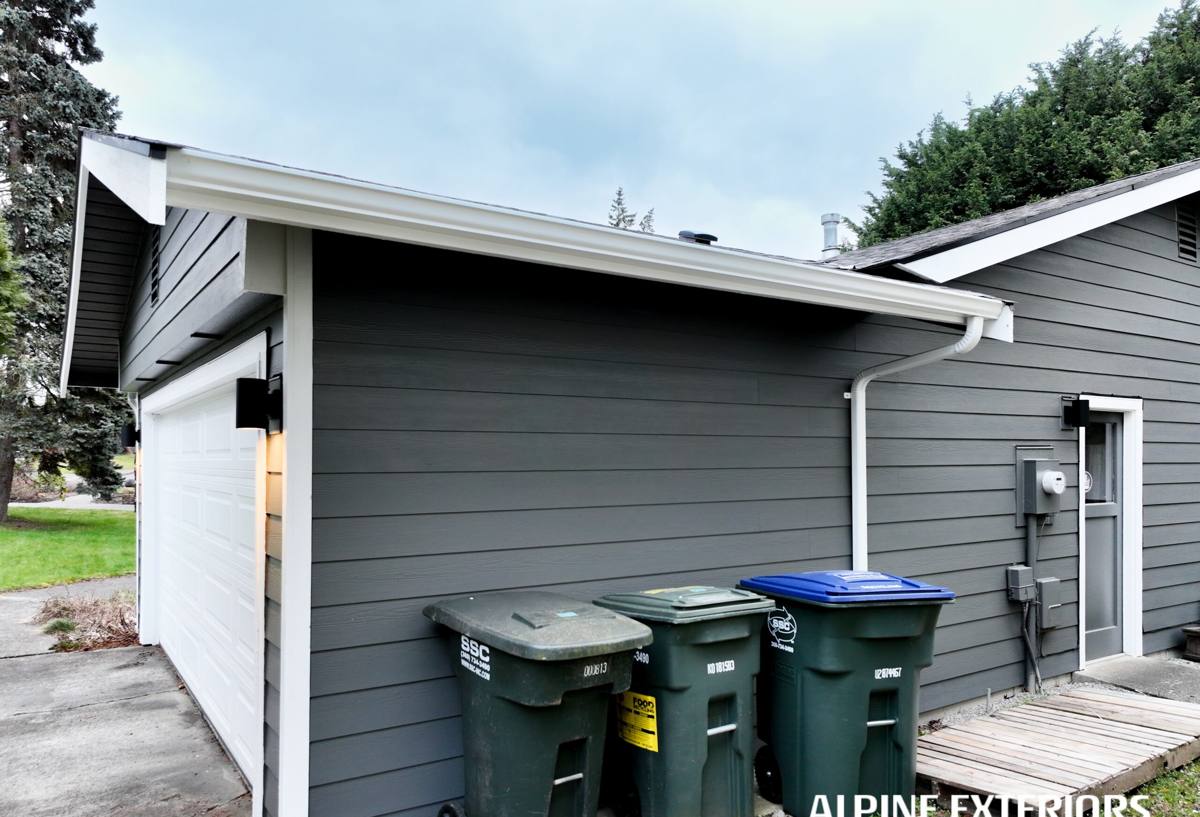
What Actually Wears Out Siding in This Neighborhood
Driving Rain and Wall-Plane Moisture
Storms off the Sound and the Strait don't just fall straight down — wind pushes rain sideways into wall surfaces, especially on exposed elevations and around window and door openings. Siding that isn't installed with proper flashing and drainage behind it traps that water instead of shedding it, and the wall sheathing underneath pays the price long before anyone notices a problem from the curb.
Moss, Algae, and Shade
Mature trees and marine-layer cloud cover keep a lot of Barkley's tree-lined lots shaded and damp well into the season. Moss and algae take hold on north-facing walls and anywhere siding stays wet longer than it should, and once organic growth is established it holds moisture against the surface around the clock — accelerating rot in wood-based products and breaking down paint films on anything not engineered to resist it.
Salt Air and Fastener Corrosion
Proximity to the bay means a low but constant level of salt in the air. Over years, that salt content works on unprotected fasteners, trim edges, and any siding material with weak points at seams and joints. It's a slow process, which is exactly why it's often overlooked until a full section of siding needs to come off to find the source of a stain or soft spot.
Signs a Barkley Home Needs Siding Replacement, Not Another Repair
- Soft or spongy spots when you press on the siding, especially near the bottom courses or under windows
- Paint that keeps failing in the same spots within a year or two of repainting
- Persistent moss or algae staining that comes back within months of cleaning
- Visible gaps, warping, or buckling panels, particularly on the north and west-facing walls
- A musty smell in an adjacent room, or interior stains near exterior walls
- Caulk that's cracked or pulling away at seams and trim joints
- Siding age of 20+ years on wood-based or older composite products
One or two of these on their own might mean a repair is enough. Several together, especially combined with the age of the material, usually mean the siding system itself has reached the end of what patching can fix.
Why We Only Install James Hardie Fiber Cement
We don't install vinyl, LP SmartSide, primed spruce, cedar, or other fiber cement brands. That's a deliberate standard, not a sales pitch, and it comes down to how each of those materials actually performs in exactly the conditions Barkley sees every winter.
Wood-based products like cedar and engineered wood siding can look excellent when new, and they're not bad products in the right climate — but they depend heavily on paint film integrity and consistent maintenance to keep moisture out. In a neighborhood with this much sustained dampness and shade, any gap in that maintenance schedule gives moisture an opening, and wood-based substrates don't tolerate that opening well over time. Vinyl sheds water well enough on its own, but it can't take direct-fastened trim details the way homeowners often want, it expands and contracts more with temperature swings, and it doesn't offer the same fire performance or long-term color retention.
James Hardie fiber cement is engineered specifically for climates like this one. It's non-combustible, it doesn't support the kind of moisture-driven rot that wood products are vulnerable to, and Hardie's HZ5 product line is formulated for the freeze-thaw and moisture cycling that the Pacific Northwest sees. The factory-applied ColorPlus finish resists fading and holds up against the exact kind of algae and moss growth common on shaded Barkley lots — it's not a field-applied paint job relying on perfect weather during installation.
Material Comparison for This Climate
| Material | Moisture Resistance | Maintenance Burden | Fit for Bellingham Climate |
|---|---|---|---|
| James Hardie Fiber Cement | Excellent — non-combustible, engineered for moisture cycling | Low — factory finish, occasional wash | Purpose-built for this climate |
| Vinyl Siding | Sheds surface water, weak at seams and penetrations | Low, but limited repair options | Fair — struggles with detailing and impact |
| Cedar / Wood Siding | Depends entirely on paint film and upkeep | High — repaint and caulk cycle | Poor without strict maintenance discipline |
| LP SmartSide / Engineered Wood | Good if edges stay sealed; vulnerable at cuts and joints | Moderate — edge sealing is critical | Fair — installation sensitivity is high |
What a Correct Siding Replacement Actually Involves
Siding replacement is a wall-assembly job, not just a surface swap. Doing it right in a climate like Barkley's means paying attention to what's happening behind the panels, not just what's visible from the street.
Tear-Off and Sheathing Inspection
Once the old siding comes off, we check the sheathing underneath for rot, soft spots, or prior water damage — problems that are common on older Bellingham-area homes where trapped moisture has been working quietly behind the old material for years. Any compromised sheathing gets addressed before anything new goes up.
Weather-Resistive Barrier and Flashing
A correctly lapped weather-resistive barrier, along with proper flashing at windows, doors, and every horizontal trim transition, is what actually keeps driving rain out of the wall. This layer matters more in a wind-driven-rain climate than the siding material itself — it's the backup system that does its job when water inevitably gets past the surface.
Clearances and Drainage
James Hardie specifies minimum clearances from grade, roof lines, and decks, along with a rainscreen or drainage plane in many applications. These clearances exist specifically to let installed siding dry out between storms instead of sitting wet — skipping them is one of the most common causes of early siding failure, regardless of the material used.
Fastening to Spec
Fastener type, spacing, and placement are all specified by Hardie for a reason, and getting them wrong is one of the fastest ways to void the product warranty and invite the kind of long-term moisture and corrosion issues salt air makes worse. Correct installation isn't optional detail work — it's what determines whether the siding performs for its full service life.
Cost Factors for a Barkley Siding Project
| Factor | Why It Matters |
|---|---|
| Amount of sheathing repair needed | Hidden rot found during tear-off adds scope but has to be fixed to do the job right |
| Home size and wall complexity | More corners, trim details, and stories increase labor time |
| Siding profile and accessories | Lap width, trim style, and soffit/fascia work affect material cost |
| Access and site conditions | Mature landscaping, tight lot lines, and slopes common in Barkley can affect staging |
| Existing paint or coating removal | Some older siding requires extra prep or disposal handling |
We won't quote a number without seeing the house, but these are the variables that move a bid up or down, and we walk through each one during the estimate so there are no surprises once work starts.
Why a Crew That Already Works Barkley Matters
Every neighborhood in Whatcom County has its own quirks — lot layouts, tree cover, wind exposure, permitting norms with the City of Bellingham — and Barkley is no exception. A crew that's already worked on homes in this area knows what to expect from the sheathing on houses of a certain age, understands how shade and moisture patterns typically play out on specific lots, and isn't learning the neighborhood on your dime. That familiarity shows up in fewer surprises during tear-off and a tighter, more predictable timeline.
It also matters for accountability. A local crew is easy to reach after the job is done, stands behind the installation with a local reputation on the line, and isn't disappearing to the next region once the final panel is up.
How to Vet a Siding Contractor
- Ask which specific siding brand and product line they install, and why they chose it
- Confirm they carry current Washington state contractor licensing and insurance
- Ask how they handle sheathing repair if rot is found during tear-off — get it in writing
- Ask about fastener type and clearance details specific to your home's exposure
- Get a written scope that separates material, labor, and any allowance for hidden repairs
- Ask how the manufacturer's warranty is structured and what voids it
Living With Your New Siding
James Hardie siding is low-maintenance, not no-maintenance. An occasional gentle wash to keep moss and algae from establishing themselves, a yearly look at caulking around trim and penetrations, and prompt attention to anything unusual are really all it takes. Compared to the repaint-and-recaulk cycle that wood siding demands in this climate, it's a significant reduction in upkeep — but a five-minute check after a hard winter storm season is still worth doing.
If your Barkley home is showing signs of siding wear, or you're planning ahead before it becomes an urgent problem, we're happy to take a look and walk you through what we're seeing — no pressure, no obligation. Request a free estimate using the form below and we'll get you a straightforward assessment of your home's siding and what it would take to do it right.