 Bellingham Roofing
 Why Silver Beach Homes Need Windows Built for the Local Climate
Homes in the Silver Beach area of Bellingham take on a specific combination of weather stress that a lot of standard window products simply aren't designed for. Moist, salt-tinged air off the Sound works its way into hardware and frame seams over the years. Driving rain, pushed sideways by wind rather than falling straight down, tests flashing and seals that would be fine in a drier climate. And the long stretch of overcast, wet months that Whatcom County sees every year gives moss, algae, and mildew plenty of time to take hold on sills, trim, and anything else that stays damp for days at a stretch.
None of that is unusual for this part of Washington. But it does mean a window job here has to account for things a generic "replace the glass" approach ignores: how the unit sheds water, how the frame material handles repeated wet-dry cycling, and how the installation itself keeps moisture from getting behind the siding in the first place. Get those details right and a window will perform for decades. Get them wrong and you're looking at soft framing, fogged glass, and drafts within a handful of years — regardless of how nice the window looked in the showroom.
What "Custom" Actually Means for a Window Job
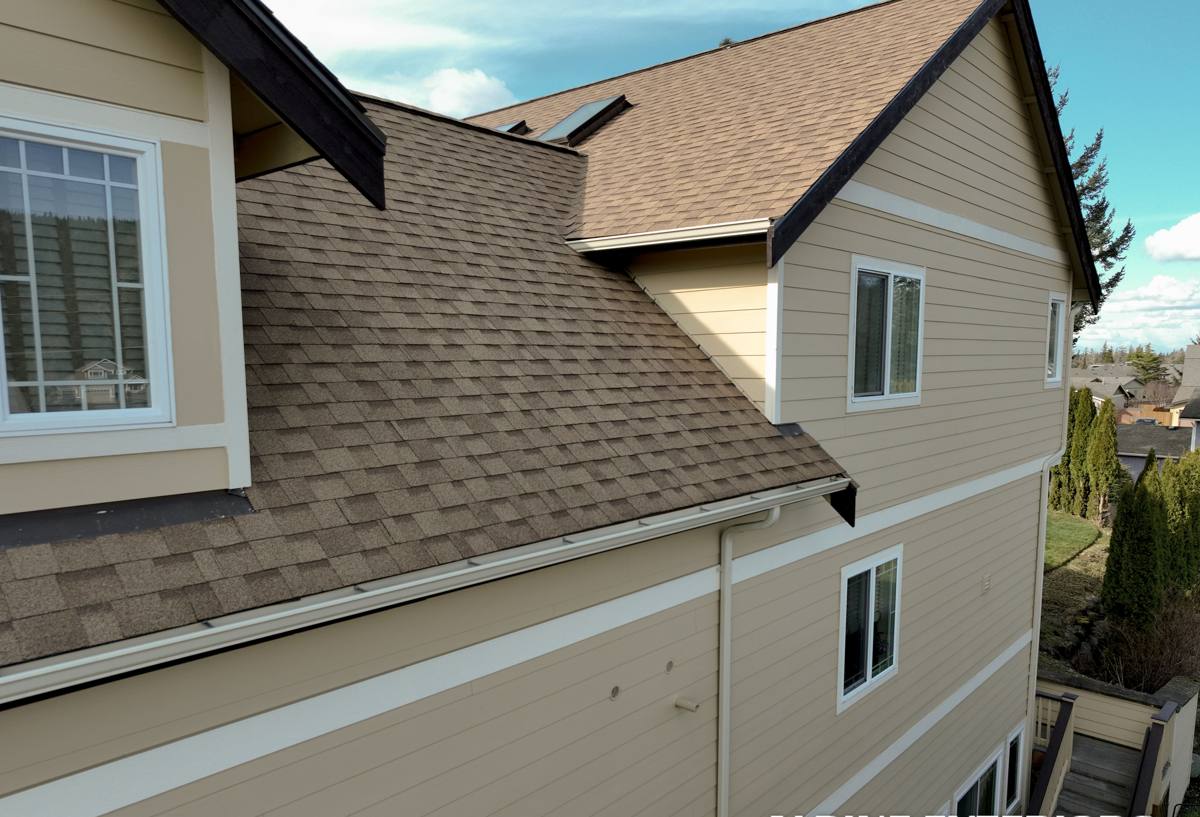
"Custom windows" doesn't necessarily mean unusual shapes or high-end finishes, though it can include those. In practice, most custom window work in an older or established neighborhood like Silver Beach comes down to one simple fact: the openings in the house rarely match a modern stock size exactly. Homes built across different decades, additions put on at different times, and settling that's happened over the years all mean the rough openings you're working with are specific to that house.
A correct custom job starts with precise measurement of every opening — width, height, depth, and squareness — because even a small mismatch forces compromises: extra trim to hide gaps, packing material that isn't really doing its job, or a unit that's slightly out of square and never seals evenly. Custom sizing eliminates those workarounds. It also matters for:
- Non-standard shapes — arched, angled, or oddly proportioned openings common in additions and older builds
- Matching sightlines and trim profiles so new windows don't look bolted onto an older home
- Replacing windows in load-bearing or structurally sensitive walls where the opening can't simply be resized to fit an off-the-shelf unit
- Situations where the original window was already a custom or discontinued size
Material and Glazing Choices That Actually Hold Up Here
The frame material matters as much as the glass, especially with the moisture load this area sees. There's no single "best" choice for every home — it depends on budget, the home's style, and how much maintenance the owner wants to take on.
| Frame Material | Moisture Performance | Maintenance | Best Fit |
|---|---|---|---|
| Vinyl | Good — won't rot, handles damp cycling well | Low | Budget-conscious replacements, rental and starter homes |
| Fiberglass | Excellent — very stable, resists warping and swelling | Low | Homes wanting durability without wood upkeep |
| Wood | Fair — needs a good exterior clad or diligent upkeep | High | Historic or character homes where wood sightlines matter |
| Aluminum-clad wood | Very good — wood interior, protected exterior face | Moderate | Owners who want a wood look with real weather protection |
On the glazing side, dual-pane with a Low-E coating and argon fill is the standard baseline for this climate — it cuts heat loss and helps control condensation on the interior glass, which is a real issue in a house that runs humid through the wet months. For rooms that face prevailing wind and rain, or for homes closer to open water where wind-driven moisture is a bigger factor, triple-pane or upgraded weatherstripping is worth pricing out. Hardware matters too: cheap steel fasteners and hinges corrode faster in salt-tinged air, so stainless or coated hardware is worth the small upcharge on a job that's supposed to last.
A Note on Why We Steer Clients Away From Certain Setups
We don't install every product on the market, and it's not because a given material is "bad" — it's about matching the product to the conditions. Bare, unprotected wood exteriors, for example, look great on day one but demand a repainting and resealing schedule that most owners underestimate; skip a cycle or two in a wet climate and moisture gets in before anyone notices. We'd rather steer a client toward a clad or fiberglass option that gives the same look with far less upkeep than sell something that turns into a maintenance chore.
Signs Your Current Windows Are Losing the Battle
Windows fail slowly, which is part of why the damage is often worse than expected by the time someone calls. Worth checking for:
- Fogging or a milky haze between the panes — the seal has failed and the insulating gas is gone
- Soft, discolored, or spongy wood at the sill or lower frame corners
- Visible moss, algae, or black staining on the frame or sill that keeps coming back after cleaning
- Drafts you can feel with a hand near the frame on a windy day
- Windows that are hard to open, close, or lock, or that don't sit flush anymore
- Paint that's bubbling or peeling specifically around the window opening, not the wall in general
- A noticeable jump in heating costs with no other explanation
Any one of these on its own might just mean a repair. Two or three together, especially moss growth combined with soft wood, usually means moisture has been getting behind the frame for a while and a repair won't hold for long.
How the Installation Process Works
A window replacement is mostly won or lost in the details you don't see once the trim goes back on. Our process on Silver Beach homes generally runs:
- On-site assessment and measurement — every opening measured individually, plus a check of the surrounding framing and siding for existing moisture damage
- Material and glazing selection — walking through frame material, glazing package, and hardware options against the home's exposure and the owner's budget
- Custom ordering — units built to the exact opening dimensions, which typically means a lead time of several weeks before installation day
- Careful removal — old units taken out without tearing up more siding or trim than necessary, and any rot or damage found underneath is flagged before we go further
- Flashing and drainage detailing — sill pan flashing, head flashing, and proper overlap with the house wrap so water is directed out and away from the framing, not trapped behind it
- Setting, shimming, and sealing — unit set square and level, insulated at the gaps, and sealed with materials rated for exterior exposure, not just a bead of caulk
- Trim and finish work — interior and exterior trim reinstalled or replaced to match the home
- Walkthrough — operation checked on every window, and the site cleaned up before we leave
The flashing and drainage step is where a lot of window jobs quietly go wrong. It's invisible once the trim is back on, but it's the single biggest factor in whether a window job lasts fifteen years or leads to a rot problem in five.
What Drives the Cost
Every home and every opening is different, so we don't quote sight-unseen — but these are the main factors that move the price on a custom window job:
| Factor | Why It Matters |
|---|---|
| Number and size of openings | More and larger windows mean more material and labor |
| Custom shapes or non-standard sizes | Anything outside a standard rectangle requires special ordering and fitting |
| Frame material | Vinyl, fiberglass, wood, and clad options carry different material costs |
| Glazing package | Triple-pane, upgraded Low-E, and specialty glass add to the base cost |
| Structural repair needed | Rot found at removal has to be repaired before the new unit goes in |
| Access and site conditions | Second-story or hard-to-reach openings take more time and equipment |
As a general rule, expect custom-sized replacement windows to run from the low thousands per opening up into higher figures for large, specialty, or structurally involved installs. We'll always give a firm, itemized number after we've actually looked at the openings — not a phone estimate that changes once we're on site.
Keeping Moss, Algae, and Moisture From Coming Back
Even a properly installed window benefits from a little upkeep in this climate. A few habits go a long way:
- Rinse sills and frames a couple of times a year to keep moss and algae from establishing, especially on north- or shade-facing windows
- Keep nearby gutters and downspouts clear so runoff isn't sheeting down across window openings
- Check exterior caulking annually and touch up anywhere it's cracked or pulled away
- Trim back vegetation that keeps a window shaded and damp longer than the rest of the house
- Wipe interior condensation off the glass during cold snaps so it isn't sitting on the sill for days
None of this takes much time, but skipping it for a few years is exactly how moss gets a foothold and how moisture starts working into places it shouldn't.
Why a Crew That Already Works in Silver Beach Makes a Difference
Window replacement is one of those jobs where local experience shows up in the small decisions — how much flashing overlap to build in for wind-driven rain, which frame materials actually hold up through a Whatcom County winter instead of just looking good on a spec sheet, and what to expect when you open up a wall on a home of a certain age in this area. A crew that's done this work around Bellingham has already seen how these homes are built, what tends to go wrong, and how to size a custom opening correctly the first time — which matters when a mis-measured order means weeks of lead time lost on a reorder.
It also means someone local is on the other end of the line if a question comes up after the install, not a call center or a subcontractor who's moved on to another region. For a job that's supposed to protect the house for the next fifteen to twenty-five years, that kind of accountability is worth as much as the window itself.
If your windows are original to the house, showing signs of wear, or you're just planning ahead, we're happy to take a look and talk through honest options — no pressure, no pushy sales pitch. Reach out below for a free estimate and we'll walk the property with you.