 Bellingham Roofing
 New Roof Installation Built for Silver Beach Conditions
Silver Beach sits in one of the more weather-tested pockets of Bellingham. Homes here deal with the same steady mix that affects most of Whatcom County — salt-laden air moving in off the water, long stretches of driving rain in the fall and winter, and a moss season that can run most of the year if a roof isn't shedding water and light the way it should. A new roof installation in this neighborhood isn't a generic swap-the-shingles job. It's a chance to correct whatever the old roof got wrong — usually ventilation, flashing, or underlayment choices that weren't matched to this climate — and put something on the house that's actually built for it.
We install new roofs for homeowners throughout the Bellingham area, and Silver Beach's mix of older homes, mature trees, and coastal exposure comes up often enough that we've got a clear sense of what holds up here and what doesn't.
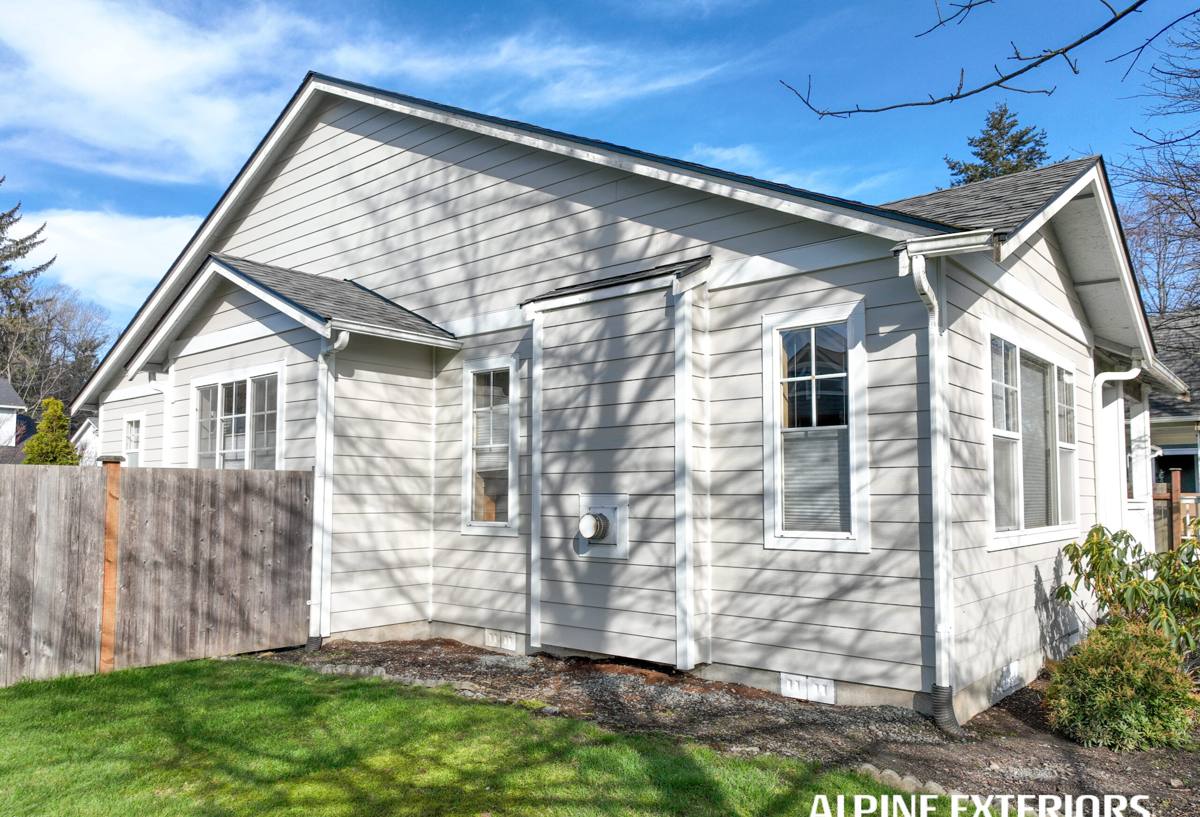
What This Climate Actually Does to a Roof
It helps to be specific about what a Silver Beach roof is up against, because it changes what "correct installation" means.
Salt Air and Corrosion
Airborne salt accelerates corrosion on exposed metal — nail heads, flashing, vent caps, gutter hardware. A roof installed with the wrong fastener or flashing material can start showing rust streaks and pinhole leaks years before it should. This is a material-selection issue as much as an installation issue, and it's one of the first things we account for.
Driving Rain
Bellingham doesn't just get rain — it gets wind-driven rain that hits roof planes at an angle instead of falling straight down. That matters at every horizontal seam, valley, and penetration. Underlayment coverage, valley flashing, and how shingles or panels are lapped all have to account for water moving sideways under wind pressure, not just running off downhill.
A Long Moss Season
Moss needs shade, moisture, and organic debris to get established, and Silver Beach's tree cover gives it plenty of all three. Moss holds moisture against roofing material, lifts shingle edges, and works its way under flashing over time. A roof that isn't ventilated and pitched to dry out between rain events will grow moss faster, no matter how good the shingles are.
What a Correct New Roof Installation Involves
A new roof is more than material on a deck. Done right, it's a system, and every layer has a job:
- Deck inspection and repair — any soft, delaminated, or water-damaged sheathing gets replaced before anything new goes down. Installing over a bad deck just hides the problem.
- Ice-and-water shield at vulnerable points — eaves, valleys, and penetrations get a self-adhering membrane, not just felt, because these are where wind-driven rain and ice dams do the most damage.
- Synthetic underlayment across the field — more tear-resistant and more water-resistant than old-style felt, and it holds up better during the install window if weather turns.
- Proper flashing at every transition — chimneys, skylights, sidewalls, and roof-to-wall junctions are where most leaks start. Flashing has to be formed and layered correctly, not just caulked.
- Balanced ventilation — intake at the eaves and exhaust at the ridge, sized to move air through the attic. This is what keeps moisture from condensing under the deck and what helps the roof dry out between storms, which directly slows moss growth.
- Correct nailing pattern and fastener spec — including corrosion-resistant fasteners appropriate for a coastal climate.
Skip any one of these and you get a roof that looks fine for a season or two and then starts showing problems exactly where the shortcuts were taken.
Our Installation Process
1. On-Site Assessment
We walk the roof, check the attic for ventilation and moisture issues, and look at how the current roof has aged — where moss has taken hold, where flashing has failed, whether the deck has soft spots. This tells us what the new roof needs to solve, not just replace.
2. Material and Ventilation Plan
We recommend materials and a ventilation layout based on the home's exposure, roof pitch, and tree cover, not a one-size-fits-all package.
3. Written, Itemized Estimate
You get a clear scope of work and price before anything is scheduled — no surprise change orders for things that should have been caught during the walkthrough.
4. Tear-Off and Deck Repair
Old roofing comes off down to the deck, damaged sheathing is replaced, and we confirm the deck is sound before installation begins.
5. Installation
Underlayment, flashing, ventilation components, and roofing material go in following manufacturer specs and the details above — not a shortcut version of them.
6. Final Walkthrough
We review the finished roof with you, including how ventilation was addressed, so you know what was done and why.
Choosing Materials for a Coastal Whatcom County Roof
There's no single "best" roofing material — the right choice depends on the home's exposure, roof complexity, and how long you want to go before your next re-roof. Here's how the common options compare for a home in Silver Beach's conditions:
| Material | Moss Resistance | Wind/Rain Performance | Typical Lifespan | Maintenance |
|---|---|---|---|---|
| Architectural asphalt shingle | Moderate — improves with algae-resistant granules and good ventilation | Good when installed with proper underlayment and flashing | 25–30 years | Periodic moss/debris removal recommended |
| Standing seam metal | High — smooth surface sheds moisture, little for moss to grip | Excellent; handles wind-driven rain well at seams | 40–60 years | Low; occasional fastener and sealant checks |
| Synthetic/composite shingle | Moderate to high, depending on product | Good; check manufacturer wind rating | 30–50 years | Low to moderate |
| Cedar shake | Low without diligent upkeep — organic material holds moisture | Fair; sensitive to installation quality | 20–30 years with maintenance | High; requires regular treatment and cleaning |
We'll walk through these trade-offs against your budget and the specifics of your roof rather than pushing one product for every home. Appearance, upfront cost, warranty structure, and long-term maintenance all factor in.
Ventilation and Moss: The Long-Term Factors
Most premature roof failures we see in this area trace back to two things: inadequate ventilation and moss that was never addressed early. They're related. A roof with poor airflow stays damp longer after every rain, and that dampness is exactly what moss needs to establish. Once moss takes hold, it holds moisture against the roofing material and starts lifting edges, which lets water underneath — and that's how a moss problem becomes a leak.
Correct ventilation isn't a nice-to-have on a Silver Beach roof — it's a core part of getting full lifespan out of whatever material you choose. We size and balance intake and exhaust ventilation as a standard part of every new roof install, not an upsell.
Signs You Need a New Roof, Not Another Repair
Homeowners often ask us where the line is between "patch it again" and "it's time to replace it." A few honest indicators:
- Granule loss heavy enough that shingles look patchy or bald in sections, especially on south- and west-facing slopes
- Multiple past repairs in different areas of the roof rather than one isolated issue
- Soft or spongy spots underfoot, which usually mean deck damage beneath the surface
- Moss regrowth within a season or two of cleaning, which points to a ventilation or shading issue a cleaning won't fix
- Daylight visible through the attic roof boards, or water stains on attic sheathing
- The roof is approaching or past its material's expected lifespan and repairs are becoming more frequent
If you're only seeing one or two of these, a repair may still make sense. If several apply at once, a new roof is usually the more cost-effective path — repeated repairs on an aging roof add up fast without solving the underlying problem.
Why a Crew That Already Works Silver Beach Matters
A roofing crew that regularly works this neighborhood already knows what tends to go wrong on homes here — which flashing details get missed, which roof ages fastest under heavy tree cover, what ventilation setups actually keep up with this much rain and shade. That's not something you get from a generic installation checklist; it comes from working the same conditions repeatedly. It also means straightforward scheduling and a crew that isn't guessing at local permit or inspection expectations for Bellingham and Whatcom County.
Before You Sign: A Practical Checklist
Whoever you hire, these are worth confirming before work starts:
- Is the estimate itemized, including tear-off, deck repair contingency, underlayment, flashing, and ventilation — not just "roof replacement" as one line?
- Does the contractor carry current liability insurance and, if applicable, workers' comp coverage?
- What's the manufacturer warranty on materials, and what's the contractor's own workmanship warranty?
- How is deck damage handled if it's found once tear-off starts — priced upfront or by change order?
- What ventilation approach are they proposing, and why, for your specific roof?
- Will they provide local references or examples of similar work in the area?
A contractor who answers these clearly and in plain language, without pressure, is usually one worth hiring.
Get a Free Estimate for Your Silver Beach Roof
If your roof is showing its age, growing moss faster than it should, or you just want an honest read on whether repair or replacement makes more sense, we're glad to take a look. Fill out the form below for a free, no-pressure estimate on new roof installation for your Silver Beach home.