 Bellingham Roofing
 Siding Replacement Built for Silver Beach's Waterfront Exposure
Silver Beach sits close enough to Bellingham Bay that the weather here isn't quite the same as siding weather three miles inland. Homes in this part of Bellingham take on a steady diet of salt-laden air, wind-driven rain off the water, and a moss season that stretches longer than most homeowners expect. Siding that isn't built for that combination fails faster here than it does in drier, more sheltered parts of Whatcom County — and by the time the failure is visible from the street, the sheathing underneath has usually been wet for a while.
We replace siding in Silver Beach with one product system: James Hardie fiber cement. Not because it's the only siding on the market, but because after years of tearing old siding off Bellingham homes, it's the one we're willing to put our name on when the job is done. This page covers what Silver Beach homes specifically need from a siding replacement, what a correct installation actually involves, and how our process works from first look to final walk-through.
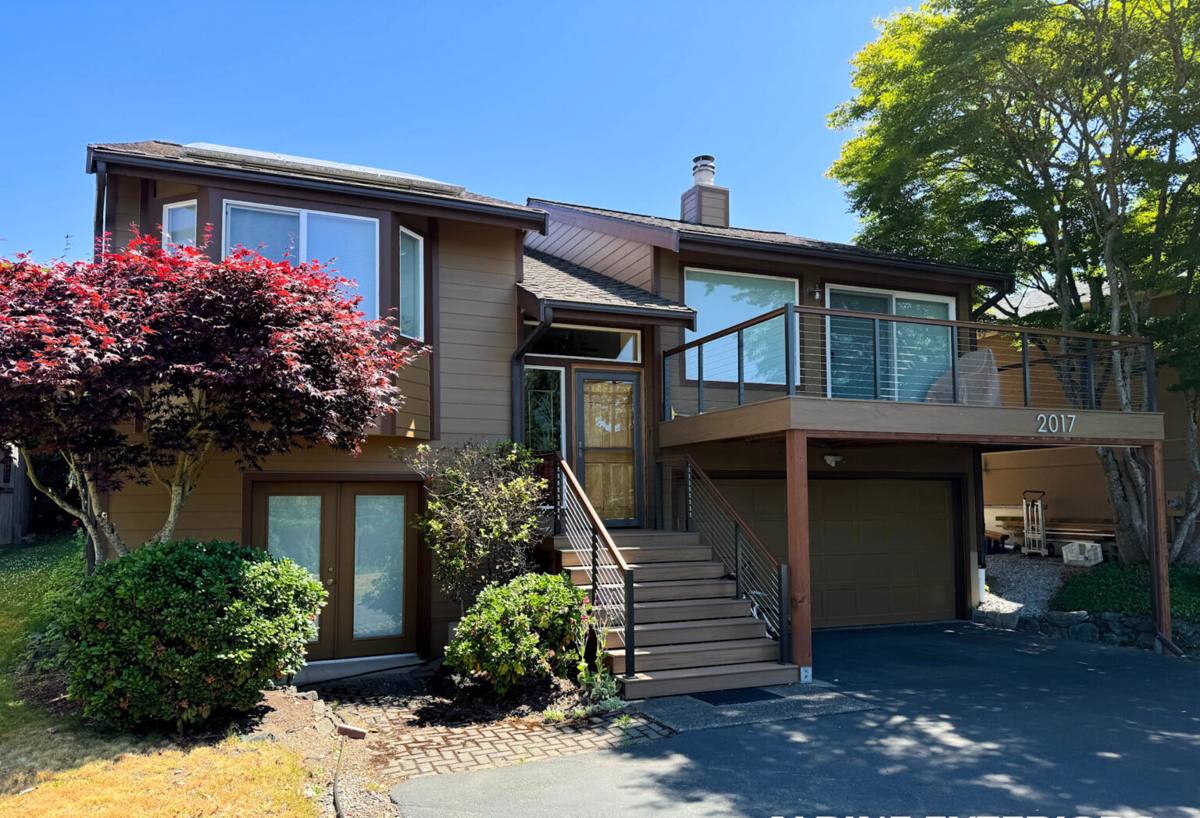
Why Silver Beach Is Harder on Siding Than Other Bellingham Neighborhoods
Salt Air and Metal Fasteners
Proximity to Bellingham Bay means airborne salt is a real, ongoing factor — not a one-time storm event but a slow, constant exposure. Salt air accelerates corrosion on any fastener, flashing, or trim that isn't rated for it, and it degrades some paint and coating systems faster than manufacturers' inland test data would suggest. Siding decisions made for a house in, say, the Sudden Valley area don't automatically hold up the same way three or four miles closer to the water.
Driving Rain Off the Water
Wind off the bay doesn't just bring rain — it drives it sideways into wall assemblies, wall penetrations, and butt joints that would stay dry in a calmer setting. That matters more than most homeowners realize, because siding's real job isn't decoration, it's managing water. A product or installation that assumes rain falls straight down will let water in around Silver Beach homes that never sees a problem inland.
A Long Moss and Mildew Season
Bellingham's marine climate already runs damp for much of the year, and the added moisture near the water stretches the moss and mildew season even longer in Silver Beach. Moss doesn't just look bad — it holds water against the siding surface, and on materials that aren't dimensionally stable or properly finished, that trapped moisture is where rot and coating failure begin.
What "Correct" Siding Replacement Actually Involves
A siding replacement is not a cosmetic swap. Done right, it's a full inspection and rebuild of the water-management system behind the visible wall. That's especially true in a location like Silver Beach, where the consequences of skipping steps show up faster.
- Full tear-off, not overlay. Installing new siding over old hides existing damage and traps moisture that's already there.
- Sheathing inspection. Every wall gets checked for soft spots, rot, and prior water intrusion once the old siding is off — this is the only point in the project where that's possible.
- Weather-resistive barrier renewal. House wrap or building paper gets replaced or repaired, not reused, especially on a home this close to driving rain exposure.
- Flashing at every penetration. Windows, doors, vents, and utility penetrations all need correctly lapped flashing — this is where most siding failures actually start, not in the field of the wall.
- Proper fastening and clearances. Corrosion-resistant fasteners, correct nailing patterns, and proper clearance from grade, decks, and roof lines.
- Manufacturer-spec installation. Gaps, caulking, and finish details installed to the manufacturer's published instructions — not "how we've always done it."
Skip any one of these and the new siding may look right for a year or two before problems that started underneath it start showing on the surface.
Why We Install James Hardie Fiber Cement — and Nothing Else
We don't install vinyl, LP SmartSide, primed wood, cedar, or other fiber cement brands. That's a deliberate standard, not an oversight, and it's worth explaining honestly rather than just asserting.
What Those Other Products Get Right
Vinyl is inexpensive and low-maintenance in mild, dry climates. Engineered wood products like LP SmartSide offer a wood look at a lower cost than real cedar. Cedar has genuine aesthetic appeal that some homeowners specifically want. None of these are junk products in a general sense — they're reasonable choices in the right setting.
Why We Don't Put Them on Silver Beach Homes
The setting here isn't the right one for most of them. Vinyl can warp and become brittle with the temperature swings and UV exposure over time, and its seams and J-channels are a weak point against driving, wind-blown rain. Engineered wood products are wood-based at the core, which means their long-term performance depends heavily on moisture staying out — a tall order in a spot with this much sustained dampness and moss growth. Cedar and primed wood siding require ongoing maintenance — recoating, caulking, moisture monitoring — that most homeowners don't keep up with consistently, and once that maintenance lapses near the water, wood siding's clock starts running fast.
Why Hardie Fits This Location
James Hardie fiber cement is non-combustible, dimensionally stable, and doesn't feed moss and mildew the way wood-based products can. It's engineered in regional formulations (HZ5 for our climate zone) specifically for areas with sustained moisture exposure. The factory-applied ColorPlus finish is baked on under controlled conditions rather than field-applied, which matters in a spot where field-applied coatings face more UV and salt exposure than average. It carries a strong transferable warranty when installed to spec — which is exactly why correct installation, not just product choice, is the other half of this equation.
Siding Options Compared for a Silver Beach Setting
| Material | Moisture/Salt Air Behavior | Maintenance Burden | Our Assessment |
|---|---|---|---|
| Vinyl | Seams and channels vulnerable to wind-driven rain; can warp with temperature swings | Low, but limited repair options when damaged | Not installed |
| LP SmartSide / engineered wood | Wood-based core sensitive to sustained moisture | Moderate — coating and joint upkeep | Not installed |
| Cedar / primed wood | Needs consistent sealing against moss and moisture | High — recoating, caulking, monitoring | Not installed |
| James Hardie fiber cement | Non-combustible, dimensionally stable, moss-resistant surface | Low — factory finish, no repainting cycle for years | What we install |
Our Silver Beach Siding Replacement Process
- On-site assessment. We walk the exterior, note problem areas, and check for signs of existing moisture intrusion before quoting anything.
- Scope and product selection. We walk you through the applicable Hardie product line, profile, and color options for your home.
- Tear-off and inspection. Old siding comes off, sheathing gets inspected, and any rot or damage is documented and addressed before anything new goes up.
- Water management rebuild. Weather barrier, flashing, and penetration details are installed or renewed to spec.
- Hardie installation. Panels, planks, or trim installed per manufacturer instructions — fastening, clearances, and joint treatment included.
- Final walk-through. We review the finished work with you before calling the job done.
Why Local Experience in This Specific Area Matters
A crew that has worked Silver Beach and similar close-to-the-water Bellingham neighborhoods knows where the driving rain hits hardest on a given elevation, how much longer moss lingers on north-facing walls this close to the bay, and which flashing details tend to get skipped by installers used to drier, inland jobs. That's not a marketing point — it's the difference between a siding job that's still performing in fifteen years and one that starts showing trouble in five.
Signs Your Silver Beach Home May Need Siding Replacement
- Persistent moss or dark staining that returns shortly after cleaning
- Soft spots or visible warping, especially on walls facing the water or prevailing wind
- Paint or coating failure that's worse than on comparable homes further inland
- Visible gaps, cracking, or separation at seams and trim joints
- Rising energy bills that suggest the wall assembly isn't sealing the way it should
- Any sign of moisture or rot on interior walls that back up to exterior siding
Get a Straight Answer on Your Siding
If your Silver Beach home is showing any of the signs above, or you're simply due for a siding replacement and want it done right the first time, we're happy to take a look. We'll give you an honest read on what your home needs — no pressure, no upsell to a product we wouldn't put on our own homes. Request a free estimate using the form below and we'll set up a time to walk the exterior with you.