 Bellingham Roofing
 Board & Batten Siding Built for South Hill's Marine Climate
South Hill is one of Bellingham's most distinctive neighborhoods, with a mix of older character homes and newer construction that both lean on strong architectural lines. Board and batten siding fits that look naturally — the vertical boards and raised battens give a home a clean, tailored profile whether the style is craftsman, farmhouse, or modern. But South Hill sits close enough to Bellingham Bay and the broader Whatcom County coastline that any siding project here has to answer to the climate first and the aesthetics second.
Vertical siding profiles like board and batten are more exposed to water running down the wall than horizontal lap siding is, which means the material and the installation both matter more than they would on a flatter, less demanding elevation. This page is about what board and batten siding needs to hold up on a South Hill home, and how we build it so it does.
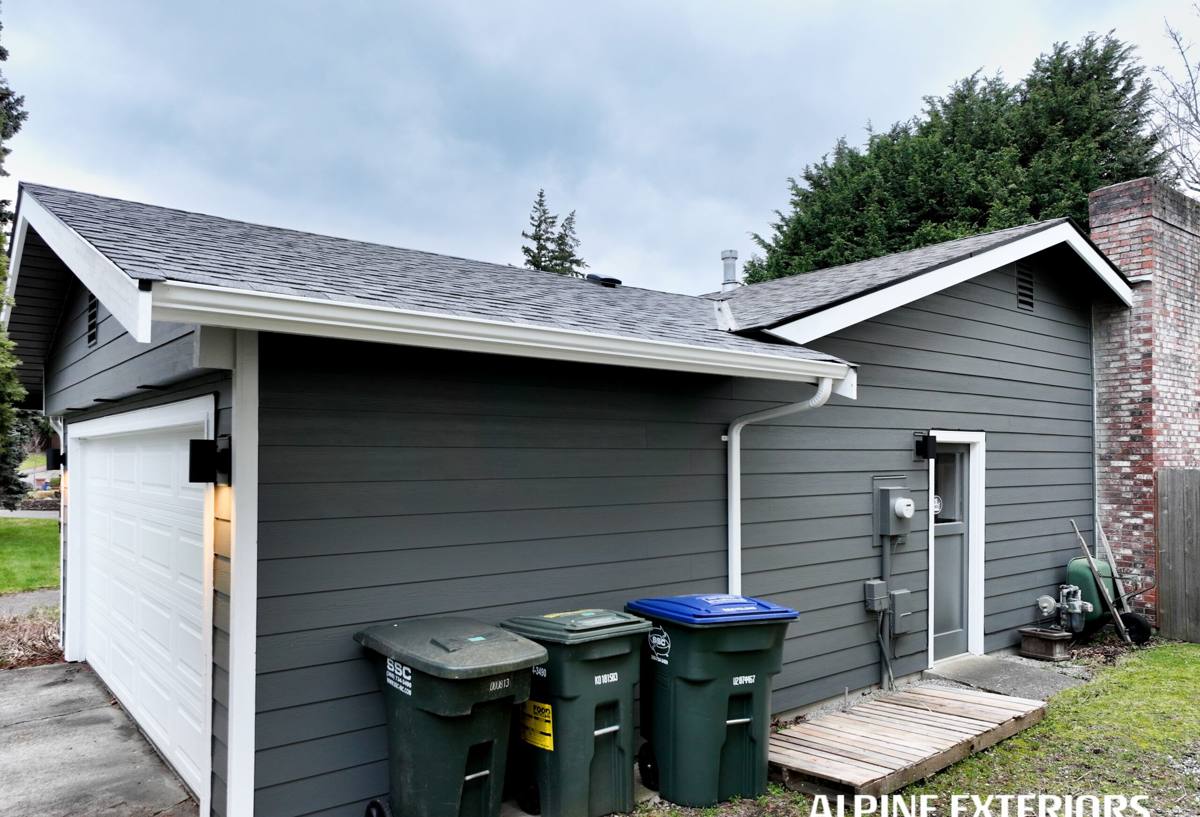
What Whatcom County Weather Does to Vertical Board & Batten Siding
Salt Air and Coastal Moisture
Homes anywhere near Bellingham Bay deal with a steady low-grade exposure to salt-laden air. Salt air accelerates corrosion on exposed fasteners and trim, and it speeds up the breakdown of finishes that aren't engineered to resist it. On a board and batten wall, where there are more vertical seams and more fastener points than on standard lap siding, that exposure adds up faster.
Driving Rain Against Vertical Seams
Bellingham's rain doesn't just fall straight down — wind off the water regularly drives it sideways against west- and southwest-facing walls. Board and batten siding channels water down the face of each board and behind each batten by design, which is fine when the water-resistive barrier, flashing, and fastening underneath are done correctly. When they aren't, that same channeling effect pushes water straight into gaps instead of past them.
The Long Moss Season
Whatcom County's moss season runs long compared to drier parts of the state. Moss and algae need shade, moisture, and time to establish, and the north- and east-facing walls common in wooded South Hill lots give them all three. Battens create horizontal ledges and vertical channels where organic growth gets a foothold if the siding material and finish don't resist it.
Why Board & Batten Is Unforgiving of Shortcuts
Batten Spacing and Fastening
Board and batten only works as a water management system if the batten spacing, panel gaps, and fastening pattern follow the manufacturer's engineering — not just a carpenter's eye for what looks even. Battens fastened too tight against the underlying panel trap moisture instead of shedding it. Fasteners placed off the manufacturer's pattern void warranty coverage and create entry points for water.
What Happens When It's Installed Wrong
The failure mode for bad board and batten work isn't dramatic — it's slow. Trapped moisture behind battens leads to soft sheathing, streaking, and finish failure years before the siding should need attention. By the time it's visible from the street, the damage is usually already behind the wall. That's the core reason we treat board and batten as a system to be engineered, not a look to be nailed up.
The James Hardie Systems We Install for Board & Batten Look
HardiePanel Vertical Siding with Battens
This is the traditional approach: HardiePanel fiber cement sheets installed vertically, with fiber cement or matching trim battens fastened over the seams at engineered spacing. It gives the classic board and batten profile with the durability of fiber cement underneath, and it's the more budget-flexible of the two systems.
Hardie Artisan Vertical Siding
Hardie's Artisan line is a heavier, more dimensional fiber cement product with a deeper reveal and a more refined factory finish. It's a step up in both material thickness and appearance, and it's a strong fit for South Hill homes where board and batten is the primary design statement on the front elevation rather than an accent.
| Option | Look & Texture | Best Fit |
|---|---|---|
| HardiePanel + Battens | Classic flat-panel board and batten, crisp shadow lines | Full-home siding, budget-conscious board and batten projects |
| Hardie Artisan Vertical | Deeper reveal, more dimensional, premium factory finish | Feature walls, front elevations, higher-end craftsman and farmhouse styles |
Why We Stick to James Hardie for Board & Batten
Board and batten is available in cedar, engineered wood like LP SmartSide, and vinyl, and each has real appeal — cedar has natural grain, engineered wood is lighter and easier to install, and vinyl board and batten is low-cost. But in a marine climate with a long wet season, each of those trades off durability for something else. Cedar needs ongoing sealing and refinishing to resist moisture and rot. Engineered wood siding is wood at its core, meaning any breach in the factory coating exposes it to the same moisture risk that wood siding has always carried. Vinyl board and batten can warp, fade, or crack, and it doesn't hold paint if a homeowner ever wants to change the color.
James Hardie fiber cement is non-combustible, doesn't rot, and its ColorPlus factory finish is engineered to resist fading and hold up to UV and moisture exposure well beyond field-applied paint. That's why board and batten on our jobs is always fiber cement, engineered specifically for the reveal and batten pattern we're building, not a general-purpose product adapted to fit.
Our Installation Process for South Hill Homes
- Site assessment — we walk the elevations that get the most weather exposure and check existing sheathing and moisture barrier condition before quoting anything.
- Water-resistive barrier and flashing — a correctly lapped WRB and properly integrated window, door, and penetration flashing go on before a single board is hung.
- Panel installation — HardiePanel or Artisan sheets are set to Hardie's fastening schedule, with gaps and clearances sized for the Bellingham climate.
- Batten installation — battens go on at engineered spacing and fastening depth so they shed water instead of trapping it.
- Sealant and finish detail — joints, trim, and penetrations get sealed with products rated for the exposure, using ColorPlus-matched materials where field sealing is needed.
- Final walkthrough — we inspect every elevation with the homeowner before calling the job done.
Why Hiring a Crew That Already Works South Hill Matters
South Hill's lots vary quite a bit — some sit more exposed to wind off the bay, others are tucked under tree cover where shade and moss pressure are the bigger concern. A crew that already works this neighborhood knows which elevations on a typical South Hill lot need the most attention and doesn't have to learn Whatcom County's weather patterns on your project. That local pattern recognition is part of what keeps a board and batten installation from becoming a callback.
Maintaining Board & Batten Siding in a Marine Climate
James Hardie board and batten is low-maintenance, not no-maintenance. A little seasonal attention goes a long way toward getting the full lifespan out of the system.
- Rinse pollen, salt residue, and debris off the siding once or twice a year with a garden hose.
- Check caulked joints around windows, doors, and trim annually for cracking or separation.
- Keep gutters clear so overflow doesn't run down the wall face during heavy rain.
- Trim back vegetation that shades the siding and keeps it damp longer than necessary.
- Watch shaded, north-facing sections for early moss or algae growth and address it before it spreads.
What Affects the Cost of a Board & Batten Project
Board and batten costs more per square foot than standard lap siding because it uses more material and more labor for the battens and detail work. A handful of factors move the number up or down on a given South Hill home.
| Factor | Why It Matters |
|---|---|
| HardiePanel vs. Hardie Artisan | Artisan's thicker profile and finish carry a higher material cost than standard panel |
| Wall complexity | Dormers, gables, and cutouts add cutting and batten labor |
| Existing wall condition | Sheathing repair or moisture damage found during tear-off adds scope |
| Full-home vs. accent application | Board and batten as a feature wall costs less overall than covering every elevation |
| Trim and detail package | Corner treatments, window trim, and batten spacing choices affect both material and labor time |
Every South Hill home is a little different, and the only way to give an accurate number is to look at the actual walls involved. If you're considering board and batten siding for your home, we're glad to walk the property, answer questions, and put together a free, no-pressure estimate using the form below.