 Bellingham Roofing
 Custom Decks Built for South Hill's Weather, Not Just Its Views
South Hill sits up above the rest of Bellingham, which means a lot of the homes here get real exposure — open air, moisture blowing in off the water, and long stretches of the year where things just don't dry out. A deck in this neighborhood isn't a fair-weather feature. It gets used, and it gets weathered, in every season. Building or replacing one here means designing for Whatcom County's actual climate, not the climate on a manufacturer's brochure.
We build and repair custom decks for South Hill homeowners who want something that looks good the first summer and still holds up after a decade of driving rain, salt-laden air, and the moss season that seems to stretch longer every year. That means paying attention to the parts of a deck most people never think about until they fail.
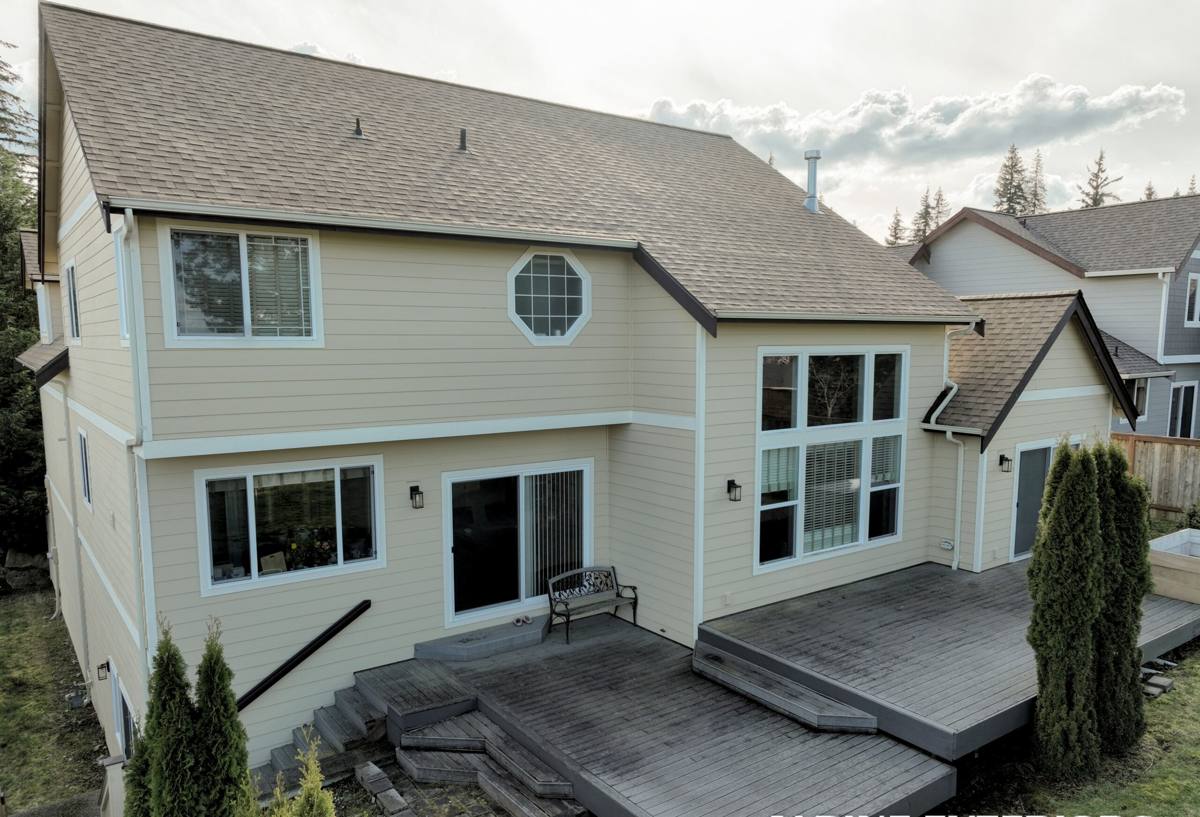
What Salt Air, Driving Rain, and Moss Actually Do to a Deck
Every material on a deck is fighting the same three things in this part of Washington:
- Salt air accelerates corrosion on fasteners, brackets, and any exposed metal hardware — even hardware rated for outdoor use wears faster near the water than it would inland.
- Driving rain doesn't just fall straight down here; wind pushes it sideways and underneath railings, ledger boards, and stair stringers, finding gaps that a calmer climate would never expose.
- Moss and algae take hold anywhere moisture sits and sunlight is limited — north-facing decks, shaded corners, and the underside of boards are the usual starting points, and once established, moss holds moisture against the wood or composite surface far longer than open air would.
None of these are dramatic, one-time failures. They're slow, cumulative damage — a fastener that rusts and loosens, a board that stays damp two extra days a week, a railing post that takes on water at the base. Over a few seasons, that's the difference between a deck that needs a light refinish and one that needs structural repair.
Choosing the Right Decking Material for This Climate
There's no single "best" decking material — there's a best material for your budget, your maintenance appetite, and how much sun or shade your deck actually gets. Here's how the common options hold up under South Hill conditions:
| Material | Moisture & Moss Resistance | Maintenance | Typical Lifespan |
|---|---|---|---|
| Pressure-treated wood | Fair — needs sealing to resist moisture uptake | Annual cleaning and re-sealing recommended | 10–15 years with upkeep |
| Cedar | Good natural resistance, but still absorbs water without finish | Regular oiling or staining | 15–20 years with upkeep |
| Capped composite | Very good — the cap sheds moisture and resists staining | Occasional washing, no sealing | 25+ years |
| PVC decking | Excellent — fully synthetic, doesn't absorb water | Occasional washing | 25–30+ years |
We install and repair all of these. Where a homeowner wants the look and feel of real wood, we're upfront about the maintenance schedule it takes to keep it performing in a climate like ours. Where low maintenance matters more than material authenticity, capped composite or PVC decking usually makes more sense for shaded or moss-prone lots. Our job is to lay out the honest trade-offs, not push whatever's easiest to install.
A Note on Uncapped or Budget Composite
Not all composite decking is built the same way. Older or uncapped composite boards can absorb moisture at the surface and are more prone to staining and mold growth in a shaded, damp environment than a fully capped product. As a matter of professional standard, we favor capped composite or PVC for lots with limited sun exposure, since the added moisture resistance matters more here than it would in a drier climate.
The Structural Work That Determines Whether a Deck Lasts
The decking surface is what you see, but the framing underneath is what actually determines whether a deck survives South Hill winters. A correct build addresses:
- Ledger board flashing — where the deck attaches to the house is the single most common source of hidden rot if it isn't flashed and sealed properly against wind-driven rain.
- Joist and beam spacing rated for the actual decking material and expected load, not the minimum code allows.
- Footings set below frost depth and on solid bearing soil, so the structure doesn't shift as ground moisture changes through the wet season.
- Fastener selection — coated or stainless-rated screws and structural connectors that won't corrode prematurely with salt air in the mix.
- Airflow underneath the deck, since a low-clearance deck over damp ground is one of the more common places we find moss and rot getting a foothold unnoticed.
These details don't show up in a photo of the finished deck, but they're the difference between a deck that needs a board replaced in year twelve and one that needs the whole substructure rebuilt.
Our Process, Start to Finish
1. On-Site Assessment
We walk the property, look at drainage, sun exposure, and how the deck will tie into the house, and talk through what you actually want to use the space for.
2. Design and Material Selection
We lay out layout options, decking material, railing style, and any built-ins (benches, stairs, multi-level transitions), with honest cost and maintenance comparisons for each.
3. Permitting
Most new decks and many replacements attached to the home require a permit. We handle the paperwork and inspections so you don't have to chase it down yourself.
4. Demolition and Structural Build
Old decking and, where needed, old framing come out. Footings, framing, and ledger flashing go in correctly the first time — this is the stage that gets rushed on cheap jobs and the stage that determines how the deck ages.
5. Decking, Railing, and Finish Work
Surface material, railings, stairs, and any trim go on last, with fasteners and hardware chosen for our climate rather than whatever's cheapest at the yard.
6. Final Walkthrough
We go over the finished deck with you, including what maintenance (if any) the material requires going forward.
Railings and Hardware: Where Cheap Shortcuts Show Up First
Railings take the most direct weather exposure of anything on a deck, and they're also where corner-cutting shows up fastest. Untreated or low-grade metal balusters and connectors can start showing surface rust within a couple of seasons this close to the water. We spec hardware rated for coastal or high-moisture exposure — stainless steel or properly coated fasteners and brackets — because replacing a rusted railing post is a far bigger job than choosing the right hardware up front.
Maintenance Checklist for South Hill Deck Owners
Whatever material your deck is built from, a few habits make a real difference in how long it lasts in this climate:
- Sweep off standing debris (leaves, needles, moss spores) at least monthly during fall and winter
- Rinse or gently scrub shaded, north-facing areas where moss tends to establish first
- Check gaps between boards for trapped organic debris that holds moisture against the material
- Inspect railing posts and fastener heads once a year for early rust or loosening
- Confirm gutters and downspouts near the deck aren't dumping extra water onto or under it
- Re-seal or re-stain wood decking on the manufacturer's recommended schedule — don't wait until it looks dry and gray
- Keep planters and furniture feet elevated slightly to avoid trapping moisture underneath
Permits and Local Considerations
Deck projects in and around Bellingham typically go through the local building department for permitting, especially for decks attached to the home, decks above a certain height, or those with stairs and railings. Requirements can vary depending on your exact lot and whether you're inside city limits or unincorporated Whatcom County. We handle that process as part of the job, but it's worth knowing up front that a properly permitted deck also tends to be a properly inspected one — which matters when you eventually sell the house.
Why Hire a Crew That Already Works in South Hill
A deck built to a generic national spec sheet isn't necessarily built for this hillside, this exposure, or this rain pattern. A crew that already works South Hill knows which lots hold onto moisture longer, which orientations grow moss fastest, and which hardware actually survives the salt air here instead of just looking good on day one. That local familiarity shows up in fewer callbacks and a deck that ages the way it's supposed to — not in a sales pitch, but in the details of how it's built.
If you're planning a new deck or need an honest look at an existing one, we're glad to come take a look. Request a free, no-pressure estimate using the form below and we'll walk the property with you and talk through real options for your home.