 Bellingham Roofing
 Deck Building in South Hill: Designed for Bellingham's Climate, Not Against It
South Hill sits above the rest of Bellingham, which means more exposure — more wind off the water, more direct rain, and often more shade from mature trees than homes down in the flats. A deck built here has to deal with all of it at once: driving rain that gets under railings and around posts, salt-tinged air drifting up from Bellingham Bay, and the kind of persistent moisture that keeps moss thriving nearly year-round in Whatcom County. A deck design that works fine in a drier climate can start showing problems here within a couple of seasons if it wasn't built with this specific combination of conditions in mind.
We build decks for South Hill homes the way this hillside actually behaves — accounting for slope, drainage, shade patterns, and the slow, steady moisture load that defines a Pacific Northwest deck's working life. That's a different job than building a deck in a dry climate and hoping it holds up.
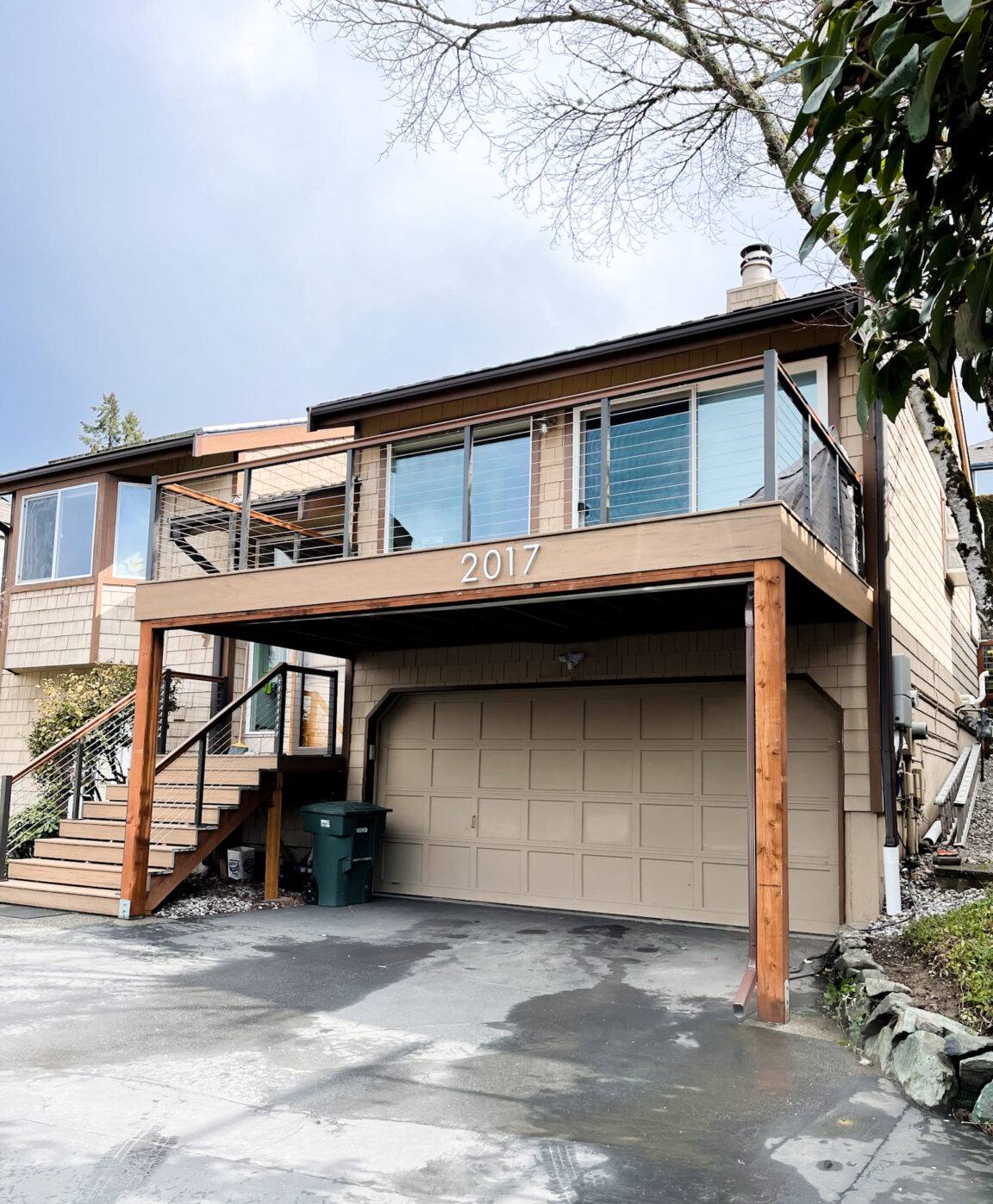
What South Hill's Terrain and Climate Actually Demand
Slope and Drainage
Many South Hill lots have real grade to them. A deck built on sloped ground needs footings sized and placed for the actual soil conditions on that lot, not a flat-lot assumption. Poor grading around footings is one of the most common causes of early deck failure we see — water pools against posts and framing instead of running off, and rot starts from the ground up long before it's visible from the surface.
Shade and Moss Pressure
Tree cover that makes a South Hill yard pleasant in summer also means less direct sun hitting the deck surface, which means slower drying after every rain. Combined with Bellingham's long wet season, shaded decking stays damp longer than an equivalent deck in an open, sunny lot — and damp wood is exactly what moss and algae need to take hold. Framing underneath a shaded deck needs airflow and separation as much as the visible boards do.
Salt Air and Metal Hardware
South Hill's elevation puts it close enough to the water that salt-laden air is a real factor over the life of a deck. Standard fasteners and connectors that would be fine further inland can start corroding faster here, which weakens structural connections in ways that aren't obvious from the surface.
Getting the Structure Right: Footings, Framing, and Ledger Attachment
A deck is only as good as what nobody sees once it's finished. We size and pour footings to reach stable, load-bearing soil below the frost and moisture-active layer, not just deep enough to pass a quick check. Framing gets properly spaced joists, blocking where the design calls for it, and — critically for this climate — enough clearance and airflow underneath that the structure can actually dry out between rain events instead of staying damp for weeks at a time.
Ledger board attachment, where the deck ties into the house, is one of the most safety-critical parts of the build and one of the most common places we find corner-cutting on older decks. Done wrong, it lets water track directly into the house's rim joist and wall framing — a slow, hidden rot problem that's expensive to fix once it's found. We flash and seal that connection properly, every time.
Choosing Decking Material for a Wet, Shaded Climate
There's no single "best" decking material — there's the right material for how a given deck will actually be used and exposed. For a shaded, moisture-heavy South Hill lot, that decision matters more than it would in a drier climate.
| Material | Moisture & Moss Behavior | Maintenance Needs | Best Fit |
|---|---|---|---|
| Pressure-treated lumber | Resists rot well when properly finished and maintained; can stay damp longer in deep shade | Needs periodic cleaning and re-sealing | Budget-conscious builds, sunnier or more open lots |
| Cedar | Naturally decay-resistant, ages gracefully, but softer surface can hold moisture in heavy shade | Regular cleaning and finish upkeep to keep it looking its best | Homeowners who want a natural wood look and don't mind upkeep |
| Composite decking | Doesn't absorb moisture like wood; much more resistant to moss taking hold on the surface | Occasional washing; no staining or sealing | Shaded, high-moisture South Hill lots where low upkeep matters |
In heavily shaded South Hill yards, we often steer homeowners toward composite for the walking surface specifically because it doesn't give moss and algae the same foothold that wood does — not because wood decking is a bad product, but because the maintenance burden of keeping wood clean and sealed in deep, damp shade is real and ongoing. That's an honest trade-off conversation we have with every homeowner, not a one-size-fits-all pitch.
Framing Lumber vs. Surface Material
Regardless of what decking material sits on top, the framing underneath is almost always pressure-treated lumber rated for ground contact where it's close to grade. That structural layer needs to be right no matter what surface material a homeowner chooses.
Railings, Fasteners, and Hardware Built for Salt Air
Railings take the brunt of driving rain and, on elevated South Hill lots, direct wind. We use fastener and connector hardware rated for exterior, corrosion-prone environments — stainless or coated hardware appropriate to the application — rather than standard interior-grade hardware that can start rusting and staining within a season or two this close to the coast. Post bases and joist hangers get the same treatment, since those hidden connections are structural, not cosmetic.
Our Deck Building Process
- On-site assessment — we walk the actual lot, note slope, drainage paths, shade exposure, and how the deck will tie into the house.
- Design and material selection — sized to the space, with material recommendations based on sun exposure and how much upkeep the homeowner wants going forward.
- Permitting — we handle the permit process for the scope of work, per City of Bellingham or Whatcom County requirements depending on the exact location.
- Footings and framing — footings poured to reach stable soil, framing built with drainage and airflow in mind.
- Decking, railings, and hardware installation — using material and fasteners matched to the site's actual exposure.
- Final walkthrough — we go over the finished deck and what upkeep, if any, it needs going forward.
Permits and Local Code
Most new decks and many significant deck replacements in Bellingham and unincorporated Whatcom County require a building permit, particularly once a deck is elevated or attached to the house. Requirements can shift based on deck height, size, and exact location, so we confirm what applies to a specific South Hill property before work starts rather than assuming. Skipping this step is a common shortcut on lower-cost deck jobs, and it's one that can create real problems at resale or insurance time.
Keeping a South Hill Deck Ahead of Moss and Moisture
No deck material in this climate is truly maintenance-free, but the right build and a simple seasonal routine keep moss and rot from getting a head start.
- Sweep leaves and debris off the deck surface regularly through fall — trapped organic material holds moisture and feeds moss growth.
- Rinse or gently wash the surface a couple of times a year to clear early moss and algae before it establishes.
- Check that gaps between boards stay clear so water can drain through rather than pooling.
- Inspect railing posts and ledger flashing yearly for any sign of softening wood or water staining.
- Re-seal or re-stain wood decking on the schedule appropriate to that finish product — don't wait until it's visibly failing.
- Keep nearby vegetation trimmed back so more light and air can reach shaded sections of the deck.
Why a Crew That Already Works South Hill Makes a Difference
A deck contractor who works this specific area regularly already knows how South Hill's slopes drain, how much shade a given block typically gets, and what the permitting process looks like locally. That's not something a crew unfamiliar with the neighborhood picks up on the first job — and on a structure that has to hold up outdoors, on a hillside, in a wet coastal climate, that local familiarity shows up in fewer callbacks and a deck that's actually built for where it sits.
If you're planning a new deck or need to replace one that's showing its age, we're happy to walk your South Hill property and talk through options. There's no cost and no pressure for an estimate — just a straightforward look at what your specific lot and budget call for.