 Bellingham Roofing
 Windows Work Harder in a Climate Like This
Sudden Valley sits tucked against Lake Whatcom, wrapped in the kind of dense evergreen tree cover that keeps homes shaded, cool, and permanently damp for a good chunk of the year. Add in the broader Whatcom County climate — salt-laced marine air drifting in off the Sound, driving rain that can run sideways for days at a time, and a moss season that stretches from fall through spring — and you've got conditions that are genuinely tough on a home's window openings. It's not just about comfort or a drafty room. Windows are one of the biggest gaps in a building envelope, and in a wet climate, a poorly performing or poorly installed window doesn't just leak heat, it can let moisture into wall framing that never gets a chance to fully dry out between storms.
For Sudden Valley homeowners, the combination of shade, humidity, and near-constant precipitation for months at a time means window performance and window installation quality both matter more than they might in a drier part of the state. We treat those as two separate jobs done right, not one.
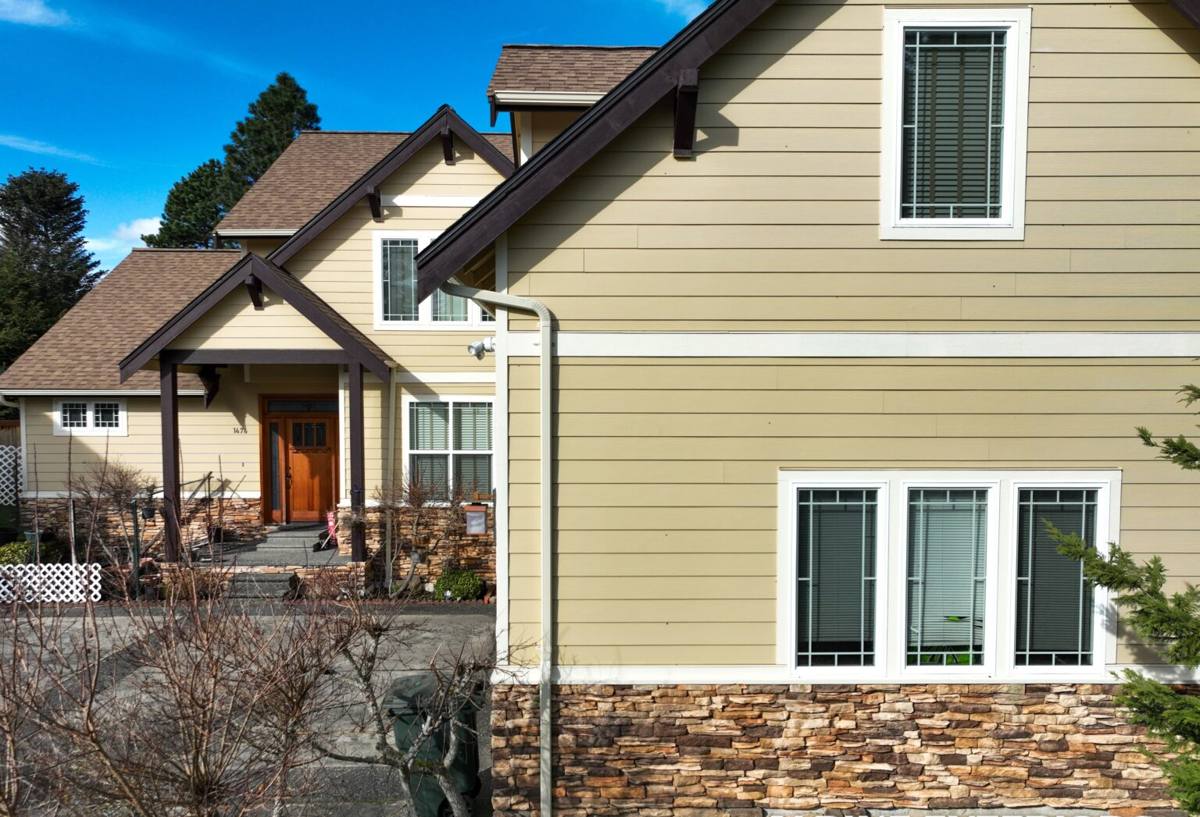
What "Energy-Efficient" Actually Means
The term gets used loosely, so it's worth breaking down what actually drives performance in a window. Three things matter most: the glass package, the frame material, and how well the unit is sealed and flashed into the wall. Get one of these wrong and the other two can't fully make up for it.
Glass and Coatings
Modern efficient windows use two or three panes of glass with a low-emissivity (Low-E) coating and an inert gas fill, usually argon, sealed between the panes. The Low-E coating reflects heat back into the room during our cold, wet months while still letting daylight through. For our climate zone, U-factor (how well the window resists heat loss) matters more than solar heat gain coefficient, since Bellingham doesn't get the intense, prolonged summer sun that makes SHGC the priority in hotter regions. Look for the NFRC label on any window you're quoted — it's the only way to compare U-factor and SHGC numbers apples-to-apples between products.
Frame Material
Frame material affects both energy performance and how the window holds up to years of damp weather. Vinyl frames are the most common choice for good reason — they don't rot, don't need painting, and perform well thermally when built with multi-chamber construction. Fiberglass frames cost more but resist expansion and contraction better over time, which can matter on a home with a lot of temperature swing between a cold night and a sunny afternoon. Wood and wood-clad frames look great but need real upkeep in a climate this wet — any gap in the exterior cladding or finish becomes an entry point for moisture.
| Frame Material | Energy Performance | Moisture Resistance | Maintenance |
|---|---|---|---|
| Vinyl | Good to very good | Excellent — won't rot | Low — occasional cleaning |
| Fiberglass | Very good | Excellent | Low |
| Wood-clad | Good to very good | Fair — depends on cladding integrity | Higher — finish and seals need monitoring |
| Aluminum | Fair — conducts heat/cold | Good if properly broken thermally | Low |
The Part That Actually Fails: Installation, Not Glass
Most window failures we get called out to inspect aren't glass failures — the sealed unit rarely fogs up on its own if it was manufactured correctly. What fails is the installation: flashing, sealant, and how the window ties into the surrounding siding and weather-resistive barrier. In a climate with driving rain and long stretches of standing moisture, any shortcut here shows up eventually as rot in the sill, staining on interior trim, or moss and mildew creeping in around the frame.
A correct installation includes a sloped sill pan to direct any water that gets past the window back outside, proper integration with the house wrap or building paper so water sheds over laps instead of behind them, backer rod and compatible sealant at the right joints (not sealant everywhere, which can trap moisture instead of letting it drain), and flashing tape at the head and jambs. None of this is visible once the trim goes back on, which is exactly why it's worth asking a contractor to explain their process before they start, not after.
Reading the Signs Your Current Windows Are Working Against You
Homeowners in Sudden Valley often live with underperforming windows longer than they need to, because the symptoms creep in slowly. Worth checking for:
- Visible fogging or a milky haze between the panes — the seal has failed and the gas fill is gone
- Condensation forming on the inside of the glass regularly during cold, damp weeks
- Soft or discolored wood at the sill or lower corners of the frame, inside or out
- A noticeable draft when standing near the window on a windy day
- Windows that are difficult to open, close, or latch — often a sign the frame has shifted or swollen
- Moss or dark streaking building up on the exterior trim around the window faster than on the surrounding siding
- Single-pane glass anywhere in the home, especially in rooms you actually use
Any one of these on its own might not mean full replacement is needed. Several together, especially combined with rising heating bills, usually mean the window and its surrounding flashing are past the point where a repair makes sense.
What Drives the Cost of a Window Project
Every Sudden Valley home is a little different — hillside lots, mature tree cover, and a mix of home ages all affect the scope of a job. Rather than quote a number that won't hold up once we see your house, here's what actually moves the price:
| Factor | Why It Matters |
|---|---|
| Number and size of windows | Larger openings and whole-house projects have better per-unit pricing than one-off replacements |
| Glass package (double vs. triple pane) | Triple-pane costs more upfront but performs noticeably better in sustained cold, damp stretches |
| Frame material | Vinyl is typically the most cost-effective; fiberglass and wood-clad run higher |
| Installation type | Full-frame replacement (removing down to the studs) costs more than insert replacement but is often necessary where there's existing rot or moisture damage |
| Access and site conditions | Steep lots, second-story windows, and limited driveway access can add time and equipment needs |
| Trim and interior finish work | Matching existing trim, especially on older homes, adds labor beyond the window swap itself |
How We Approach a Sudden Valley Window Project
We keep the process straightforward and try to surface problems before they become surprises mid-project:
- On-site assessment. We look at every window opening individually — not just the glass, but the sill, the surrounding siding, and any signs of past moisture intrusion. Hillside and shaded lots often have different exposure needs window to window on the same house.
- Honest scope recommendation. If insert replacement will do the job cleanly, we say so. If we find rot or damage that means a full-frame replacement is the only way to do it right, we explain why and show you what we're seeing.
- Product selection based on your home, not a sales script. Frame material, glass package, and style get matched to the specific exposure of each opening — a north-facing window under heavy tree cover has different needs than one that catches more weather.
- Correct removal and prep. Old windows come out carefully, and we inspect the framing and weather barrier underneath before anything new goes in. This is the step that gets skipped when installation is rushed, and it's the one that matters most in our climate.
- Proper flashing and sealing. Sill pan, house wrap integration, flashing tape, and the right sealant at the right joints — done in the sequence that actually sheds water instead of trapping it.
- Finish work and walkthrough. Interior and exterior trim gets finished to match, and we walk the job with you before we consider it done.
Why Local Experience in Sudden Valley Matters
A crew that already works in this community understands things that don't show up in a generic estimate: how much shade and moisture a given street or lot typically holds onto, what building styles and ages are common here, and how driving rain off the lake and the Sound behaves against different exposures. That translates into fewer surprises once removal starts and better judgment calls about where insert replacement is enough versus where a full-frame job is the right call. It also means a crew that isn't guessing at how the local weather patterns stack up against a given product's real-world track record in Whatcom County, rather than its marketing claims.
We also stand behind our own installation work separately from the manufacturer's product warranty, so if something is ever off with how a window was set — not the glass itself, but our workmanship — you're not stuck arguing with two different companies about whose problem it is.
Maintenance That Actually Extends Window Life
Energy-efficient windows are close to maintenance-free compared to older wood units, but a little attention goes a long way in this climate:
- Clear moss, debris, and organic buildup from tracks and weep holes at least once a year — clogged weep holes are one of the most common causes of interior moisture problems we see
- Check exterior caulking and sealant lines annually for cracking or gaps, especially after a hard winter
- Keep gutters and downspouts clear so water isn't sheeting directly down onto window heads
- Operate each window a few times a year, even ones you rarely open, so hardware and weatherstripping don't seize or compress permanently
If your Sudden Valley home has drafty windows, visible condensation, or you're just planning ahead for a remodel, we're happy to walk the property with you and give an honest, no-pressure estimate — no obligation, and no pressure to replace more than what actually needs it.