 Bellingham Roofing
 Sudden Valley's Setting Puts Extra Demands on Siding
Sudden Valley sits along Lake Whatcom under heavy tree cover, which means most homes here deal with more shade, more standing humidity, and slower drying times than siding out in the open gets. Add in what the rest of Whatcom County already contends with — salt-laden marine air moving in off Bellingham Bay and the Salish Sea, driving rain events off the Pacific, and a moss season that can stretch from fall well into spring — and you have a combination that punishes the wrong siding choice fast.
North-facing walls under a tree canopy rarely get direct sun. That means moisture sits on the surface longer, algae and moss get a foothold, and any siding product with a wood or wood-fiber core is at real risk of swelling, delaminating, or rotting at the edges if it isn't detailed correctly. We see this pattern constantly in lake-adjacent, tree-shaded neighborhoods: it isn't one big storm that causes the damage, it's the slow, repeated cycle of damp-to-dry that never fully finishes drying out.
None of this means a house in Sudden Valley is doomed to siding problems. It means the siding material and the installation details both have to be chosen for the actual conditions on that lot, not for a showroom.
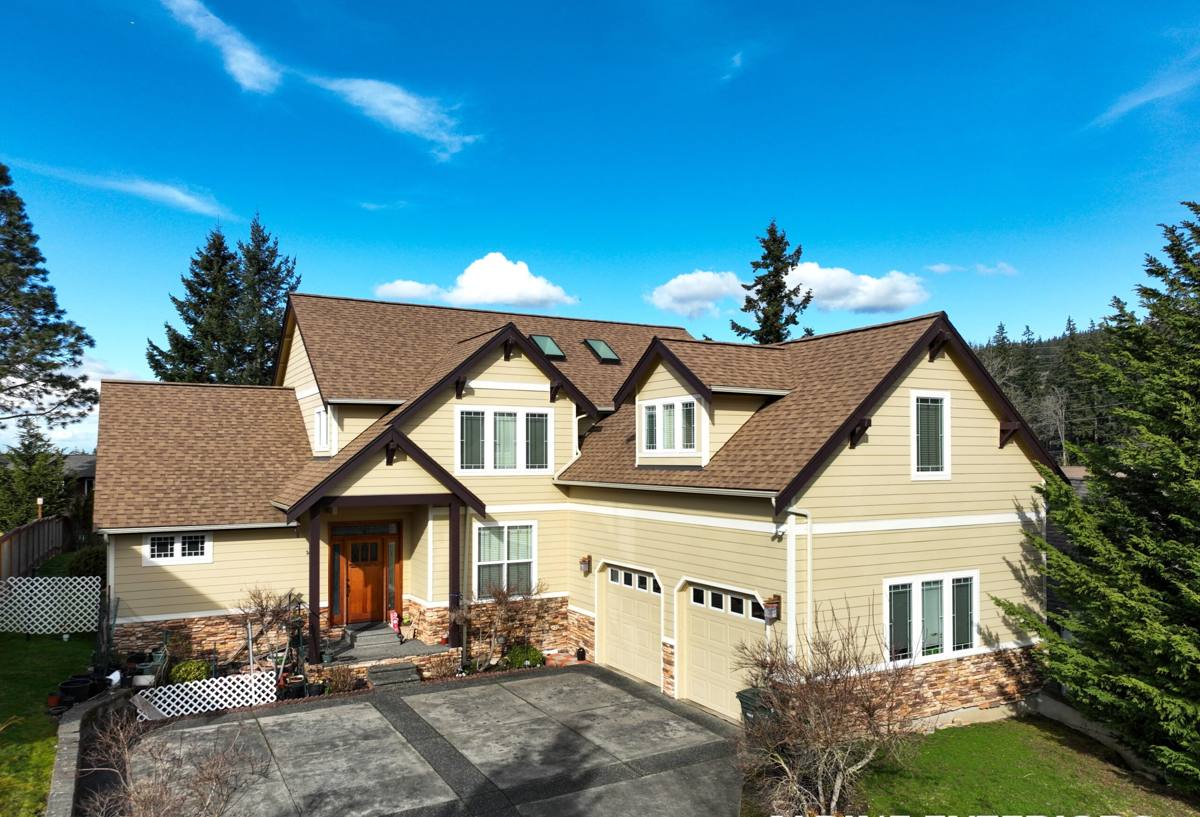
What Correct James Hardie Installation Requires Here
Weather-Resistive Barrier and Flashing
Fiber cement siding is only as good as what's behind it. On a shaded, damp lot, the weather-resistive barrier, window and door flashing, and kick-out flashing at roof-to-wall intersections have to be installed in the correct shingle-lap order so water is always directed out and down, never trapped behind the cladding. This is the step that gets rushed on a low-bid job and is the one most responsible for hidden rot years later.
Gaps, Clearances, and Fastening
James Hardie's install specs call for specific gaps at butt joints, trim, and any place siding meets a roofline, deck, or grade — clearances that matter even more in a wooded setting where debris and organic buildup can bridge those gaps if they're cut too tight. Fastener placement and caulking at the right joints (and no caulking at the ones meant to breathe) keep the wall assembly able to shed moisture instead of holding it.
HZ5 Engineering and ColorPlus Finish
Bellingham falls within James Hardie's HZ5 climate zone, and the HZ5 product formulation is engineered for exactly this kind of wet, temperate exposure — it resists moisture absorption and freeze-thaw stress better than a generic fiber cement product. Pairing that with a factory-applied ColorPlus finish means the color coat is baked on under controlled conditions, so it holds up to UV and driving rain far longer than a field-applied paint job would, and it isn't the finish that fails first in a shaded, humid spot.
Choosing the Right Hardie Product Line for a Wooded, Lake-Adjacent Home
Sudden Valley's mix of wooded lots and lake-facing properties calls for different siding profiles depending on the home's style and its sun exposure. All of these are still 100% James Hardie — we're matching the product line to the house and the site, not switching brands.
| Product Line | Look | Where It Fits Best |
|---|---|---|
| HardiePlank Lap Siding | Traditional horizontal board look | Most home styles; the standard choice for full-house re-sides |
| HardieShingle | Staggered or straight-edge shingle texture | Cabin or craftsman-style homes wanting a rustic, lake-community feel |
| HardiePanel | Smooth or textured vertical panels | Gable accents, modern facades, or mixed-material designs |
| HardieTrim | Corner boards, fascia, window/door trim | Finishing details on any of the above |
On shaded, tree-heavy lots we'll also talk through color selection — darker ColorPlus tones can make a home read as a natural part of the wooded setting, but lighter tones show less pollen and organic debris between cleanings. There's no wrong answer, just trade-offs worth knowing before you commit to a color.
Why We Only Install James Hardie
We don't install vinyl, LP SmartSide, Cemplank, Allura, primed spruce, or cedar, and in a climate like Sudden Valley's the reasons are practical, not brand loyalty. Vinyl expands, contracts, and can warp with the area's temperature swings, and it has no real defense against long-term moisture exposure at seams. LP SmartSide and other engineered-wood products use an OSB-based core — well-engineered, but any wood-fiber core is more vulnerable to swelling and edge damage if water finds a way in, and shaded, slow-drying walls are exactly where that risk shows up first. Primed spruce and cedar look great on day one but demand a repaint or reseal cycle that most homeowners underestimate, especially on a house that barely sees direct sun.
James Hardie's fiber cement composition doesn't have a wood core to swell or rot, it's non-combustible, and the ColorPlus finish carries a real factory warranty instead of relying on a field-applied coat. For a house that's going to spend a lot of its life damp and shaded, that's the material we're willing to put our name behind.
Our Process, Start to Finish
- On-site inspection of existing siding, trim, and visible sheathing condition, with particular attention to north-facing and tree-shaded walls
- Moisture and rot check where staining, soft spots, or past patch jobs suggest hidden damage
- Product line, profile, and ColorPlus color selection based on the home's style and exposure
- Written estimate and, where needed, permitting handled before any work starts
- Tear-off of old siding and repair or replacement of any compromised sheathing before new material goes up
- Weather-resistive barrier and flashing installed to spec at every window, door, and roofline intersection
- James Hardie siding installed to manufacturer clearance, fastening, and joint-treatment specifications
- Trim, caulking, and touch-up work completed
- Site cleanup and a final walkthrough, with warranty registration handled on our end
Living With Moss Season: Maintenance After Installation
Correctly installed Hardie siding is low-maintenance, but "low-maintenance" isn't "zero-maintenance," especially under tree cover. A little seasonal attention goes a long way toward keeping a Sudden Valley home looking clean through the wet months:
- Rinse siding with a garden hose once or twice a year to clear pollen, moss spores, and organic debris before they take hold
- Keep gutters and downspouts clear so overflow doesn't run down the siding face
- Trim back branches and shrubs that keep a wall shaded and damp longer than necessary
- Check caulking at trim and joints annually and have any cracked or missing caulk redone promptly
- Avoid direct pressure washing at close range — a gentle rinse is enough and won't drive water behind properly lapped siding
- Address any moss or algae growth early with a mild cleaning solution rather than letting it establish
Cost Factors for a Sudden Valley Siding Project
Every home is different, but the same handful of factors drive most of the variation in what a project costs:
| Factor | Why It Matters |
|---|---|
| Home size and number of stories | More surface area and more complex staging on multi-story homes |
| Condition of existing sheathing | Hidden rot repair, if found, adds material and labor before new siding can go on |
| Product line and trim complexity | Shingle and panel accents with custom trim take more labor than straight lap siding |
| Site access | Tree cover, tight lots, and driveway access affect staging and cleanup time |
| Tear-off vs. re-side scope | Full removal of old siding costs more than siding installed over a prepared surface, but is often the right call when moisture damage is present |
Why Local Sudden Valley Experience Matters
A crew that's worked in Sudden Valley before already knows what to expect: wooded, sometimes tight lot access, homes with real shade exposure on at least one elevation, and — if your property falls under HOA covenants for the community — an awareness that color and material choices may need to fit within those guidelines. We'll work within whatever review process applies to your property rather than treating it as an afterthought.
More importantly, a contractor who understands how Bellingham's marine climate and Sudden Valley's tree cover interact knows where to spend extra care — the flashing details, the gap clearances, the color choice on a shaded elevation — before those decisions turn into a callback five years down the road. That's the difference between siding that just looks good at installation and siding that still looks good after several wet Whatcom County winters.
If you're weighing a siding project for a Sudden Valley home, we're happy to walk the property, look at what you're working with, and put together a straightforward, no-pressure estimate using the form below.