 Bellingham Roofing
 Sunnyland's Roofs Work Harder Than Most
Sunnyland sits close enough to Bellingham Bay that the air itself becomes part of the maintenance conversation. Between the salt-tinged marine air, the wind-driven rain that comes off the water during fall and winter storms, and the shaded, damp conditions that let moss take hold on north-facing slopes, roofs in this neighborhood age differently than roofs twenty miles inland. An asphalt shingle roof installed with generic, one-size-fits-all methods will often show its age here faster than the same roof would in a drier part of Whatcom County. That doesn't mean asphalt shingles are the wrong choice for Sunnyland homes — far from it. It means the installation details matter more here than they do almost anywhere else.
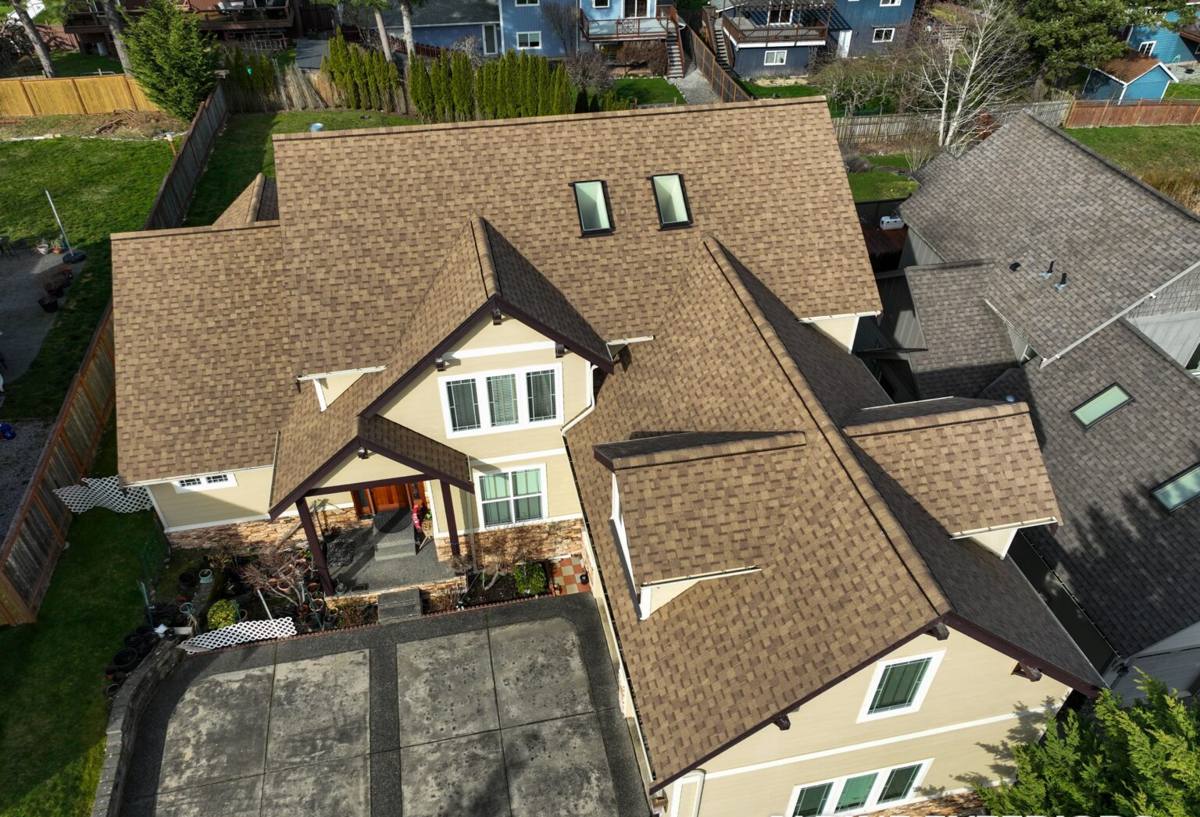
This page focuses specifically on asphalt shingle roofing for Sunnyland homes: what the local climate demands, what a correctly built roof actually includes, and how we approach the work when we're on your street instead of somewhere else in Bellingham.
What Bellingham's Climate Actually Does to a Shingle Roof
Driving Rain and Wind-Driven Water
Bellingham gets a lot of rain, but the bigger issue for roofs isn't total rainfall — it's the direction it comes from. Storms pushing in off the Strait and the Bay tend to drive rain sideways, which forces water up and under shingle tabs and around flashing details that would stay perfectly dry in a straight-down rain. A roof that looks fine in a light drizzle can still leak during a wind-driven system if the underlayment, flashing, and shingle overlap weren't built with that in mind.
Moss and Sustained Dampness
Sunnyland has enough tree cover and shaded rooflines that moss isn't an occasional nuisance — it's a seasonal certainty on the wrong roof. Moss holds moisture against the shingle surface long after the rest of the roof has dried out, which shortens the life of the shingle mat and, over years, works its way under tabs and lifts them. The problem isn't moss itself so much as how long it's allowed to sit.
Salt Air and Material Fatigue
Proximity to Bellingham Bay means a light but constant exposure to salt-laden air. It's not the dramatic corrosion you'd see at an oceanfront property, but over the 20-plus-year life of an asphalt shingle roof, it accelerates the breakdown of exposed metal flashing, fasteners, and vent components if they aren't rated and installed for it.
None of these conditions are unique to Sunnyland in isolation — but the combination of shade, moisture, and coastal air together is what makes this neighborhood's roofs behave differently than roofs in drier, more open parts of Whatcom County.
Choosing the Right Asphalt Shingle for This Neighborhood
Not every asphalt shingle product is built the same way, and for a shaded, damp neighborhood like Sunnyland, the differences matter more than the price tag alone suggests.
| Shingle Type | Best Fit for Sunnyland | Trade-Offs |
|---|---|---|
| Standard 3-tab | Budget re-roofs, secondary structures | Shorter lifespan under sustained moss/moisture exposure; less algae resistance |
| Architectural (laminate) | Most Sunnyland homes | Heavier, thicker mat resists wind uplift and holds up better under repeated wet-dry cycles |
| Algae-resistant (AR) shingles | Shaded or north-facing roof planes | Copper- or zinc-infused granules resist the dark streaking common on damp roofs; slightly higher upfront cost |
| Impact-rated shingles | Optional upgrade | Adds durability against debris from wind events; not required by climate but worth discussing case by case |
For most Sunnyland homes, we lean toward architectural shingles with algae-resistant granules as the practical default — not because the budget option is a bad product, but because the extra material cost is small relative to the added years of service in a shaded, damp setting. We'll walk through your specific roof planes and sun exposure before recommending one over the other, since a south-facing roof and a heavily shaded north slope on the same house can reasonably use different strategies.
What a Correct Installation Actually Involves
The shingle itself is the most visible part of the roof, but it's the layers underneath and the details around penetrations that determine whether a roof handles Bellingham's weather well or poorly.
Underlayment and Water Barrier
Synthetic underlayment provides the roof's secondary defense against wind-driven rain that gets past the shingle surface. In vulnerable areas — valleys, eaves, and around chimneys or skylights — we use self-adhering ice-and-water shield membrane, which seals tightly around fasteners and resists the kind of wind-pushed moisture intrusion that's common in this part of Whatcom County.
Ventilation
A shingle roof that can't breathe traps moisture in the attic space, which accelerates deck rot from the inside and can worsen moss growth from condensation on the underside of the sheathing. Balanced intake and exhaust ventilation is not optional in our approach — it's a core part of making the roofing system last.
Flashing and Metal Details
Flashing around chimneys, skylights, vents, and roof-to-wall transitions is where the majority of real-world leaks originate, not the shingle field itself. Given the salt air exposure near the Bay, we use flashing and fastener materials chosen for corrosion resistance, not just whatever is cheapest to source.
Nailing Pattern and Wind Resistance
Manufacturer-specified nailing patterns exist for a reason — under-nailed shingles are one of the most common causes of premature blow-off during the windier storm systems Bellingham sees in fall and winter. We follow manufacturer nailing specs exactly, which also keeps material warranties valid if you ever need to make a claim.
Our Process, Start to Finish
- On-site inspection: We walk the roof (not just the ground) to assess deck condition, ventilation, flashing points, and moss or moisture damage specific to your property.
- Honest scope and estimate: You get a clear written estimate that separates what's needed now from what can wait, with shingle options explained in plain terms.
- Tear-off and deck check: Old roofing comes off, and we inspect the deck underneath for soft spots or rot before anything new goes down — this is where hidden moisture damage from years of moss or leaks tends to surface.
- Underlayment and flashing installation: Ice-and-water membrane in vulnerable zones, synthetic underlayment across the field, and new flashing at every penetration and transition.
- Shingle installation: Installed to manufacturer spec for nailing pattern and exposure, keeping warranty coverage intact.
- Ventilation check: Intake and exhaust venting confirmed or corrected as part of the job, not treated as an afterthought.
- Cleanup and final walkthrough: Site cleaned, magnetic sweep for stray fasteners, and a walkthrough so you understand what was done and why.
Living With Moss and Long-Term Maintenance
Even a well-installed, algae-resistant shingle roof in Sunnyland benefits from some seasonal attention, given how much shade and moisture the neighborhood gets. This isn't about constant upkeep — it's about a few checks that catch small problems before they become expensive ones.
- Have gutters and downspouts cleared before the fall rains start, so water isn't backing up under the eaves
- Look for dark streaking or green-black growth on shaded roof planes and address it early rather than letting moss establish
- Trim back overhanging branches where practical to reduce shade and debris buildup on the roof surface
- After major wind events, do a visual check from the ground for lifted or missing shingles
- Avoid pressure washing shingles directly — it strips granules and shortens shingle life; gentler moss treatment methods protect the roof surface
- Schedule a professional inspection every few years, especially once a roof passes the ten-year mark
Signs Your Sunnyland Roof May Need Attention
Because leaks from wind-driven rain and flashing failures don't always show up as an obvious drip on day one, it helps to know the early warning signs:
- Granules collecting in gutters or at the base of downspouts
- Dark streaking or moss patches concentrated on shaded or north-facing slopes
- Curling, cupping, or cracked shingle tabs, especially on older 3-tab roofs
- Soft spots or discoloration on interior ceilings near exterior walls after a storm
- Visible daylight or gaps around chimney or skylight flashing from the attic
- Shingles that look uniformly worn or bald in one section but not others, which often points to a ventilation or sun-exposure issue rather than age alone
None of these mean an automatic full replacement — many are addressable with targeted repair if caught early, which is part of why we recommend catching them early rather than waiting.
Why Local Experience in Sunnyland Matters
A roofing crew that works Whatcom County regularly develops a working knowledge of how each neighborhood's microclimate behaves — which streets hold shade longer, which roof orientations get hit hardest by wind off the Bay, and which older homes in areas like Sunnyland tend to have specific ventilation quirks from when they were originally built. That knowledge shows up in small decisions during a job: where to add extra ice-and-water membrane, which flashing details to double-check, and how aggressively to plan for moss given a particular roof's sun exposure. It's the difference between a roof that's technically installed to code and one that's actually built for the conditions it will face for the next two decades.
We also stand behind the work with clear communication before, during, and after the job — no vague scopes, no surprise change orders for things that should have been caught during the inspection.
Get a Straightforward Look at Your Roof
If you're in Sunnyland and dealing with moss buildup, an aging roof, or just want an honest opinion on what your asphalt shingle roof actually needs, we're happy to take a look. Use the form below to request a free, no-pressure estimate — we'll walk the roof, explain what we find in plain language, and give you real options, not a sales pitch.