 Bellingham Roofing
 Decking Built for Sunnyland's Weather, Not Just Its Looks
Sunnyland is a quiet, established part of Bellingham, and a lot of the decks in the neighborhood were built for a different era of expectations — a coat of stain every couple of summers, a pressure wash, and hope. That approach runs out of road fast here. Between Bellingham Bay's salt air, the long stretch of driving rain we get most of the year, and a moss season that seems to start earlier every fall, a deck in this part of Whatcom County takes a beating that decks in drier climates never see. Composite decking exists largely to solve exactly this problem, but only if it's specified and installed correctly for the conditions it's actually going to sit in.
This page is about composite decking specifically for Sunnyland homes — what the local climate demands, what a correct installation actually involves, and why a crew that already works this neighborhood tends to get better long-term results than one seeing it for the first time.
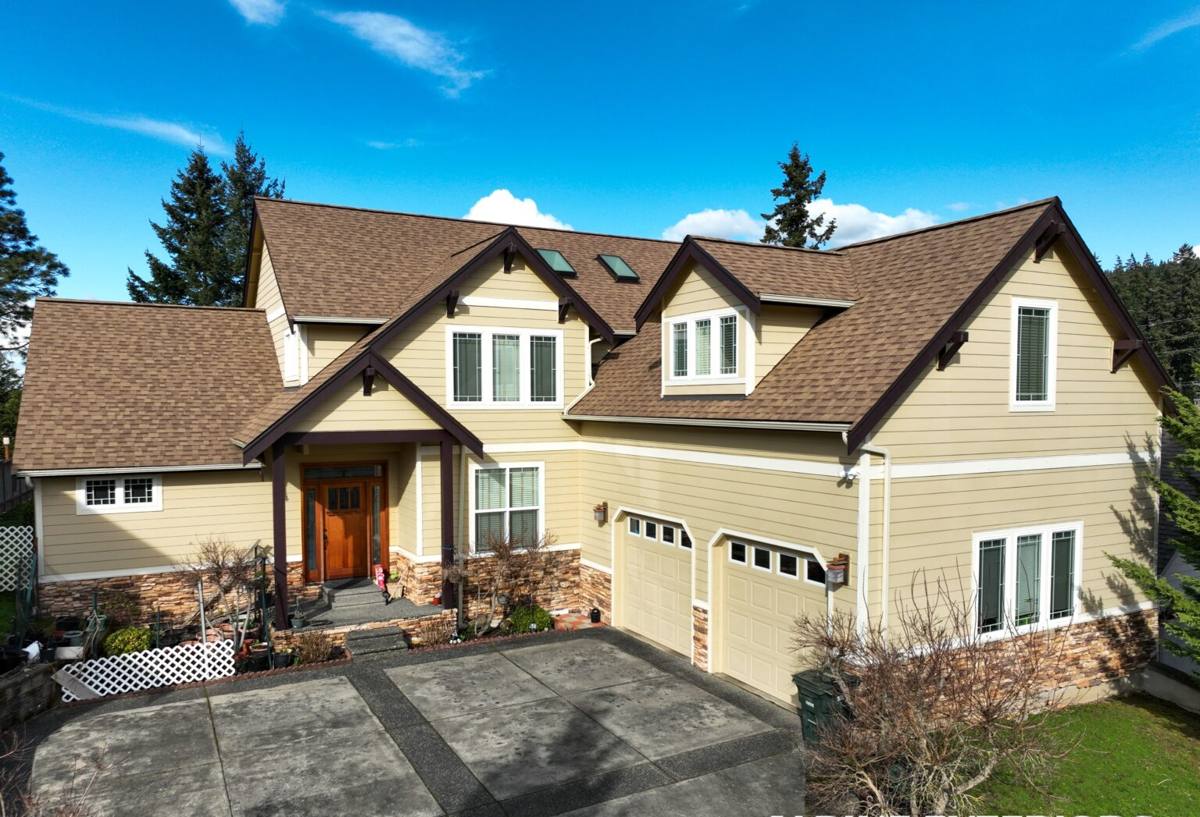
What Bellingham's Climate Actually Does to a Deck
It helps to be specific about the stresses at play, because they're not the same stresses a deck faces in Spokane or Sacramento.
Moisture That Never Fully Lets Up
Bellingham gets long stretches of low-intensity, driving rain rather than short, heavy downpours. That matters because it means wood and fastener surfaces stay damp for days at a time instead of drying between storms. Any decking material that absorbs water, or any fastener that isn't rated for sustained moisture contact, is working against the clock from day one.
Moss and Organic Growth
Moss doesn't need much — shade, moisture, and time — and Sunnyland's mature tree cover provides plenty of both. Once moss or algae gets a foothold on a deck surface or in the gaps between boards, it holds moisture against the material and turns the deck slick, which is a real slip hazard on stairs and landings.
Salt Air Off the Bay
Homes closer to Bellingham Bay deal with a low but constant level of salt-laden air. It's not the same exposure as a beachfront property, but it's enough over years to accelerate corrosion on exposed metal fasteners, brackets, and hardware that aren't rated for it.
Freeze-Thaw Cycling
Whatcom County doesn't get brutal winters, but it does get repeated cycles of freezing nights and wet, thawing days. Water that gets into a crack, a fastener hole, or an unsealed board end and then freezes will expand that damage every single cycle.
Why Composite Decking Fits This Climate
None of this means wood decking is impossible in Sunnyland — plenty of homeowners still choose it and maintain it well. But composite decking removes several of the maintenance burdens that this specific climate makes worse, which is why it's become the more common choice for homeowners who want a deck that holds up without a standing appointment on the calendar every spring.
Moisture Resistance
Quality composite boards, especially capped composite, don't absorb water the way wood does. That matters directly in a climate where boards rarely get a real chance to dry out between rain events.
Resistance to Moss and Mildew Staining
Composite surfaces are far less hospitable to moss and algae than untreated or even stained wood, and what does grow on the surface generally rinses off rather than staining into the grain. This doesn't mean a composite deck is maintenance-free — it still needs regular cleaning in a shaded, damp yard — but the cleaning is easier and the material doesn't degrade from the exposure the way wood fiber does.
No Annual Refinishing
Wood decks in this climate typically need re-staining or sealing every one to three years to keep water out of the fibers. Composite decking skips that cycle entirely, which is often the deciding factor for homeowners who want to actually use their deck rather than maintain it.
Composite vs. Wood vs. PVC for a Sunnyland Deck
Every decking material is a set of trade-offs. Here's how the common options actually compare for a Bellingham backyard, honestly.
| Material | Moisture Behavior | Maintenance | Typical Lifespan Here |
|---|---|---|---|
| Pressure-treated wood | Absorbs water; prone to swelling, splitting, and mildew staining without upkeep | Sealing or staining every 1-3 years | 10-15 years with consistent upkeep |
| Capped composite | Water-resistant surface layer; core doesn't wick moisture the way wood does | Periodic cleaning, no sealing or staining | 25-30+ years, manufacturer-dependent |
| Cellular PVC | Fully moisture-resistant; unaffected by wet ground contact | Low; occasional cleaning | Comparable to or longer than composite, at a higher material cost |
We install composite decking because, for most Sunnyland homeowners, it's the best balance of upfront cost, appearance, and freedom from the maintenance this climate otherwise demands. When wood is the right call — for budget, repair matching, or personal preference — we say so and build it correctly for these conditions rather than talking anyone out of it.
What a Correct Composite Installation Actually Involves
Composite boards are more forgiving than wood in some ways and less forgiving in others. Installed wrong, a composite deck can trap moisture, sag, or develop surface problems that a warranty won't cover because the failure traces back to the build, not the material.
Substructure First
The joists and ledger board underneath matter as much as the decking itself. In a climate this wet, we use fasteners and structural hardware rated for sustained moisture and coastal exposure, and we make sure the ledger connection to the house is properly flashed so water can't work its way into the wall framing behind it — a common failure point on older Bellingham decks that were never flashed correctly in the first place.
Airflow Underneath
Composite boards need airflow beneath them to manage the moisture that inevitably works its way through gaps and end cuts. Decks built too low to the ground, or over ground that doesn't drain, trap humidity underneath the boards regardless of what the surface material is rated for.
Proper Spacing and Fastening
Composite material expands and contracts with temperature more than wood does. Board gapping, hidden fastener systems, and picture-frame trim details all have to account for that movement, especially at butt joints and stair stringers, or the deck will show gaps or buckling within a couple of seasons.
Ledger and Stair Flashing
Stairs and any point where the deck meets the house siding are the two places we see the most water intrusion on existing decks. Correct flashing at both points is not optional in a climate that gets this much sustained rain.
How Our Process Works
- On-site assessment — We look at your existing deck or build site, drainage, sun/shade exposure, and how close you are to the Bay, since that affects hardware selection.
- Material and layout discussion — We walk through composite board options, color, and layout for your specific yard, including stair and railing needs.
- Structural check or rebuild — If we're resurfacing an existing deck, we inspect the substructure first. A composite surface on a compromised frame is a bad deal for you, and we won't do it without addressing the frame.
- Installation — Framing and flashing work, then composite board installation with attention to airflow, spacing, and fastening appropriate to this climate.
- Final walkthrough — We go over care basics for your specific deck before we consider the job done.
Maintaining a Composite Deck in a Moss-Prone Climate
Composite decking cuts the maintenance load significantly, but "low maintenance" doesn't mean "no maintenance," especially with the tree cover common in Sunnyland yards.
- Sweep debris and fallen leaves off the deck regularly — trapped organic matter is what feeds moss and algae growth
- Rinse the deck surface a few times a year, more often in shaded areas, to keep spores from getting established
- Clean gaps between boards where debris collects, since that's where moisture and organic buildup start
- Check that nothing (planters, furniture legs, rugs) is sitting directly on the surface for long stretches without airflow underneath it
- Inspect railings, stair connections, and ledger flashing once a year for any sign of movement or water staining
Why a Crew That Already Works Sunnyland Makes a Difference
None of the material or installation details above are secret information, but applying them correctly to a specific yard takes local judgment. A crew that regularly works in Sunnyland and the surrounding Bellingham neighborhoods knows how close a given lot sits to salt air exposure, how shaded a typical yard is likely to be based on the tree cover common to the area, and what drainage problems tend to show up on the older housing stock here. That local pattern recognition is what keeps a composite deck performing the way it's supposed to for decades instead of just looking right for the first year.
It also means we're not learning Whatcom County's permitting and inspection expectations on your project — we already know what's required for a deck build or rebuild in the city, and we handle that process as part of the job rather than treating it as an afterthought.
Get a Straight Answer for Your Deck
If you're weighing a deck replacement or a new build in Sunnyland, we're happy to take a look and give you an honest read on your options — no pressure, no upsell script. Fill out the form below for a free estimate, and we'll walk the site with your specific yard and climate exposure in mind.