 Bellingham Roofing
 Window Installation in South Hill: A Hillside Neighborhood With Its Own Demands
South Hill sits above the rest of Bellingham, and that elevation changes how weather actually hits a house. Wind that moves gently through lower, more sheltered parts of town arrives with more force once it climbs the hill, and rain that falls straight down closer to the water often turns sideways by the time it reaches a South Hill wall. Add in Whatcom County's steady salt-tinged marine air, driving rain, and a moss season that can run most of the year on shaded surfaces, and you get a neighborhood where windows take a genuinely different beating than the same product would take a few blocks away at sea level.
We install, replace, and repair windows across Bellingham, and South Hill's mix of older housing stock, mature tree cover, and exposed hillside lots is a distinct case within that work. A window here isn't just a product choice — it's one piece of a wall assembly that has to hold up against wind-driven rain, shed water correctly off a sloped lot, and survive a long damp season without trapping moisture behind the trim. Getting that right depends more on installation detail than on which window brand ends up in the opening.
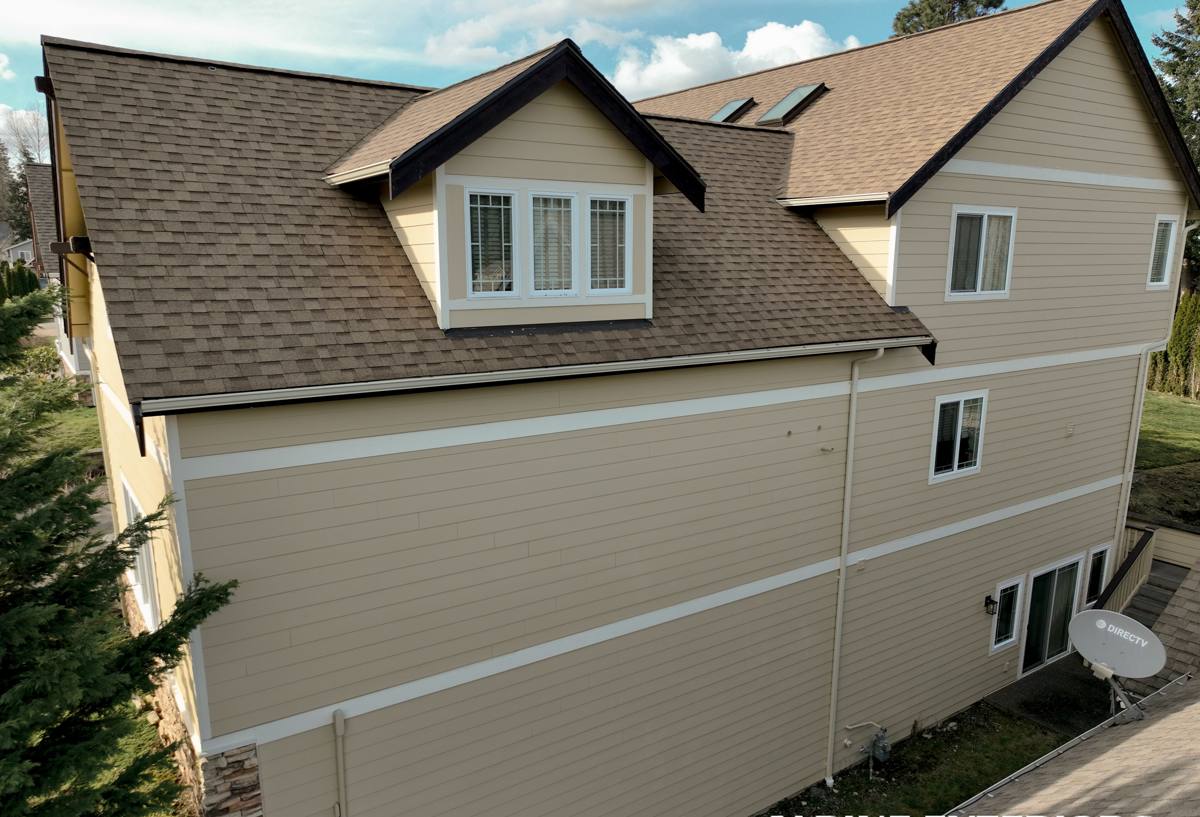
What South Hill's Setting Does to Windows
Elevation and Wind-Driven Rain
Higher ground means more direct exposure to prevailing wind, especially on walls that face open sky or a view toward the bay. That wind doesn't just make a house feel drafty — it drives rain into head flashing, jamb seams, and sill pans at an angle a calmer, lower-elevation site wouldn't have to handle. Window installations that would perform fine on a sheltered lot can leak on a South Hill hillside simply because the flashing wasn't built for that added wind load.
Mature Tree Canopy, Shade, and Moss
Many South Hill streets have significant tree cover, which is part of the neighborhood's character but also means a lot of walls and window sills stay shaded and damp longer than they would on a more open lot. That combination — shade plus Whatcom County's persistent moisture — is exactly what moss and mildew need to establish themselves on sills, trim, and lower window corners. It's a slow problem that usually shows up first as failing paint or a soft spot underfoot on a wood sill, long before anyone notices water inside the wall.
Older Homes, Older Windows
South Hill has a lot of established housing stock, and older homes often still carry original or early-replacement windows — single-pane, early aluminum-frame, or first-generation vinyl units that were never built for the performance standards or the wind-driven rain exposure this hillside actually sees. Those windows can still look fine from the street while performing poorly: fogging between panes, drafts, or hardware that's stiff from years of corrosion. Matching a new window's performance to what an older home's opening and framing can actually support is a bigger part of the job here than in newer construction.
What a Correct Window Installation Actually Involves
Full-Frame Replacement vs. Insert Replacement
Insert replacement fits a new window into the existing frame and is faster, less disruptive to surrounding trim, and a reasonable option when that existing frame is sound and was flashed correctly to begin with. Full-frame replacement removes the window down to the rough opening and rebuilds the flashing from the framing out. On South Hill's older homes, we see the case for full-frame more often than on newer construction, simply because original flashing details from decades ago frequently don't meet what this hillside's wind and rain exposure actually requires. We'll tell you honestly which situation your home is in rather than defaulting to whichever option is quicker to sell.
Flashing and Sill Details We Treat as Non-Negotiable
Most window failures we get called out for aren't failures of the window itself — they're shortcuts taken in the flashing and sealing during installation that don't show up until a wet season or two later. On a hillside lot facing wind-driven rain, none of the following are optional:
- A sill pan pitched to shed water outward and down, not one that lets water pool under the frame
- Head flashing lapped correctly into the housewrap above the window so water sheds down and out, not behind the siding
- Jamb flashing tied into the surrounding wall assembly, not just caulk bridging the gap
- Weep holes and drainage paths left clear and functional after installation, not sealed shut by trim or paint
- Corrosion-resistant fasteners and hardware suited to sustained marine-influenced moisture
- Air sealing and insulation around the frame that doesn't trap moisture against older framing
These details add very little to the cost of a job relative to the window itself. Skipping them is what turns a decent window into a leak behind the wall within a few years, and on an older South Hill home, that wall may already have less moisture tolerance than new construction.
Choosing the Right Window for a South Hill Home
There's no single correct frame material for every house on this hill — it depends on the home's age, its exposure to wind and shade, and your budget. What matters is understanding the real trade-offs before deciding.
| Frame Material | How It Handles This Hillside | Maintenance | Realistic Lifespan |
|---|---|---|---|
| Vinyl | Resists rot and corrosion well; seam and weld quality matters more under wind-driven rain | Low; periodic track and weep-hole cleaning | 20-30 years |
| Fiberglass | Very stable dimensionally, holds up well against repeated wetting and drying | Low | 30-40+ years |
| Wood, painted or clad | Can look right for older, character homes but needs diligent upkeep in shaded, damp spots | Higher; regular paint and finish maintenance | 15-30 years depending on upkeep |
| Aluminum | Conducts cold and is more prone to corrosion over time in salt-influenced hillside air unless well-finished | Moderate | 20-30 years |
Plenty of South Hill homes were built with a particular architectural character in mind, and we'll talk through which material keeps that look intact without sacrificing performance, rather than pushing whichever product is easiest for us to install.
Our Process, Start to Finish
- An on-site visit where we look at each window's exposure — wind direction, shade, tree cover, existing damage — rather than quoting the whole house identically
- A straightforward conversation about frame material, glass options, and full-frame versus insert replacement, with the honest trade-offs for your specific home
- Measurement and ordering, with realistic timelines given manufacturer lead times
- Careful removal of the existing window, with an inspection of the framing and sill for hidden rot or past water damage before anything new goes in
- Installation with the flashing, sill pan, and sealing details built for this hillside's wind and rain, not a generic install checklist
- Integration with surrounding siding and trim so the finished opening looks correct and sheds water as one system
- A final walkthrough covering operation, warranty paperwork, and basic care
Signs a South Hill Home Needs Window Attention
- Fogging or condensation trapped between panes, usually meaning a failed seal
- Noticeable drafts or a cold spot near a closed window, especially on wind-exposed walls
- Soft, discolored, or spongy sill or trim material on shaded elevations
- Windows that stick, won't latch, or are harder to operate than they used to be
- Peeling paint or bubbling finish around a wood-framed window
- Visible daylight, cracked caulk, or gaps around the frame from inside
- Interior water staining on the wall or ceiling near a window
Any one of these is worth a look. Caught early, most point to a repair or reseal. Left through another wet season on an exposed hillside wall, several of them point to water already working its way into the framing.
Cost Factors for Window Installation in South Hill
We don't quote off a flat per-window price sheet, because the real cost drivers vary a lot from house to house on this hill. Here's what typically moves the number, without invented figures attached:
| Factor | Why It Affects Cost |
|---|---|
| Full-frame vs. insert replacement | Full-frame involves more labor and rebuilding flashing, so it costs more than an insert into a sound existing frame |
| Frame material | Fiberglass and higher-grade vinyl generally cost more upfront than basic vinyl or aluminum, but often less over the life of the window |
| Number and size of openings | Larger view-oriented windows and multi-window projects cost more than a single small unit |
| Existing rot or water damage | Framing repair discovered once the old window is out adds cost, but it's cheaper to fix now than to seal a new window over an existing problem |
| Access and elevation | Upper-story or hard-to-reach openings on a steep hillside lot can add labor time |
| Glass package | Low-E coatings, gas fills, and triple-pane glass add cost and can be worth it depending on the window's exposure |
We'll walk through which of these actually apply to your project before we give you a number, so the estimate reflects your house rather than a generic average.
Why a Crew That Already Works South Hill Matters
A crew that's installed and repaired windows across this hill sees, year after year, how wind direction, tree shade, and lot slope actually affect a given wall — not just how a product performs on a spec sheet. That translates into practical judgment: how much extra attention a west-facing, wind-exposed opening needs compared to a sheltered one two doors down, how a sill pan should be pitched for the water a specific elevation sees, and which older South Hill homes are likely to have flashing details from a previous era that won't hold up to today's expectations. That local pattern recognition is the difference between an installation that's technically fine and one that's actually built for the wall it's going into.
Windows Are Part of a Bigger Exterior Picture
Windows are the focus of this page, but the same wind, rain, and moss that wear on a window wear on the rest of a South Hill home's exterior too. We also handle siding, roofing, and decks, and if a window project uncovers moisture damage in the surrounding siding or trim, or a flashing problem where a roof edge meets a wall above a window, we can address it as part of the same project instead of leaving you to find a second contractor for a problem we already found.
Get a Free, No-Pressure Estimate
If your South Hill home has windows that are drafty, fogged, hard to operate, or just showing their age, we're glad to take a look and give you a straightforward, honest read on what it actually needs. Use the form below to schedule a free estimate — no pressure, no upsell script.