 Bellingham Roofing
 Metal Roofing Built for York's Weather, Not Just Its Look
York is a quieter residential pocket close to the water and to Bellingham's damp, wooded terrain, and that combination puts real demands on a roof. Salt-tinged air moves in off the bay, driving rain comes in sideways during fall and winter storms, and the long stretch of overcast, wet months from October through May gives moss every opportunity it needs to take hold. A metal roof handles all three of those conditions better than most other roofing materials, but only when it's the right system, installed correctly, and matched to the specific exposure of the home it's going on. That's the piece that gets skipped when a crew treats a metal roof like a generic product instead of a system that has to answer to Whatcom County weather.
This page is about metal roofing specifically for homes in and around York — what the climate actually does to a roof here, what a correct installation looks like, and why local experience with this exact area changes the outcome.
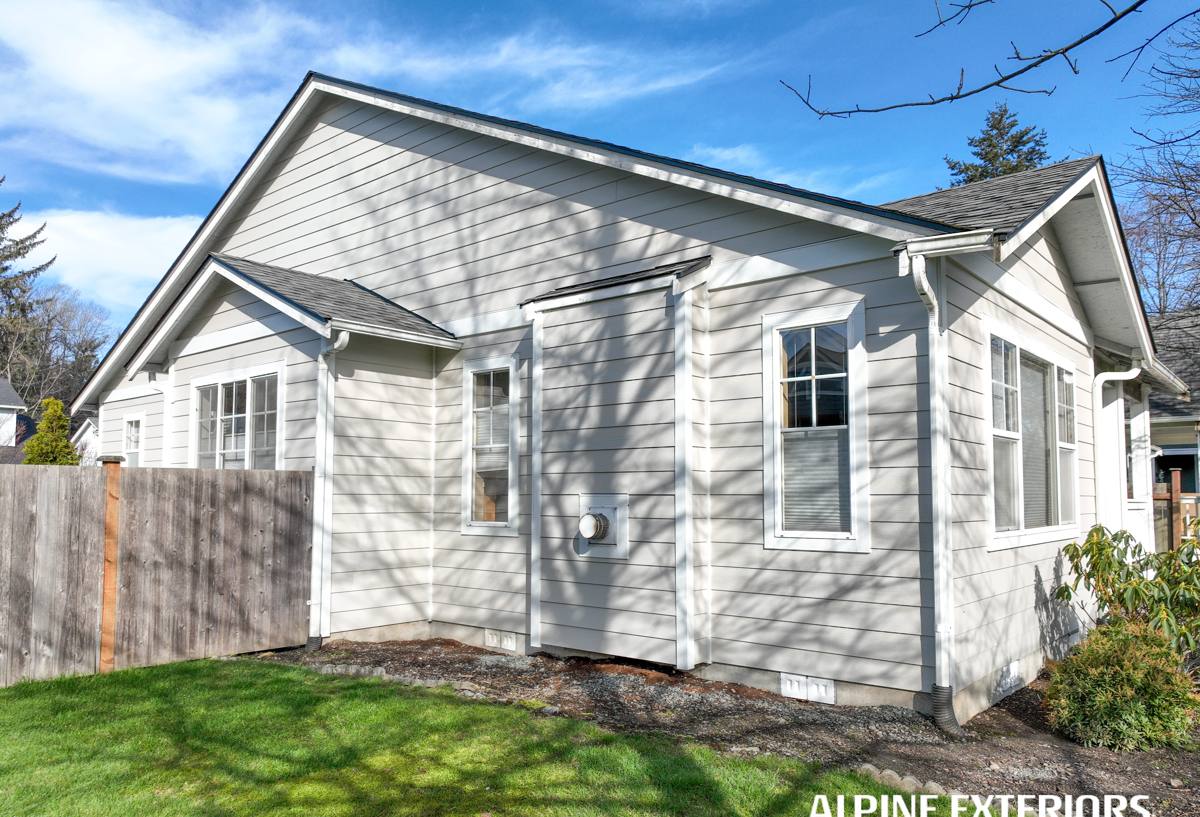
What Bellingham's Climate Does to a Roof Over Time
Salt Air and Metal Corrosion
Being close to the water means airborne salt settles on every exterior surface, roofs included. Untreated or poorly coated metal will corrode faster in this environment, especially at fastener heads, cut edges, and panel seams where a factory finish can be compromised during installation. This is why the coating system and finish quality matter as much as the base metal — a panel that's rated for coastal exposure and installed with the right fasteners will shrug off salt air for decades; one that isn't will show rust streaks and pitting years before it should.
Driving Rain and Wind-Driven Water
Storms here don't always come straight down. Wind-driven rain pushes water sideways and upward under roof edges, around penetrations, and into any gap in flashing that a calmer climate might never expose. A metal roof's watertightness depends almost entirely on how the underlayment, flashing, and panel laps are detailed — the panels themselves are the easy part.
Moss, Shade, and Moisture Retention
Long overcast stretches and tree cover common around York keep roof surfaces damp for extended periods, which is exactly what moss needs to establish. Moss holds moisture against the roof surface, can work into seams over time, and often signals that debris and organic buildup have been sitting in valleys or against panel edges longer than they should. Metal sheds moss far more easily than shingles because it doesn't have the porous, granular surface moss can grip, but panel design, slope, and detailing still influence how well a specific roof resists it.
Why Metal Makes Sense for This Area
Metal roofing isn't the right fit for every home or every budget, but for the conditions York sees, it has real advantages:
- Sheds water fast — steep-profile panels and standing seam systems move heavy rain off the roof before it has a chance to work into laps or fasteners.
- Resists moss and organic growth — a smooth, hard surface gives moss and moisture far less to hold onto compared to shingles.
- Handles wind well — properly fastened metal panels perform strongly in the wind events that come through with fall and winter storms.
- Long service life — a correctly installed metal roof with the right coating can outlast several cycles of asphalt shingle replacement, which matters given how much this climate wears down roofing materials.
- Low ongoing maintenance — less need for the moss treatments and granule loss monitoring that shingle roofs require here.
None of that is automatic. It's a function of the specific panel profile, coating, fastening method, and flashing detail chosen for the home — which is why we walk through those choices with every homeowner rather than quoting a single generic package.
What a Correct Metal Roof Installation Actually Involves
Deck Inspection and Prep
Before any panel goes down, the existing deck gets checked for soft spots, rot, or moisture damage — issues that are more common on older homes in wetter parts of Whatcom County than homeowners expect. Any compromised sheathing gets replaced. Installing new metal over a damaged deck just hides a problem that will resurface as a leak later.
Underlayment
A high-quality synthetic or self-adhering underlayment goes down as the actual waterproofing layer beneath the metal. In a climate with this much driving rain, we pay particular attention to underlayment at eaves, valleys, and any low-slope sections where wind-driven water is most likely to test the roof.
Panel Selection and Layout
Panel profile (standing seam, exposed-fastener, or a shingle-style metal panel) gets chosen based on roof slope, the home's architecture, and budget. Layout is planned to minimize seams in high-exposure areas and to keep water moving toward properly detailed edges rather than pooling or backing up against a lap.
Fastening and Sealants
Coastal-rated fasteners matched to the panel material prevent the galvanic corrosion that mismatched metals cause over time. Sealants and closures at ridges, eaves, and penetrations are chosen for long-term flexibility, since a sealant that hardens and cracks after a few Bellingham winters becomes a leak point no matter how good the panels are.
Flashing and Penetrations
Chimneys, vents, skylights, and valleys are where most roof leaks actually start, metal or otherwise. Flashing here gets formed and layered specifically for the panel profile in use, not bent generically and caulked into place.
Ventilation
Metal roofs perform best with proper attic ventilation behind them. In a humid climate like this one, inadequate ventilation can trap moisture under the deck regardless of how good the roof surface is, so we check intake and exhaust venting as part of the job, not as an afterthought.
Comparing Metal Roofing Approaches for a York Home
| Factor | Standing Seam Metal | Exposed-Fastener Metal |
|---|---|---|
| Fastener exposure | Concealed under seams — no exposed fastener heads to corrode or leak | Fasteners penetrate the panel face and need periodic inspection |
| Upfront cost | Higher | Lower |
| Best fit | Full roof replacements, higher-exposure areas, longer-term ownership plans | Outbuildings, budget-driven projects, lower-visibility roof sections |
| Maintenance | Minimal once installed correctly | Occasional fastener and washer checks over the roof's life |
| Coastal/salt-air performance | Strong, especially with a marine-grade coating | Adequate with correct fasteners, but more failure points |
For most homes near the water and tree line around York, we lean toward standing seam when budget allows, simply because it removes the fastener-corrosion variable that salt air and decades of rain will eventually test.
Our Process for York Metal Roofing Projects
- On-site assessment — we look at the existing roof, deck condition, slope, tree cover, and exposure to prevailing wind and rain direction specific to the property.
- Honest scope and options — we walk through panel type, coating, and budget trade-offs in plain terms, including where a lower-cost option is genuinely reasonable and where it isn't.
- Written estimate — a clear breakdown of materials, labor, and timeline, with no vague allowances.
- Prep and protection — landscaping, gutters, and the surrounding property are protected before tear-off begins.
- Tear-off and deck repair — old roofing removed, deck inspected, and any damaged sheathing replaced before underlayment goes down.
- Installation — underlayment, flashing, and panels installed to manufacturer spec and to the exposure conditions of the specific home.
- Final walkthrough — we go over the finished roof with the homeowner, including basic care and what to watch for over the first year.
What to Check Before You Sign With Any Roofer
- Are they licensed and insured to work in Washington State, with proof available on request?
- Do they inspect the deck before quoting, or price the job sight-unseen?
- Is the estimate itemized, or a single lump number with no breakdown?
- Do they explain fastener type and flashing approach, or just the panel brand?
- Can they speak specifically to moss, moisture, and wind exposure in this part of Whatcom County?
Why Local Experience in York Matters
A roofing crew that already works in and around York has a working sense of how exposed a given block tends to be to wind off the water, how much shade and moisture particular streets hold onto into spring, and which roof details tend to fail first on homes of a certain age in this area. That's not something a crew driving in from outside the region picks up on the first visit. It shows up in smaller decisions — how a valley gets flashed, where extra underlayment is worth the cost, which panel profile actually suits the home's slope and surroundings — that don't show up on a quote sheet but do show up in how the roof performs ten winters later.
It also matters for accountability. A local company is easy to reach after the job if a question comes up, and has a reputation in the community worth protecting, which is a different incentive than a crew that's moved on to another region entirely.
Maintaining a Metal Roof in This Climate
Metal roofs need less upkeep than most materials, but "less" isn't "none," especially here:
- Clear debris from valleys and around penetrations each fall before the wet season sets in.
- Keep overhanging branches trimmed back to reduce shade and moisture retention that encourage moss.
- Check gutters and downspouts are clear so water actually leaves the roof instead of backing up at the eaves.
- Have flashing and sealant points inspected periodically, particularly after major wind events.
A quick annual look at these items catches small issues — a lifted flashing edge, a clogged valley — before they turn into an interior leak.
Getting Started
If you're weighing a metal roof for a home in York, we're happy to take a look, walk the roof, and give you a straightforward read on condition, options, and realistic cost — no pressure, no obligation. Use the form below to request a free estimate.