 Bellingham Roofing
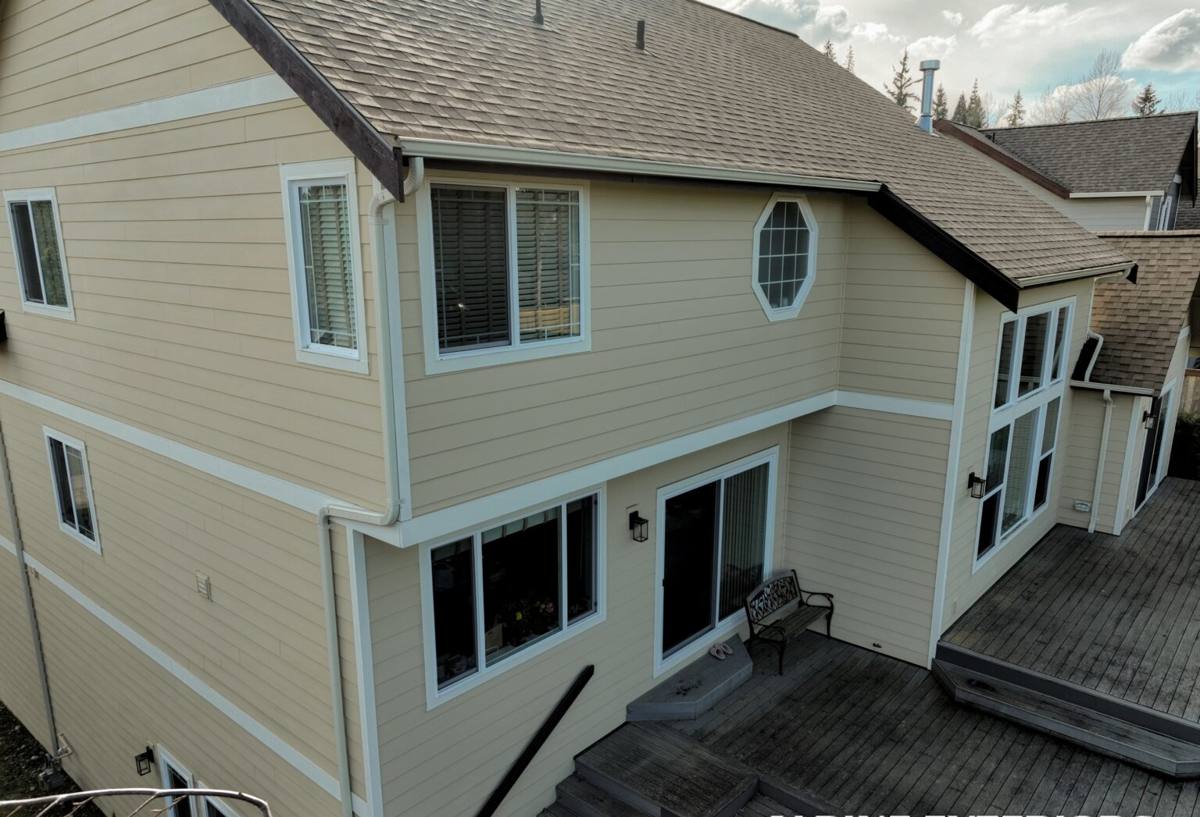
 Siding Repair in Blaine: Fixing It So It Stays Fixed
Blaine sits right against the water at the northern edge of Whatcom County, and that position means local homes take on a steadier dose of salt air and wind-driven rain than towns set further inland. When siding damage shows up here — a cracked panel, a soft spot near a window, a section that's pulled away from the wall — it's rarely an isolated problem. It's usually a sign that moisture has already found a way behind the surface, and a patch job that only addresses what's visible tends to leave the real cause untouched. We work Blaine regularly, and siding repair is one of the calls we get most often once a homeowner notices something isn't right.
We install and repair James Hardie fiber cement siding exclusively. That's a professional standard we've built around watching how different siding materials actually hold up — or fail — in a coastal, high-moisture town like Blaine, not a sales preference. Whether the repair is on Hardie siding we're extending the life of, or another material that's reached the point where repair no longer makes sense, we start every job by figuring out what's actually happening behind the wall, not just what's visible from the driveway.
What Blaine's Climate Does to Siding
Salt Air Off the Water
Homes anywhere near Semiahmoo Bay or Drayton Harbor take on salt-laden air more consistently than towns further from the coast. Salt speeds up corrosion on fasteners, flashing, and exposed trim, and it breaks down lower-grade finishes faster than a drier inland climate would. A repair that reuses corroded fasteners or ignores a failing finish is a repair that's already on borrowed time.
Driving Rain
Storms coming off the water push rain sideways into wall assemblies instead of just dropping it straight down. That wind-driven moisture finds its way into joints, seams, and any gap in flashing far more readily than vertical rainfall would, and it's usually the real driver behind siding damage that looks minor on the surface but traces back to a much bigger wet spot underneath.
A Long Moss Season
Mild temperatures and near-constant moisture give moss and mildew a growing season that can run most of the year on shaded or north-facing walls. Once moss or mildew takes hold on damaged or gapped siding, it holds moisture against the surface longer, which accelerates whatever damage was already starting underneath.
How to Tell If Siding Needs Repair — or Replacement
Not every damaged section needs a full siding replacement, but not every problem is fixable with a patch either. Knowing which situation you're in matters, because repairing over hidden rot just delays a bigger job and adds cost.
- Cracked, split, or visibly warped panels in an isolated area
- Soft or spongy spots when pressed, especially low on the wall or around window and door trim
- Siding that's pulled loose or gapped away from the wall, often around corners or seams
- Peeling paint or a chalky, faded finish concentrated on shaded or north-facing walls
- Staining or streaking below a window, roofline, or trim board
- Visible moss or mildew that returns quickly after cleaning
- Rust staining around fasteners or trim, more common this close to the water
A single cracked panel with dry, solid sheathing behind it is usually a straightforward repair. Multiple soft spots, staining that traces back several feet from the visible damage, or rot found once we pull the first panel are signs the problem is bigger than one section — and that's the point where an honest contractor tells you repair isn't the right call anymore.
What a Correct Repair Actually Involves
A repair that just replaces the damaged panel and stops there is the most common shortcut we see undone within a year or two, especially in a climate like Blaine's. Doing it right means treating the repair as a small version of a full installation, not a patch.
Find the Moisture Path First
Before any new siding goes on, we trace where water actually got in — a failed seam, a gap in flashing, a window that wasn't properly integrated with the wall wrap. Replacing the visible panel without fixing that entry point means the same damage comes back, often in the same spot.
Check the Sheathing and Framing Behind It
Once siding is off, we look at what's underneath. Soft or discolored sheathing needs to be addressed before new siding goes back on, not covered over. This is also where a repair sometimes turns into something larger, and we'll tell you plainly if that's the case rather than sealing over a problem that's still active.
Match Fasteners and Flashing to the Coastal Environment
Corrosion-resistant fasteners and properly lapped flashing matter more on a repair this close to the water than they would in a milder inland climate. Reusing corroded hardware or skipping flashing details on a repair just sets up the same failure again, faster than it took the first time.
Match the Finish
On Hardie siding with a factory-applied ColorPlus finish, matching panel color and profile matters for both appearance and long-term performance, since ColorPlus is engineered to hold its finish far longer than field-applied paint. We source matching Hardie product rather than mixing in something that will visibly age at a different rate.
Repair vs. Replacement: What Actually Drives the Decision
| Factor | Favors Repair | Favors Full Replacement |
|---|---|---|
| Extent of damage | Isolated to one or two sections | Spread across multiple walls or elevations |
| Sheathing condition | Dry and solid once opened up | Soft, discolored, or rotted in multiple spots |
| Age of existing siding | Still within its expected service life | Near or past end of life, with damage in several places |
| Underlying cause | A single identifiable moisture entry point | Systemic moisture intrusion behind large sections |
| Material match | Matching product still available | Discontinued color or profile with no reasonable match |
These are general guidelines, not a diagnosis. The only reliable way to know which side of that table a given house falls on is to open up the damaged area and look, which is why we're upfront that some repair calls turn into a conversation about replacement once we're actually into the wall.
Why We Only Repair and Install James Hardie Siding
We used to work with a broader range of siding products. What changed our minds was what we kept finding on repair and tear-off calls in coastal, high-moisture towns like Blaine — not a supplier relationship or a marketing angle.
- Non-combustible core: Fiber cement doesn't feed a fire the way wood-based siding products can, which matters for both safety and insurance considerations.
- Factory-applied ColorPlus finish: Baked on under controlled conditions rather than brushed on site, so it holds up longer against fading, chalking, and salt-air exposure — and it's a big reason repairs blend in rather than standing out.
- Climate-engineered HZ product lines: Hardie's HZ5 formulation is built for regions with sustained moisture and freeze-thaw cycling, which fits coastal Whatcom County.
- Dimensional stability: Fiber cement doesn't swell, cup, or warp the way engineered wood products can after repeated wet-weather exposure, which means fewer repair calls to begin with.
- Strong transferable warranty: Hardie backs correctly installed product with one of the stronger warranty structures in the industry.
We won't install or patch in LP SmartSide, vinyl siding, Cemplank, Allura, primed spruce, or cedar. Each has homeowners who are satisfied with it, and we're not here to tell you otherwise. But when we're the ones doing the repair, we stand behind one system we trust in this climate rather than mixing in a cheaper material that shifts the maintenance burden back onto you a few years down the road.
When Existing Non-Hardie Siding Needs Repair
A lot of our Blaine repair calls come from homes with vinyl, engineered wood, or cedar siding that's original to the house. We'll still assess and repair those where it makes sense — a homeowner shouldn't be forced into a full siding replacement over one damaged section. But where the damage is extensive, or where the existing material is clearly reaching the end of what it can reasonably give in this climate, we'll say so directly and lay out what replacing with Hardie would look like, without any pressure to decide on the spot.
Our Repair Process
- On-site assessment: We walk the affected area, check for soft spots beyond what's visible, and identify the likely moisture entry point.
- Opening up the damage: We remove enough siding to see the sheathing and framing condition underneath, which is the only way to give an honest scope.
- Straightforward scope and cost: We tell you what we found, what it will take to fix it correctly, and what it costs — before any work beyond the initial opening-up happens.
- Repair the source, not just the symptom: Flashing, house wrap, and sheathing issues get addressed alongside the visible siding damage.
- Match and finish: New Hardie panels are matched for profile and ColorPlus color so the repair blends into the rest of the wall.
Timing Repairs Around Blaine's Weather
Whatcom County's wettest, windiest stretch typically runs from late fall through winter, and Blaine's exposed coastal position makes that stretch harder on a house than it is further inland. Spring and summer generally give the most stable conditions for siding repair, since new material and sealants set up better in dry weather. That said, active moisture intrusion doesn't wait for good weather — a soft spot that's actively letting water in is worth addressing on its own timeline rather than holding out for the ideal season and letting the damage spread through a winter.
Why a Local Crew Matters for a Repair Call
Siding repair rewards local knowledge more than a full new installation does, because diagnosing a problem correctly depends on having seen how damage actually develops on real houses in this specific climate. A crew that works Blaine regularly knows which walls take the worst of the wind-driven rain, where moss tends to mask early damage, and which repair shortcuts show up as callbacks within a year. That experience is what separates a repair that actually holds from one that just covers the problem back up until the next storm off the water finds it again.
Get a Free, No-Pressure Estimate
If your Blaine home has siding damage — a cracked panel, a soft spot, staining that won't clean off, or anything else that doesn't look right — we're glad to take a look and give you a straightforward, honest read on what it actually needs. Reach out using the form below to schedule a free estimate, no pressure and no upsell script.