 Bellingham Roofing
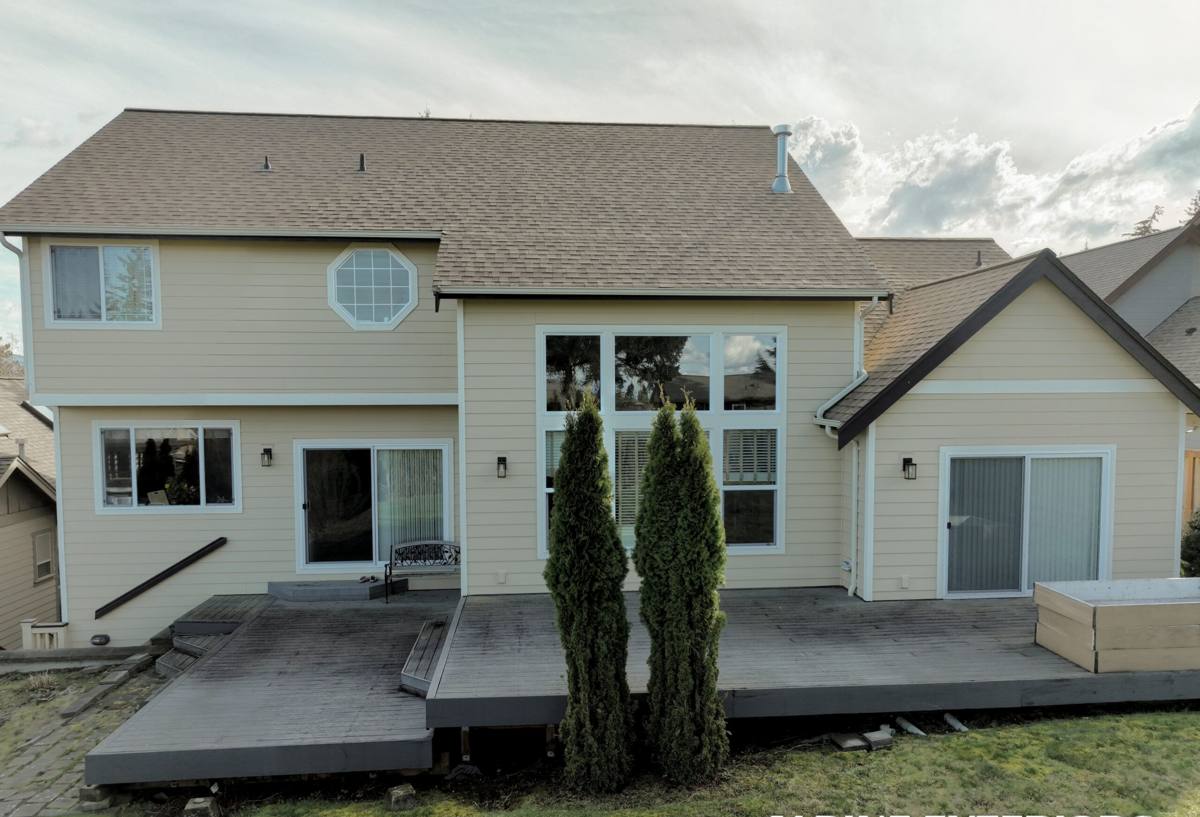
 Deck Replacement Built for Edgemoor's Setting
Edgemoor sits close to Bellingham Bay, tucked into wooded, bluff-adjacent lots that give homeowners some of the best outdoor living space in Whatcom County. That same setting — marine air, mature tree canopy, and steep or sloped yards — is exactly what wears a deck out faster than a homeowner expects. A deck built without that in mind may look fine for a few years and then fail from underneath, in the framing and fasteners nobody sees until a board flexes or a railing loosens.
This page is about one job, done right, in one neighborhood: replacing a tired or failing deck in Edgemoor with a structure that's actually built for how this part of Bellingham weathers a deck, not a generic build dropped in from a catalog plan.
Why Edgemoor Decks Take a Different Kind of Beating
Salt Air and Driving Rain
Proximity to the bay means fasteners, flashing, and metal hardware are exposed to salt-laden air more than they would be further inland. Standard hardware corrodes faster here, and once a fastener starts rusting, it stops holding wood tight — that's how railings get wobbly and boards start to cup. Add Bellingham's sideways, wind-driven rain and any gap in flashing or a ledger board connection becomes a path for water straight into the house framing, not just the deck.
Tree Cover and a Long Moss Season
Many Edgemoor lots have real tree canopy, which is great for privacy and shade but means decks stay damp longer after every rain. Whatcom County's moss season runs long — often eight months or more of the year with enough moisture for growth — and moss on a deck surface isn't just cosmetic. It holds water against the wood or composite surface, stays cold and slick, and accelerates rot in framing underneath if drainage isn't handled correctly.
Slopes and Bluff-Adjacent Lots
Sloped and elevated lots common in Edgemoor often mean taller decks, more complex footings, and drainage that has to be planned rather than assumed. A deck built on a slope without proper grading and drainage detail under the frame will trap water exactly where you don't want it — against posts and beams.
Signs an Edgemoor Deck Needs Replacement, Not Just Repair
Not every tired deck needs a full replacement. But there's a point where patching boards is just delaying a bigger, more expensive failure. Look for:
- Soft or spongy spots when you walk across the deck, especially near the house or in shaded corners
- Visible rust streaks below fasteners or bolts, which usually means the hardware underneath is failing
- Gaps, dark staining, or soft wood where the deck meets the house (the ledger board connection)
- Persistent moss or algae that comes back within weeks of cleaning
- Railings or posts that flex or wiggle under normal pressure
- Boards cupping, splitting, or lifting nails/screws across multiple sections rather than one or two spots
If two or more of these show up at once, it's usually a sign the framing underneath — not just the surface boards — has been compromised. That's a replacement job, not a repair.
What a Correct Deck Replacement Actually Involves
A deck replacement done right is mostly about what you don't see once the decking boards go down. In a marine, moss-prone environment like Edgemoor, these details matter more than they would in a drier inland climate:
Ledger Board and Flashing
Where the deck attaches to the house is the single most common point of hidden rot. Correct flashing — installed so water sheds away from the house wall rather than behind the ledger board — is non-negotiable here given how much rain this area gets.
Framing and Fasteners
We use fasteners and structural hardware rated for the corrosion exposure this area actually sees, not the minimum a code inspector will accept elsewhere. Joist tape or a comparable protective barrier over the framing reduces how much moisture the wood absorbs over the life of the deck.
Footings and Drainage
On sloped or shaded Edgemoor lots, footings need to be sized and placed for the actual soil and grade, and the area under the deck needs somewhere for water to go. Skipping this is how you get standing water and rot at the post bases years down the line.
Ventilation Under Low Decks
Decks built close to the ground with little airflow underneath hold moisture longer, which matters even more under tree cover. Proper spacing and, where needed, ventilation gaps help the structure actually dry out between rain events instead of staying damp for months.
Decking Material Options for a Damp, Shaded Site
Material choice matters more on a shaded, moisture-heavy lot than it does on an open, sunny one. Here's how the common options actually perform in Edgemoor's conditions:
| Material | How It Handles Moss/Shade | Maintenance | Typical Lifespan Here |
|---|---|---|---|
| Pressure-treated wood | Needs regular cleaning and sealing to resist moss and rot in shaded areas | Annual cleaning, periodic staining/sealing | 10-15 years with upkeep |
| Cedar | Naturally moderate rot resistance but still holds moisture under canopy; benefits from sealing | Sealing every 1-2 years | 15-20 years with upkeep |
| Composite decking | Doesn't rot, but moss and algae can still grow on the surface and need washing | Periodic washing, no sealing/staining needed | 25-30 years, varies by brand and installation quality |
| PVC decking | Fully moisture-resistant surface; easiest to keep moss from taking hold | Occasional washing | 25-30+ years |
We don't push one material over another as a rule — we walk through the trade-offs with each homeowner. Composite and PVC cost more up front but ask less of you over the life of the deck, which matters on a shaded lot where a wood deck will need more frequent attention to stay ahead of moss and moisture. Wood costs less initially but only performs well if the maintenance actually happens on schedule.
Our Replacement Process
Every Edgemoor deck job follows the same sequence, adjusted for the specific lot and structure:
- On-site assessment — we check the framing, ledger connection, footings, and drainage before quoting anything, not just the surface condition
- Full or partial demo — removing decking, and framing where it's compromised, down to solid material
- Structural correction — resetting or replacing footings, framing, and ledger flashing to current standards for this climate
- Material installation — decking, railings, and stairs installed per the plan agreed with the homeowner
- Final walkthrough — checking rail stability, board spacing, and drainage before we consider the job done
A quick pre-job checklist we work through with every Edgemoor homeowner:
- Confirm whether the existing footings are reusable or need replacing
- Inspect the ledger board and house wall behind it for hidden water damage
- Assess canopy cover and plan for drainage and airflow accordingly
- Discuss material trade-offs given the site's shade and moisture exposure
- Verify railing height and spacing meet current code, especially on elevated decks
Permits and Local Considerations
Deck replacements in Bellingham typically require a permit through the City of Bellingham, particularly when structural framing, footings, or railings are being replaced rather than just surface boards. On sloped or bluff-adjacent Edgemoor lots, setback and grading considerations can come into play as well. We handle the permit process as part of the job rather than leaving homeowners to sort it out, and we won't cut corners on inspections just to move faster — a deck that fails an inspection later costs more to fix than it would have to build correctly the first time.
Why It Matters That We Already Work in Edgemoor
A crew that's worked other Edgemoor properties already understands how the tree cover, slope, and marine air on a given street tend to behave — which lots hold moisture longest, where drainage typically needs extra attention, and what hardware actually holds up here versus what's rated for drier, inland conditions. That's not something you can fully substitute with a generic spec sheet. It means fewer surprises once demo starts and a build that's suited to the site from the first footing, not adjusted after the fact.
It also means realistic timelines. Whatcom County's wet season narrows the window for framing and footing work that needs dry conditions to go in correctly, and a crew familiar with the area plans around that instead of promising a schedule that weather won't cooperate with.
Get a Straight Answer on Your Deck
If your Edgemoor deck is showing soft spots, persistent moss, loose railings, or rust at the hardware, it's worth having someone look at the framing before deciding between a repair and a full replacement. We offer a free, no-pressure estimate — fill out the form below and we'll take a look and give you a straight assessment of what your deck actually needs.