 Bellingham Roofing
 Why Sunnyland Windows Wear Out Differently
Sunnyland sits close enough to Bellingham Bay that its homes take on a mix of weather most inland neighborhoods never deal with. Salt-laden air off the water works into metal hardware and finishes over the years. Driving rain off Puget Sound doesn't just fall straight down here — it comes in sideways during winter storms, testing every seam around a window frame. And then there's moss season, the long stretch from fall through spring when constant damp keeps wood surfaces wet for days at a time. None of this is dramatic on its own, but stacked together over a decade or two, it's exactly the combination that ages out old windows faster than homeowners expect.
A lot of Sunnyland's housing stock is older — bungalows and post-war homes with original wood sash windows, sometimes with a storm window added on later as a stopgap. Those windows were fine for their era, but they were never built to modern energy standards, and years of Whatcom County weather have usually taken a toll on the wood, the glazing, or both.
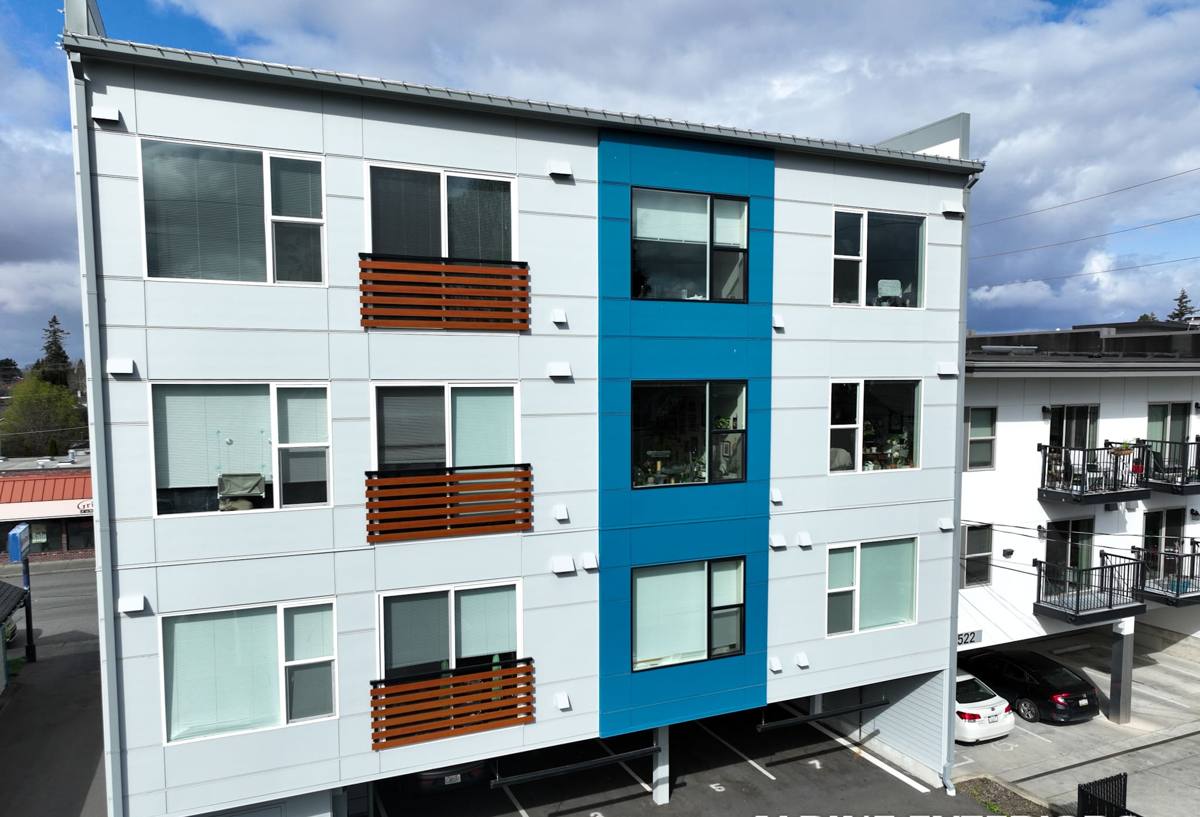
What "Energy-Efficient" Actually Means for a Bellingham Home
Energy-efficient window ratings get thrown around a lot, but in a marine climate like ours, not every number matters equally. Bellingham doesn't deal with the same brutal summer sun load as inland Washington, so solar heat gain coefficient (SHGC) is a secondary concern here. What matters most locally is U-factor (how much heat escapes through the glass and frame) and air leakage (how much cold, wet air sneaks in around the sash). A window with a strong U-factor and tight air seal will do more for a Sunnyland heating bill than one optimized for blocking summer sun.
Condensation resistance also deserves attention. With our humidity and temperature swings, a window that fogs or drips condensation on the interior isn't just annoying — over time that moisture finds its way into sills and drywall. Low-E glass coatings, warm-edge spacers, and argon or krypton gas fills between panes all contribute to keeping interior glass surfaces warmer and drier.
The Numbers Worth Asking About
| Feature | Older single-pane window | Modern energy-efficient window |
|---|---|---|
| Typical U-factor | 1.0 or higher | 0.27–0.30 or better |
| Air leakage | Often unrated, drafty | 0.3 cfm/ft² or lower |
| Interior condensation | Common in cold months | Rare with proper installation |
| Glazing | Single pane | Double or triple pane with Low-E coating |
The Trouble with Sunnyland's Older Housing Stock
When we open up an older window in this neighborhood, a few things show up again and again: swollen or soft wood at the sill from years of driving rain finding its way past worn glazing putty, hardware that's seized or corroded from salt exposure, and insulation (or lack of it) around the frame that was never adequate to begin with. None of this is a surprise for homes of this age — it's just what happens over decades in a coastal climate.
Retrofit vs. Full-Frame Replacement
Not every window needs to come out down to the studs. If the surrounding framing is solid and dry, a retrofit (or "pocket") replacement — where the new window fits into the existing frame — can be a faster, less invasive option. But if we find rot, moisture damage, or a frame that's out of square, a full-frame replacement is the honest recommendation, even though it costs more and takes longer. Installing a new window into a compromised frame just locks the problem behind new trim, and in a climate this wet, that problem doesn't go away on its own.
Choosing the Right Frame Material for Salt Air and Rain
Frame material matters as much as glass quality in a neighborhood exposed to both salt air and sustained rain. Each option has real trade-offs, and the right choice depends on the home's exposure, style, and budget.
| Material | Moisture/salt performance | Maintenance | Typical lifespan |
|---|---|---|---|
| Vinyl | Very good — won't rot or corrode | Low; occasional cleaning | 20–30 years |
| Fiberglass | Excellent; very stable in temperature swings | Low | 30+ years |
| Wood (clad exterior) | Good if cladding stays intact; interior wood needs protection | Moderate to high | 20–30 years with upkeep |
| Aluminum | Prone to corrosion near salt air unless well-finished | Moderate | Varies widely |
For homes this close to the bay, we generally steer customers toward vinyl or fiberglass frames for the bulk of a project, and reserve wood-clad options for homes where the owner specifically wants the interior wood look and is prepared for the upkeep it involves. This isn't a knock on wood windows — it's about matching the material's maintenance demands to the realistic amount of attention most homeowners want to give a window every year.
What a Correct Installation Actually Involves
In a climate where wind-driven rain is a regular event, the installation details matter more than the window itself. A window that's a great product but poorly installed will leak, fog, or rot out the surrounding wall long before its glass ever fails. A correct install includes:
- A sloped sill pan flashing that directs any water that does get past the frame back outside, not into the wall cavity
- Proper integration with the existing siding's weather-resistive barrier, so water sheds over each layer rather than behind it
- Sealants and tapes rated for exterior exposure and compatible with the siding material
- Continuous insulation around the frame gap — no gaps, no compressed fiberglass stuffed in as an afterthought
- Unobstructed weep holes so any incidental moisture in the frame can drain back out
Skipping any one of these steps is how a brand-new window ends up with the same rot problem the old one had, just a few years later instead of a few decades.
How Our Process Works
We keep the process straightforward, because a window project shouldn't feel like a mystery:
- On-site assessment — we look at each window individually, not just the house as a whole, since exposure can vary from the bay-facing side to the sheltered side
- Product selection and quote — we walk through frame material, glass package, and cost trade-offs based on what that specific home needs
- Scheduling — we plan around the weather where we can, since window openings are exposed to the elements during the swap
- Installation — proper flashing, sealing, and insulation as described above, on every unit, not just the visible ones
- Walkthrough and cleanup — we test operation on every window, clear debris, and haul away the old units
Signs Your Current Windows Are Costing You Money
Some window problems are obvious; others quietly add to a heating bill for years before anyone notices. Worth checking for:
- Condensation or fogging between the panes of a double-pane window (a sign the seal has failed)
- Noticeable drafts near the frame on windy days
- Windows that are hard to open, close, or lock — often a sign of frame swelling or warping
- Soft or discolored wood at the sill or corners
- Moss or dark staining building up on the frame or trim faster than the rest of the exterior
- Single-pane glass anywhere in the home, especially on the side facing prevailing weather
- A heating bill that's crept up without an obvious explanation
Why a Crew That Already Works Sunnyland Matters
Window work in this neighborhood isn't quite the same as window work in a drier, inland part of Washington. A crew that already works Bellingham homes knows what to expect from houses of this age and exposure — where rot tends to show up first, which frame materials hold up best given the bay's salt air, and how to sequence an install around the region's rain patterns instead of getting caught mid-project by a system rolling in off the water. That familiarity also extends to the practical side: knowing what Whatcom County and City of Bellingham permitting typically requires for window replacement, so a project doesn't stall on paperwork nobody accounted for.
Hiring locally also means someone is around after the job is done. If a window needs an adjustment after its first real winter storm, or a homeowner has a question a season later, a crew based in the area is a phone call away, not a company that did one job in the neighborhood and moved on.
Maintenance After Installation, Bellingham-Style
Energy-efficient windows are lower-maintenance than the originals they replace, but "lower" isn't "none," especially in this climate. A few habits go a long way: keep weep holes and tracks clear of moss, leaves, and debris, particularly heading into the wetter months; rinse frames periodically to keep salt residue and grime from building up; check exterior sealant every year or two for cracking or gaps, since sealant is the first line of defense against driving rain; and make sure gutters and downspouts near windows are directing water away rather than sheeting down the wall. None of this takes much time, but it's what keeps a well-installed window performing well for its full lifespan instead of just its first few years.
If your Sunnyland home has windows that fog, stick, draft, or just aren't pulling their weight on the heating bill anymore, we're happy to take a look. We offer free, no-pressure estimates — fill out the form below and we'll get you scheduled.