 Bellingham Roofing
 Why Ferndale Roofs Wear Out Differently Than Roofs Inland
Ferndale sits close enough to the water and to Bellingham Bay's weather patterns that its roofs deal with a combination most inland Whatcom County homes don't: salt-laden air off the coast, long stretches of driving rain pushed in by winter storms, and a moss season that can run most of the year in shaded, north-facing sections of a roof. None of these alone is unusual for Western Washington. Together, on the same roof, year after year, they shorten the useful life of materials that were never really designed with all three in mind.
Salt air accelerates corrosion on exposed metal — flashing, fasteners, valleys, and vents — faster than it would a few miles inland. Driving rain, especially wind-driven rain that hits a roof at an angle instead of falling straight down, finds every weak seam, nail pop, and undersized flashing detail. And moss doesn't just look bad; its root structure lifts shingle edges and holds moisture against the roof deck long after the rain has stopped. A roof replacement in Ferndale needs to account for all three, not just meet the minimum spec for a dry-climate install.
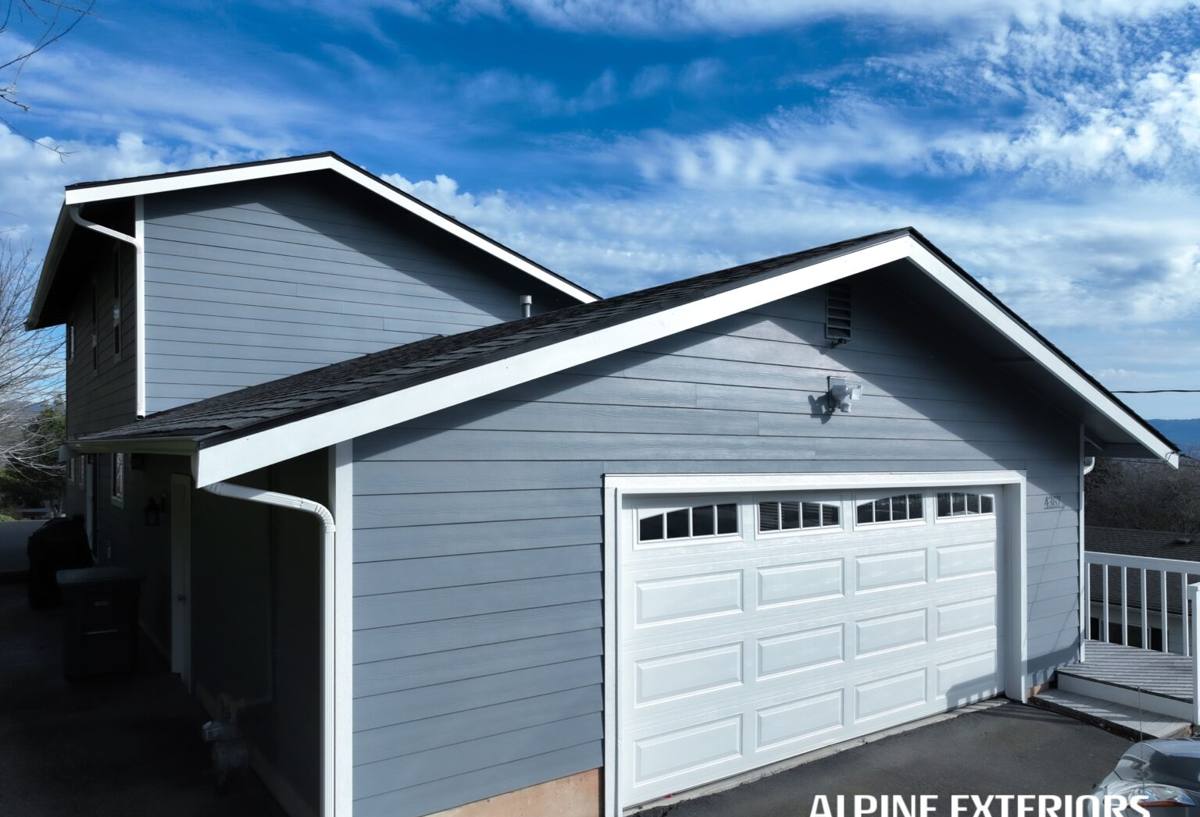
Signs a Ferndale Roof Needs Replacement, Not Another Repair
Homeowners often ask us to look at a "leak" and the honest answer is that the leak is a symptom of a roof that's past the point where patching makes financial sense. Here's how we tell the difference:
- Granule loss heavy enough that you can see bare, shiny patches on multiple shingles, not just one or two spots
- Shingles that are cupping, curling, or cracking across large sections rather than isolated storm damage
- Moss growth that returns within a few months of cleaning, especially on north- or west-facing slopes
- Soft spots or give underfoot when walked (a sign the decking underneath has taken on moisture)
- Rusted or deteriorated flashing around chimneys, skylights, and roof-to-wall transitions
- A roof that's 20+ years old with no documented history of underlayment or ventilation upgrades
If a roof shows two or more of these at once, repair work tends to become a cycle of chasing new leaks every wet season instead of solving the underlying problem. That's the point where replacement is the more honest recommendation, even though it's the bigger number up front.
Choosing a Roofing Material That Actually Suits Ferndale's Conditions
There's no single "best" roofing material — there's a best material for this house, this exposure, and this budget. For most Ferndale homes, the decision comes down to a short list.
| Material | How It Handles Salt Air / Rain / Moss | Typical Lifespan Here |
|---|---|---|
| Architectural asphalt shingle | Good rain performance with proper underlayment; moss-resistant granule options help slow regrowth; standard fasteners need corrosion-resistant coating near the coast | 20-30 years |
| Standing seam metal | Sheds rain fast and resists moss well due to steep, slick surface; requires marine-grade or coated fasteners and flashing to manage salt exposure long-term | 40-50+ years |
| Synthetic/composite shingle | Won't absorb moisture like wood; holds up well to driving rain; moss can still gain a foothold in debris buildup without regular clearing | 30-40 years |
| Cedar shake | Natural material that stays damp longest in our climate, which is exactly what moss needs; requires the most maintenance to keep ahead of moisture and growth | 20-25 years with diligent upkeep |
We'll walk you through the real trade-offs for your specific roof — pitch, sun exposure, tree cover, and budget all matter more than any general ranking. Our job is to tell you honestly which option fits your house, not to steer you toward whatever we happen to have on the truck.
A Note on Moss-Resistant Shingles
Many manufacturers now offer shingles with copper or zinc granules built in to slow algae and moss growth. They help, especially on shaded slopes, but they're not a substitute for good ventilation and periodic cleaning. We treat them as one layer of a moss strategy, not the whole plan.
What a Correct Roof Replacement Actually Involves
A roof replacement done right in this climate is more than pulling off old shingles and nailing down new ones. The details that don't show up in a driveway estimate are usually the ones that determine whether the roof performs for 25 years or leaks again in five.
- Full tear-off — we remove existing roofing down to the deck rather than layering over it, so we can actually see what's underneath
- Deck inspection and repair — any decking softened by trapped moisture gets replaced before anything new goes down
- Ice-and-water barrier at eaves and valleys — these are the spots where driving rain and ice dams do the most damage, and they get the highest level of protection
- Synthetic underlayment across the field — a secondary water barrier that outperforms old felt paper in wind-driven rain
- Corrosion-resistant flashing and fasteners — sized and coated for coastal exposure, not generic inland-spec hardware
- Balanced intake and exhaust ventilation — so moisture from inside the house doesn't get trapped against the new deck
- Ridge cap and final detailing — the finish work that determines how the roof looks and how well it sheds wind-driven rain at the peak
Ventilation and Moisture: The Part Homeowners Rarely Ask About
A shocking number of roof failures in this region trace back to poor attic ventilation rather than a bad roofing material. When warm, moist air from inside the house gets trapped against the underside of the roof deck, it condenses, and that moisture feeds rot and mold from below at the same time moss and rain are working on the roof from above. On a replacement, we check intake ventilation at the soffits and exhaust at the ridge, and we'll flag it if your current setup is undersized — it's a much smaller fix during a replacement than it is later.
How Our Roof Replacement Process Works
We keep the process straightforward because most homeowners are doing this once every couple of decades and shouldn't need to become experts to feel confident in it.
- On-site inspection — we get on the roof, check the decking where we can, and look at ventilation, flashing, and drainage, not just the shingle surface
- Written estimate — clear scope, material options, and a real price range, not a vague ballpark
- Material selection — we talk through the options in the table above based on your roof's exposure and your budget
- Scheduling around the weather — in a climate with a real wet season, timing the tear-off and dry-in matters as much as the install itself
- Daily site cleanup — magnetic sweeps for nails and debris removal so the property isn't left a mess overnight
- Final walkthrough — we go over the finished roof with you before calling the job done
Why Hiring a Crew That Already Works in Ferndale Matters
Roofing crews that mostly work drier, inland areas sometimes spec materials and details that are fine for those conditions but undersized for ours. A crew that regularly works Ferndale and the surrounding Whatcom County coastline already knows which flashing details leak first in a wind-driven rain event, which slopes hold moss longest based on tree cover and sun angle, and how to sequence a tear-off around a marine weather forecast instead of a generic one. That local pattern recognition is the difference between a roof that's technically installed to code and one that's actually built for what this area throws at it year after year.
Local permitting is also part of the job. Roof replacements typically require a permit, and a crew that regularly pulls permits in the area already has that process down, which keeps your project from stalling on paperwork.
What Roof Replacement Costs Depend On
We won't quote a number without seeing the roof, but the factors that move the price are consistent from job to job.
| Factor | Why It Matters |
|---|---|
| Roof size and number of facets | More squares and more valleys/hips mean more material and labor time |
| Roof pitch and access | Steep or hard-to-access roofs take longer and require more safety setup |
| Decking condition | Rot or soft spots discovered during tear-off add material and labor not visible from the ground |
| Material choice | Asphalt, metal, synthetic, and cedar carry different material and labor costs, as shown above |
| Ventilation upgrades | Adding or correcting intake/exhaust ventilation is inexpensive during a replacement, costlier after |
| Flashing and detail work | Chimneys, skylights, and multiple roof-wall transitions add time regardless of material |
Broadly, a full asphalt shingle replacement on an average home in this region runs in the mid five figures to low five figures depending on size, with metal typically running higher up front and lower over the life of the roof. We'll give you the real number for your roof after an inspection, not before.
After Your New Roof Goes On: A Simple Maintenance Checklist
A new roof still needs basic upkeep in this climate to reach its full lifespan.
- Clear gutters and downspouts at least twice a year so rain has somewhere to go
- Trim back overhanging branches that keep shaded areas of the roof damp longer than they need to be
- Have moss growth treated early, before it establishes a root structure under the shingles
- Check attic ventilation isn't blocked by insulation or storage after any attic work
- Schedule a quick visual inspection after major windstorms, especially around flashing and ridge caps
If you're weighing a roof replacement for a Ferndale home, we're happy to take a look and give you a straight answer about what your roof actually needs — no pressure, no inflated urgency. Fill out the form below for a free estimate.