 Bellingham Roofing
 Roof Repair Built for How Lynden Actually Weathers
Lynden sits in the Nooksack Valley, a little inland from Bellingham Bay but still very much inside Whatcom County's marine-influenced weather pattern. That combination matters more than most homeowners realize. You get long stretches of low-intensity rain punctuated by wind events that drive water sideways into laps, flashing, and fastener heads instead of letting it run straight off the slope. You get short winter daylight and heavy tree cover in a lot of Lynden neighborhoods, which keeps roof decks damp and shaded for days at a time. And because the valley sits close enough to the water and the prevailing westerlies, salt-laden air reaches inland further than people expect, slowly working on exposed metal fasteners, flashing, and vent stacks even on roofs that never see the coastline directly.
None of that means a Lynden roof needs exotic materials or a completely different system than the rest of Whatcom County. It means the repair has to account for moisture that lingers, wind that pushes rain uphill under laps, and metal components that corrode faster than the shingles around them age. A patch that would hold fine in a drier climate can fail here in a single wet season if it ignores those realities.
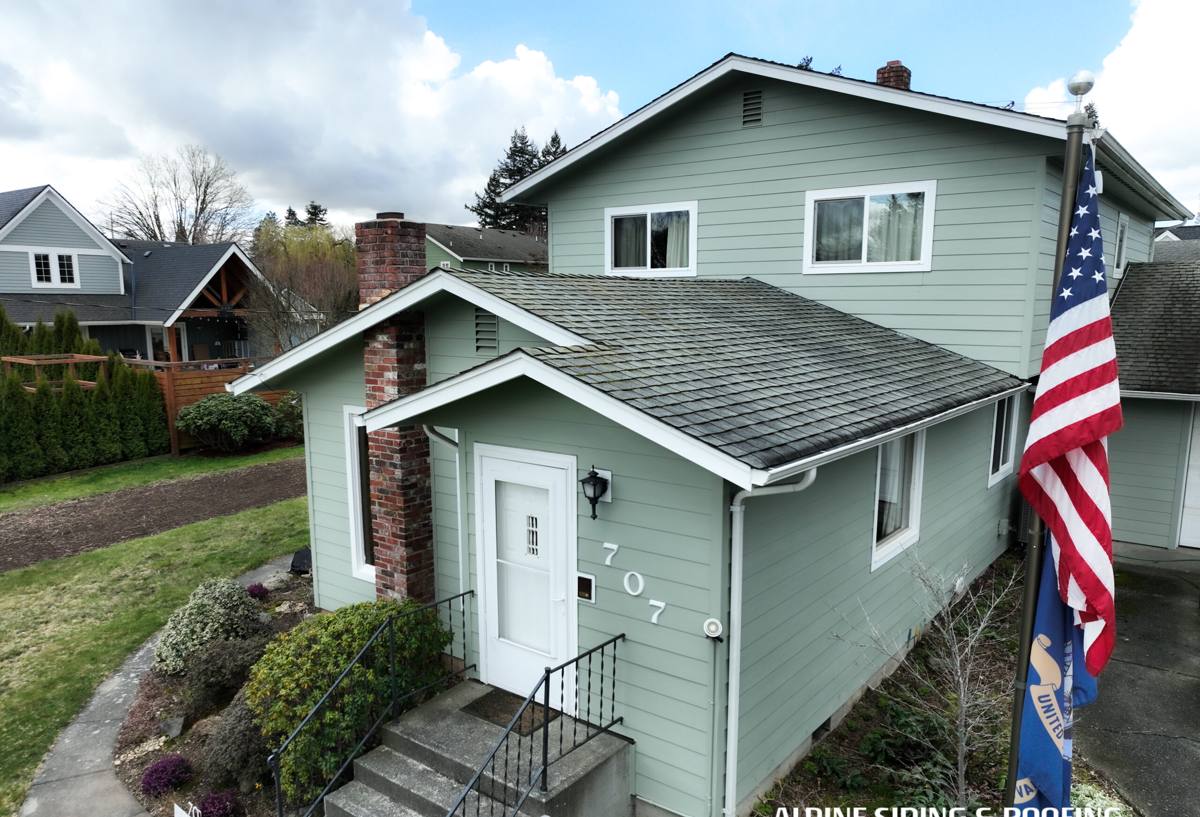
What Moss, Rain, and Salt Air Actually Do to a Roof
Moss and Organic Growth
Moss doesn't just look bad. It holds water against the roofing surface long after the rest of the roof has dried, which softens shingle mat, accelerates granule loss, and keeps wood decking and sheathing damp underneath. On shaded, north-facing slopes — common on wooded Lynden lots — moss can establish within a couple of seasons and, left unaddressed, will lift shingle edges as it grows, creating an entry point for wind-driven rain.
Driving Rain
Whatcom County storms rarely fall straight down. Wind pushes rain at an angle, which means it can find its way under shingle tabs, around poorly lapped flashing, and through nail heads that have backed out even slightly. This is why so many "mystery leaks" in this area trace back to flashing details — valleys, chimneys, skylights, wall-to-roof transitions — rather than the field of the roof itself.
Salt Air and Metal Fatigue
Even at Lynden's distance from open water, airborne salt contributes to faster corrosion on exposed nail heads, drip edge, vent flashing, and metal roofing fasteners than you'd see in a dry inland climate. Corroded fasteners lose their grip and their seal at the same time, which is a common root cause of small leaks that show up years before the shingles themselves are worn out.
Common Repair Needs We See on Lynden Homes
The repair calls we run in this area tend to fall into a handful of recurring categories rather than being random. Recognizing the pattern helps homeowners know what they're likely dealing with before a crew ever climbs up.
- Flashing failures at chimneys, skylights, and roof-to-wall transitions where wind-driven rain finds a gap
- Moss-related granule loss and lifted shingle edges on shaded, north-facing slopes
- Nail pops and corroded fasteners that back out and let water track in along the shank
- Valley leaks where debris and moss slow drainage and force water sideways under the metal
- Soft or delaminating decking discovered only once a shingle or two is pulled back
- Gutter and edge-detail issues that redirect roof runoff back under the roofline instead of away from it
What a Correct Repair Actually Involves
A roof repair is only as good as the diagnosis behind it. Sealing the spot where water is visibly dripping inside the house often just moves the leak a few feet — water travels along the underlayment or decking before it shows up on a ceiling, so the entry point and the drip point are rarely the same place. A repair worth paying for starts with tracing the water path, not just patching the symptom.
Diagnosis Before Repair
That means checking flashing laps, examining fastener condition, looking at the decking itself where accessible, and understanding how wind direction and roof slope interact at that specific spot. On an older Lynden roof with years of moss cycles behind it, we're also checking whether the decking underneath has stayed sound or has softened from repeated wetting.
Matching Materials and Technique to the Original System
A repair needs to integrate with the existing roofing system, not just sit on top of it. That means matching shingle type and, where possible, weathering so a patch doesn't stand out or wear differently than the surrounding field. It means re-flashing with proper laps and sealant compatible with the existing materials, not just running a bead of caulk over a gap and calling it done. Caulk-only fixes are common shortcuts and they fail fast in this climate because they're not designed to flex and shed water the way a properly lapped flashing detail is.
Fastening for Wind and Moisture
Given how much local damage traces back to fastener corrosion, we use fasteners appropriate to the exposure and make sure they're seated correctly — not overdriven, not underdriven, and placed where the manufacturer's nailing pattern actually calls for them. This is a small detail that has an outsized effect on how long a repair lasts.
Our Repair Process
1. Inspection and Honest Assessment
We start by getting on the roof, not just looking at it from the ground. We check the area around the reported leak or damage as well as adjacent flashing, valleys, and penetrations, since problems in this climate rarely stay isolated to one spot.
2. Clear Scope and Options
We tell you what we found, what's causing it, and what the repair actually involves — including if a repair isn't the right call because the roof is past the point where patching makes financial sense. We'd rather tell you that up front than sell a repair that won't hold.
3. The Repair
Work is done to integrate with your existing roof system: matched materials where they're available, proper flashing technique, correct fastening, and attention to the drainage path so water is shed away from the repair rather than pooling near it.
4. Cleanup and Follow-Through
We clear debris, remove old material, and leave the site the way we found it. If the repair uncovered a bigger issue — soft decking, widespread moss damage, a roof nearing the end of its service life — we'll tell you plainly rather than let it surface again next winter.
Repair vs. Replacement: How to Think About the Decision
Not every roof problem calls for a full tear-off, but not every leak is a five-minute fix either. The table below outlines the general factors that push a Lynden homeowner toward one option or the other. These are guidelines, not guarantees — every roof is different, which is why an in-person inspection matters more than a rule of thumb.
| Factor | Leans Toward Repair | Leans Toward Replacement |
|---|---|---|
| Roof age | Well within expected material lifespan | At or beyond typical service life for the material |
| Extent of damage | Isolated to one flashing detail or a small shingle area | Spread across multiple slopes or recurring in different spots |
| Decking condition | Solid, no soft spots found | Soft, delaminated, or water-stained decking discovered |
| Moss history | Light, recently treated growth | Years of untreated moss with granule loss across large areas |
| Leak pattern | Single, traceable source | Multiple leaks or a source that can't be pinned down |
Signs a Lynden Roof Needs Attention Now
Because Whatcom County's rain is persistent rather than dramatic, a lot of roof damage here builds slowly and gets noticed late — often not until it shows up as a stain on a ceiling. Catching it earlier keeps a repair a repair instead of letting it become a replacement.
- Dark streaking or green-black growth on shaded slopes, especially anything raised or thick enough to lift a shingle edge
- Granules collecting in gutters or at downspout outlets
- Daylight visible through the roof deck from inside an attic space
- Soft or spongy spots felt when walking the roof, or sagging visible from the ground
- Water stains on interior ceilings or upper walls, particularly after a windy rain event
- Curling, cracked, or missing shingles near valleys, chimneys, or roof-to-wall transitions
- Visibly corroded or missing fasteners, flashing, or vent caps
How Often to Check
A visual check from the ground twice a year — once after the wettest part of winter and once before fall storms pick up — catches most developing problems before they become interior damage. Anything you can't confirm from the ground is worth a professional look rather than a ladder trip.
Why a Crew That Already Works in Lynden Makes a Difference
Roofing crews that work regularly in this specific stretch of Whatcom County get a practical education that generic experience doesn't fully replace: which roof orientations in this valley hold moss longest, how local wind patterns tend to drive rain into specific flashing details, and how fast salt-influenced air corrodes exposed fasteners compared to a drier inland climate. That knowledge shows up in where we look first during an inspection and in the material and fastening choices we make for a repair.
There's also a practical scheduling side to it. Rain doesn't pause for a repair crew, and a roof with an active leak or exposed decking needs attention on a timeline that fits the weather, not just a general contractor's calendar. A crew that already has a presence in the area can usually respond faster and coordinate repair timing around the next incoming system, which matters a lot more here than in a climate with long dry stretches to work with.
Get an Honest Look at Your Roof
If you're dealing with a leak, moss buildup, or a roof that's just due for a check after a rough winter, we're happy to come take a look. The estimate is free, there's no pressure to move forward, and if a repair isn't the right call for your roof, we'll tell you that too. Fill out the form below to get started.