 Bellingham Roofing
 Storm Damage Roof Repair for Puget Homes
Puget is one of the residential neighborhoods that makes up Bellingham, and like the rest of the city it sits close enough to Bellingham Bay and the Salish Sea to take on a specific mix of weather stress most inland towns never deal with. Wind off the water doesn't just bring rain straight down — it drives it sideways and up under roof edges, shingle tabs, and flashing seams. Add salt-tinged marine air that accelerates corrosion on cheap metal, and a moss and mildew season that runs long on shaded, north-facing slopes, and you have a climate that finds every weak point in a roof over time, storm by storm.
Storm damage isn't always the dramatic kind. Sometimes it's an obvious event — a windstorm that peels back a section of shingles or drops a limb through the field of the roof. More often it's quieter: a gust that lifts a shingle tab just enough to break its seal, a flashing joint that opens a hairline gap, or wind-driven rain that finds its way under a lapped edge and starts wetting the decking underneath with no visible sign from the ground. Both kinds need attention, and both are common enough in this part of Whatcom County that a Puget homeowner should know what to watch for and what a correct repair actually involves.
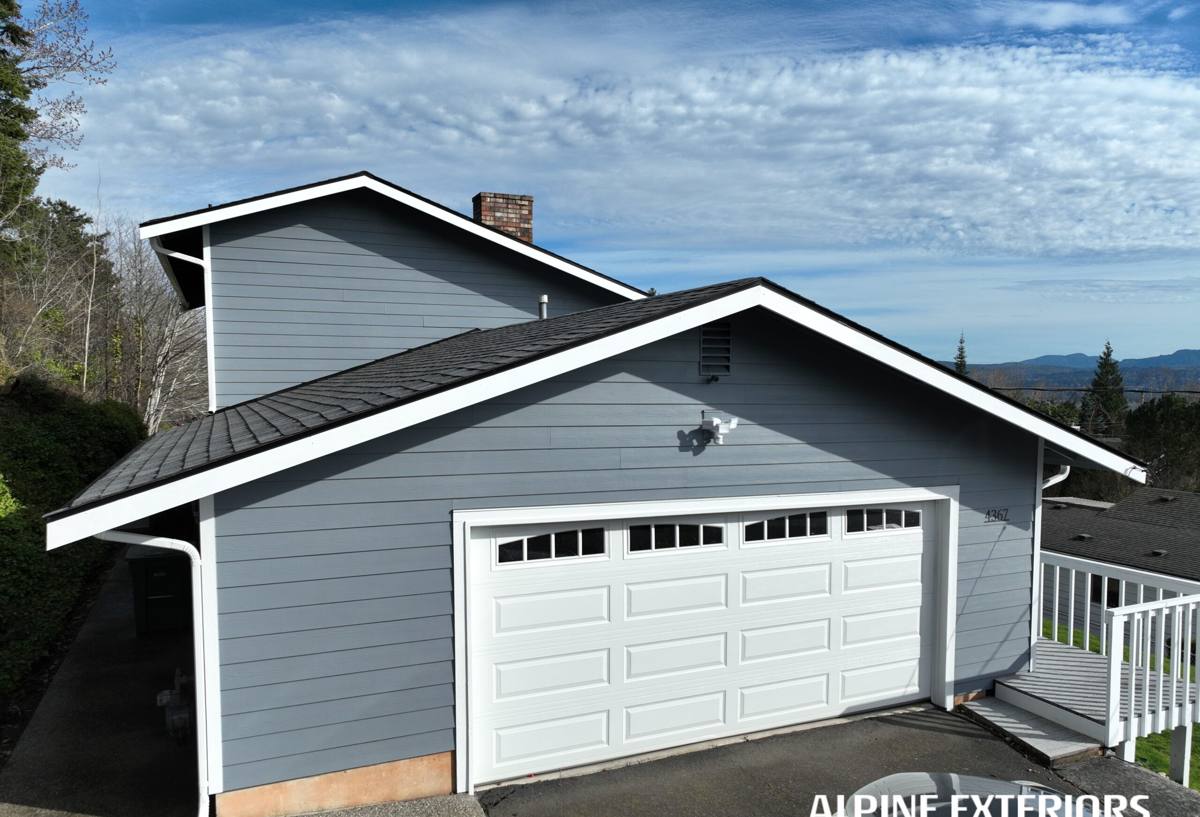
Recognizing Storm Damage on a Puget Roof
Most storm damage isn't obvious from the driveway. It shows up as a combination of small signs, and it's easy to write any single one off as normal wear. Together, they're worth a closer look.
- Shingles that look lifted, curled, cracked, or are simply missing after a windstorm
- Granules collecting in gutters or at the base of downspouts — a sign of shingle surface wear from wind and impact
- Bent, lifted, or separated flashing around chimneys, skylights, vents, and where the roof meets a wall
- Water stains on interior ceilings or upper walls, especially after a storm with strong wind
- Visible daylight through the attic roof deck or damp insulation near the roofline
- Dents or bruising on shingles, gutters, or vent caps after hail or wind-blown debris
- New or worsening moss growth concentrated in one area, which can indicate a spot where water is sitting longer than it should
- Debris — branches, needles, leaves — packed into valleys, where it traps moisture against the roof surface
Any one of these is a reason to get a roof looked at. Several at once, especially right after a storm, means it shouldn't wait.
Why Fast, Correct Repair Matters More Here
A small storm-related opening in a roof doesn't stay small in this climate. Bellingham gets meaningful rainfall across most of the year, so a compromised roof rarely gets a long dry stretch to sit and wait — water keeps finding its way in with the next system that rolls through, and decking that never gets a chance to dry out starts to soften and rot from repeated exposure rather than one bad soaking.
There's also a cost dimension to acting quickly. A repair caught early — reseating a few shingles, resealing a flashing joint, replacing a section of underlayment — is a contained job. The same damage left through two or three more storms can spread to the decking, the insulation, and interior finishes, turning a modest repair into a much larger one. Fast action after a storm isn't about urgency for its own sake; it's about keeping the job the size it actually is.
Emergency Tarping and Temporary Protection
When a storm has opened up a section of roof — a torn-off area, a hole from fallen debris, or damage severe enough that rain is actively getting in — the first priority is stopping active water intrusion, not starting the full repair on the spot. A proper temporary tarp job does more than throw a sheet of plastic over the damage:
- The tarp is sized to extend well past the damaged area in every direction, not just cover the hole itself
- It's secured to framing or battens, not just weighted down with loose objects that wind can move
- Edges and seams are set up to shed water downhill rather than pond or funnel it toward the opening
- The rest of the roof gets a quick check for secondary damage that isn't the main event but still needs covering
A tarp is a stopgap, not a fix. It buys time to schedule the real repair correctly — sourcing matching material, coordinating with an insurance adjuster if a claim is involved, and doing the work without cutting corners under storm-emergency pressure.
What a Correct Storm Damage Repair Actually Involves
The visible damage after a storm is usually the smallest part of the real problem. A repair that only replaces what's obviously broken and ignores what's underneath tends to fail again at the next storm. A correct repair works outward from the point of damage until everything affected — and everything that could let water back in — is addressed.
Assessing the Full Extent, Not Just the Visible Damage
Wind and water damage rarely stop exactly at the edge of what's visible from the ground. A section of missing shingles often means the shingles around it took wind stress too, even if they're still nominally in place. Underlayment beneath a damaged section may already be compromised even where the shingle layer looks intact. Part of doing this correctly is pulling back enough of the surrounding material to see what's actually happening underneath before deciding the repair's real boundary.
Decking Inspection and Repair
If water has been getting into a damaged section for any length of time, the roof decking underneath needs to be checked for softening or rot, not just covered back over. Soft or delaminated decking gets cut out and replaced with matching material before anything goes back on top of it — skipping this step is one of the most common ways a "repaired" roof leaks again within a year or two.
Underlayment and Flashing
Given how much of the local wind comes in off the water, underlayment and flashing detail matter as much as the visible shingle layer, if not more. Self-adhered or synthetic underlayment in the repaired section resists wind-driven rain far better than older felt products. Flashing at valleys, chimneys, vents, and wall intersections gets rebuilt to shed water correctly, not just patched with sealant over an existing gap — sealant alone is a short-term fix, not a repair.
Matching the Existing Roof
A storm repair that leaves an obvious patch of mismatched shingles isn't just a cosmetic problem — mismatched material can mean different wind ratings, granule wear, and remaining lifespan sitting side by side on the same roof. We work to match shingle profile, color, and where possible manufacturer batch as closely as the market allows, and we'll tell you honestly up front if an exact match isn't realistic given the roof's age, rather than pretending otherwise.
Repair or Replace: How That Decision Actually Gets Made
Not every storm-damaged roof needs a full replacement, and not every roof is a good candidate for another patch repair. The right call depends on a handful of concrete factors, not a sales pitch in either direction.
| Factor | Favors Repair | Favors Replacement |
|---|---|---|
| Age of existing roof | Under roughly half its expected lifespan | Already near or past its expected service life |
| Extent of damage | Localized to one section or slope | Spread across multiple slopes or large areas |
| Decking condition | Sound decking found under the damaged area | Widespread rot or soft decking discovered |
| Shingle match availability | Reasonably close match still available | Material discontinued or badly mismatched |
| History of prior repairs | First or second repair on an otherwise sound roof | Multiple past repairs and recurring problem areas |
| Insurance claim scope | Adjuster scope limited to the damaged section | Adjuster determines full-slope or full-roof replacement is warranted |
We'll walk you through where your roof lands on these factors and explain our reasoning, rather than defaulting to whichever option is more profitable for us. A roof with years of sound life left doesn't need to be replaced just because it took storm damage in one spot.
Our Process, Start to Finish
Storm repair work goes smoother, and holds up better, when it follows a consistent process rather than getting rushed because a storm just happened.
- Initial call and, if needed, emergency tarping: if water is actively getting in, stopping that comes first, before anything else is scheduled.
- Full roof inspection: not just the damaged section — the whole roof, since one storm event can affect more than one area.
- Documentation: photos and a written scope of the damage, useful for your own records and for an insurance claim if you're filing one.
- Written estimate: a clear scope of what needs to happen, what material will be used, and what it will cost — before work starts, not as a surprise afterward.
- Insurance coordination, if applicable: meeting the adjuster on site or providing documentation directly so the claim reflects the actual damage.
- The repair itself: tear-back to sound material, decking replacement where needed, new underlayment and flashing, and matched shingles or roofing material.
- Cleanup and final walkthrough: debris and nails cleared from the yard and gutters, and a walkthrough so you can see exactly what was done.
Working With Insurance on a Storm Claim
A lot of storm damage repair work in this region involves an insurance claim, and it goes more smoothly when the contractor treats it as a normal part of the job. That means documenting damage thoroughly and honestly — not exaggerating the scope to inflate a claim, and not underselling it either. It means being available to meet an adjuster on site, since adjusters aren't roofing specialists and often rely on the contractor's assessment to understand what they're looking at. And it means giving you a straight answer about what's actually storm-related damage versus pre-existing wear, since insurance covers the former and not the latter, and blurring that line just sets you up for a denied claim.
If you're not sure whether damage is significant enough to file a claim at all, that's a reasonable thing to ask us before you start the process — sometimes a small, contained repair costs less out of pocket than a deductible would.
Why a Crew That Already Works Puget Matters
A roofing crew that works Bellingham roofs regularly has already seen how salt air corrodes cheap fasteners and flashing over a few seasons, how wind off the bay drives rain into places a straight-down rainstorm never would, and which roof orientations in this area hold moss and organic growth the longest through the wet months. That knowledge shapes real decisions on a storm repair — which fastener and flashing materials hold up, where extra underlayment coverage is worth the added cost, and which shingle lines perform honestly in this specific climate rather than just on a spec sheet.
It also matters for accountability. A crew based here, working here every week, is the crew you can call next year if something about the repair doesn't hold up — not a name from a truck that showed up after the last big storm and moved on once the work dried up.
After the Repair: Keeping the Rest of the Roof Storm-Ready
A completed repair is a good moment to take stock of the rest of the roof, since storm damage often reveals maintenance issues that had nothing to do with the storm itself.
- Clear gutters and downspouts so storm runoff actually drains instead of backing up under the roof edge
- Check and clear moss buildup on shaded slopes before it works its way under shingle edges
- Trim back tree limbs that overhang the roof and could come down in the next windstorm
- Have flashing at chimneys, skylights, and vents checked periodically, since these are the most common places a new leak starts
- Keep a simple record of any repair work done, including materials used, in case it's relevant to a future claim or sale
None of this replaces a professional inspection after a significant storm, but it goes a long way toward reducing how much damage the next one causes.
If a recent storm has left your Puget home with missing shingles, a leak, or damage you're not sure how to assess, we're glad to come take an honest look and put together a straightforward, no-pressure estimate — use the form below to get started.