 Bellingham Roofing
 Fiber Cement Siding Built for Sehome, Not Just Sold There
Sehome sits in central Bellingham, close enough to the water to catch salt-laden air off the Salish Sea, wooded enough in parts to hold shade and moisture long after a storm passes, and old enough as a neighborhood that a lot of its homes are on their second or third exterior. That combination, salt air, driving rain, and a moss season that can run most of the year on shaded walls and roof lines, is exactly the kind of exposure that separates siding materials that hold up from siding materials that just look good on install day. We install James Hardie fiber cement siding exclusively, and on a Sehome job specifically, that choice comes from what this climate does to a wall assembly over years, not just what a product brochure claims.
This page is about one service in one place: fiber cement siding installation on Sehome homes. If you're comparing materials, weighing a repair against a full replacement, or just trying to understand what a correct installation actually involves before you get quotes, this is the detail that matters.
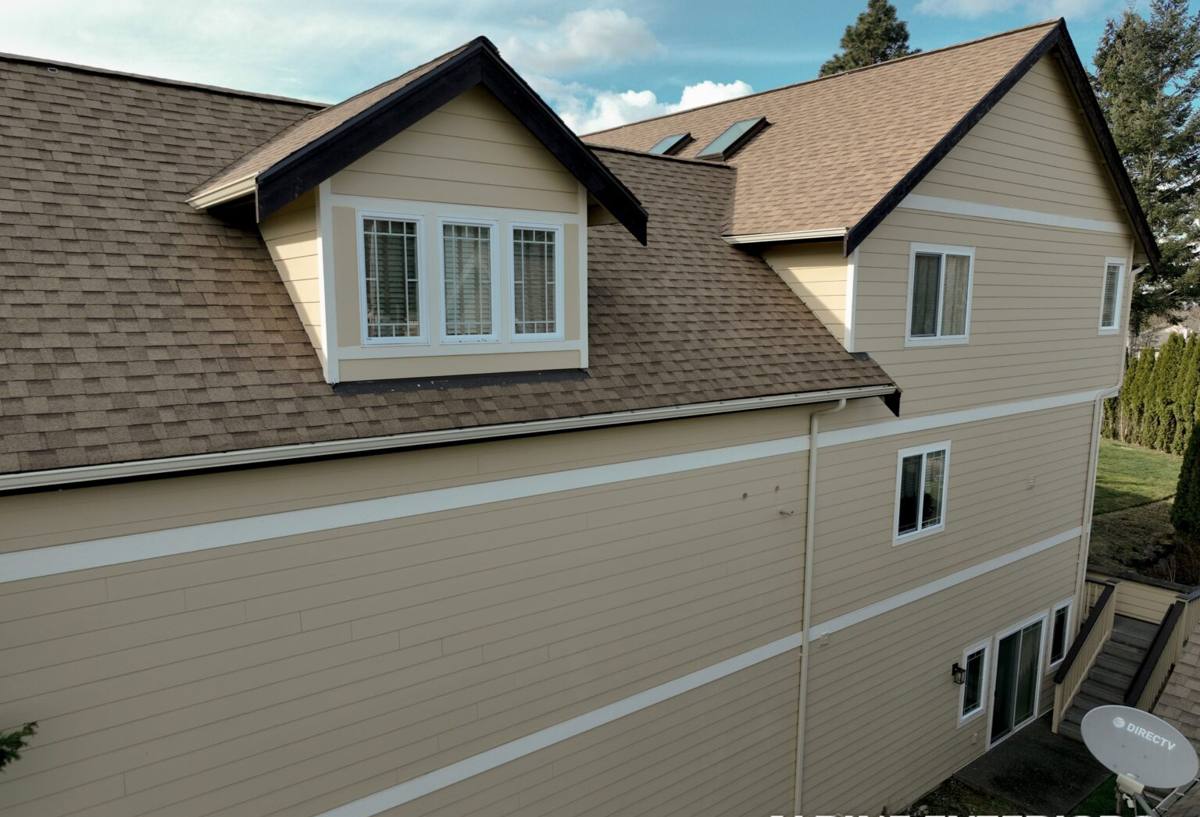
What Whatcom County's Climate Does to Siding in Sehome
Salt Air Off the Sound
Sehome isn't waterfront, but it's well within reach of the salt-carrying air that moves through Bellingham off the Salish Sea. Salt speeds up corrosion on fasteners, flashing, and any exposed metal trim, and it degrades lower-grade paint and coatings faster than a drier inland climate would. Siding and hardware choices here need to account for that corrosion exposure from day one, because a finish or fastener that's rated for a national average climate is often not rated for a coastal one.
Driving Rain, Not Straight-Down Rain
Most of the rain that hits Sehome comes in on a wind rather than falling straight down, which pushes water sideways into seams, laps, and trim joints instead of just sheeting off a wall. A siding system that performs fine in a still, dry climate can still fail here if its joints, caulking, and flashing details weren't built with wind-driven rain specifically in mind. This is one of the most common gaps we find on older Bellingham homes: the material itself wasn't the problem, the installation details around water management were.
A Moss Season That Doesn't Really End
Mature tree cover and mild, damp temperatures give Bellingham a long moss and mildew season, and Sehome's shaded lots and tree-lined streets are no exception. North-facing walls and anywhere airflow is limited tend to grow moss and algae first, and any siding material that's even slightly porous becomes a growth surface over time. Moss and algae don't just look bad; they hold moisture directly against the substrate, which accelerates whatever damage the moisture would otherwise cause on its own.
Why Fiber Cement Is the Right Material for This Climate
Fiber cement is a mix of cement, sand, and cellulose fibers, engineered to be dimensionally stable and resistant to moisture-driven swelling, warping, and rot in a way that wood-based and many engineered products aren't. That matters directly in a climate like this one, where a wall assembly can go weeks without fully drying out. We specify James Hardie's HZ5 formulation on Bellingham jobs, including Sehome, because HZ5 is engineered specifically for regions with heavy moisture exposure and freeze-thaw cycling, rather than Hardie's formulations built for drier, warmer climates.
ColorPlus Factory Finish
Hardie's ColorPlus finish is baked onto the board in a controlled factory process before it ever reaches a job site, which gives it better fade and moisture resistance than paint applied in the field after installation. On a home exposed to this much sun, salt, and rain, that difference shows up over years, not months.
Non-Combustible Core
Fiber cement doesn't feed a fire the way wood-based siding can, which is a real consideration for both homeowner safety and insurance, independent of the climate discussion.
A Warranty That Depends on Correct Installation
Hardie backs its products with one of the stronger transferable warranties in the siding industry, but that warranty is conditioned on installation following Hardie's published specifications. A beautiful product installed with the wrong clearances, fasteners, or flashing details can still fail early, and that failure is on the installer, not the material.
What a Correct Fiber Cement Siding Job Actually Involves
The material is only part of the outcome. Most of the siding failures we get called out to inspect in Bellingham, on any material, trace back to installation shortcuts rather than a bad product. On a Sehome home, we treat the following as non-negotiable baseline steps, not upgrades:
- Substrate inspection before anything goes back up: Once old siding comes off, we check the sheathing and framing for rot or moisture damage, especially common on older Sehome homes where a prior siding layer may have been trapping water against the wall for years.
- Water-resistive barrier, installed correctly: A house wrap or weather barrier has to be lapped correctly, shingle-style, so water sheds down and out rather than getting trapped behind the new siding.
- Flashing at every penetration: Windows, doors, hose bibs, light fixtures, and any other wall penetration need proper flashing integrated with the water-resistive barrier, not just caulk over a gap.
- Correct fastener type and placement: Hardie specifies fastener type, spacing, and placement precisely; using the wrong fastener or nailing pattern is one of the most common ways installers void the manufacturer warranty without the homeowner ever knowing.
- Proper clearances: Siding needs the right gap from grade, roof lines, and horizontal surfaces like decks and patios so water isn't wicking up into the bottom edge of the boards.
- Caulked and sealed joints at trim and butt joints: Every seam is a potential entry point for wind-driven rain, so joint treatment has to match the exposure this climate actually delivers.
Our Installation Process
- On-site walkthrough and assessment: We look at your home's specific exposure, sun, shade, wind direction, and current siding condition, before recommending a scope.
- Tear-off and substrate check: We remove the existing siding and inspect the sheathing and framing underneath for hidden moisture damage before closing anything back up.
- Repair or replace damaged substrate: Any rot or compromised sheathing gets addressed before new siding goes on; covering damage instead of fixing it just relocates the problem.
- Weather barrier and flashing installation: House wrap and flashing go in first, integrated at every window, door, and penetration.
- Hardie board installation to spec: Fastening, clearances, and joint treatment follow Hardie's published installation requirements so the manufacturer warranty stays intact.
- Final trim, caulking, and cleanup: Trim details get finished, joints sealed, and the site cleaned before we walk the job with you.
Fiber Cement Compared to Other Siding Materials
| Material | Moisture Performance in This Climate | Maintenance | Typical Lifespan |
|---|---|---|---|
| James Hardie Fiber Cement | Dimensionally stable, engineered HZ5 line for wet, coastal climates | Occasional wash; ColorPlus finish resists fading | Decades with correct installation |
| Vinyl | Can warp or buckle with temperature swings; seams can allow water behind panels | Low, but damage often means full panel replacement | Moderate, shorter in harsh exposure |
| Engineered Wood (LP SmartSide and similar) | More moisture-sensitive at cut edges and seams than fiber cement | Requires consistent field maintenance to protect edges | Shorter than fiber cement in sustained wet climates |
| Cedar | Natural material, moisture-sensitive without diligent upkeep | Regular refinishing and inspection required | Variable, heavily maintenance-dependent |
We don't install vinyl, engineered wood products like LP SmartSide, other fiber cement brands like Cemplank or Allura, primed spruce, or cedar. Each has a place in the market and plenty of homeowners are satisfied with them elsewhere. Our call, specific to this climate and made after years of tear-offs and service calls in Bellingham, is to stand fully behind one system rather than offer a lower-cost option that shifts maintenance risk onto the homeowner later.
What Fiber Cement Siding Costs in Sehome
Pricing depends on the home, but a few factors drive most of the variation we see on Sehome jobs specifically:
| Factor | Why It Matters |
|---|---|
| Tear-off vs. new construction | Removing and disposing of old siding, and repairing any substrate damage found underneath, adds labor that a bare-wall install doesn't require |
| Home size and wall complexity | More corners, dormers, and trim details mean more cutting, fitting, and flashing work |
| Substrate condition | Older Sehome homes sometimes have moisture damage behind existing siding that isn't visible until tear-off, which can add repair scope |
| Siding profile and finish | Lap siding, panel siding, and shingle-style profiles all price differently, as do standard ColorPlus color options |
We walk every property before quoting rather than pricing off a generic list, because the substrate condition alone can change the real scope of a job once old siding comes off.
Signs Your Sehome Home's Siding Needs Attention
- Moss or dark staining that returns quickly after cleaning, especially on shaded or north-facing walls
- Soft, spongy, or bubbling siding, particularly low on the wall or around window and door trim
- Visible warping, cupping, or gaps opening up at seams and butt joints
- Peeling or fading paint on a wall that shouldn't need repainting yet
- Staining or streaking below window sills, suggesting flashing isn't shedding water correctly
- A noticeable increase in drafts or a musty smell near exterior walls
Why a Crew That Already Works in Sehome Matters
A contractor who installs siding across Bellingham every week, rather than occasionally passing through the region, has already seen how salt air, wind-driven rain, and a long moss season behave on real walls through a full year of weather. That experience shapes small decisions on a Sehome job that a generic installation crew might not think to make: how much extra attention a shaded, moss-prone wall needs at the seams, where an older home's substrate is most likely to have hidden moisture damage, and which clearance and flashing details are worth the extra time so you're not dealing with a callback two winters from now. Correct fiber cement installation is detailed work, and the margin for error in this climate is smaller than it is in a drier region.
If your Sehome home needs new siding, or you're not sure whether what you have is holding up the way it should, we're glad to take a look. Reach out using the form below for a free, no-pressure estimate, straightforward and honest, with no upsell script.