 Bellingham Roofing
 Sehome's Siding Challenge: Bay Air, Driving Rain, and Moss
Sehome sits close enough to Bellingham Bay that salt-laden air is a constant factor in how exterior materials age, and its tree-covered lots and hillside streets mean shade, damp ground, and slow-drying wall surfaces are the norm rather than the exception. Add in Whatcom County's long stretch of driving rain from fall through spring, and you have a set of conditions that will find every weakness in a siding system within a few wet seasons. Homes here don't fail because owners neglected them — they fail because the siding installed on them wasn't matched to this climate in the first place.
We install siding in Sehome regularly enough to know which walls take the worst weather (the ones facing the prevailing southwest storms), which trim details rot first, and which older installations are quietly holding moisture behind the cladding right now. This page is about what a correct siding installation for a Sehome home actually involves — not a generic overview, but the specifics that matter for this neighborhood.
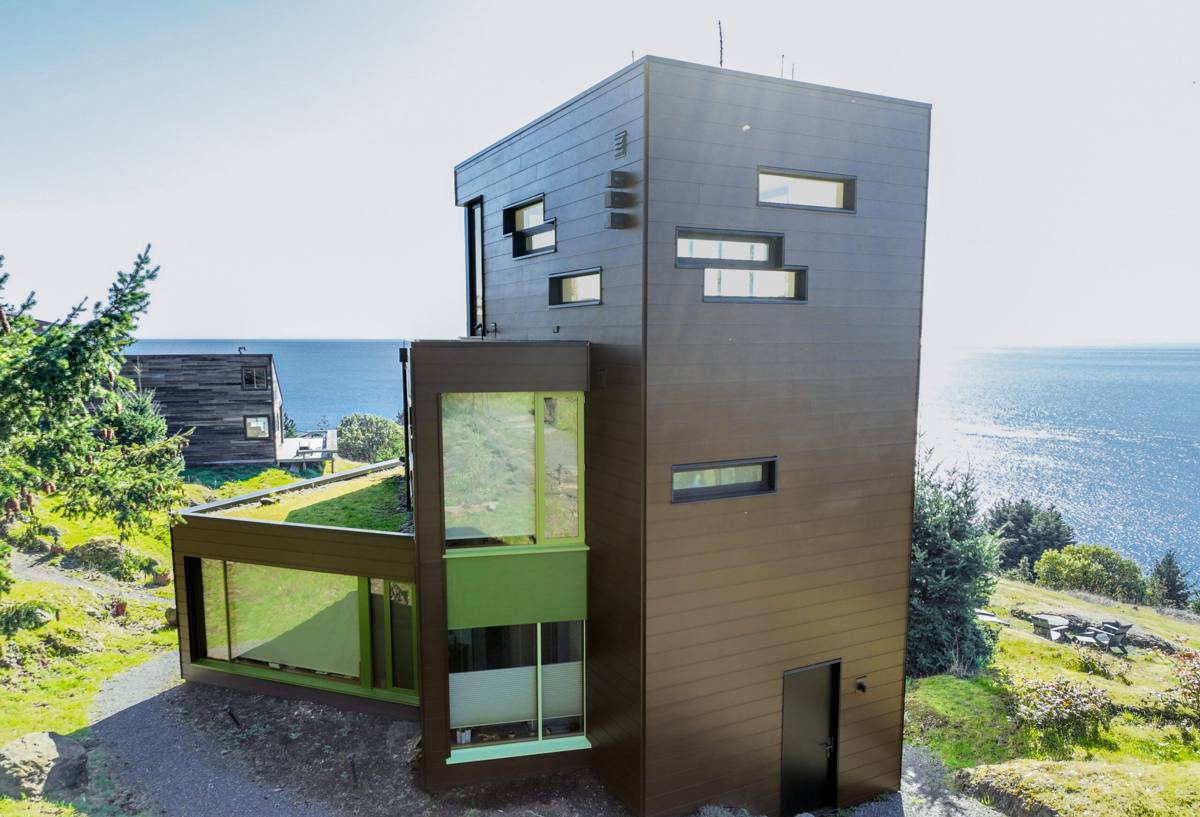
What Sehome Homes Need From Their Siding
Three climate factors drive almost every siding decision we make in this part of Bellingham:
- Salt air: proximity to the bay accelerates corrosion of fasteners, flashing, and any metal trim components, and it degrades paint films faster than inland exposure.
- Driving rain: wind-driven moisture doesn't just hit siding — it gets pushed sideways and upward under laps, around trim, and into anything less than a properly detailed water management system.
- Moss and prolonged dampness: shaded lots, tree cover, and short winter days mean many wall surfaces in Sehome rarely get a full afternoon of direct sun. Moss and algae growth take hold on materials that hold surface moisture, and constant dampness is the single biggest driver of rot in wood-based products.
Put together, this means the right siding for a Sehome home has to resist moisture absorption at the material level, shed wind-driven rain through correct installation detailing, and hold its finish without repainting every few years just to keep ahead of mildew and salt staining.
Why We Install Only James Hardie Fiber Cement
We standardized on James Hardie fiber cement siding for every home we side, including every job we do in Sehome, and we don't install vinyl, LP SmartSide, cedar, primed spruce, or other fiber cement brands. That's not a marketing position — it's a practical one built around exactly the conditions described above.
Fiber cement is non-combustible and dimensionally stable, meaning it doesn't expand and contract with moisture the way wood-based products do, so it holds paint and caulk lines far longer in a wet, humid climate. James Hardie's HZ5 product line is engineered specifically for climates with extended damp seasons and freeze-thaw cycles, which describes Whatcom County well. The factory-applied ColorPlus finish is baked on under controlled conditions rather than field-painted, which matters enormously here — a field-applied finish is only as good as the weather on installation day and the maintenance schedule after, while a factory finish is consistent from day one and backed by its own finish warranty.
We're not going to pretend every other product is unusable — vinyl and engineered wood siding both have a place in the market and get used successfully in plenty of climates. But for the specific combination of salt exposure, driving rain, and moss-prone shade that Sehome deals with, we've made the call that James Hardie is the product we're willing to put our name on.
What a Correct Siding Installation Actually Involves
Siding is a system, not a single product. A James Hardie board installed without the right prep work behind it will still fail early in this climate. Here's what we treat as non-negotiable on every job.
Tear-Off and Substrate Inspection
We don't install new siding over old, and we don't skip inspecting the sheathing underneath. Removing the existing cladding is the only way to find hidden rot, compromised sheathing, or moisture damage that's been building for years — which is common on homes where wood siding or older fiber cement has been holding water against the wall for a decade or more. Any damaged sheathing gets replaced before a single new board goes up.
Weather-Resistive Barrier and Flashing
A correctly lapped weather-resistive barrier, proper window and door flashing, and a drainage plane behind the siding are what actually keep driving rain out of the wall assembly — the siding itself is the second line of defense, not the first. This is the detail that gets rushed on cheap installations and is exactly where wind-driven Bellingham rain finds its way in.
Fastening and Fit
James Hardie specifies fastener type, placement, and spacing precisely, and following that specification is what keeps the warranty valid and the siding performing. We keep proper clearance at grade, around trim, and at penetrations so water has somewhere to go instead of wicking into the board edges — a detail that matters even more on shaded, slow-drying Sehome lots.
Finish Work
Caulking only where Hardie's specifications call for it (not everywhere, which traps moisture), properly primed and painted cut edges, and correctly installed trim and corner details finish the job. Skipped or rushed finish work is where a technically sound installation still ends up with premature paint failure or moss staining at joints.
Material Comparison for Bellingham's Coastal Climate
| Material | Moisture Resistance | Maintenance in Wet Climate | Typical Lifespan Here |
|---|---|---|---|
| James Hardie Fiber Cement | High — non-combustible, dimensionally stable | Low — factory finish holds up well against salt air and rain | 30+ years with correct install |
| Vinyl Siding | Moderate — sheds water but can warp and gap over time | Low, but color fades and panels can loosen in wind | 15-25 years |
| Cedar / Wood Siding | Low to moderate — absorbs moisture, prone to moss growth in shade | High — repainting/staining every 3-5 years | 10-20 years without heavy upkeep |
| LP SmartSide (engineered wood) | Moderate — treated strand board core, sensitive to sustained moisture exposure | Moderate — edge sealing and paint maintenance are critical | 20-30 years if maintenance stays current |
This isn't a claim that the other products can't work anywhere — it's why, given Sehome's specific combination of salt air, wind-driven rain, and shaded, moss-prone lots, fiber cement is the product we recommend and the only one we install.
Our Installation Process, Start to Finish
- On-site assessment: we walk the exterior, check for existing moisture damage, and evaluate sun exposure, drainage, and grading around the home.
- Written estimate and product selection: we go over Hardie board profiles, textures, and ColorPlus color options that fit the home and neighborhood.
- Tear-off and prep: old siding comes off, sheathing is inspected and repaired as needed, and the weather-resistive barrier goes on correctly lapped.
- Flashing and trim: windows, doors, and penetrations get properly flashed before any siding is hung.
- Siding installation: boards are installed to Hardie's fastening and clearance specifications, course by course.
- Finish detailing: caulking, touch-up painting of cut edges, and trim work are completed and inspected.
- Final walkthrough: we go over the finished job with the homeowner before calling it done.
Signs Your Sehome Home Needs New Siding
- Visible moss or algae staining that returns quickly after cleaning, especially on shaded walls
- Paint that's peeling, bubbling, or chalking faster than a normal repaint cycle
- Soft or spongy spots when you press on the siding, particularly near the bottom courses
- Gaps, warping, or buckling panels, common on older vinyl or wood siding after years of wind exposure
- Rising energy bills alongside noticeably drafty walls, which can point to a failing weather barrier
- Visible rust streaking from fasteners or trim, more common near the bay's salt air influence
Why Hiring a Crew That Already Works in Sehome Matters
A siding crew that's never worked this neighborhood is guessing at things a local crew already knows: how the terrain drains on hillside lots, how much shade a given block actually gets through the winter, and which older homes in the area were built with siding practices that don't hold up to today's understanding of moisture management. That local knowledge shows up in small decisions — where to add extra flashing, which walls need closer attention during tear-off, how to sequence a job around Bellingham's wetter months — that add up to a siding job that actually lasts.
It also matters for permitting and code compliance specific to Whatcom County jurisdictions, and for simply being reachable if a question comes up five years after installation. A crew that treats Sehome as just another stop on a route through Bellingham doesn't carry the same accountability as one that plans to still be doing work in this neighborhood a decade from now.
If your Sehome home's siding is showing its age, or you're planning ahead of a repaint you'd rather not repeat in five years, we're happy to take a look and put together a straightforward, no-pressure estimate. Use the form below to get started.