 Bellingham Roofing
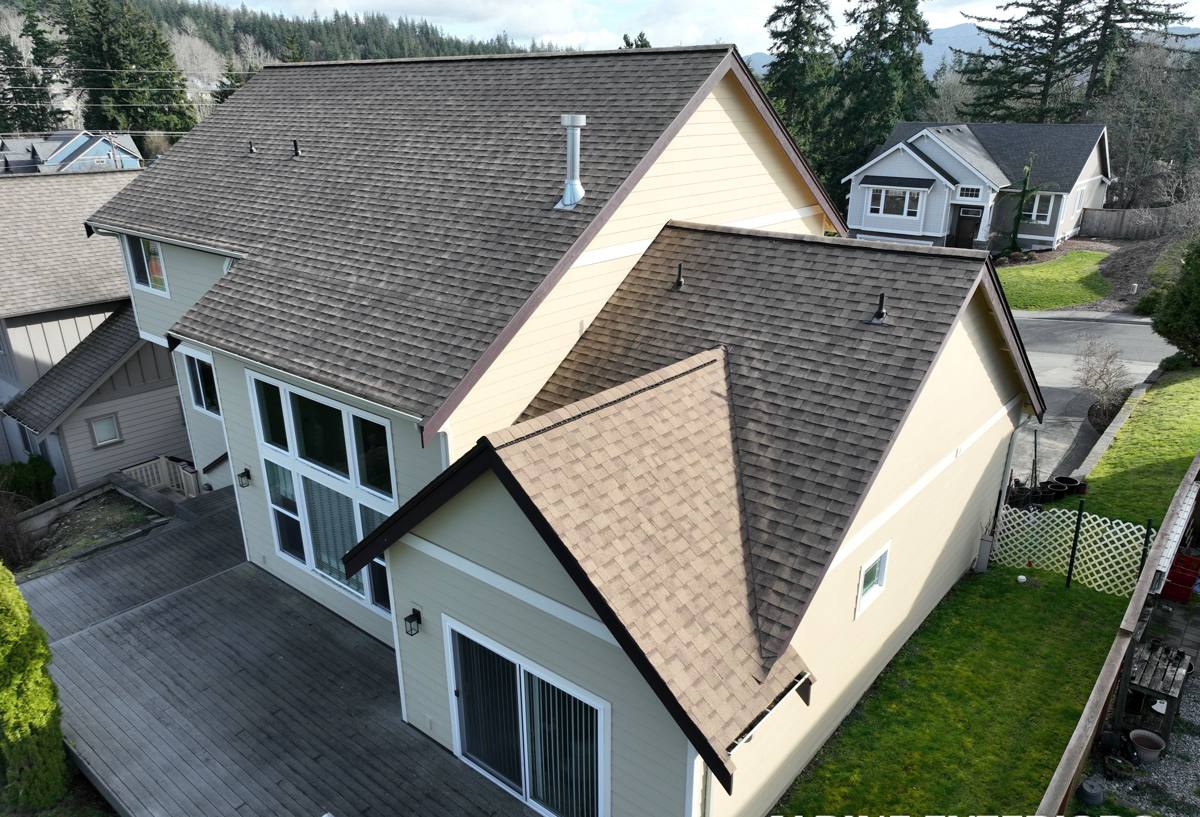
 South Hill sits above the rest of Bellingham, and that elevation cuts both ways. The views and light are part of why people build here, but the same exposure means new construction takes a harder hit from wind-driven rain, salt-laden air off Bellingham Bay, and the shade-and-moisture cycle that keeps moss thriving most of the year. Windows going into a new South Hill build aren't just a finish item on the punch list — they're one of the first real tests of whether the building envelope will hold up in Whatcom County weather. Get the install wrong and you won't see it for a year or two, until staining, soft trim, or a draft around the frame shows up. Get it right, and the windows become one of the quietest, most trouble-free parts of the house.
Why South Hill's Setting Changes the Window Equation
New-construction windows aren't installed the same way everywhere in Bellingham, and South Hill's combination of elevation, tree cover, and proximity to the water creates a specific set of demands.
Wind-driven rain at elevation
Higher lots catch more wind, and wind is what turns ordinary rain into a water-intrusion problem. Water that would simply run down a wall on a sheltered lot gets pushed sideways and upward into gaps, nail fins, and rough openings on exposed South Hill sites. The flashing and sealant details around a new window have to assume wind-driven rain is normal weather, not a rare event.
Salt air off the bay
Bellingham's proximity to the water means a steady low-level exposure to salt-carrying moisture, which is harder on exposed metal hardware, fasteners, and some cladding finishes than dry inland air. It doesn't ruin a window overnight, but it accelerates corrosion on the wrong materials and shortens the useful life of hardware that isn't rated for coastal-adjacent conditions.
A long moss season
Whatcom County's wet, mild stretch of the year keeps moisture sitting on horizontal surfaces — sills, trim caps, and anywhere debris can collect — for months at a time. That's exactly the environment moss and algae need to take hold. On a new build, sill design and drainage details determine whether that moisture sheds cleanly or lingers against wood trim and window frames.
What a Correct New-Construction Window Install Actually Involves
New-construction windows are installed differently than a retrofit or replacement unit — there's no existing frame to work around, which is an advantage, but it also means every layer of the water management system has to be built correctly the first time.
The sequence that actually keeps water out
- Rough opening checked for square, level, and correct dimensions before the window ever shows up on site
- Sill pan flashing installed so any water that gets past the window has a sloped, sealed path back outside
- Weather-resistive barrier integrated with the flashing in the correct shingle-lap order, top layers overlapping lower ones
- Window set, shimmed plumb and square, and fastened per the manufacturer's specified pattern
- Flanges or fins sealed and taped following the manufacturer's flashing instructions, not a generic method
- Head flashing installed above the window to divert water around, not into, the opening
- Interior air sealing with low-expansion foam or backer rod and sealant, so conditioned air isn't leaking around the frame
Skip or rush any one of these steps and the window itself can be flawless and the wall can still leak. This is where most new-construction window problems actually start — not with a bad window, but with a shortcut in the flashing sequence.
Code requirements that matter on a new build
New-construction windows in Bellingham have to meet current Washington State Energy Code performance targets and the applicable building code's egress requirements for bedroom windows — minimum opening size and sill height above the floor. On a new build these aren't optional add-ons; they're checked at inspection, and getting the window schedule right at the ordering stage avoids an expensive swap later.
Choosing the Right Window for a South Hill Build
There's no single "best" window material — the right choice depends on the home's exposure, the architectural style, and how much long-term maintenance the owner wants to take on. For an exposed or view-oriented South Hill lot, weather performance and hardware durability carry more weight than they would on a sheltered, tree-covered site.
| Material | Weather & Salt-Air Resistance | Maintenance | Where It Fits Best |
|---|---|---|---|
| Vinyl | Good; won't corrode or rot, seams are the main watch point | Low | Value-focused builds, sheltered elevations |
| Fiberglass | Very good; dimensionally stable under temperature swings | Low | Exposed South Hill lots wanting long-term stability |
| Wood interior / aluminum-clad exterior | Good on the exterior clad face; interior wood needs protection from any leaks | Moderate | Higher-end builds prioritizing interior wood appearance |
| Aluminum-frame | Fair; slim sightlines, but frame conducts cold and needs a corrosion-resistant finish near the bay | Moderate | Modern architecture, view walls, larger glass spans |
Whatever material a homeowner or builder specs, we pay close attention to hardware ratings on South Hill jobs specifically because of the salt-air exposure — corrosion-resistant fasteners and hinges cost a little more up front and save a callback down the road.
Our Process on South Hill New-Construction Jobs
We work with builders and owner-builders throughout the framing and dry-in stages, not just as a subcontractor who shows up once and leaves.
Before the windows arrive
We review the window schedule against the plans and the energy code targets, confirm rough opening sizes against the actual ordered units — a common source of on-site surprises — and walk the framing for square and moisture before any flashing goes on.
During installation
Every opening gets sill pan flashing, correctly lapped house wrap integration, and manufacturer-specified fastening and sealing. On exposed elevations we pay extra attention to head flashing and end-dam details, since that's where wind-driven rain finds the gaps.
After installation
We check operation on every unit — smooth opening and closing, tight locking, no binding — and walk the exterior with the builder or owner before we consider the job finished. Adjustments are far easier to make while the siding and trim crews are still on site than after the house is finished and occupied.
Common Mistakes We Watch For on New Builds
Most window problems on new construction trace back to a handful of repeat issues, and they're worth knowing whether you're a builder, an owner-builder, or a homeowner keeping an eye on your own project.
- Sill pan flashing skipped or installed without a back dam, so any water that gets in has nowhere to drain but into the framing
- House wrap taped in the wrong lap order, funneling water behind the barrier instead of over it
- Nail fins fastened through the flashing tape rather than sealed and taped over, breaking the water seal
- Rough openings cut oversized "for flexibility," leaving excess gap that's harder to air-seal correctly
- Head flashing left off or installed flush instead of sloped, so it doesn't actually shed water away from the frame
- Standard hardware used on an exposed, view-facing elevation where corrosion-resistant hardware would have made more sense
Any one of these can pass a casual visual inspection and still cause a leak two or three winters later — which is exactly why the flashing sequence matters more than the window brand.
Permits and Inspections
New-construction window installs in the City of Bellingham and unincorporated Whatcom County go through the standard building permit and inspection process tied to the overall construction permit — there isn't a separate window-only permit for new builds, but the windows are part of what inspectors check at the dry-in and final stages. We coordinate our work to be ready for those inspection points rather than scrambling to fix flashing after a wall has already been closed up.
Why a Crew That Already Works South Hill Matters
A window flashing detail that works fine on a sheltered, low-elevation lot elsewhere in Bellingham can underperform on an exposed South Hill site catching wind off the bay. Knowing which elevations on a given lot need extra attention to head flashing and end dams, which hardware holds up under the salt-air exposure, and how the moss-and-moisture season affects sill design isn't something that shows up in a manufacturer's install manual — it's local, site-by-site judgment built from doing the work here repeatedly. That's the difference between a window install that looks right on install day and one that's still performing correctly ten winters later.
After Move-In: Keeping New Windows Performing
A correctly installed new-construction window is close to maintenance-free, but a few habits extend its life in this climate:
- Rinse sills and tracks periodically to clear moss spores and organic debris before they take hold
- Check exterior caulking annually, especially on sun-and-wind-exposed elevations, and re-seal any cracked joints promptly
- Keep gutters and downspouts clear so overflow isn't running down the wall past window heads
- Operate hardware through its full range a few times a year so hinges and locks don't seize between uses
If you're planning new construction or an addition on South Hill and want windows installed the way this climate actually requires, we're happy to walk the plans with you and put together a straightforward, no-pressure estimate. Use the form below to get started.