 Bellingham Roofing
 Storm Damage Roof Repair Built for Birchwood's Climate
Birchwood sits close enough to Bellingham Bay and the Strait of Georgia that homes here take a different kind of weather beating than roofs further inland. Wind-driven rain off the water, salt-laden air, and long stretches of gray, wet weather each fall and winter add up over time. When a windstorm rolls through Whatcom County and tears a few shingles loose or drives rain up under your flashing, the damage is rarely as simple as it looks from the ground. A proper repair has to account for what the storm did today and what the neighborhood's climate will keep doing to that roof for the next ten years.
This page is about one job: storm damage roof repair for homes in and around Birchwood. Not a general roofing overview, not a sales pitch for a full tear-off you don't need — just a straight explanation of what storm damage looks like here, what a correct repair involves, and why it matters that the crew doing the work already understands this specific stretch of Bellingham.
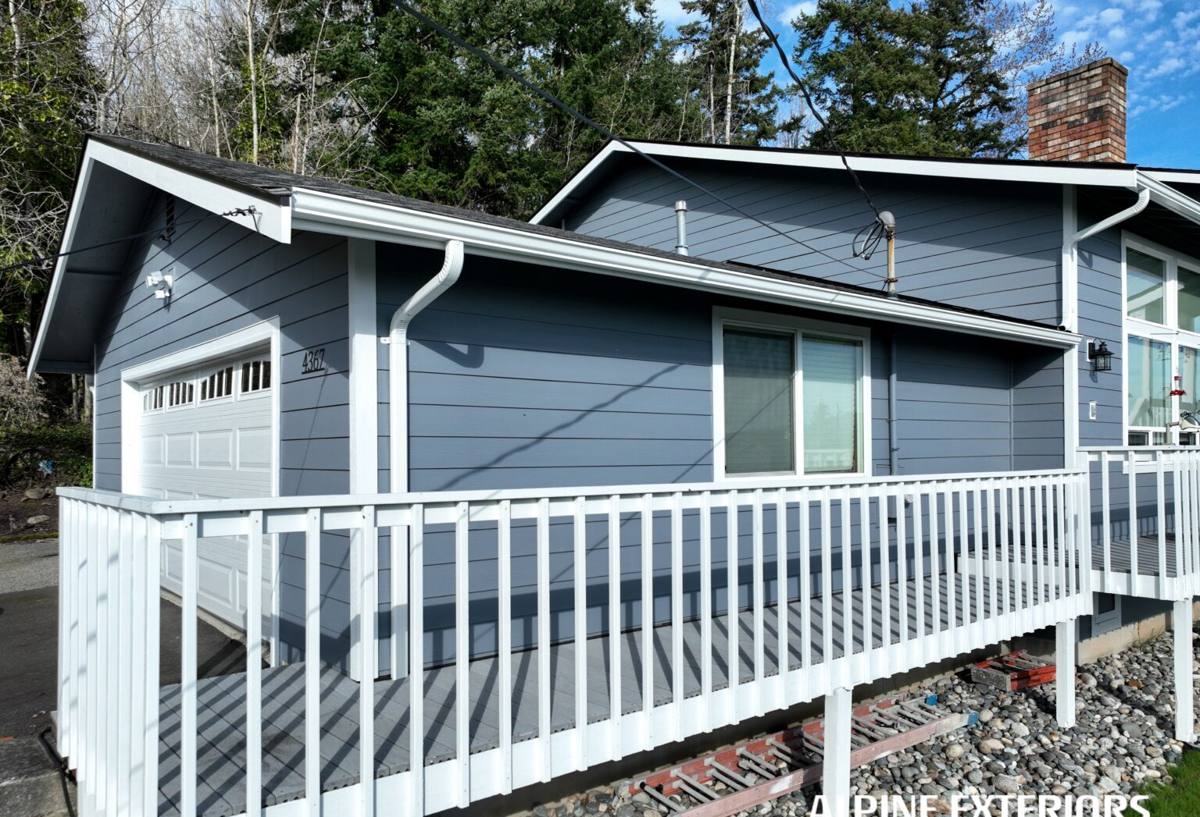
Why Birchwood Roofs Take a Different Kind of Beating
Every roof in Whatcom County deals with rain. Birchwood's mix of mature tree cover, proximity to the water, and exposure to shifting marine winds gives it its own particular set of stressors.
Salt Air and Metal Fatigue
Homes closer to the bay pick up trace salt in the air, which speeds up corrosion on exposed metal — flashing, fasteners, gutter hardware, vent caps. A storm that loosens a flashing seam on a roof with already-corroding metal will do more damage, faster, than the same storm would on a drier, inland roof.
Driving Rain, Not Just Rain
Straight-down rain is easy for a roof to shed. Wind-driven rain, the kind that comes sideways off the water during a storm system, is what actually gets under shingles, through nail holes, and behind flashing that would otherwise hold up fine. Most of the storm damage repair calls we see in this area trace back to wind-driven rain finding a weak point, not the rain itself causing damage on flat, calm days.
A Long Moss Season
Bellingham's wet season runs long, and shaded, tree-lined lots like many in Birchwood stay damp even between storms. Moss and algae take hold on north-facing slopes and under tree cover, and moss doesn't just look bad — it holds moisture against the shingle surface, lifts shingle edges over time, and creates channels where wind-driven rain can push water further under the roofing layer than it normally would. A storm that would be a non-event on a clean roof can turn into a real leak on a moss-compromised one.
What Storm Damage Actually Looks Like
Storm damage isn't always a missing shingle you can spot from the driveway. Some of the most costly damage is the kind that sits quietly for weeks before it shows up as a ceiling stain. After any significant wind or rain event, it's worth walking the property and checking for the following:
- Shingles that are cracked, curled at the edges, or visibly out of alignment with the rest of the field
- Granules collecting in gutters or at downspout outlets — a sign of shingle surface abrasion from wind and debris
- Bent, lifted, or missing flashing around chimneys, vent pipes, and roof-to-wall transitions
- Dented or dislodged roof vents, especially after hail or falling branches
- Soft or spongy spots on the roof deck when walked, which point to trapped moisture below the surface
- Water stains, discoloration, or a musty smell in the attic or on interior ceilings
- Debris — branches, needles, moss clumps — pooled in valleys where water is meant to flow freely
- Gutters pulling away from the fascia, which is often a sign of wind stress on the whole roof edge, not just the gutter
Any one of these on its own might be minor. Several together, especially after a named storm system, usually means it's worth having someone look at the whole roof rather than patching the one spot you can see.
What a Correct Storm Damage Repair Involves
A repair that only addresses the visible symptom tends to fail again in the next storm. A repair done right treats the roof as a system — covering, underlayment, flashing, and deck — and checks each layer before closing it back up.
Roof Covering
Damaged or missing shingles get replaced with matching material, properly nailed and sealed, not just caulked over. On older roofs, we'll flag when the surrounding shingles are brittle enough that a patch is likely to crack the next time someone walks near it — that's a conversation about scope, not an upsell.
Flashing and Transitions
Flashing failures are behind a large share of the leaks we trace back to storm damage. Chimney flashing, step flashing along walls, and valley flashing all get inspected and resealed or replaced as needed, with particular attention paid to areas showing salt-related corrosion.
Underlayment and Decking
If wind or wind-driven rain has gotten past the shingle layer, the underlayment and the wood decking beneath it need to be checked, not assumed fine. Soft decking gets replaced before new roofing goes back down — covering over compromised wood just hides the problem until it reappears as a ceiling leak.
Cleanup and Debris Clearing
Storms often leave behind branches, needles, and moss buildup in valleys and gutters. Clearing that debris is part of the repair, not a separate step, since blocked drainage paths are one of the most common reasons a roof takes on repeat damage after the initial storm has passed.
Repair or Replace? How We Help You Decide
Not every storm-damaged roof needs a full replacement, and not every roof is a good candidate for another round of patching. The right call depends on the roof's age, how widespread the damage is, and what condition the rest of the roof is in.
| Factor | Repair Usually Makes Sense | Replacement Is Worth Discussing |
|---|---|---|
| Roof age | Roof is under 15-18 years old, materials still supple | Roof is nearing or past its expected service life |
| Damage extent | Damage is localized to one slope or area | Damage is spread across multiple slopes or recurring |
| Decking condition | Deck is solid, no soft spots found | Multiple areas of soft or rotted decking |
| Shingle condition nearby | Surrounding shingles are still flexible and well-sealed | Surrounding shingles are brittle, curling, or losing granules broadly |
| Storm history | First significant damage in several years | Repeated storm damage calls on the same roof |
We'll walk you through where your roof lands on this before recommending anything — a repair estimate should tell you honestly if you're a year or two from needing full replacement instead.
How Our Storm Damage Repair Process Works
1. Inspection
We start with a full roof inspection, not just a look at the damage you called about. Storms rarely limit themselves to one spot, and we'd rather catch a second problem area now than have you call back after the next system moves through.
2. Clear Explanation and Estimate
You get a plain-English rundown of what we found, what caused it, and what it will take to fix — including photos and notes if you're planning to file an insurance claim.
3. Repair
Work is done to match your existing roofing material as closely as possible, with proper flashing and fastening techniques suited to wind-driven rain exposure, not just a cosmetic patch.
4. Final Check and Cleanup
Before we consider the job done, we check the repair under close inspection, clear the site of debris and old material, and make sure gutters and valleys are flowing freely again.
Working With Your Insurance Claim
Many storm damage repairs in Whatcom County get filed as insurance claims, and the process goes smoother when the documentation is thorough from the start. We photograph damage before and during repair, note probable cause where it's clear (wind, falling debris, hail), and provide a written estimate your adjuster can work from. We're not a public adjuster and won't promise a claim outcome, but we can make sure the roofing side of your claim is documented the way an insurer expects to see it.
Why It Matters to Hire a Crew That Already Works Birchwood
A roofer who works Birchwood regularly already knows which slopes tend to hold moss, which flashing details tend to fail first in this kind of salt-air exposure, and how wind off the bay typically hits a given roof orientation. That's not a small thing when you're trying to figure out whether a leak is a one-time fluke or the first sign of a bigger issue. It also means faster response after a storm — when a wind event hits Bellingham, crews already familiar with the area's roofs and access points can prioritize efficiently instead of starting from zero on every call.
Local experience also means straight talk about what your roof actually needs. We're not interested in selling a full replacement when a targeted repair will hold up fine, and we're not interested in a quick patch job that leaves your home exposed through the next storm system.
Get an Honest Look at Your Roof
If a recent storm has you wondering whether your Birchwood roof took damage, or you've noticed a leak, missing shingles, or moss buildup that's been bothering you for a while, it's worth getting a professional set of eyes on it before the next system rolls in off the water. Fill out the form below for a free, no-pressure estimate — we'll tell you honestly what we find and what it will take to fix it right.